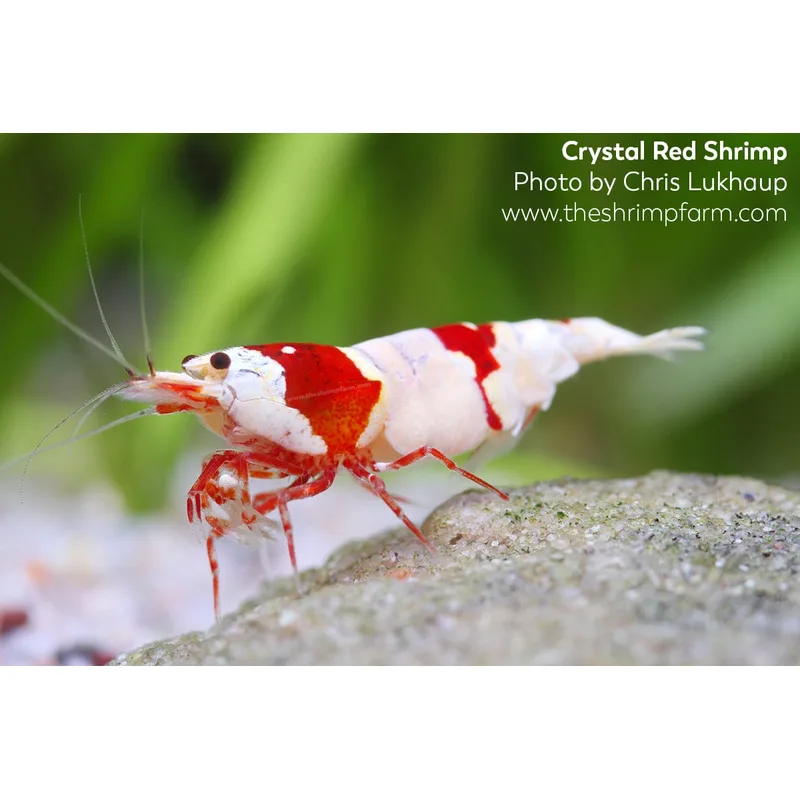
Shrimp keepers lose more colonies to water chemistry than to any disease. The numbers on the test kit, GH, KH, TDS, and pH, are not independent dials. They push on each other, and the right target depends on which shrimp you keep. A range that is perfect for cherry shrimp will slowly kill Crystal Reds, and the reverse is also true.
This guide is the reference you can keep open at the water-change bucket. It covers what each parameter measures, how they interact, the target ranges for the two shrimp groups most people keep, how to measure each one, and how to adjust them without causing a swing. It is built for beginners who just bought their first colony and for breeders running multiple tanks who want a clean checklist.
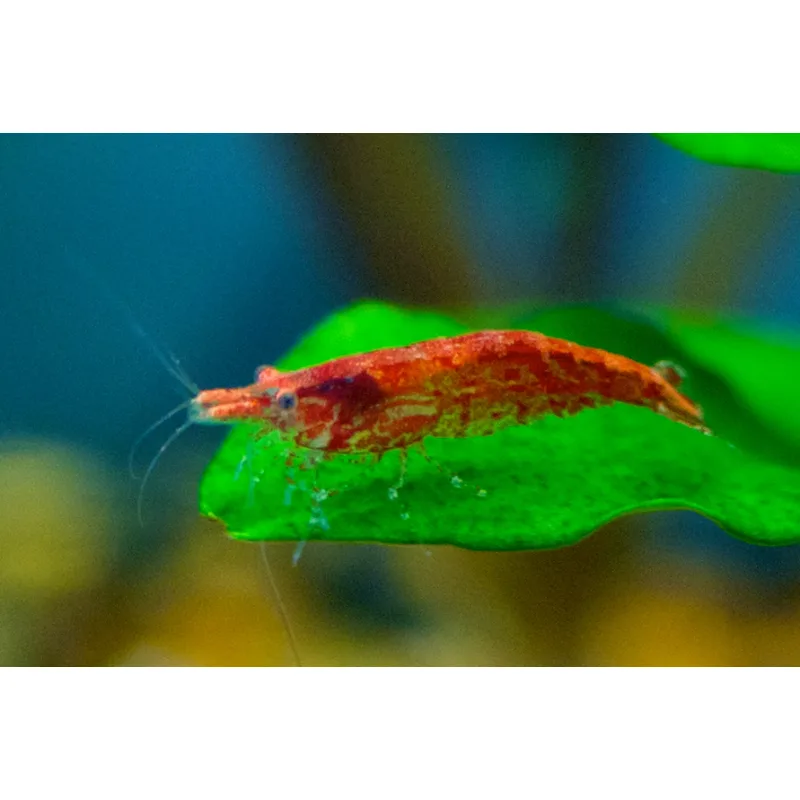
The Short Answer: Target Ranges
Neocaridina and Caridina are not interchangeable. Pick the column that matches your shrimp.
| Parameter | Neocaridina (Cherry, Yellow, Blue Velvet) | Caridina (Crystal Red, Taiwan Bee, Tiger-type) |
|---|---|---|
| pH | 6.5-8.0 | 5.4-6.2 |
| GH | 6-12 dGH | 3-6 dGH |
| KH | 2-8 dKH | 0-1 dKH |
| TDS | 150-300 ppm | 100-180 ppm |
| Temperature | 65-80°F | 60-74°F |
| Ammonia / Nitrite | 0 ppm | 0 ppm |
| Nitrate | under 20 ppm | under 10 ppm |
Neocaridina are the forgiving group. They tolerate harder, more alkaline water and plenty of tap supplies already land in range. Caridina need soft, acidic water held there by an active buffering substrate, which almost always means building water from RO. If you are not sure which group you have, check the seller listing before you buy anything else. For full care of each group, see our Neocaridina care guide and Caridina care guide. Amano shrimp are the usual exception to the tidy split, and the Amano shrimp care guide covers their needs separately.
What Each Parameter Actually Measures
GH (General Hardness)
GH measures dissolved calcium and magnesium. Shrimp pull both minerals from the water to build a new exoskeleton every molt. Too little GH and molts stall or fail, the classic “white ring” death where a shrimp cannot finish shedding. Too much GH is rarely lethal but pushes TDS up and can hurt breeding in Caridina. GH is measured in dGH. One dGH is roughly 17.9 ppm of hardness.
KH (Carbonate Hardness)
KH measures carbonate and bicarbonate, the water’s buffering capacity. It resists pH change. High KH holds pH steady and high. Near-zero KH lets pH sit low but also lets it move, which is why Caridina tanks lean on a buffering substrate to do the holding. KH is the parameter that most often separates a thriving Neocaridina tank from a failing Caridina one.
TDS (Total Dissolved Solids)
TDS is a conductivity reading, in ppm, of everything dissolved in the water: GH minerals, KH carbonates, sodium, nitrate, and leftovers from food and fertilizer. It cannot tell you which minerals are present. Its strength is speed. If you remineralize RO water, a TDS meter lets you hit the same target every time in about ten seconds. For a deeper look at meters, see our TDS meter roundup.
pH
pH measures acidity. For shrimp it matters less as a number and more as a consequence of KH, substrate, and source water. Chasing pH with chemicals is the fastest way to a crash, which is covered below.
How the Four Numbers Interact
Think of it as a chain. Source water sets the starting point for GH, KH, and TDS. KH then sets how stable pH is. Substrate and driftwood push pH and KH over time.
- TDS rises with GH and KH. A Neocaridina tank at GH 8 and KH 4 will usually read inside the 150-300 ppm window. A Caridina tank at GH 4 and KH 0 reads far lower.
- High KH means high, stable pH. You cannot hold a Caridina pH of 5.8 with KH 5 water. Something will give, and it will be the shrimp.
- Low KH means a fragile pH. This is why soft-water tanks need steady maintenance and no big water-change swings.
- TDS creeps up between changes. Evaporation concentrates minerals, and food and waste add dissolved solids. A rising TDS reading with no new additions is your cue for a water change.
One practical consequence: do not judge water by TDS alone. Two tanks can both read 200 ppm with very different GH and KH, and only one of them suits Caridina.
Measuring Your Water
You need three tools, all inexpensive.
GH and KH
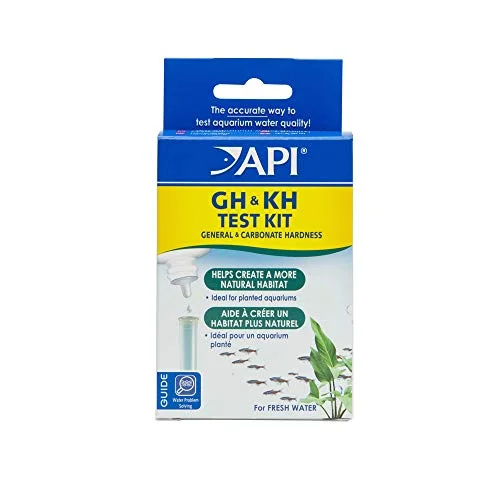
API GH & KH Test Kit
Best for GH and KH- ✓ Reads GH and KH in dGH and dKH, the units every shrimp reference uses
- ✓ Drop counts give exact numbers instead of color-chart guesses
- ✓ Cheap enough to run before every water change while dialing in a recipe
- ✗ Does not test pH, TDS, ammonia, or nitrite
- ✗ Color change at the end point is subtle under dim tank lighting
A drop-count titration kit gives a real dGH and dKH number. Count drops carefully, swirl, and read the color change at the end point. Test your tap or RO-plus-mineral mix before you use it, and test the tank after the first week of any new setup. For more kit options, see our GH and KH test kit roundup.
pH and the Nitrogen Cycle
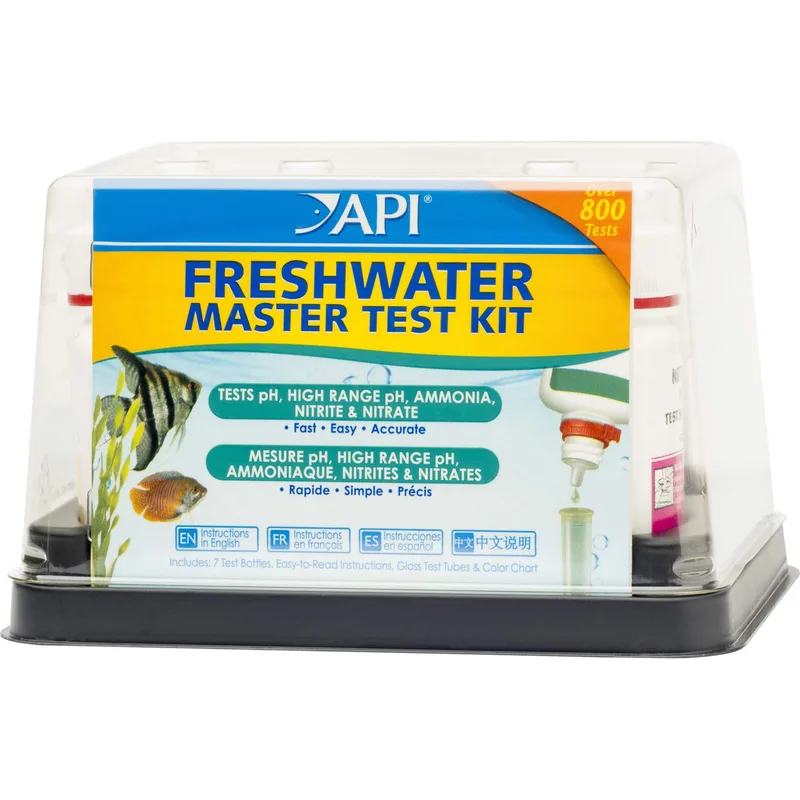
API Freshwater Master Test Kit
Best for pH and Cycling- ✓ Covers pH plus the nitrogen cycle in one box
- ✓ Large reagent volume lasts a long time across several tanks
- ✓ Easy to compare against the shrimp pH ranges in this guide
- ✗ The pH card reads in 0.2-0.4 steps, coarse for tight Caridina targets
- ✗ Does not test GH or KH
A liquid master kit covers pH, ammonia, nitrite, and nitrate. For Neocaridina the pH card is plenty. Caridina keepers who want tighter pH resolution often add a dedicated pH pen later, but a liquid kit is still the right starting point and the only way to confirm ammonia and nitrite are at zero.
TDS
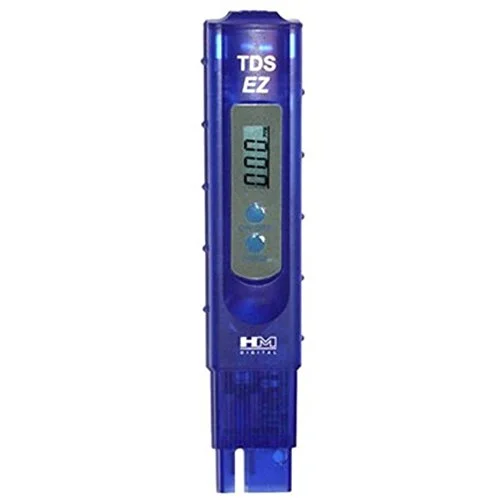
HM Digital TDS-EZ Water Quality Tester
Best TDS Meter- ✓ Instant reading for mixing remineralized water to a target
- ✓ Simple pen design with no menus to get wrong
- ✓ Low price makes a spare for the breeding rack easy to justify
- ✗ Not waterproof, so keep the electronics end dry
- ✗ Needs occasional calibration checks against a reference solution
Dip the pen in a cup of water, wait for the reading to settle, and write it down. Do it on fresh mixed water and on tank water at the same time each week. A pen like this is best treated as a trend tool: consistent relative readings matter more than absolute accuracy.
Adjusting Parameters Without a Crash
Shrimp are more sensitive to how fast water changes than to small differences in the final number. A colony that has lived at pH 7.4 for a year is safer there than pushed to a “textbook” 6.8 in one afternoon.
- Change one thing at a time. Adjust GH, then wait. Do not stack remineralizer, buffer, and a big water change on the same day.
- Keep water changes small. Ten to twenty percent per week is a sane default. Match temperature and TDS of new water to the tank within a small margin.
- Drip new water in if you must change more than a quarter of the volume.
- Avoid pH chemicals. Powder and liquid pH adjusters create swings. Fix the source water or the substrate instead.
- Acclimate new shrimp slowly. Drip acclimation over an hour or more reduces the shock from a parameter mismatch with the shop’s water.
Building Water from RO
Caridina keepers, and anyone with very hard or very soft tap, build water from RO. RO strips nearly all dissolved minerals, giving a TDS near zero that you remineralize to your target.
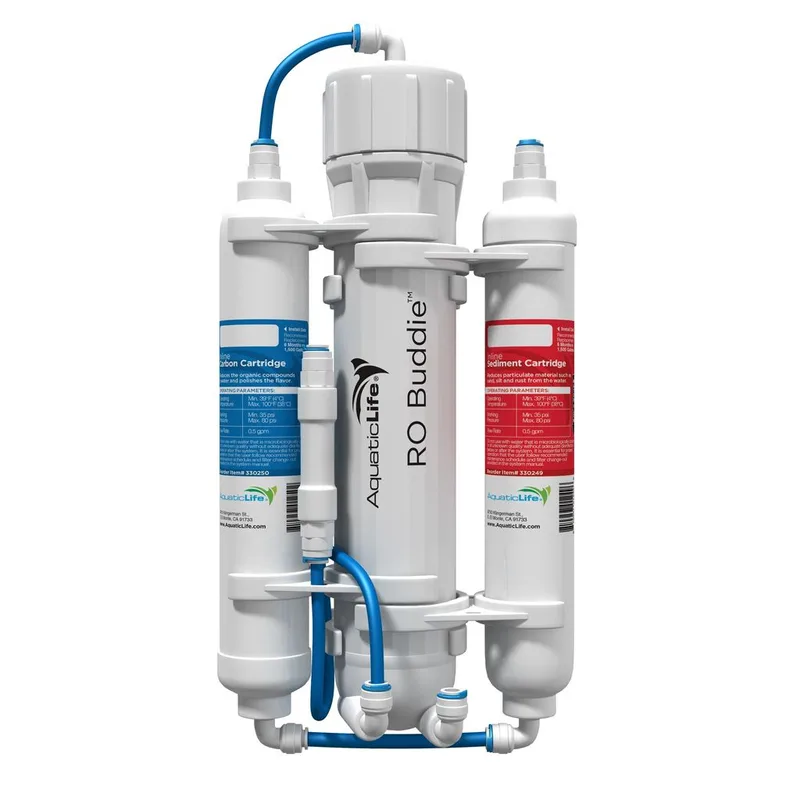
Aquatic Life RO Buddie 4-Stage RO/DI 50 GPD
Best RO Unit for Caridina- ✓ Starts Caridina water from a near-zero TDS blank slate
- ✓ DI stage polishes RO output further for tighter control
- ✓ Compact enough for a hobby room or garage
- ✗ Wastes water during production, so plan a use for the reject line
- ✗ Membranes and cartridges are an ongoing replacement cost
A 4-stage RO/DI unit is a reasonable first purchase if you keep more than a couple of tanks. See our RO system roundup for alternatives.
For Caridina, use a GH-only remineralizer. It raises GH and TDS without adding carbonates.
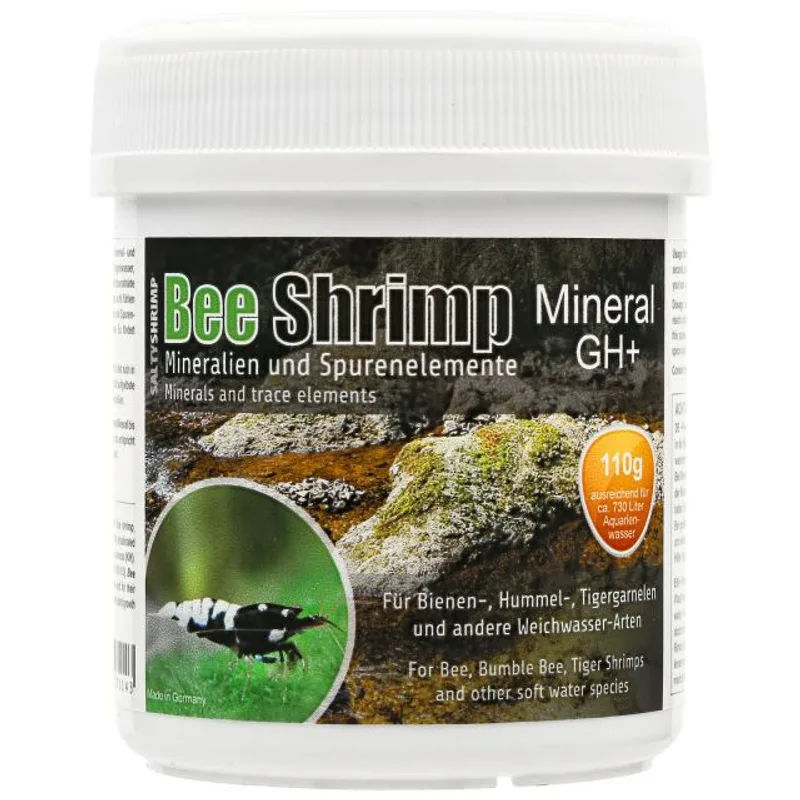
SaltyShrimp Bee Shrimp Mineral GH+
Best for Caridina- ✓ Raises GH without raising KH, which keeps Caridina water on target
- ✓ A small dose goes a long way, so one jar mixes a lot of water
- ✓ Repeatable TDS results once you log your dose per liter
- ✗ Only works from RO or very soft source water
- ✗ Needs a TDS meter and GH kit to dose accurately at first
For Neocaridina on RO water, use a GH/KH remineralizer, which restores the carbonate buffering they want.
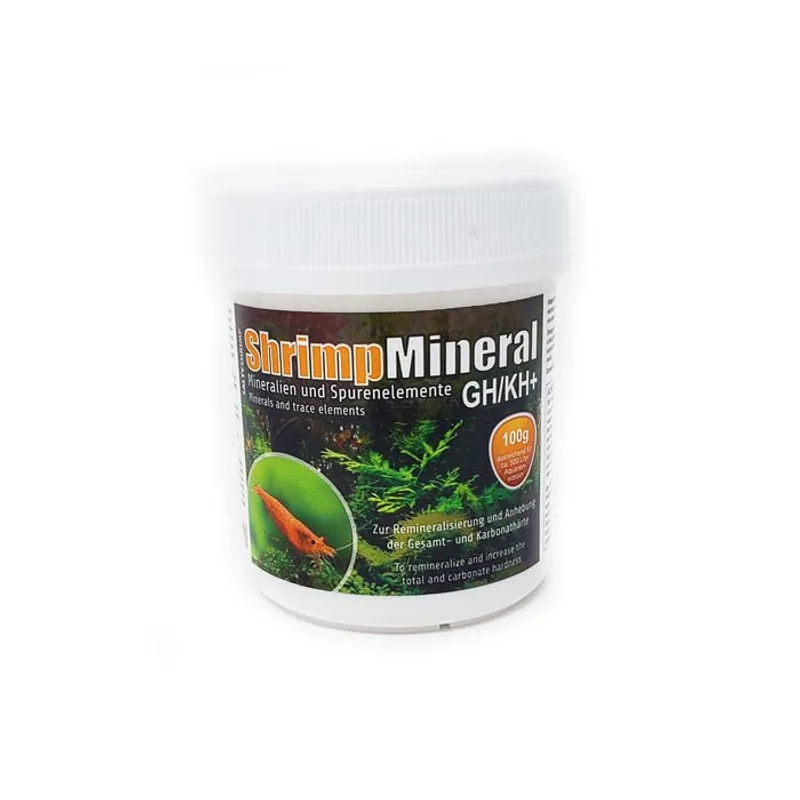
SaltyShrimp Shrimp Mineral GH/KH+
Best for Neocaridina- ✓ Adds both GH and KH, matching what Neocaridina want
- ✓ Lets RO users hit a Neocaridina recipe without tap water guesswork
- ✓ Gives consistent water from change to change
- ✗ Wrong for Caridina because it adds KH
- ✗ Costs more per liter than simply using suitable tap water
Do not swap these. GH/KH mix in a Caridina tank pushes KH out of range and fights your substrate. GH-only mix in a Neocaridina tank leaves pH unbuffered. Compare more options in our shrimp remineralizer guide. If your tap water already sits in the Neocaridina range, you can skip RO entirely, mix a conditioner into the new water, and save the money.
Shrimp-Safe Notes: Copper and Water Treatments
Shrimp are invertebrates, and copper is toxic to them even at levels fish shrug off. Many fish medications, some algaecides, and some plant fertilizers contain copper. Always read the ingredient list on anything you add to a shrimp tank, and if copper appears, do not use it. Some tap supplies also carry copper from household plumbing; let water run for a minute before collecting it and use a conditioner that binds heavy metals. Our water conditioner comparison covers which conditioners are suited to shrimp tanks.
Be cautious with pH buffers and acid additives too. Our pH buffer roundup explains the trade-offs, and the short version is that most shrimp tanks do better with stable source water than with additives.
Warm-Climate Tips
In warm southern climates, summer room temperatures can push a shrimp tank past 80°F, which is already the Neocaridina ceiling and well past the Caridina one of 74°F. Warm water also holds less oxygen and speeds up evaporation, which concentrates TDS faster. Add airflow across the surface, keep tanks out of afternoon sun, and top off with RO water, not tap, so TDS does not ratchet upward.
Frequently Asked Questions
What is the ideal TDS for shrimp?
It depends on the group. Neocaridina do well at 150-300 ppm. Caridina want 100-180 ppm. Pick the target for your species and aim for the middle of the range, not the edge.
Do shrimp need KH?
Neocaridina do, in the 2-8 dKH range, because carbonates stabilize pH. Caridina need KH at 0-1 dKH and rely on an active buffering substrate for stability.
Can I use tap water for shrimp?
Often yes for Neocaridina, if the tap water has moderate GH and KH, no chloramine problems after conditioning, and no copper. Caridina almost always need RO water as a base because most tap water has too much KH.
How often should I test my shrimp tank?
Test weekly for the first two months of a new setup, then every couple of weeks once things are stable. Always test after any change in water source, substrate, or remineralizer.
Why did my shrimp die after a water change?
Most often the new water differed from the tank in temperature, TDS, or KH. Match all three, change smaller amounts, and check for copper or chloramine in the source water.
My TDS keeps going up. What should I do?
Rising TDS between changes usually means evaporation and accumulated waste. Top off with RO water, not tap, and do a regular partial water change. If it climbs faster than that, look for a decaying substrate, uneaten food, or a leaching hardscape piece.
Conclusion
Get the group right first. Neocaridina want moderate GH and KH with pH in the 6.5-8.0 range and TDS around 150-300 ppm. Caridina want soft, acidic water with near-zero KH and TDS around 100-180 ppm. Then measure, change slowly, and keep a log of your recipe so each water change matches the last.
If you buy only two things, start with the API GH & KH Test Kit and a TDS pen. They tell you what is in the water before you add anything to it. For Caridina, add an RO unit and the GH-only remineralizer; for Neocaridina on RO, use the GH/KH version. Consistency beats perfection, and a stable “almost right” tank outperforms a perfect one that swings every week.