AquaRanked is reader-supported. When you buy through links on our site, we may earn an affiliate commission.
Neocaridina davidi — commonly sold as cherry shrimp, blue dreams, orange sakura, and a dozen other color variants — are the most forgiving dwarf shrimp species in the hobby. They tolerate a wider parameter range than their caridina cousins, breed readily in established tanks, and come in nearly every color imaginable.
That said, “forgiving” does not mean “impossible to kill.” Neocaridina still have specific needs, and getting the fundamentals right is the difference between a thriving colony and a slow die-off. This guide covers everything from initial tank setup through colony breeding.
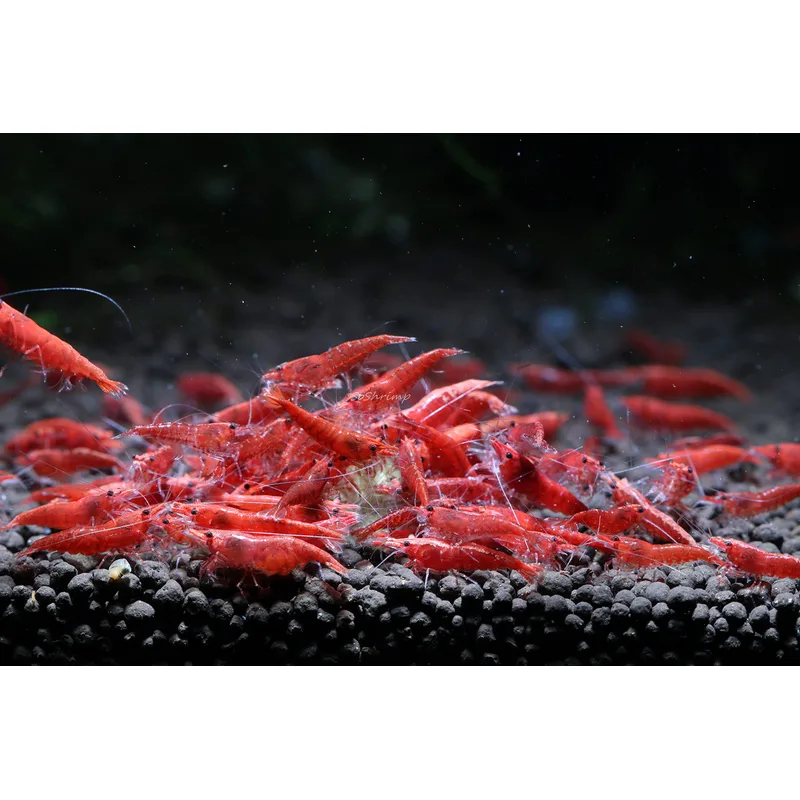
Tank Setup
Tank Size
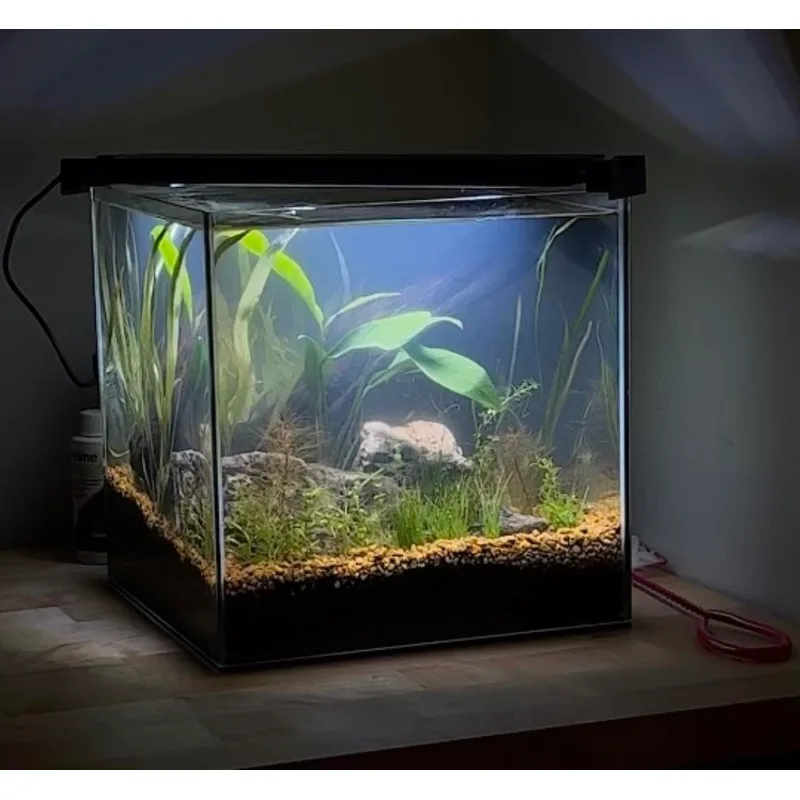
A 10-gallon tank is the ideal starting point for a neocaridina colony. You can keep shrimp in 5-gallon tanks, but smaller water volumes are less stable — a minor parameter swing that a 10-gallon tank absorbs without issue can wipe out shrimp in a 5-gallon.
For breeding colonies, 20 gallons gives you room to grow without constant culling. Larger tanks also develop more biofilm, which is the primary food source for neocaridina between supplemental feedings.
Substrate
You have two main options: inert substrates (sand, gravel) or active/buffering substrates (Fluval Stratum, aqua soil).
For neocaridina, inert substrates work perfectly well. Neocaridina thrive in a pH range of 6.5-7.5, and most tap water falls within that range. An inert sand or gravel substrate will not alter your pH, which keeps things simple.
Active substrates like Fluval Stratum are better if you also want to grow plants. They provide nutrients for root-feeding plants and gently buffer pH toward the acidic side. Just be aware that active substrates exhaust their buffering capacity after 18-24 months and will need replacement.
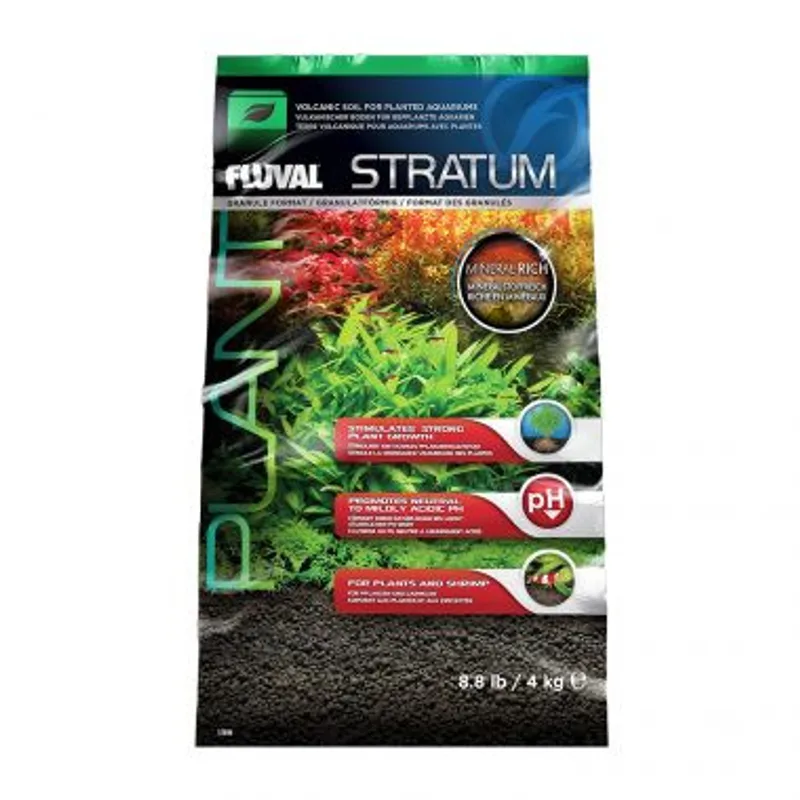
Fluval Stratum Plant and Shrimp Substrate
Best Substrate- ✓ Light and porous — does not compact over time
- ✓ Supports strong plant growth alongside shrimp
- ✓ Gently buffers pH toward neutral range
- ✓ Shrimp graze on biofilm that develops on the granules
- ✗ Can cloud water during initial setup
- ✗ Breaks down after 18-24 months and needs replacement
Filtration
Sponge filters are the gold standard for shrimp tanks. They are 100% shrimp-safe — no intakes to trap babies — and they provide biological filtration while growing biofilm that shrimp graze on.
If you prefer a hang-on-back filter, cover the intake with a fine sponge prefilter. Without a prefilter, shrimplets will get pulled into the filter and die.
Hardscape and Plants
Driftwood and rocks provide surface area for biofilm growth and hiding spots for molting shrimp. Java moss, Christmas moss, and Bucephalandra are popular plant choices because they grow in shrimp-safe conditions without demanding high light or CO2.
Moss in particular is important for shrimplet survival. Newborn shrimp hide in moss clumps and graze on the microorganisms that colonize the dense fronds. A tank with generous moss coverage will produce higher shrimplet survival rates than a bare tank.
Water Parameters
Getting parameters right is the single most important factor in neocaridina success. Here are the target ranges:
| Parameter | Target Range |
|---|---|
| pH | 6.5–7.5 |
| TDS | 150–250 ppm |
| GH | 6–8 dGH |
| KH | 2–4 dKH |
| Temperature | 68–78°F (20–26°C) |
| Ammonia | 0 ppm |
| Nitrite | 0 ppm |
| Nitrate | <20 ppm |
pH
Neocaridina are flexible on pH — anything between 6.5 and 7.5 works. Stability matters more than hitting a specific number. A tank that sits consistently at 7.2 is far better than one that swings between 6.8 and 7.4 throughout the day.
GH and KH
GH (general hardness) measures calcium and magnesium, which shrimp need for molting. A GH of 6-8 provides enough minerals for healthy shell development. Below 5, you will see molting failures — shrimp that cannot shed their old exoskeleton, which is fatal.
KH (carbonate hardness) buffers pH and prevents dangerous swings. A KH of 2-4 gives you enough buffering capacity without pushing pH too high.
TDS
Total dissolved solids should sit between 150 and 250 ppm. TDS gives you a quick snapshot of overall mineral content. If your TDS drifts above 300, it usually means waste buildup — time for a water change.
Remineralization
If you use RO or distilled water (common in areas with unsuitable tap water), you need to add minerals back. SaltyShrimp GH/KH+ is the standard choice. Mix it into your water change water before adding it to the tank, targeting a TDS of 180-220 ppm.
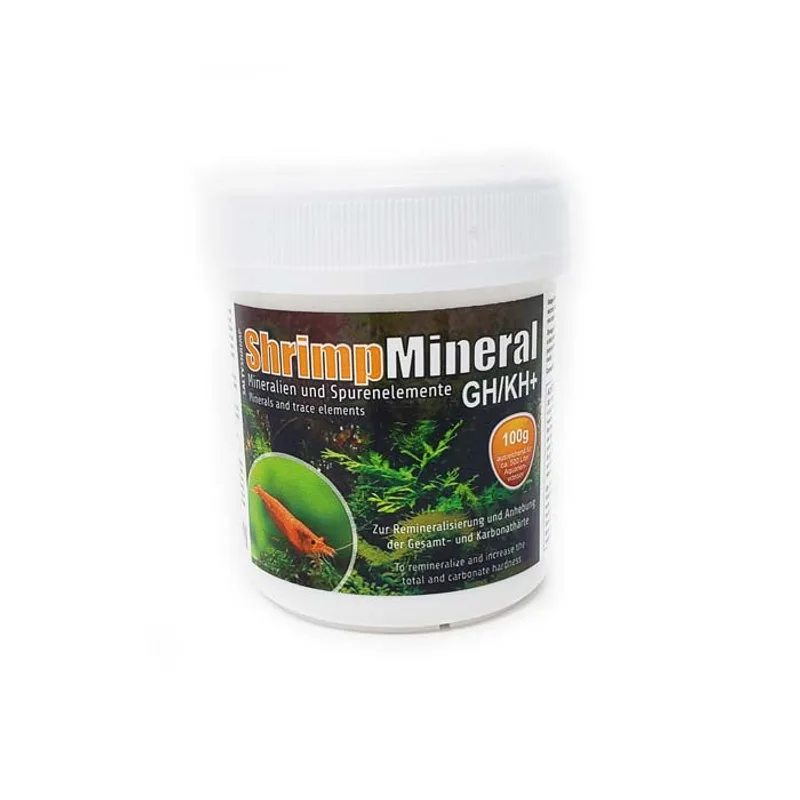
SaltyShrimp Shrimp Mineral GH/KH+
Best Remineralizer- ✓ Precisely raises both GH and KH for neocaridina
- ✓ Dissolves quickly in RO or distilled water
- ✓ A little goes a long way — 100g lasts months
- ✓ Industry standard among serious shrimp keepers
- ✗ Requires a TDS meter to dose accurately
- ✗ Overkill if your tap water already has suitable parameters
Cycling the Tank
Never add shrimp to an uncycled tank. Neocaridina are far more sensitive to ammonia and nitrite than most fish. Even trace amounts of ammonia can kill shrimp within hours.
Cycle your tank for a minimum of 4-6 weeks before adding shrimp. Use a liquid ammonia source or add fish food and let it decompose. The cycle is complete when:
- Ammonia reads 0 ppm
- Nitrite reads 0 ppm
- Nitrate is present (indicates the full nitrogen cycle is functioning)
Test with a liquid reagent kit (not strips) for accuracy during cycling.
Feeding
Neocaridina are primarily biofilm grazers. In a mature, planted tank with driftwood, they can find most of their food naturally. Supplemental feeding is still important, but overfeeding is the most common mistake new shrimp keepers make.
Feeding Schedule
Feed supplemental food 3-4 times per week, not daily. Drop in only as much as the colony can consume in 2-3 hours. Remove any uneaten food after that window to prevent water quality issues.
Best Foods
A balanced diet for neocaridina includes:
- Sinking pellets/sticks: Dennerle Shrimp King Complete, Hikari Shrimp Cuisine
- Blanched vegetables: Zucchini, spinach, cucumber (remove after 12 hours)
- Protein supplements: Snowflake food, bee pollen, dried mulberry leaves
- Mineral supplements: Indian almond leaves, mineral junkie
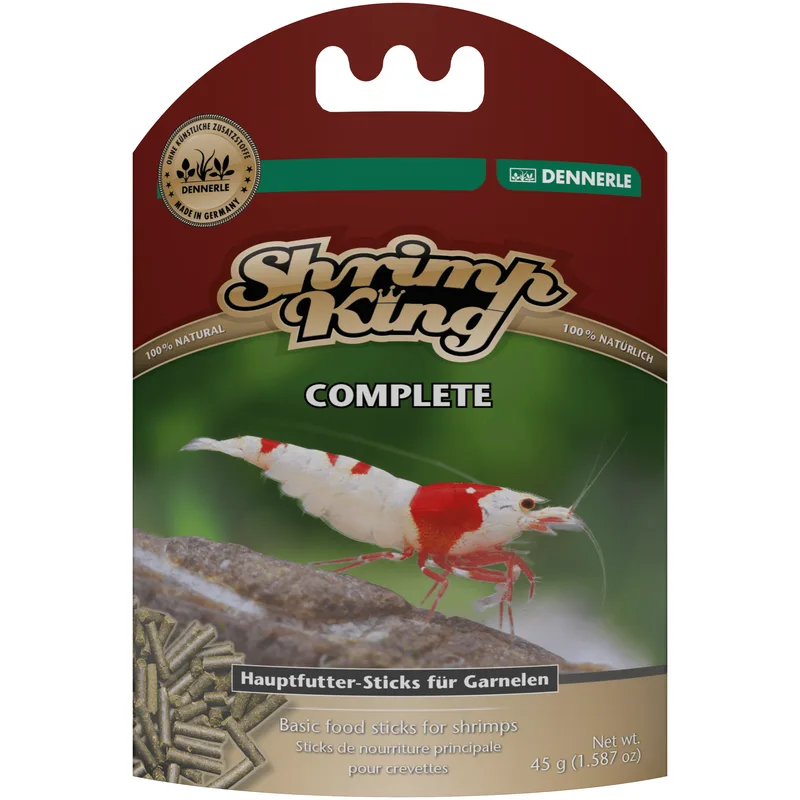
Dennerle Shrimp King Complete
Best Shrimp Food- ✓ Balanced formula designed specifically for dwarf shrimp
- ✓ Sticks sink immediately and hold together for hours
- ✓ Rich in plant-based nutrients shrimp need
- ✓ Does not foul water even if left overnight
- ✗ Small container for the price
- ✗ Some shrimp prefer protein-heavier foods
Variety matters. Rotating between several food types ensures your shrimp get a full nutritional profile and keeps them actively foraging.
Breeding
Getting Started
Neocaridina breed readily once they are established and comfortable. You do not need to do anything special — provide stable parameters, regular food, and hiding spots, and breeding will happen naturally.
A colony of 10-15 shrimp is a good starting group. This gives you enough genetic diversity to avoid inbreeding issues and enough individuals that both males and females are represented.
Sexing
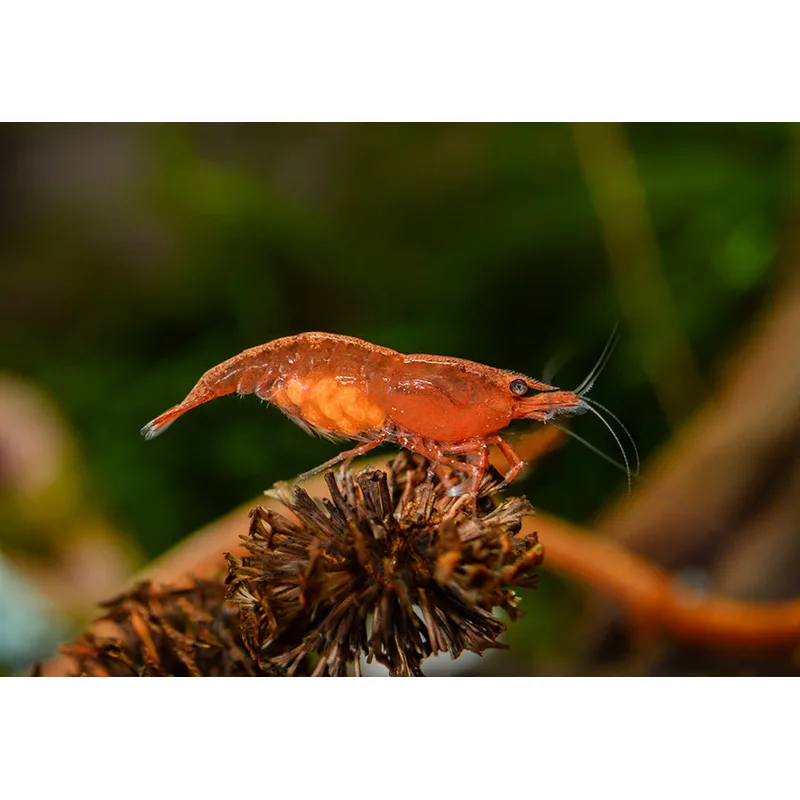
Females are larger, more colorful, and develop a curved underbelly (the “saddle”) where they carry eggs. Males are smaller, slimmer, less colorful, and more active swimmers.
In cherry shrimp, the difference is obvious by about 8-10 weeks of age. Females develop a visible yellow or green saddle behind the head — these are developing eggs in the ovaries.
The Breeding Process
- A female molts and releases pheromones
- Males swim frantically searching for the female (the “mating dance”)
- The male fertilizes the eggs
- The female carries fertilized eggs under her tail (swimmerets) for 28-35 days
- Fully developed shrimplets hatch as miniature versions of the adults
Shrimplet Survival
Shrimplet survival depends on two things: food and hiding spots. Dense moss, leaf litter, and biofilm-covered surfaces provide both. In a tank with good moss coverage and established biofilm, expect 80-90% survival rates.
Avoid keeping neocaridina with fish that eat shrimplets. Even “peaceful” fish like guppies and tetras will eat newborn shrimp. A shrimp-only tank produces the highest survival rates.
Color Grading
Neocaridina come in grades based on color intensity and opacity:
- Low Grade / Cherry: Translucent body with some red patches
- Sakura: More solid color coverage, some translucency
- Fire Red: Deep solid red across the entire body
- Painted Fire Red: Opaque red with no translucency, including legs
Higher grades command higher prices and produce more visually striking colonies. To maintain or improve color quality:
- Cull selectively. Remove shrimp with poor coloration to a separate tank
- Avoid mixing colors. Crossing red and blue neocaridina produces dull, wild-type brown offspring
- Add new bloodlines every 12-18 months to prevent inbreeding-related color loss
Common Problems
Molting Issues
Failed molts are usually caused by low GH. Shrimp need calcium and magnesium to form new shells. If you see shrimp dying mid-molt (half-stuck in their old shell), test your GH immediately. Raise it to 6-8 dGH using a remineralizer.
White Ring of Death
A white band around the body behind the head indicates the shrimp’s exoskeleton cracked during molting. This is almost always fatal and caused by insufficient minerals (low GH) or rapid parameter changes.
Population Crashes
Sudden die-offs are typically caused by:
- Copper contamination (check fertilizers and medications — many contain copper)
- Ammonia spikes (from overfeeding or a dead fish)
- Temperature shock during water changes
- Pesticide residue on new plants
Always drip-acclimate new shrimp over 1-2 hours and quarantine new plants by soaking them in dechlorinated water for 48 hours.
Frequently Asked Questions
How many neocaridina shrimp should I start with?
Start with 10-15 shrimp to ensure good genetic diversity and both sexes. A group this size will begin breeding within a month or two if conditions are right. Buying fewer than 8 increases the risk of getting all one sex.
Can neocaridina live with fish?
Small, peaceful fish like ember tetras, otocinclus, and pygmy corydoras are generally safe with adult neocaridina. However, all fish will eat shrimplets to some degree. For maximum breeding success, keep a shrimp-only tank.
How fast do neocaridina breed?
Under ideal conditions, a female can produce a batch of 20-35 shrimplets every 5-6 weeks. A starting colony of 10-15 shrimp can grow to 100+ within 3-4 months. Growth is exponential once multiple females are breeding simultaneously.
Do neocaridina need a heater?
Neocaridina tolerate a wide temperature range (68-78°F), so a heater is only necessary if your room temperature drops below 65°F regularly. In most homes, ambient temperature is sufficient. Slightly cooler temperatures (70-72°F) can actually slow breeding if your colony is growing too fast.
What is the difference between neocaridina and caridina shrimp?
Neocaridina are hardier and prefer higher GH/KH (harder water with pH 6.5-7.5). Caridina species like Crystal Red and Bee shrimp require softer, more acidic water (pH 5.5-6.8, GH 3-5, KH 0-2) and are less forgiving of parameter swings. Neocaridina are the better choice for beginners.
How long do neocaridina shrimp live?
Neocaridina typically live 1.5-2 years in a well-maintained tank. Higher temperatures (above 78°F) speed up metabolism and shorten lifespan, while cooler temperatures (68-72°F) tend to extend it.
Conclusion
Neocaridina shrimp are genuinely one of the most rewarding species you can keep in a freshwater aquarium. They are colorful, active, constantly breeding, and relatively forgiving of mistakes. Get the fundamentals right — cycled tank, stable parameters (pH 6.5-7.5, GH 6-8, TDS 150-250), appropriate food, and good moss coverage — and your colony will take care of the rest.
Start with 10-15 shrimp, resist the urge to overfeed, and give the tank time to mature. Within a few months, you will have a thriving colony that practically manages itself.