AquaRanked is reader-supported. When you buy through links on our site, we may earn an affiliate commission.
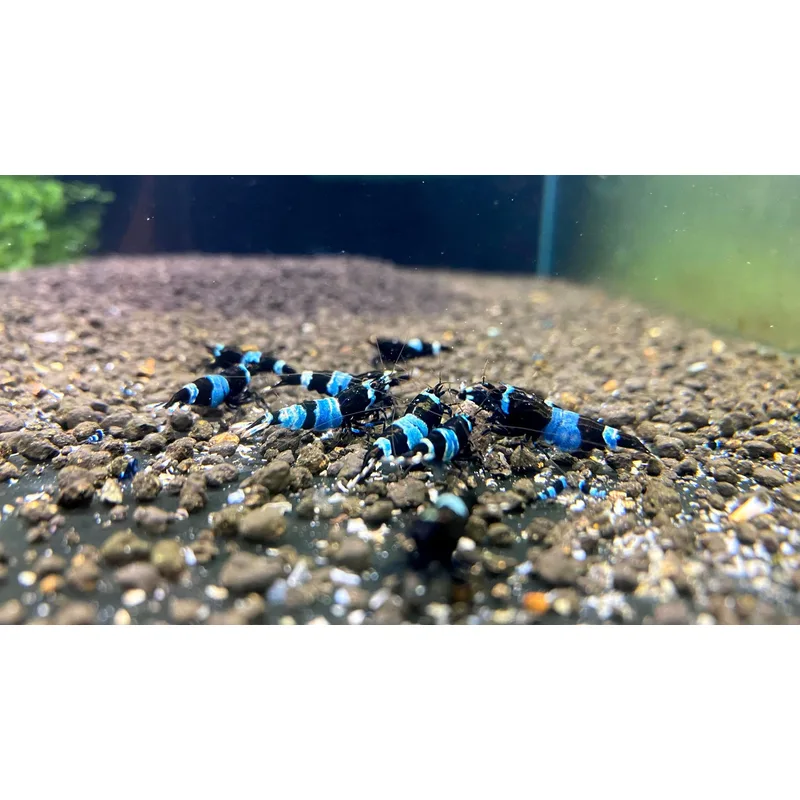
Caridina shrimp occupy a tier above Neocaridina in both visual impact and keeping difficulty. Crystal Red shrimp with their bold red-and-white banding, Taiwan Bee shrimp in extreme patterns like Shadow Panda and Blue Bolt, and Tiger shrimp with their distinctive striping have become centerpieces of the planted tank hobby. They are also among the most parameter-sensitive invertebrates kept in freshwater aquariums.
The challenge with Caridina is not mysterious — it is chemistry. These shrimp originate from soft, acidic mountain streams where pH runs well below neutral, carbonate hardness approaches zero, and total dissolved solids stay low. Replicating those conditions in a home aquarium requires RO water, an active buffering substrate, a Caridina-specific remineralizer, and consistent monitoring. None of it is complicated once you understand what you are managing and why. But skipping any piece of the system produces predictable failures: failed molts, dropped eggs, and shrimp that live a few weeks then gradually disappear.
This guide covers the complete system for keeping Caridina successfully: substrate selection, RO water preparation, parameter monitoring, filtration, feeding, and breeding behavior. The parameters here apply to the most commonly kept Caridina species — Crystal Red (Caridina cantonensis var. Crystal Red), Crystal Black, Taiwan Bee varieties (Blue Bolt, Shadow Panda, King Kong), and Tiger shrimp (Caridina mariae). Extreme Taiwan Bee varieties bred for competition-level patterns may require tighter ranges, but the fundamentals remain the same.
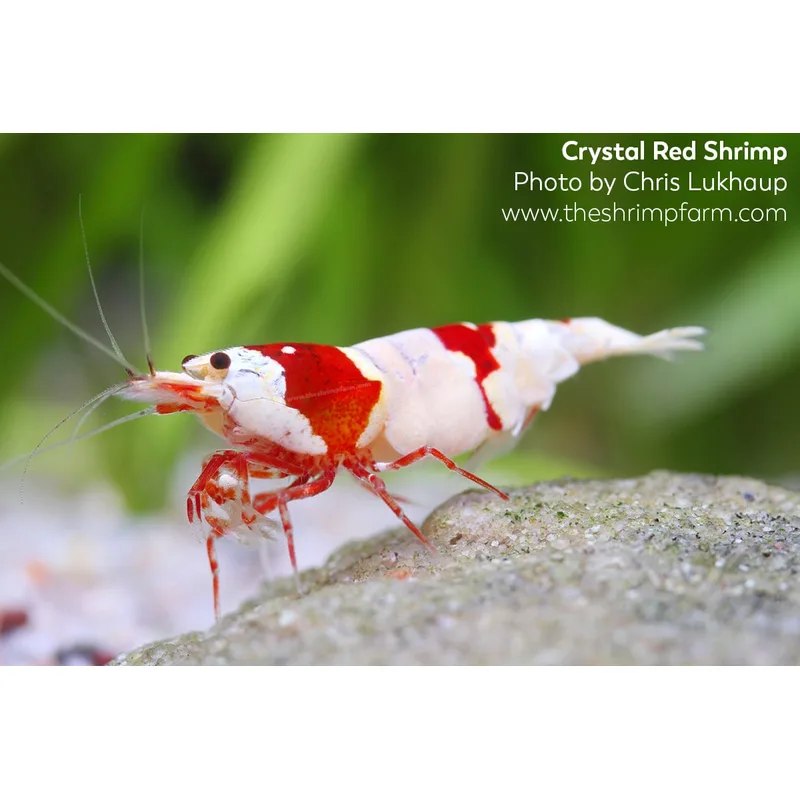
Why Caridina Require a Different Approach
The core difference between Caridina and Neocaridina is carbonate hardness. Neocaridina tolerate and actually prefer moderate KH (2–8 dKH), which acts as a pH buffer in the water column. Caridina require KH at zero or near-zero — specifically 0–1 dKH. In a Caridina tank, pH stability comes not from carbonates in the water but from the substrate itself. Active buffering substrates like ADA Amazonia absorb carbonates from the water, keeping KH low and pH stable in the 5.4–6.2 range that Caridina need.
This means the standard approach of using a buffering substrate is not optional for Caridina — it is the mechanism by which stable chemistry is maintained. Without active substrate, KH climbs, pH rises above the Caridina tolerance window, and shrimp begin failing at molts within weeks.
The full Caridina parameter window per ARTICLE-RULES standards:
| Parameter | Target Range |
|---|---|
| Temperature | 60–74°F |
| pH | 5.4–6.2 |
| GH | 3–6 dGH |
| KH | 0–1 dKH |
| TDS | 100–180 ppm |
| Ammonia | 0 ppm |
| Nitrite | 0 ppm |
| Nitrate | <10 ppm |
Temperature deserves specific attention. Caridina prefer cooler water than most tropical species, with a ceiling around 74°F and an ideal breeding range of 68–72°F. In warm climates during summer, ambient room temperatures can push tank water above 76°F without intervention. A desk fan directed across the water surface provides 3–5°F of evaporative cooling and handles most situations in air-conditioned rooms. Dedicated aquarium chillers exist for serious setups, but most Caridina breeders manage with airflow.
Tank Setup
Tank size: A minimum of 10 gallons is the practical starting point. Caridina are more sensitive to parameter swings than Neocaridina, and water volume provides the buffer that keeps parameters stable between water changes. Smaller tanks — 5 gallons and under — are achievable for experienced keepers but leave almost no margin for error. A 10-gallon dedicated Caridina setup is manageable; a 20-gallon is more stable and more forgiving for beginners.
Cycle the tank completely before adding shrimp. Active substrates like ADA Amazonia leach ammonia as they break down organic compounds in the first weeks — this is normal and accelerates the cycling process. Run the tank through a full ammonia spike and crash (0 ppm ammonia, 0 ppm nitrite, measurable nitrate) before adding shrimp. This typically takes 4–6 weeks. Adding shrimp to an uncycled or partially cycled Caridina tank is the most common cause of losses in new setups.
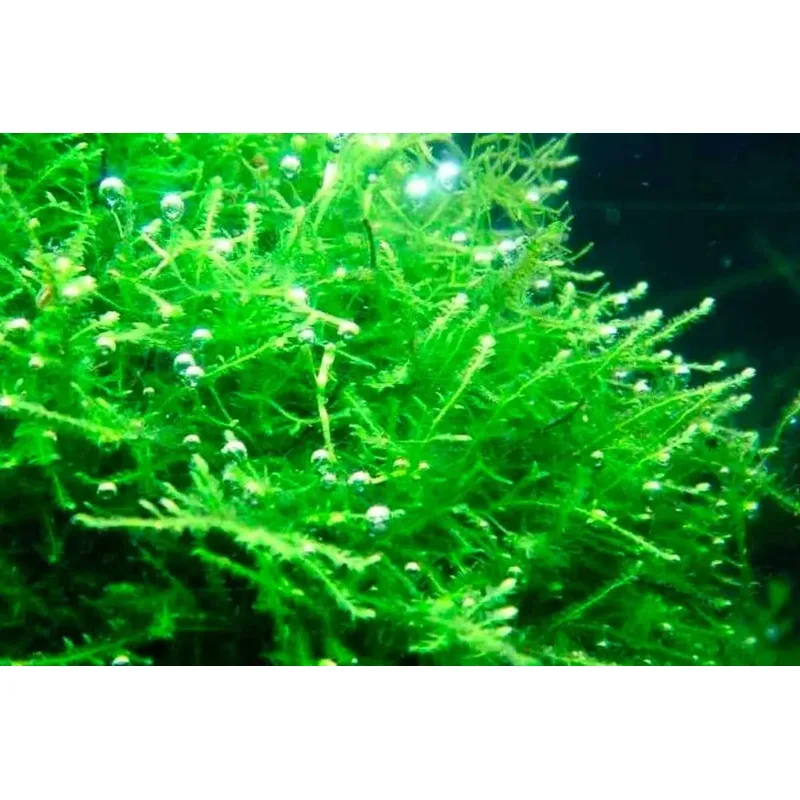
Plants: Java moss, Christmas moss, and subwassertang provide the biofilm and microbe populations that Caridina browse continuously. Taiwan moss creates a denser, finer mat that supports shrimplet survival by giving them protected grazing surface in their first weeks. The tank does not need to be elaborately planted — a dense mat of moss on a flat stone, a cluster of Indian almond leaves on the substrate, and a piece of cholla wood covers the functional needs. Indian almond leaves release tannins that lower pH slightly and contain compounds that inhibit pathogen growth — genuinely useful in a Caridina tank.
Substrate: The Foundation of the System
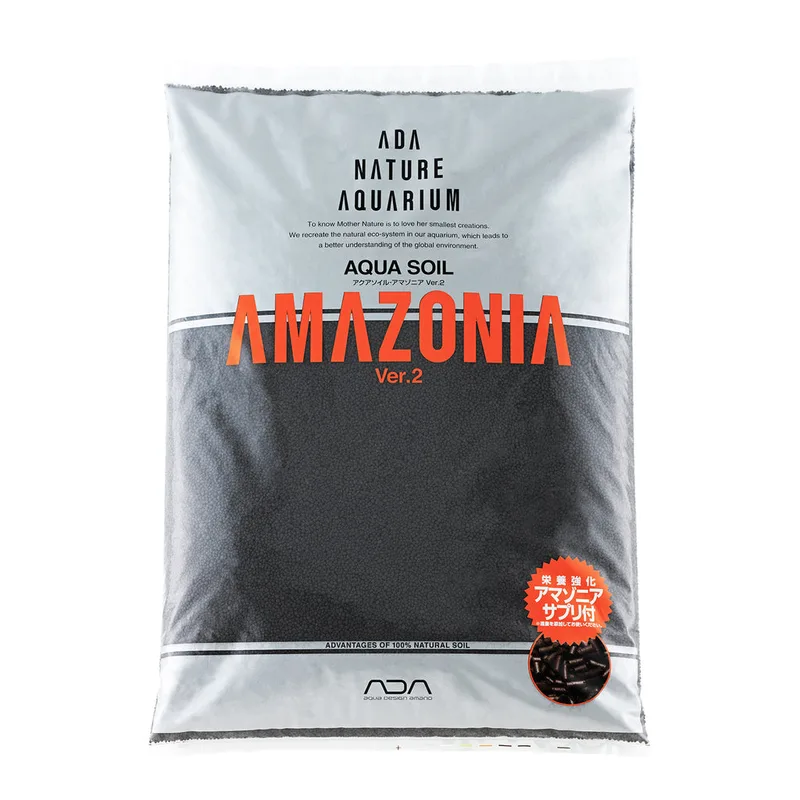
ADA Aqua Soil Amazonia Ver 2 (9L)
Best Substrate- ✓ Actively buffers pH into the Caridina range without chemical additives
- ✓ Rich in organic matter that builds biofilm shrimp graze continuously
- ✓ Dark color provides strong contrast for showing off shrimp coloration
- ✓ 9L covers a standard 10-20 gallon setup with adequate substrate depth
- ✗ Initial ammonia leaching requires 4-6 week fishless cycle before adding shrimp
- ✗ Exhausts buffering capacity over 12-18 months and must eventually be replaced
ADA Aqua Soil Amazonia Ver 2 is the substrate that established the modern approach to Caridina keeping. It actively buffers pH into the 5.5–6.5 range and absorbs carbonates from the water column, keeping KH near zero without chemical intervention. The buffering is not permanent — the substrate exhausts over 12–18 months and eventually stops controlling pH — but within its active lifespan, it provides the most stable acidic soft-water environment available in substrate form.
The 9L bag covers most 10–20 gallon setups with a substrate depth of 2–3 inches, which is necessary for plant root development and to ensure adequate substrate volume for buffering. The Ver 2 formulation includes a concentrated supplement bag that mixes in underneath the main substrate during setup, delivering organic compounds and trace elements to the root zone without releasing them into the water column. This reduces the initial turbidity and ammonia spike compared to older Amazonia formulations.
Alternatives: Fluval Stratum is a gentler option that buffers into the 6.0–7.0 range — suitable for Tiger shrimp and less demanding Caridina, but may not hold pH low enough for Crystal Red breeding setups. For the most reliable results across the full Caridina species range, ADA Amazonia remains the default choice.
Do not use inert substrates (sand, gravel, Eco-Complete) for Caridina tanks. Inert substrates leave pH and KH control entirely to the water source. Any tap or hard RO water will cause KH to climb unchecked into the range that Caridina cannot tolerate. Inert substrates work for Neocaridina; they do not work for Caridina.
Filtration
Caridina filtration follows the same rule as Neocaridina: sponge filtration only, or HOB with a covered intake. Shrimp juveniles hatch at 1.5–2mm — standard HOB and canister filter intakes pull them directly into the impeller. Sponge filtration eliminates this risk entirely.
The Aquarium Co-Op Sponge Filter is the benchmark for shrimp setups. It provides both mechanical and biological filtration, grows the biofilm that Caridina browse constantly, and requires minimal maintenance — squeeze the sponge in old tank water during water changes to preserve the bacterial colony. For a 10-gallon Caridina tank, one medium Co-Op sponge driven by a standard air pump is sufficient. For a 20-gallon, run two mediums.
Keep flow gentle. Caridina originate from still to slow-moving water. Strong circulation stresses them and can interfere with molting. A single sponge filter running at a moderate bubble rate is the right balance between filtration and flow for a dedicated Caridina tank. For a full comparison of shrimp-safe filter options, see the Best Sponge Filters guide.
Water Chemistry: RO Water and Remineralization
This is where most new Caridina keepers stumble: you cannot use tap water directly. Most municipal tap water runs 3–8 dKH or higher, which immediately exceeds the Caridina KH ceiling of 1 dKH. Even if an active substrate can temporarily absorb those carbonates, continuous tap water changes keep reintroducing KH, gradually saturating the substrate’s buffering capacity and collapsing pH stability over weeks to months.
The solution is RO (reverse osmosis) water as a base. RO strips nearly all minerals and carbonates, producing a near-blank slate: TDS close to 0, KH 0, GH 0. This is too soft for shrimp — they need minerals for exoskeleton formation. The fix is a Caridina-specific remineralizer that adds GH without adding KH.
Remineralizing for Caridina
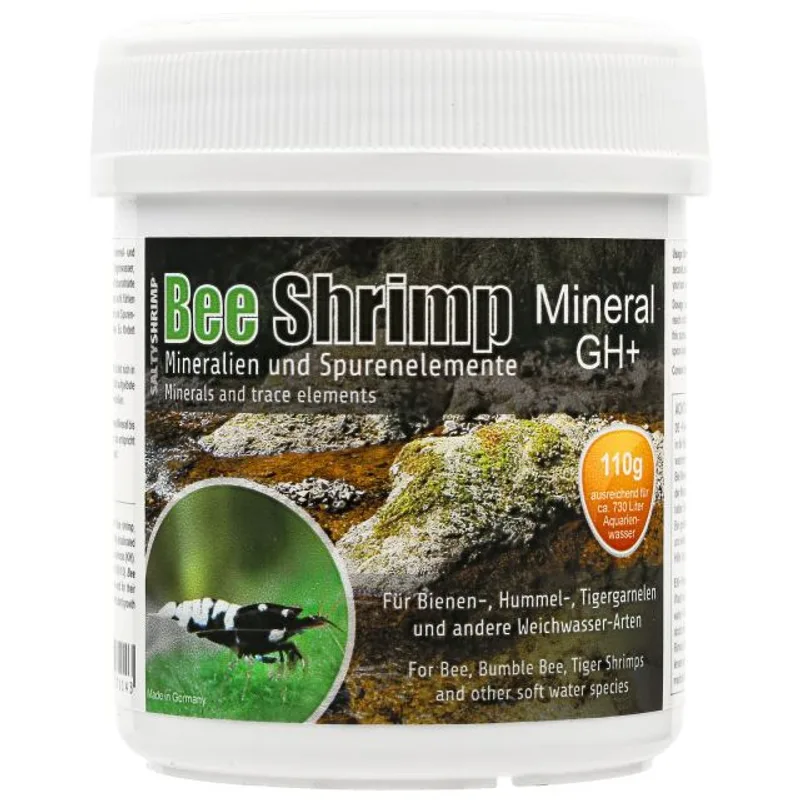
SaltyShrimp Bee Shrimp Mineral GH+
Essential Remineralizer- ✓ Raises GH without adding KH — essential for the KH 0-1 Caridina window
- ✓ Pharmaceutical-grade mineral blend formulated specifically for bee shrimp
- ✓ Produces consistent TDS readings — takes the guesswork out of remineralizing
- ✓ 110g treats hundreds of liters of RO water — economical for regular use
- ✗ Works correctly only with RO or soft source water — not for hard tap water
- ✗ Requires a TDS meter and GH test kit to dose accurately when starting out
SaltyShrimp Bee Shrimp Mineral GH+ is the industry standard for Caridina remineralization. The critical distinction between this and the GH/KH+ version is in the name: Bee Shrimp Mineral GH+ raises GH only. The GH/KH+ formulation adds both GH and KH, which is correct for Neocaridina but actively harmful in a Caridina setup where maintaining near-zero KH is essential. Always confirm you have the GH+ version — the packaging is similar and the difference matters significantly.
Dose into RO water in a separate bucket before water changes. A starting point of approximately 2g per 10 liters brings RO water to around 140–160 ppm TDS with GH of 4–5 dGH. Measure TDS after each addition and note your dose-to-TDS ratio — this becomes your consistent protocol for every water change. Prepared water should temperature-match the tank before adding it. Cold water changes in Caridina tanks trigger stress molts, which can prove fatal depending on the shrimp’s molt stage.
Prepared water should also be tested for GH before use. Seachem Prime is shrimp-safe at the recommended dose for dechlorinating if your RO unit feeds from chlorinated municipal supply. Do not skip this step even with RO water if your pre-filter tap contains chloramine.
Monitoring TDS
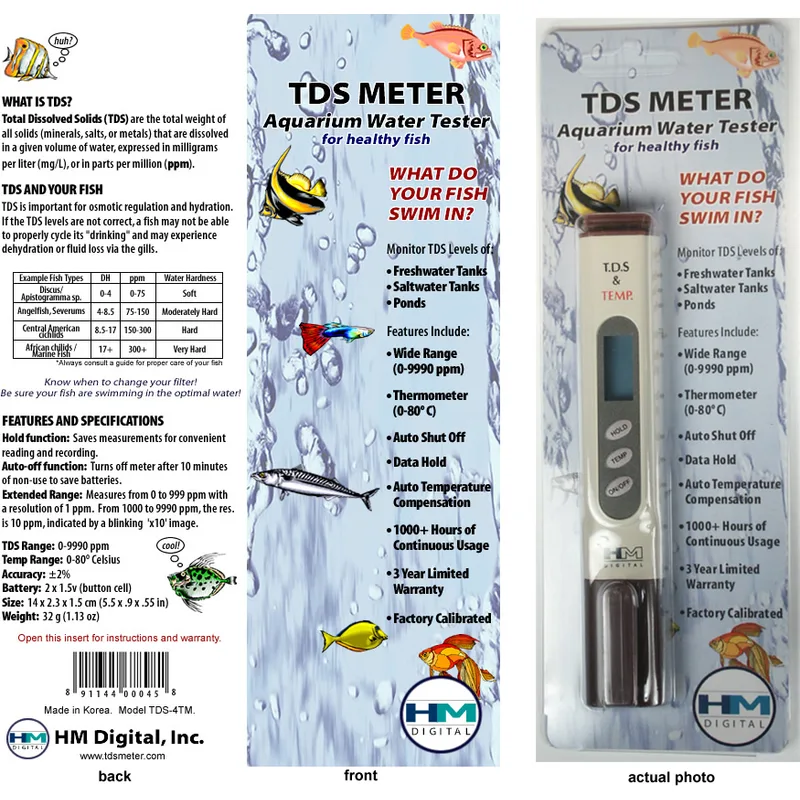
HM Digital TDS-4TMA Aquarium TDS Meter
Best TDS Meter- ✓ Purpose-built for aquarium use with aquarium-specific packaging insert
- ✓ Measures TDS and temperature simultaneously — two critical Caridina checks in one
- ✓ Pocket size fits a breeding rack toolbox without taking up space
- ✓ ±2% accuracy is precise enough for the 100-180 ppm Caridina window
- ✗ Requires calibration solution for long-term accuracy verification
- ✗ Probe prongs corrode over time with heavy use — replace when readings drift
A TDS meter is a non-negotiable tool for Caridina keeping. TDS measures total mineral content in parts per million — a fast, calibration-free proxy for overall mineral concentration. For Caridina, the target window is 100–180 ppm. Above 200 ppm, you are adding more minerals than needed. Below 80 ppm, the water is too soft to support consistent molting.
The HM Digital TDS-4TMA is the go-to meter for aquarium use. Its aquarium-specific design includes a temperature readout alongside TDS — two critical Caridina parameters measured in one dip. Check TDS in the water you are preparing for a change and check the tank water weekly to confirm the substrate is maintaining parameter stability. As the substrate ages past its first year, TDS can drift upward between changes as buffering efficiency declines — the TDS meter is the first signal that substrate replacement is approaching.
Testing GH and KH

API GH & KH Test Kit
Best Test Kit- ✓ Tests both GH and KH — the two most critical Caridina parameters after pH
- ✓ Drop-count method gives exact dGH/dKH readings rather than approximate ranges
- ✓ Inexpensive enough to test before every water change when dialing in a new setup
- ✓ Results in the dGH/dKH units used in every Caridina care reference
- ✗ Does not test pH, TDS, ammonia, or nitrite — need separate kits for those
- ✗ Color shift can be subtle under artificial aquarium lighting
A TDS meter tells you total mineral content but not mineral composition. GH and KH must be verified with a dedicated liquid test kit, particularly when establishing a new remineralizer dosing protocol. The API GH & KH test kit uses drop-count titration — add drops one at a time to a water sample until the color shifts, with each drop equal to 1 dGH or 1 dKH. This gives exact readings rather than the approximate ranges that test strips produce.
When first setting up a Caridina tank, run GH and KH tests weekly for the first two months. Verify that your substrate is holding KH at 0–1 dKH and that your remineralizer dose is delivering 3–6 dGH. Once your protocol is confirmed and stable, monthly testing is sufficient to catch any parameter drift as the substrate ages.
Feeding Caridina
Caridina in a mature, planted tank with established biofilm can survive on biofilm grazing alone for extended periods. But survival without supplemental feeding is not the same as thriving, breeding, and expressing full color. Targeted feeding makes a measurable difference in production.
Feeding rule: small amounts every other day. Feed only what shrimp consume in 90 minutes. Remove leftovers with a turkey baster before decomposition begins. Overfeeding causes more Caridina losses through water quality degradation than underfeeding ever does — and in the low-KH, low-buffering Caridina tank environment, water quality spikes happen faster than in a Neocaridina setup.
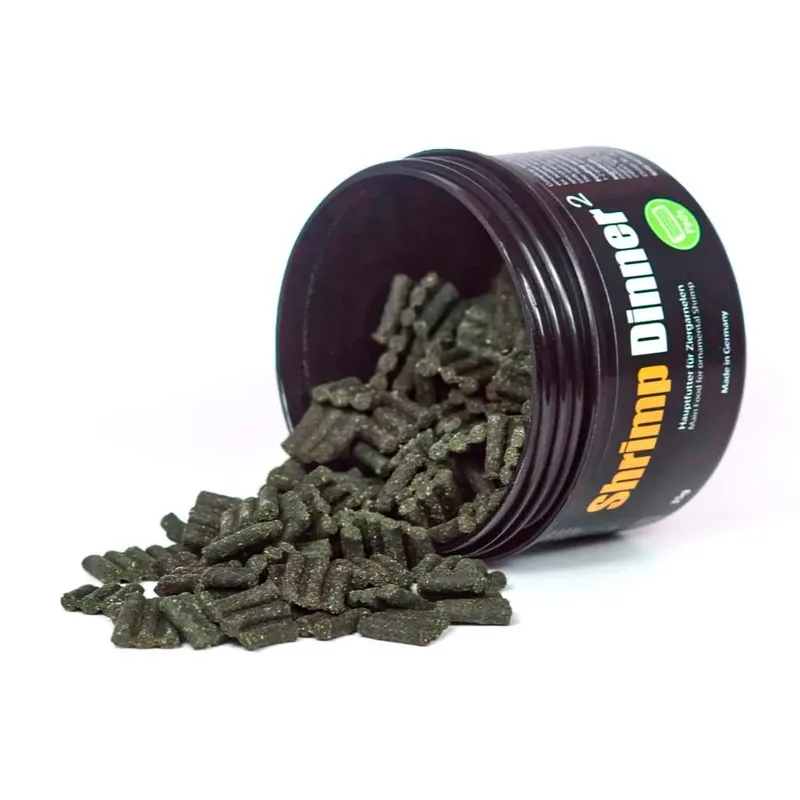
GlasGarten Shrimp Dinner Pads 2 (35g)
Best Shrimp Food- ✓ Pressed from 100% natural plant-based ingredients — no artificial binders or dyes
- ✓ Wafer format sinks and stays together for hours without clouding the water
- ✓ Carotenoid-rich formula supports color expression in Crystal Red and Taiwan Bee
- ✓ Accepted readily by Caridina even in low-bioload setups
- ✗ 35g runs out faster than expected in tanks with 30+ adult shrimp
- ✗ Pricier per gram than generic pellets, but quality difference is visible
GlasGarten Shrimp Dinner Pads 2 is the most complete all-in-one staple food for Caridina. The pressed wafer format sinks immediately and holds together for hours — shrimp graze continuously without water clouding from disintegrating food. The ingredient list is entirely plant-based, including spirulina, multiple leafy greens, and natural carotenoid sources that support color expression in Crystal Red and Taiwan Bee patterns. No artificial binders, colorants, or preservatives.
Rotate Shrimp Dinner Pads with:
- Blanched organic vegetables (zucchini, spinach) once or twice a week
- GlasGarten Bacter AE — a microbial supplement that colonizes biofilm and significantly improves survival rates for juvenile shrimp; particularly valuable in newer setups without fully developed biofilm
- Dried leaves (Indian almond, mulberry, catappa) left in the tank as a continuous grazing source
- Bee pollen granules for occasional protein variety
Avoid foods that cloud the water. Soft pastes and uncompressed powders disintegrate rapidly in a low-KH, low-buffering Caridina tank. Stick to dense, pressed, or dried formats.
Popular Caridina Varieties
Crystal Red and Crystal Black shrimp are the accessible entry point to Caridina keeping. They are more tolerant of slight parameter variation than Taiwan Bee varieties and are available from numerous domestic breeders. The grading system runs C through SSS based on pattern definition, white coverage, and color density. Starting with A- or S-grade Crystal Red from a reputable domestic breeder is more reliable than imported shrimp, which often arrive stressed and fail to acclimate despite correct parameters.
Taiwan Bee shrimp (Blue Bolt, Shadow Panda, King Kong, Pinto) are selectively bred from Caridina cantonensis and require the tightest parameter windows. These varieties are less forgiving of any deviation from ideal conditions and command premium prices that make losses more costly. Set up a proven Crystal Red tank first. Once that system runs stably for three to four months with consistently berried females and good shrimplet survival, Taiwan Bee shrimp are a reasonable next step.
Tiger shrimp (Caridina mariae) are somewhat more parameter-flexible than Crystal or Taiwan Bee varieties. Common Orange Eye variants tolerate a slightly wider pH range (5.5–7.0) and GH up to 8 dGH. Tibee shrimp — hybrids between Tiger and Caridina cantonensis — combine Tiger hardiness with Bee-pattern aesthetics and are kept under standard Caridina parameters.
CRS and CBS Grading Scale
| Grade | Pattern Description |
|---|---|
| C Grade | Mostly colored, minimal white coverage |
| B Grade | Equal color and white with some pattern separation |
| A Grade | Clean pattern separation, good white coverage |
| S Grade | Significant white coverage, defined pattern |
| SS Grade | Heavy white coverage, clean lines throughout |
| SSS Grade | Maximum white, perfect pattern definition — rare |
Molting and Breeding
Understanding normal molting behavior is critical for Caridina because failed molts are the most common visible symptom of parameter problems.
Normal molts happen quickly — a shrimp shedding its exoskeleton should be free within a few minutes. The empty shell is then eaten by other shrimp for its mineral content. Seeing empty molts regularly is a sign the colony is in good condition.
Failed molts — where a shrimp becomes stuck in its old exoskeleton — indicate either insufficient GH (calcium and magnesium deficit affecting exoskeleton formation) or a rapid parameter change that triggered a premature molt before the shrimp had adequate reserves. If you see dead shrimp with exoskeleton still attached, test GH immediately. Raising GH from 3 to 5 dGH resolves many ongoing failed molt issues. Keep water stable during recovery — avoid large water changes or additives until the colony stabilizes.
White ring of death is a specific failed molt pattern where a ring of old exoskeleton remains around the neck/head junction after the shrimp escapes the rest of its shell. This typically indicates a GH deficiency combined with a rapid parameter shift. It is more common in new setups where TDS is allowed to fluctuate significantly between water changes.
Breeding: Caridina females carry eggs under their tails and fan them for 28–40 days until hatching. They are significantly more likely to abort a clutch in response to parameter swings than Neocaridina. A single poorly matched water change — wrong TDS, inadvertently elevated KH, or temperature mismatch — can cause egg dropping. Prepare water meticulously, temperature-match everything, and keep changes to 10–15% of tank volume weekly rather than large infrequent changes.
Caridina breed best at 68–72°F. At 73–74°F, breeding slows. Below 65°F, reproduction nearly stops. Many consumer heaters have a minimum setpoint of 68°F — acceptable for most Caridina work, but verify the heater’s specs if targeting the lower end of the breeding range. Batch sizes are smaller than Neocaridina (15–25 eggs per female) with longer intervals between clutches.
Common Problems and Troubleshooting
Shrimp not breeding after 8+ weeks: Confirm temperature is in the 68–72°F range. Confirm GH is 4–6 dGH. Check KH — if the substrate is aging out and KH has risen above 1 dKH, pH stability is degrading even if the meter still reads acceptable values. Test pH at the same time every day (CO2 and plant photosynthesis affect pH throughout the day in planted tanks).
pH unstable or rising despite active substrate: The substrate has likely exhausted its buffering capacity, or the source water KH is too high for the substrate to manage. Confirm RO water TDS is near zero before remineralizing. If KH persistently reads above 1 dKH in the tank despite careful water changes, the substrate needs replacement.
Sudden losses with no obvious cause: Run a TDS meter reading and an API GH/KH test immediately. Sudden losses in Caridina tanks are almost always a parameter event — elevated KH from an aging substrate, an accidentally high TDS water change, or a temperature spike. Confirm all parameters (pH, GH, KH, TDS, temperature) before adding any treatments or interventions.
Copper contamination: Copper is acutely toxic to Caridina at trace levels well below fish-safe thresholds. Avoid all liquid fertilizers not explicitly labeled copper-free for invertebrate tanks. Seachem Flourish Comprehensive contains trace copper — use Seachem Flourish Trace or a copper-free alternative in Caridina tanks. Most medications are unsafe for Caridina; run a separate hospital tank for any fish disease treatment rather than medicating a shrimp tank.
FAQ
Can I use tap water with a good dechlorinator for Caridina? In most cases, no. The issue is not chlorine — dechlorinators like Seachem Prime handle that effectively. The issue is KH. Most tap water runs 2–8 dKH, which immediately violates the Caridina requirement of 0–1 dKH. If your tap water naturally tests at 0–1 dKH with a pH around 6.0–6.5, it may work — test with the API GH & KH kit before proceeding. Most keepers cannot use their tap water for Caridina.
How long does ADA Amazonia last before it needs replacing? Typically 12–18 months of active buffering. Signs that the substrate is exhausting: pH creeps above 6.5 despite normal water changes, KH starts reading 2+ dKH. When substrate loses buffering capacity, shrimp losses often follow quickly because nothing is holding pH stable between changes. Some keepers extend substrate life by adding a bag of peat in the filter sump, but substrate replacement is the definitive solution for long-term colony health.
Can Caridina and Neocaridina share a tank? Not recommended. Their parameter requirements are incompatible. Neocaridina prefer pH 6.5–8.0 and KH 2–8 dKH. Caridina need pH 5.4–6.2 and KH 0–1 dKH. Any compromise setting stresses one group. Keep each type in its own dedicated setup.
Do Crystal Red and Taiwan Bee shrimp crossbreed? Yes. Crystal Red, Crystal Black, and Taiwan Bee shrimp are all variants of Caridina cantonensis and interbreed freely. Mixing them produces offspring that lack defined patterns of either parent. Do not mix Crystal Red with Taiwan Bee if pattern quality matters to you. Tiger shrimp (Caridina mariae) can hybridize with cantonensis varieties — the resulting Tibee shrimp are intentionally bred by some hobbyists for hybrid vigor and pattern variety.
How often should water changes be done in a Caridina tank? Weekly, at 10–15% of tank volume. Smaller frequent changes are better than large infrequent ones — they maintain parameter stability without the shock of suddenly replacing a significant portion of the water column. Prepare all water in advance, temperature-match exactly, and confirm TDS before adding to the tank. Never skip more than two weeks between changes.
What is the best tank size for beginners starting with Crystal Red shrimp? 10 gallons is the practical minimum for stable Caridina chemistry. A 15–20 gallon setup provides more buffer against parameter swings and gives beginners more reaction time if something goes wrong. Avoid starting with anything under 5 gallons — parameter swings in small volumes outpace most beginners’ ability to respond.
Why are my Caridina shrimp hiding and refusing to come out? New shrimp spend their first 1–2 weeks hiding while acclimating. If shrimp continue hiding after two weeks with no feeding activity, check for parameter problems. Poor water chemistry makes Caridina lethargic and cover-seeking. Also check that the tank is not over-lit — Caridina are more active under lower-intensity or broken lighting. Floating plants significantly increase activity levels and shrimp confidence in most setups.
Conclusion
Caridina shrimp require a complete system, not just good intentions. The three non-negotiable components are an active buffering substrate (ADA Amazonia), RO water remineralized with a Caridina-specific GH+ product, and consistent TDS and parameter monitoring. Get those three elements working reliably before adding shrimp, and most of the common failure modes disappear.
Start with Crystal Red shrimp before moving to Taiwan Bee varieties. Crystal Red confirm that your system is actually working before you invest in more expensive animals. A tank that breeds Crystal Red consistently for three to four months is ready for Blue Bolt or Shadow Panda shrimp.
The ongoing maintenance is manageable: weekly 10–15% water changes with pre-prepared RO water, every-other-day feedings with GlasGarten Shrimp Dinner Pads, and monthly parameter verification with your GH/KH test kit. The upfront chemistry work is what earns you a tank full of shrimp in patterns that look impossible — and once the system is dialed in, Caridina are rewarding to watch and reliably productive.
For the full Neocaridina Shrimp Care Guide, the Best Shrimp Substrate guide, and the Cherry Shrimp Breeding Guide, see those dedicated articles for deeper coverage of each topic.
Our Top Pick