Ricefish are easy to feed and easy to feed wrong. The mistake is almost never the brand; it is particle size, sinking food they will not chase, and too much of it. Their mouths are small and angled upward, they eat from the top inch of the water, and they will not clean up what reaches the bottom.
This guide covers what ricefish eat, a staple-plus-treat rotation, a feeding schedule for adults, fry, and outdoor tubs, and the foods to skip. For tank setup and general care see the Medaka Ricefish Care Guide; for breeding conditioning and fry rearing step by step see the Ricefish Breeding Guide.
What Ricefish Actually Eat
Wild Japanese ricefish (Oryzias latipes) are omnivorous surface feeders in rice paddies and slow streams. They pick off mosquito larvae, small crustaceans, insects that fall in, and algae film. That shapes a good aquarium diet:
- Floating or semi-floating foods in small granules or fine flake
- Insect and crustacean protein, the closest match to their natural diet
- Some plant matter, which good staples already include
- Live food as a breeding trigger, since hobbyists report heavier egg production with live food in the rotation
Staple Foods
A quality micro granule or crushed flake should make up most of the diet. Pick the one that stays near the surface for a minute or two.
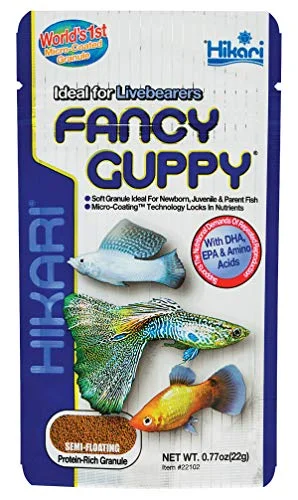
Hikari Fancy Guppy Semi-Floating Food, 0.77 oz
Best Daily Staple- ✓ Granule size suits the small, upturned mouths of ricefish
- ✓ Semi-floating, so it stays in the top inch where they feed
- ✓ Inexpensive and widely available
- ✗ Small container runs out quickly across several tanks
- ✗ Granules can cloud water if overfed
Hikari Fancy Guppy is the simplest default. A second staple with a different protein base, such as an insect-based granule, gives a more balanced rotation than one food alone.
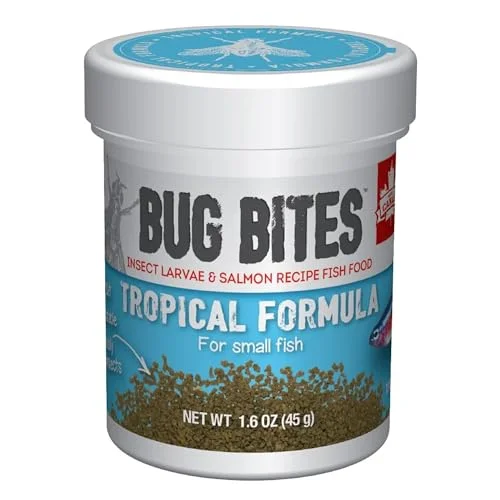
Fluval Bug Bites Tropical Granules, 1.6 oz
Best Insect-Based Staple- ✓ Insect larvae as the first ingredient suits an insect-eating fish
- ✓ Small granule size works for adults
- ✓ Useful as a second staple for variety
- ✗ Sinks more than it floats once wet
- ✗ Some fish need a day to accept it
Crush anything larger than about 1 mm between your fingers. Ricefish adults are only 1.5 inches long and will spit out chunks.
How to Choose a Staple
Three label details matter more than the brand name.
- Particle size: look for granules or flake under about 1 mm, or something you can crush down to that. If an adult has to bite a piece in half, it will usually skip it, and the leftovers end up fouling the bottom.
- Protein sources: fish meal, krill, insect larvae, or shrimp near the top of the ingredient list is a better match for an insect-and-crustacean eater than a wheat-first formula. Filler grains lower in the list are normal; wheat or soy as the first ingredient is a sign to rotate in something else.
- Buoyancy: semi-floating or slow-sinking food is ideal. Fully sinking pellets suit corydoras, not ricefish. Food that floats for one to two minutes gives every fish in the group a turn.
Medaka that are bred for color, such as Yokihi, Miyuki, and Platinum strains, do not need a special diet. Color-enhancing ingredients like spirulina help a little, but good conditioning and clean water do more. For strain differences see the Ricefish Strains Guide.
Live Food at Home
Live food is the cheapest way to improve spawning and fry survival, and ricefish handle it well because it moves at the surface.
- Baby brine shrimp: hatch daily in a small container with aeration. A single jar can feed dozens of fish and is the most reliable fry grow-out food.
- Daphnia: easy to keep in a bucket with green water; adults hunt them eagerly.
- Microworms: a culture in a covered tub will produce worms for weeks. Rinse them off the culture medium before feeding so the medium does not cloud the water.
- Vinegar eels: the lowest-maintenance culture. They tolerate neglect, stay alive in the tank for hours, and do not foul the water when fry miss them.
If you only add one culture, make it baby brine shrimp for breeders and vinegar eels for anyone raising a handful of fry.
What Not to Feed
- Large pellets and sinking wafers: wasted food and extra waste
- Whole bloodworms for adults: the pieces are large for the fish
- Bread, rice, or kitchen scraps: they foul the water quickly, whatever the name of the fish suggests
- Medicated food without a reason: unnecessary, and some contain copper that is harmful to shrimp
- Anything greasy or spoiled: fish do not need it and tanks will not forgive it
Treats and Conditioning Foods
Two or three times a week, swap one feeding for a protein treat. Baby brine shrimp, daphnia, and finely crumbled frozen foods are the favorites. Freeze-dried brine shrimp is the low-effort option, but soak it first so it does not swell after being swallowed. For hatching and culturing options see the Best Live Food Cultures guide, and for frozen and freeze-dried comparisons see the Best Frozen Fish Food guide.
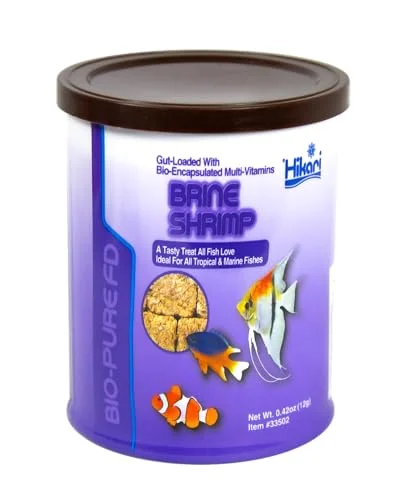
Hikari Bio-Pure Freeze-Dried Brine Shrimp, 0.42 oz
Best Conditioning Treat- ✓ Convenient stand-in when live brine shrimp are not on hand
- ✓ Crumbles into surface-sized pieces
- ✓ Long shelf life
- ✗ Floats and swells, so soak it first
- ✗ Small tub for the price
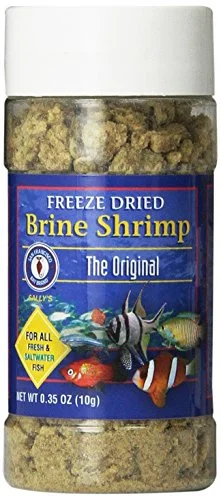
San Francisco Bay Brand Freeze-Dried Brine Shrimp, 10 g
Best Bulk Treat- ✓ Larger quantity than most small tubs
- ✓ Easy to crush to size
- ✓ Adds protein variety to a pellet diet
- ✗ Lower nutrition than live brine shrimp
- ✗ Floats until soaked
Skip whole bloodworms for adults unless crumbled; they are large for a 1.5-inch fish and are better as an occasional treat in a mixed tank.
Feeding Fry
Ricefish fry are larger than guppy or tetra fry but still need very small food within a day or two of the yolk sac being absorbed. Feed small amounts several times a day, and remove leftovers.
- Days 1–7: fine powder foods or live vinegar eels
- Weeks 1–4: microworms, crushed fry granules, and newly hatched baby brine shrimp when available
- Weeks 4–8: crushed adult staple and frozen baby brine shrimp
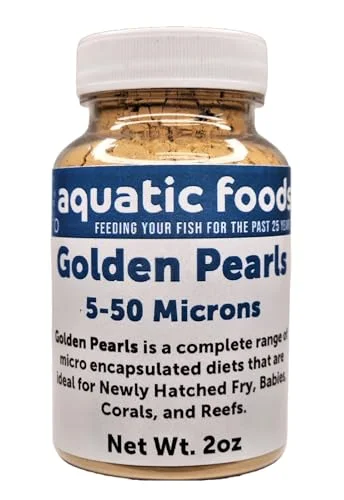
Golden Pearls 5-50 Microns, 2 oz
Best Powder for Newly Hatched Fry- ✓ Particle size works for the smallest fry
- ✓ Needs no culture or hatching
- ✓ Can be mixed with water and dripped in
- ✗ Pricier than flake or granule
- ✗ Must be dosed lightly to avoid fouling water
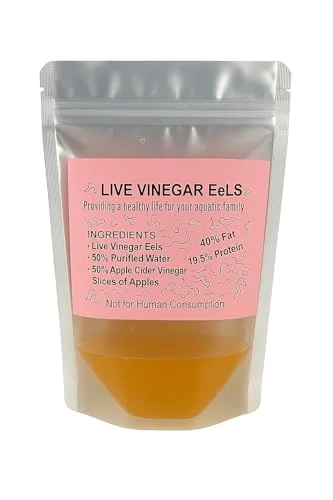
Live Vinegar Eels Culture, 10 oz
Best Live First Food- ✓ Stay alive in water and wiggle near the surface where fry feed
- ✓ Low-maintenance culture
- ✓ Do not foul the tank if uneaten
- ✗ Small and low in calories, so fry need larger foods by week two
- ✗ Live culture arrives by mail and needs a restart
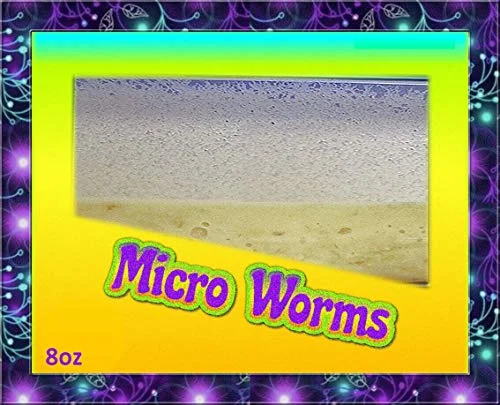
Insectsales.com Micro Worm Culture, 8 oz
Best Live Grow-Out Food- ✓ Slightly larger than vinegar eels, good for growing fry
- ✓ Cultures can be renewed from the starter
- ✓ Fry take them eagerly
- ✗ Culture can smell if overfed
- ✗ Worms sink after a while, so remove leftovers
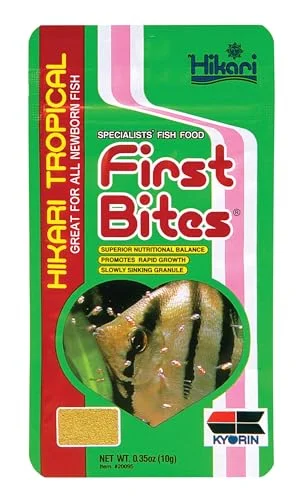
Hikari First Bites, 10 g
Best Fry Starter Food- ✓ Fine enough for fry once crushed
- ✓ Inexpensive for the quantity
- ✓ Complete dry food without culture upkeep
- ✗ Sinks, so fry need frequent small feedings
- ✗ Too coarse for first-day fry unless crushed to powder
See the Best Fry Food guide for more comparisons. Fry in a bare container with a sponge filter are safest, since no intake can pull them in; the Best Sponge Filters guide covers the options.
Feeding Schedule
| Group | Frequency | Notes |
|---|---|---|
| Adults, indoor | Once or twice a day | Only what they finish in 1–2 minutes; one protein treat feeding, 2–3 times a week |
| Breeding group | Twice a day | Add live or frozen brine shrimp more often for several weeks before spawning |
| Fry, days 1–14 | 3–4 small feedings | Remove leftovers and top off with a water change |
| Fry, weeks 3–8 | 2–3 feedings | Move to crushed staples as they grow |
| Adults, outdoor tub (spring to fall) | Once a day or less | Algae, insects, and mosquito larvae supply a share of the diet |
Outdoors, in USDA Zones 7-9, ricefish feeding season runs roughly March through October. Medaka are hardy, but metabolism slows in cool water; when temperatures drop below about 50°F, feed little or nothing, and stop feeding entirely once the fish are sluggish. In summer heat above 90°F, food spoils faster and oxygen is lower, so feed less and pull leftovers. Predator protection matters too; use mesh covers over any tub.
Shrimp-Safe Feeding
Ricefish are often kept with dwarf shrimp, and several tips matter there. Common fish foods do not contain copper, but check the label of any medicated food before using it in a shrimp tank, and remember that medications and some plant fertilizers can carry copper that is toxic to shrimp. Adult ricefish can eat newborn shrimp, so a heavily planted tank with moss helps shrimplets survive. Every food in this guide is listed as shrimp safe by its maker.
Common Feeding Mistakes
- Overfeeding: the number one problem. Uneaten food rots, spikes ammonia, and kills fry first. See the Tank Cycling Guide for what ammonia spikes do.
- Sinking food only: ricefish ignore it and it fouls the tank.
- Oversized pieces: crush it.
- Feeding through cold weather outdoors: food sits uneaten and spoils.
- Never offering variety: a pellet-only diet works, but breeding output improves with live or frozen food in the rotation.
Frequently Asked Questions
What is the best food for ricefish?
A small semi-floating granule or crushed flake as the daily staple, plus a protein treat such as baby brine shrimp, daphnia, or freeze-dried brine shrimp two or three times a week.
How often should I feed ricefish?
Once or twice a day for adults, in amounts they finish within 1–2 minutes. Outdoor tubs often need only one feeding a day or less in the warm season.
Can ricefish eat guppy food?
Yes. Small guppy granules and flakes are the right size and float, which suits their mouths. Many keepers use a guppy food as the staple.
What do ricefish fry eat?
Powdered fry food or live vinegar eels for the first week, then microworms, crushed granules, and baby brine shrimp.
Can ricefish go without food while I’m away?
Healthy adults usually manage several days, and a planted tank with algae offers grazing. For longer trips use an automatic feeder; see the Best Auto Feeders guide.
Do ricefish eat mosquito larvae?
Yes, they are a natural food, which is why ricefish are used in outdoor tubs. See the Outdoor Ricefish Tub Setup guide.
Do ricefish need to eat in winter?
Outdoors, feeding should drop sharply as water cools and stop when the fish are inactive. Indoor fish at normal room temperature feed as usual.
Conclusion
For most keepers the winner is simple: Hikari Fancy Guppy as the daily staple, rotated with an insect-based granule, with live or freeze-dried brine shrimp a few times a week. That combination fits the mouth size, stays where the fish eat, and supports breeding condition without much work.
For breeders, the runner-up purchase is a fry setup: a micro powder or vinegar eel culture for week one, then microworms and crushed First Bites. Feed lightly, remove leftovers, and the rest takes care of itself.