Dry flakes and pellets keep fish alive. Live foods are what actually get guppies, shrimp, and ricefish into breeding condition and get fry to grow out fast. On a multi-tank breeding rack, live foods aren’t a luxury — they’re the difference between a colony that reproduces reliably and one that limps along on flakes.
This roundup covers the live food cultures worth keeping on hand: brine shrimp eggs you hatch yourself, self-sustaining daphnia, and the two easiest cultures to run in the background — vinegar eels and microworms. We’ve also included the harvesting gear and backup food that round out a working setup.
Here are the best live food options in 2026, plus the pump and harvesting tools that make hatching and culturing them practical.
| Ocean Nutrition Sep-Art Artemia Cysts (Brine Shrimp Eggs) Best Overall | San Francisco Bay Brand Brine Shrimp Hatchery Kit Best for Beginners | Aquatic Arts Live Daphnia Magna, 100-Count Best for Fry Growth | Live Vinegar Eels Culture (Turbatrix aceti), 10 oz Best for Tiny Fry | Insectsales.com Micro Worm Culture, 8 oz Best Value | Brine Shrimp Direct Sieve Best Harvesting Tool | San Francisco Bay Brand Freeze Dried Brine Shrimp, 10g Best Backup Food | |
|---|---|---|---|---|---|---|---|
| Rating | 9.2/10 | 8.6/10 | 9/10 | 8.6/10 | 8.7/10 | 8.2/10 | 7.8/10 |
| Price | $38.87as of Sep 27, 2026 | $27.83as of Sep 27, 2026 | $21.99as of Sep 27, 2026 | $19.99as of Sep 27, 2026 | $11.99as of Sep 27, 2026 | $7.50as of Sep 27, 2026 | $7.59as of Sep 27, 2026 |
| Brand | Ocean Nutrition | San Francisco Bay Brand | Aquatic Arts | — | Insectsales.com | Brine Shrimp Direct | San Francisco Bay Brand |
| Form | Decapsulated artemia cysts (hatch yourself) | — | — | — | — | — | Freeze-dried whole brine shrimp |
| Package Size | 0.8 oz (25g) box | — | — | 10 oz | 8 oz | — | 10g (0.35 oz) |
| Hatch Time | 24-36 hours at 80-82°F | — | — | — | — | — | — |
| Includes | — | Hatchery cone, airline tubing, 3 hatch-mix packets | — | — | — | — | — |
| Air Pump | — | Not included | — | — | — | — | — |
| Setup | — | No-tools cone stand | — | — | — | — | — |
| Species | — | — | Daphnia magna | Turbatrix aceti | Panagrellus redivivus | — | — |
| Count | — | — | 100 live daphnia | — | — | — | — |
| Shipping | — | — | Live, temperature-controlled | — | — | — | — |
| Marketed As | — | — | — | First food for fish fry | — | — | — |
| Maintenance | — | — | — | Minimal — active for months once established | — | — | — |
| Culture Medium | — | — | — | — | Oats or potato flakes plus yeast | — | — |
| Mesh | — | — | — | — | — | Fine mesh sized for newly hatched brine shrimp nauplii | — |
| Material | — | — | — | — | — | Durable plastic frame | — |
| Use | — | — | — | — | — | Rinse and collect hatched shrimp before feeding | — |
| Shelf Life | — | — | — | — | — | — | Long — no refrigeration needed |
| Check Price → | Check Price → | Check Price → | Check Price → | Check Price → | Check Price → | Check Price → |
Prices change daily — tap Check Price for the current Amazon price. Numbers shown were verified on the "as of" date.
Quick Picks
- Best Overall: Ocean Nutrition Sep-Art Artemia Cysts — decapsulated brine shrimp eggs with no shells left to strain out
- Best for Beginners: San Francisco Bay Brand Hatchery Kit — a complete no-guesswork setup, just add a pump
- Best for Fry Growth: Aquatic Arts Live Daphnia Magna — a self-sustaining culture with excellent nutrition
- Best for Tiny Fry: Live Vinegar Eels Culture — surface-feeding food for fry too small for anything else
- Best Value: Insectsales.com Micro Worm Culture — affordable, fast-reproducing starter culture
Detailed Reviews
1. Ocean Nutrition Sep-Art Artemia Cysts (Brine Shrimp Eggs)
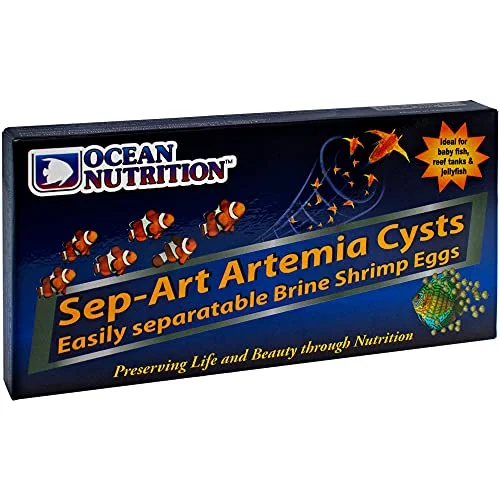
Ocean Nutrition Sep-Art Artemia Cysts (Brine Shrimp Eggs)
Best Overall- ✓ Decapsulated cysts mean no leftover shells to strain out after hatching
- ✓ Larger 25g box lasts through many hatches on a breeding rack
- ✓ High-protein hatchlings trigger spawning behavior in guppies and shrimp
- ✓ Cysts store for months in a cool, dry spot before hatching
- ✗ Higher upfront cost than a small trial-size vial
- ✗ Requires your own hatchery setup, marine salt, and airline (not included)
Brine shrimp eggs (cysts) are the foundation of live-food feeding for a reason: newly hatched brine shrimp (often called “baby brine” or nauplii) are small enough for most fry, packed with protein and fatty acids, and reliable to hatch on a schedule. Ocean Nutrition’s Sep-Art line is decapsulated, meaning the outer shell has been removed before packaging — you hatch and feed nauplii without straining out a layer of empty shells afterward, and the cysts store for months in a cool, dry spot before you need them.
The 25-gram box is sized for a working breeding rack rather than a one-off trial. Once you’re hatching daily, that larger volume means fewer reorders compared to a small trial vial, though it’s a bigger upfront purchase if you’re just testing whether hatching your own brine shrimp fits your routine.
Feeding freshly hatched brine shrimp to conditioning adults is one of the most reliable ways to trigger a spawning response in guppies, endlers, and shrimp. The hunting behavior alone — chasing live, swimming food — does something flakes can’t replicate.
You’ll need your own hatchery setup (a cone or bottle, marine salt, and an air source) to actually hatch these — see the hatchery kit below if you don’t already have one.
Best for: Any breeding rack that wants a reliable, shell-free source of newly hatched live food.
2. San Francisco Bay Brand Brine Shrimp Hatchery Kit
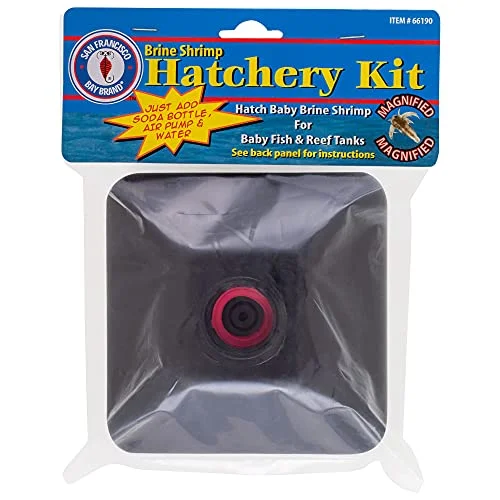
San Francisco Bay Brand Brine Shrimp Hatchery Kit
Best for Beginners- ✓ Everything you need except a pump and light in one box
- ✓ Reusable cone lasts for dozens of hatches
- ✓ Removes the guesswork for a first-time hatcher
- ✗ Air pump sold separately — budget for one before your first batch
- ✗ Cone can clog with unhatched shells without steady, continuous airflow
If you’ve never hatched brine shrimp before, this kit removes the guesswork. It bundles a hatchery cone, airline tubing, and three packets of pre-measured hatch mix (salt plus eggs), so you’re not sourcing marine salt and a cone separately for your first batch.
The cone design relies on continuous airflow from the narrow tip to keep eggs suspended and prevent unhatched shells from settling and clogging the bottom. That means you need a pump running the whole 24-36 hour hatch cycle — the kit doesn’t include one, which is an easy detail to miss when ordering.
Once you’ve got a pump paired with it (see the Hygger pump in the Beyond Live Foods section below), the cone is reusable indefinitely — you’re only replacing hatch-mix packets and, eventually, sourcing your own bulk brine shrimp eggs once you know your routine.
Best for: First-time hatchers who want a complete, no-improvising starting point.
3. Aquatic Arts Live Daphnia Magna, 100-Count
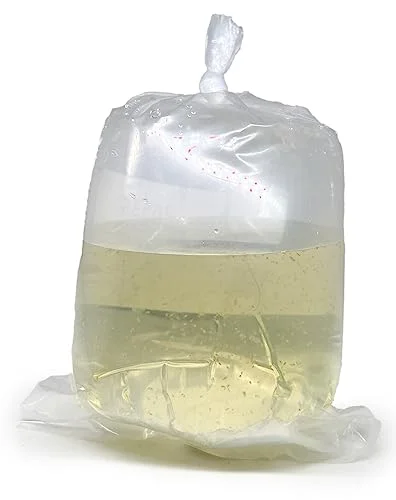
Aquatic Arts Live Daphnia Magna, 100-Count
Best for Fry Growth- ✓ Self-sustaining once established in a tub of green water
- ✓ Good size range for both fry and adult livebearers
- ✓ D. magna grows larger than D. pulex, giving fish more to chase
- ✓ Excellent gut-loaded nutrition compared to any dry food
- ✗ Live shipment means delivery timing and weather matter
- ✗ A small starter culture can crash if overharvested before it's established
Daphnia is the closest thing to a “set it and forget it” live food on this list. Unlike brine shrimp, which you hatch fresh for each feeding, a daphnia culture can become self-sustaining in a tub of green water (algae-rich water under light), reproducing on its own and giving you a standing supply to net out as needed.
Aquatic Arts ships Daphnia magna specifically, which grows noticeably larger than the more common Daphnia pulex — useful if you’re feeding adult livebearers or shrimp rather than just tiny fry. The size range as the population matures also means a single culture serves fry through to adults as individuals grow.
Because this arrives as live animals, delivery conditions matter more here than with a dry product. Order when you can acclimate them promptly, and don’t overharvest a brand-new culture before it’s had a chance to establish — pull too many too soon and the culture can crash instead of multiplying.
Best for: Breeders who want a self-renewing live food supply instead of hatching a fresh batch every day.
4. Live Vinegar Eels Culture (Turbatrix aceti), 10 oz
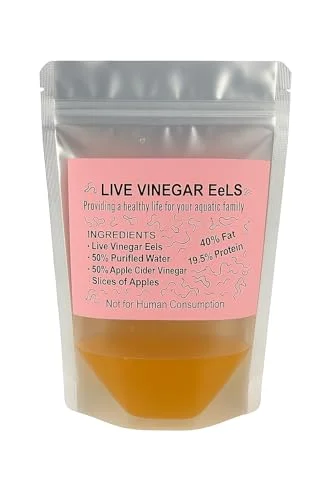
Live Vinegar Eels Culture (Turbatrix aceti), 10 oz
Best for Tiny Fry- ✓ Swim at the surface, perfect for fry too small to chase sinking foods
- ✓ One of the lowest-maintenance live cultures you can keep
- ✓ Ideal first live food for newly hatched ricefish and betta fry
- ✗ Vinegar smell during culturing puts some hobbyists off
- ✗ Multiplies more slowly than microworms
Vinegar eels (Turbatrix aceti) solve a specific problem: newly hatched fry that are too small to eat even newly hatched brine shrimp. Ricefish fry and betta fry in their first days are the clearest example — vinegar eels swim near the surface rather than sinking, putting them right where the smallest fry are actually feeding.
This is also the lowest-maintenance culture on this list. Once established in its jar with apple cider vinegar and water, a vinegar eel culture can run for months with almost no attention beyond splitting it periodically and adding a fresh apple slice now and then.
The trade-off is smell — a vinegar eel culture smells like, unsurprisingly, vinegar, and it’s strong enough that some hobbyists keep the jar in a garage or fish room rather than on a living room shelf. It also multiplies more slowly than microworms, so it’s better as a fry-specific tool than a bulk feeding source.
Best for: The first few days of ricefish or betta fry that can’t yet handle anything larger.
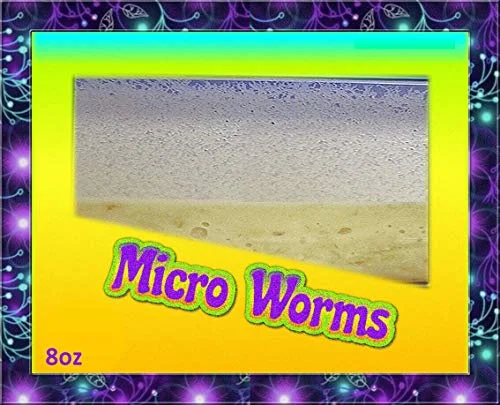
5. Insectsales.com Micro Worm Culture, 8 oz
Insectsales.com Micro Worm Culture, 8 oz
Best Value- ✓ Fast-reproducing starter culture ready to feed within days
- ✓ Affordable entry point into live foods
- ✓ Sink slowly, which suits mid-water feeding fry well
- ✗ Develops an odor if not refreshed every few weeks
- ✗ Needs a warm spot (70-80°F) to stay productive
Microworms (Panagrellus redivivus) are the standard first live food recommendation for a reason: they’re cheap, they reproduce fast, and the culture is nearly impossible to mess up. A single 8-ounce starter culture, fed oats or instant potato flakes with a pinch of yeast, produces enough worms to feed a fry batch within a week or two of setup.
Compared to vinegar eels, microworms sink slowly instead of staying at the surface, which suits fry that are already feeding mid-water — a natural next step once fry outgrow vinegar eels or newly hatched brine shrimp.
Maintenance is minimal but not zero: cultures develop a sour smell if left too long without a fresh feeding, and they slow down in a cold room. Keep the container somewhere in the 70-80°F range and restart it from a small scoop every few weeks for the best yield.
Best for: A first live-food culture that’s cheap, fast, and forgiving of a beginner’s mistakes.
Buying Guide
Live vs. Freeze-Dried: Why Bother Culturing?
Freeze-dried and frozen brine shrimp are convenient, but they don’t move — and movement is what triggers a feeding and hunting response in fish. Live foods are also more nutritionally complete when freshly hatched, since a nauplius still carries its own yolk sac reserves. If you’re trying to condition adults for spawning or push fry growth, live beats dried every time. Keep a freeze-dried backup on hand for the days a culture crashes, but don’t lean on it as your primary feed.
Matching Food Size to Mouth Size
- Vinegar eels: smallest fry (day 1-5), especially surface feeders like ricefish and bettas
- Microworms: small to mid-size fry once they’re past the first few days
- Newly hatched brine shrimp: fry a week or older, plus adult shrimp and small fish
- Daphnia: juveniles through adults, since the population includes a range of sizes
Feeding food too large for a fry’s mouth means it goes uneaten and fouls the water — undersized fry can’t physically eat a full-grown daphnia.
Hatching Brine Shrimp: The Basics
Brine shrimp eggs hatch in 24-36 hours in marine-salt water (roughly 1 tablespoon of aquarium salt per cup of water) held at 80-82°F with continuous aeration. Skipping aeration is the most common reason a hatch fails — the eggs need to stay suspended, not settle to the bottom. Harvest with a fine sieve, rinse briefly in fresh water to remove salt, then feed immediately since nauplii are most nutritious right after hatching.
Keeping Cultures From Crashing
Every live culture on this list — daphnia, vinegar eels, microworms — fails the same way: overharvesting before the population has recovered, or letting it go too long without maintenance. Split cultures into a backup container periodically so a crash in one jar doesn’t wipe out your entire supply.
A Note for Shrimp Keepers
Daphnia, microworms, and vinegar eels are all safe and genuinely useful foods for shrimp, not just fish fry — shrimp will pick at all three as they settle or die off. Newly hatched brine shrimp is more of a fish food; shrimp will scavenge shells and stragglers, but it’s not a primary shrimp diet. None of these live cultures involve copper or chemical additives, so there’s no shrimp-safety concern the way there is with some medications.
Beyond Live Foods: What Else You Need
Hatching and culturing live foods takes more than just the eggs or the starter culture. These two products round out a working setup.
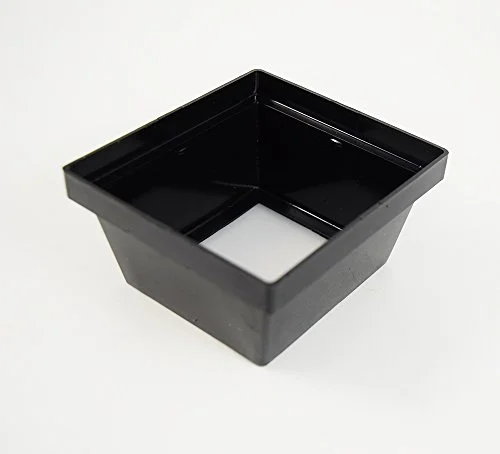
Brine Shrimp Direct Sieve
Brine Shrimp Direct Sieve
Best Harvesting Tool- ✓ Purpose-built rather than a generic dropship sieve
- ✓ Fine mesh catches nauplii without losing them down the drain
- ✓ Holds up to daily use on a breeding rack
- ✗ Single mesh size — combo sets exist if you culture other live foods too
- ✗ Small enough to misplace among the rest of your tank gear
Once brine shrimp hatch, you need to separate them from the water, shells, and salt before feeding. This purpose-built sieve has mesh fine enough to catch nauplii without losing them down the drain — a step up from trying to strain them through a coffee filter or paper towel.
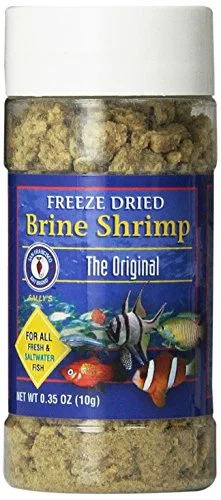
San Francisco Bay Brand Freeze Dried Brine Shrimp, 10g
San Francisco Bay Brand Freeze Dried Brine Shrimp, 10g
Best Backup Food- ✓ Shelf-stable backup for when a live culture crashes
- ✓ No hatching or culturing required
- ✓ Same brine shrimp nutrition profile without daily maintenance
- ✗ Lower conditioning value than live or just-hatched brine shrimp
- ✗ Floats, so it's less useful for bottom-feeding or fry-sized fish
Keep a jar of freeze-dried brine shrimp on hand for the days a live culture crashes or you simply run out of time to hatch a fresh batch. It won’t replace live foods for conditioning breeders, but it’s the same brine shrimp nutrition without the daily maintenance.
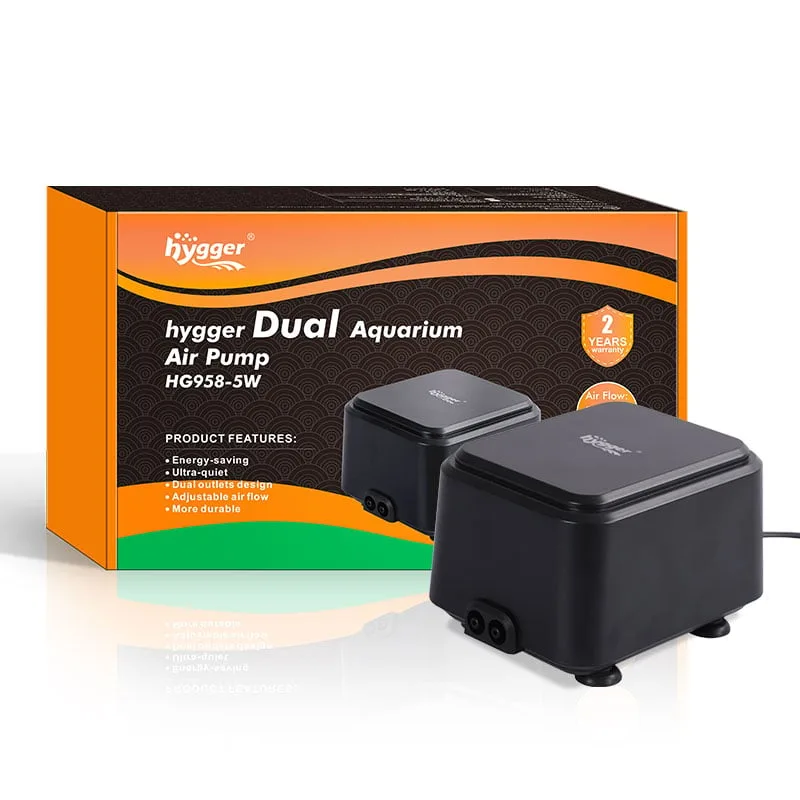
Hygger Quietest Aquarium Air Pump
Hygger Quietest Aquarium Air Pump
- ✓ Quiet enough to run right next to a breeding rack
- ✓ Adjustable output covers a nano hatchery cone up through larger setups
- ✓ One pump can run a hatchery cone and a sponge filter with a splitter
- ✗ Diaphragm may weaken after 18-24 months of continuous use
- ✗ Larger flow setting is overkill for a single hatchery cone
The San Francisco Bay Brand hatchery kit above doesn’t include a pump, and a hatching cone needs continuous airflow for the full 24-36 hour cycle to keep eggs suspended. This pump is quiet enough to run next to a breeding rack around the clock, and the adjustable output covers a single hatchery cone plus a sponge filter off the same line with a splitter.
Frequently Asked Questions
How long does it take to hatch brine shrimp eggs?
Typically 24-36 hours at 80-82°F with continuous aeration and marine-salt water. Colder water or inconsistent aeration slows the hatch or reduces the hatch rate.
Can I feed live daphnia to shrimp?
Yes. Daphnia is a good food for shrimp as well as fish — shrimp will pick at daphnia that settle or die off, and the culture poses no chemical risk to shrimp the way some water treatments do.
What’s the easiest live food culture to start with?
Microworms. The culture is forgiving of beginner mistakes, reproduces quickly, and only needs oats or potato flakes plus a pinch of yeast to keep going.
Do vinegar eels smell bad?
Yes, noticeably — the culture medium is apple cider vinegar and water, so it smells like vinegar. Most hobbyists keep the jar in a fish room or garage rather than a living space.
How often do I need to restart a microworm culture?
Every few weeks. Scoop a small amount of an established culture into fresh medium (oats or potato flakes, water, and yeast) before the old culture sours and slows down.
Can baby brine shrimp be fed to shrimp fry?
Shrimp will scavenge brine shrimp shells and stragglers, but it isn’t a primary shrimp food the way daphnia or microworms are. Lean on daphnia and microworms for shrimp colonies and save brine shrimp for fish fry and conditioning adults.
Conclusion
For most breeding setups, Ocean Nutrition Sep-Art Artemia Cysts is the best place to start — it’s a reliable, decapsulated hatching food that skips the shell-straining step, and the 25-gram box covers plenty of hatches while you build a routine. If you’d rather skip the daily hatch-and-harvest cycle, the Aquatic Arts Live Daphnia Magna culture gives you a self-sustaining supply once it’s established.
For the cheapest, most forgiving entry point into live foods overall, the Insectsales.com Micro Worm Culture is hard to beat — it’s inexpensive, reproduces fast, and tolerates beginner mistakes better than any other culture on this list. Whichever you start with, pair it with a reliable hatchery setup or air pump, and you’ll see the difference in breeding activity and fry growth within a couple of weeks.