Frozen and freeze-dried fish food bridges the gap between convenience and nutrition. Live food is ideal but impractical for daily feeding. Dry flakes and pellets are convenient but limited in nutritional variety. Frozen food gives you the nutritional profile of live food — high protein, natural fats, and feeding stimulation — without the hassle of culturing live organisms.
For conditioning breeders, growing out fry, or just keeping community fish in peak color and health, frozen food should be part of your rotation at least 2–3 times per week.
Quick Picks
- Best Overall: Hikari Frozen Bloodworms — sterilized, flat pack, universally accepted
- Best for Small Fish: Hikari Frozen Baby Brine Shrimp Mini Cubes — perfect portion size, smaller particles
- Best Shelf-Stable: SFBB Freeze-Dried Bloodworms — no freezer needed, sticks to glass
- Best for Nano Tanks: Hikari Freeze-Dried Brine Shrimp — tiny particles for small mouths
Detailed Reviews
1. Hikari Bio-Pure Frozen Bloodworms (Flat Pack)
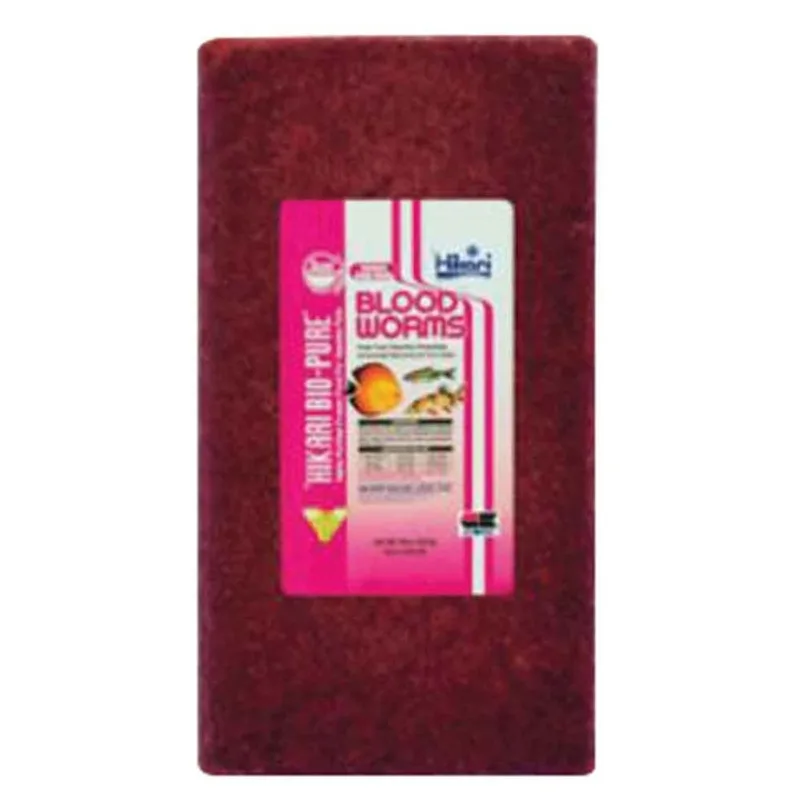
Hikari Bio-Pure Frozen Bloodworms (Flat Pack)
Editor's Choice- ✓ Three-step sterilization eliminates parasites and harmful bacteria
- ✓ Flat pack format lets you break off small portions without thawing the whole thing
- ✓ Virtually every freshwater fish eats these eagerly
- ✓ Consistent quality batch to batch
- ✗ Requires freezer storage — not shelf-stable
- ✗ Can foul water if overfed (high protein decomposes quickly)
Hikari frozen bloodworms are the standard frozen food for freshwater aquariums. The three-step sterilization process (UV sterilization, pharmaceutical-grade purification, and flash freezing) eliminates the parasites and bacteria that raw bloodworms can carry. You get the nutritional benefits of bloodworms without the contamination risk.
The flat pack format is superior to cube trays for portion control. Break off a small section with your fingers — no need to thaw an entire cube. For a 10-gallon tank with a few fish, you need about a thumbnail-sized piece per feeding. The flat pack lets you scale portions precisely.
Virtually every freshwater fish eagerly eats bloodworms. Guppies, bettas, tetras, corydoras, plecos, cichlids — even picky eaters attack bloodworms with enthusiasm. They are the universal conditioning food for breeding and the best way to get a shy fish eating in a new tank.
Shrimp also love bloodworms. Drop a piece into a shrimp tank and watch the colony swarm it within minutes. High protein supports healthy molting and egg development in berried females.
The only caution is overfeeding. Bloodworms are rich — uneaten pieces decompose quickly and spike ammonia. Feed only what your fish consume in 2–3 minutes.
Best for: Any freshwater tank where you want high-protein conditioning food that every fish accepts.
2. Hikari Bio-Pure Frozen Baby Brine Shrimp (Mini Cubes)
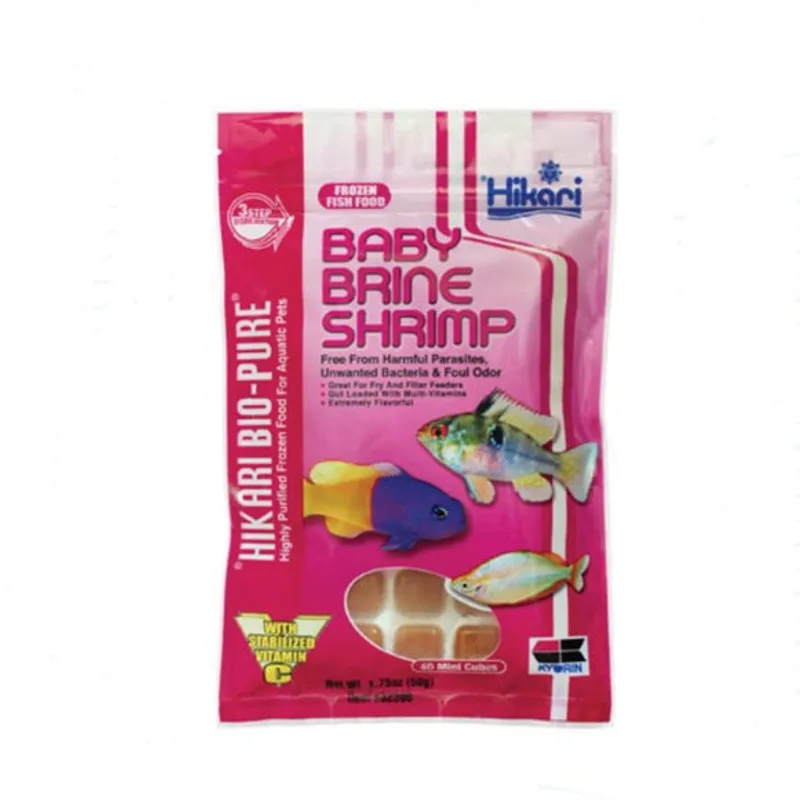
Hikari Bio-Pure Frozen Baby Brine Shrimp (Mini Cubes)
Best for Small Fish- ✓ Pre-portioned cubes make dosing easy — one cube per feeding for most tanks
- ✓ Smaller particle size than bloodworms — perfect for nano fish and fry
- ✓ Same sterilization process as bloodworms — safe and clean
- ✓ High acceptance rate across all freshwater species
- ✗ Lower protein than bloodworms — better as supplement than staple
- ✗ Cubes thaw quickly and can cloud water if added frozen to warm tanks
Frozen brine shrimp is the go-to food for small fish, fry that have outgrown baby brine shrimp, and nano tank communities. The individual organisms are smaller than bloodworms, making them accessible to fish with tiny mouths — ember tetras, chili rasboras, endlers, and juvenile guppies.
The cube format gives you consistent portions. Pop one cube out of the tray, drop it in the tank (or thaw it in a cup of tank water first for better distribution), and one cube feeds a 10-gallon community nicely. For larger tanks, use multiple cubes.
Brine shrimp are lower in protein than bloodworms but contain beneficial fatty acids, particularly when enriched (Hikari’s version is vitamin-enriched). They are better as a supplement fed 2–3 times per week rather than a daily staple.
The cube format does have a downside: you cannot easily portion out less than one cube. For nano tanks with only a few fish, one cube may be too much. In that case, thaw a cube in water, use a pipette to dispense a smaller portion, and discard the rest (or feed it to another tank).
Best for: Small community fish, growing juveniles, and tanks where bloodworms are too large.
3. San Francisco Bay Brand Freeze-Dried Bloodworms (1.75 oz)
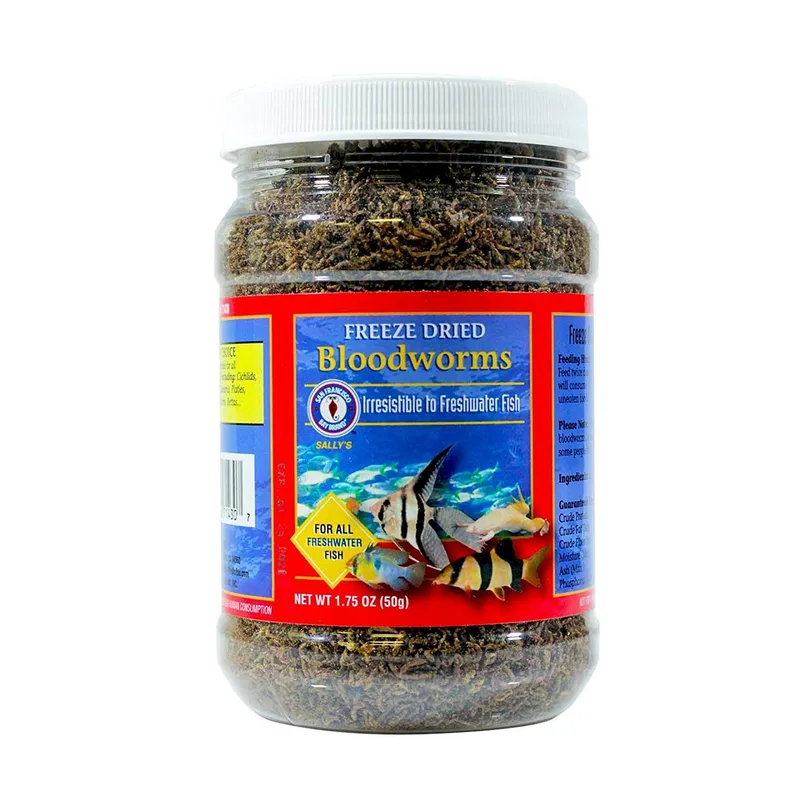
San Francisco Bay Brand Freeze-Dried Bloodworms (1.75 oz)
Best Shelf-Stable- ✓ No freezer needed — shelf-stable for months
- ✓ Same nutritional value as frozen — just dehydrated
- ✓ Sticks to aquarium glass for controlled feeding
- ✓ Large 1.75 oz jar lasts months of regular use
- ✗ More expensive per serving than frozen
- ✗ Some fish take longer to accept freeze-dried vs. frozen texture
If you cannot store frozen food (no freezer space, shared fridge, dorm life), freeze-dried bloodworms provide similar nutrition in a shelf-stable format. The drying process preserves protein and fat content while making the food lightweight and shelf-stable for months.
The SFBB bloodworms stick to the aquarium glass when pressed against it — a feature that lets you control where fish feed and watch them pick food off the glass. This is particularly useful for bottom feeders like corydoras that might not get to floating food before top-dwelling fish grab it all.
The 1.75 oz jar seems small but lasts months because freeze-dried food is extremely lightweight relative to its rehydrated volume. A pinch expands significantly when wet. For a 10-gallon tank, a small pinch 2–3 times per week lasts most of a year.
Some fish need time to recognize freeze-dried food as edible. If your fish ignore it initially, try soaking it in tank water for 30 seconds before offering — the rehydration makes it smell and move more like live food.
Best for: Keepers without freezer space who want high-protein food in a shelf-stable format.
4. Hikari Bio-Pure Freeze-Dried Brine Shrimp (0.42 oz)
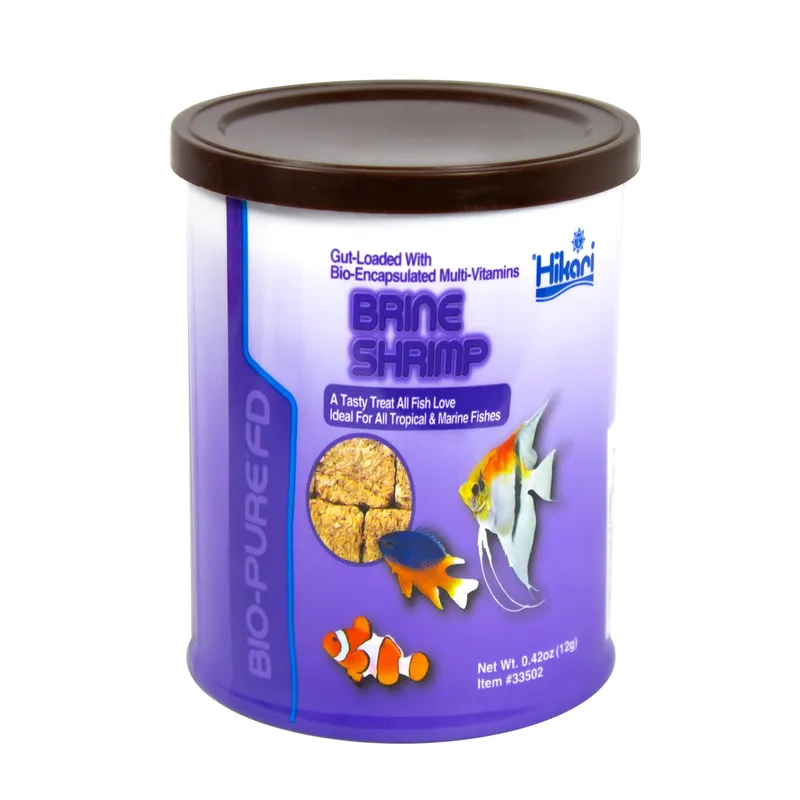
Hikari Bio-Pure Freeze-Dried Brine Shrimp (0.42 oz)
Best for Nano Tanks- ✓ Tiny particle size perfect for small fish, fry, and shrimp
- ✓ Shelf-stable — no freezer required
- ✓ Can be crushed even finer for very small fry
- ✓ Affordable and widely available
- ✗ Small container size — heavy feeders go through it quickly
- ✗ Floats at the surface initially — bottom feeders may miss it
This is the nano tank and fry food container. The freeze-dried brine shrimp particles are small enough for even juvenile fish and shrimp to consume. Crush it between your fingers for an even finer powder that newly free-swimming fry can eat.
For shrimp tanks specifically, freeze-dried brine shrimp dropped on the substrate brings the entire colony running. It is a high-protein treat that supports molting and breeding — excellent for conditioning berried females.
The small container (0.42 oz) is appropriate for nano setups where you only need a tiny amount per feeding. Heavy feeders with large tanks will go through it quickly, but for a 5- or 10-gallon setup, it lasts a reasonable time.
The brine shrimp float initially before sinking as they absorb water. Surface feeders (ricefish, guppies) grab them at the top; bottom feeders get whatever sinks. For targeted bottom feeding, pre-soak the food until it sinks, then add to the tank.
Best for: Nano tanks, small fish, growing fry, and shrimp colonies.
Comparison Table
| Hikari Bio-Pure Frozen Bloodworms (Flat Pack) Editor's Choice | Hikari Bio-Pure Frozen Baby Brine Shrimp (Mini Cubes) Best for Small Fish | San Francisco Bay Brand Freeze-Dried Bloodworms (1.75 oz) Best Shelf-Stable | Hikari Bio-Pure Freeze-Dried Brine Shrimp (0.42 oz) Best for Nano Tanks | |
|---|---|---|---|---|
| Rating | 9.3/10 | 9/10 | 8.7/10 | 8.5/10 |
| Price | Unavailable | Unavailable | $19.49as of Sep 27, 2026 | $7.90-$8.32as of Sep 27, 2026 |
| Brand | Hikari | Hikari | San Francisco Bay Brand | Hikari |
| Type | Frozen bloodworms | Frozen brine shrimp | Freeze-dried bloodworms | Freeze-dried brine shrimp |
| Format | Flat pack | Mini cube tray | Jar | Container |
| Size | 16 oz | 1.75 oz | 1.75 oz | 0.42 oz |
| Protein | ~55% | ~50% | ~55% | ~50% |
| Shrimp Safe | Yes — shrimp love bloodworms | Yes | Yes | Yes |
| Check Price → | Check Price → | Check Price → | Check Price → |
Prices change daily — tap Check Price for the current Amazon price. Numbers shown were verified on the "as of" date.
Frozen Food Buying Guide
Frozen vs. Freeze-Dried: What Is the Difference?
Frozen food retains moisture and texture closest to live food. Fish accept it readily because it looks and moves like natural prey when thawed. It requires freezer storage and must stay frozen until use.
Freeze-dried food has the same nutritional content but is dehydrated. It is shelf-stable, lightweight, and convenient. Some fish are less enthusiastic about the texture initially, but most adapt. Pre-soaking in tank water improves acceptance.
Both are legitimate feeding options. Frozen is generally preferred for picky eaters and conditioning breeders. Freeze-dried is better for convenience and storage flexibility.
How Often to Feed Frozen/Freeze-Dried
- Community tanks: 2–3 times per week, alternating with flakes or pellets
- Breeding conditioning: Daily for 2–3 weeks before expected spawning
- Fry grow-out: Daily (baby brine shrimp or crushed freeze-dried)
- Shrimp tanks: 2–3 times per week as a protein supplement
Frozen food should complement your staple diet, not replace it entirely. A varied rotation (flakes, pellets, frozen, vegetables) provides the broadest nutrition.
Avoiding Water Quality Issues
Frozen food is richer than dry food and decomposes faster. To prevent fouling:
- Feed only what fish consume in 2–3 minutes
- Thaw in a small cup of tank water and discard the thaw water (it contains waste and phosphates)
- Remove any uneaten pieces after 5 minutes
- Do not dump frozen cubes directly into the tank (the rapid melt dumps nutrients)
Frequently Asked Questions
Can I refreeze thawed frozen fish food?
No. Once thawed, frozen fish food should be used within 24 hours and any remainder discarded. Refreezing degrades nutritional quality and can promote bacterial growth.
Are frozen bloodworms safe for bettas?
Yes — frozen bloodworms are one of the best foods for bettas. They are high protein, eagerly accepted, and help prevent constipation better than dry pellets alone. Feed 2–3 worms per betta, 3–4 times per week.
Will frozen food introduce parasites to my tank?
Properly sterilized frozen food (Hikari Bio-Pure) is treated to eliminate parasites and bacteria. Unsterilized frozen food from unknown sources could potentially carry contaminants. Stick with reputable brands that specify sterilization processes.
Can shrimp eat frozen bloodworms?
Absolutely. Shrimp are omnivores and enthusiastically consume frozen bloodworms, brine shrimp, and other protein foods. High-protein food is particularly beneficial for berried females and growing juveniles. Limit protein foods to 2–3 times per week for shrimp.
How do I store frozen fish food?
Keep it in your freezer (0°F or below). Most frozen fish food lasts 6–12 months in the freezer without significant nutrient degradation. Store flat packs flat and cube trays upright. Keep the package sealed to prevent freezer burn.
Conclusion
Hikari Bio-Pure Frozen Bloodworms are the single best frozen food for most freshwater setups — sterilized, universally accepted, and easy to portion from the flat pack. Add frozen brine shrimp for variety and smaller fish, and keep a jar of freeze-dried bloodworms for convenience when you cannot access the freezer.
A feeding rotation of dry staple + frozen protein 2–3 times weekly keeps fish in breeding condition, maintains vibrant color, and provides the nutritional variety that a single food type cannot match.