If you keep guppies, cherry shrimp, or any nano livestock, you already know the deal: hang-on-back filters and canisters can turn baby shrimp into expensive fish food. Sponge filters solve that problem entirely.
Every single filter on this list is 100% shrimp-safe. That is not a coincidence — it is the nature of how sponge filters work. There are no exposed intakes, no impellers, and no gaps big enough to suck in even day-old shrimplets. Water gets pulled through foam by air pressure alone, and nothing living gets trapped.
Sponge filters also happen to be the cheapest, quietest, and most reliable filtration option for small tanks. They provide both mechanical and biological filtration, they are nearly impossible to break, and they cost less than a bag of premium fish food.
Here are the five sponge filters worth buying in 2026.
Quick Picks
- Best Overall: Aquarium Co-Op Sponge Filter — coarse foam that resists clogging, weighted base, four size options
- Best Dense Foam: Hikari Bacto-Surge — ultra-fine pore structure catches tiny particles, great biological surface area
- Best with Media Chamber: hygger 8-20 Gallon — lets you add bio ceramic balls or other media inside the filter body
- Best Budget Double: UPETTOOLS Double Sponge Filter — two sponge heads plus included bio media, rated 15-55 gallons
- Best Value: AQUANEAT Bio Sponge Filter — dirt cheap, available in multi-packs, gets the job done
Detailed Reviews
1. Aquarium Co-Op Sponge Filter
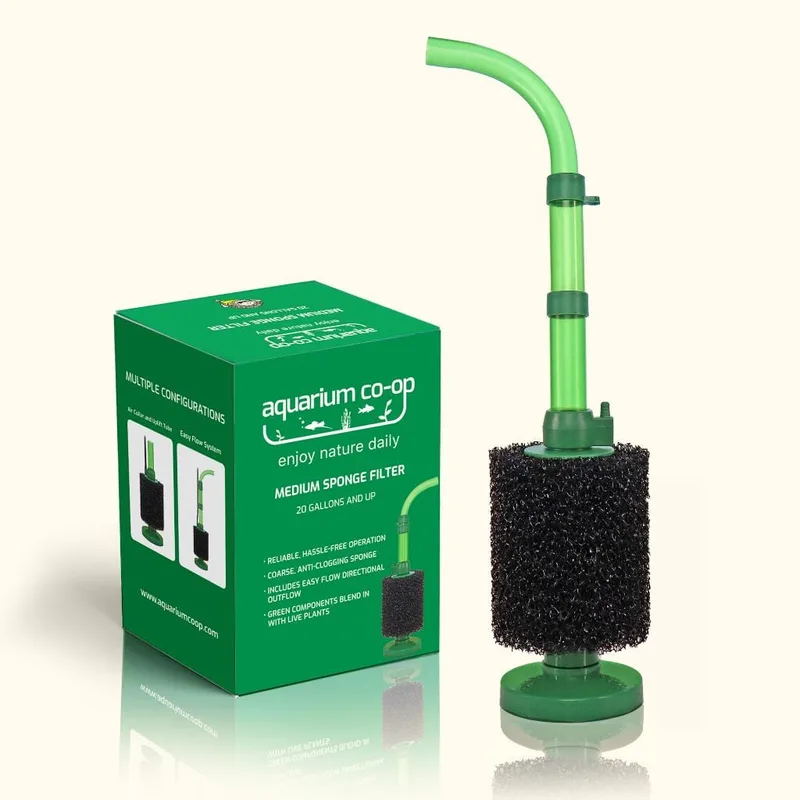
Aquarium Co-Op Sponge Filter
Editor's Choice- ✓ Coarse pore structure resists clogging longer than most competitors
- ✓ Available in four sizes from nano to large
- ✓ Weighted base actually stays put — no suction cups needed
- ✓ Designed by a well-known hobbyist retailer who uses them in hundreds of tanks
- ✗ Only sold direct through Aquarium Co-Op (not on Amazon)
- ✗ Coarse foam may let very fine particles pass initially
The Aquarium Co-Op sponge filter is what most experienced hobbyists recommend first, and for good reason. Cory McElroy designed these for his own fish room, and they show up in hundreds of tanks at the Aquarium Co-Op warehouse.
The coarse foam is the key differentiator. Where most sponge filters use dense, fine-pored foam that clogs in a couple of weeks, these use a more open structure that lets water flow freely for much longer between cleanings. You will still get solid biological filtration — beneficial bacteria colonize the surface regardless of pore size — but you will spend less time squeezing sponges in old tank water.
The weighted base is another practical touch. Most sponge filters rely on suction cups that fail after a few months. These just sit on the substrate under their own weight. If you have a deep sand bed, push them down a bit and they stay anchored.
The downside is availability. You cannot buy these on Amazon. You have to order direct from Aquarium Co-Op’s website, which means paying their shipping rates. For a single filter it might not be worth it, but if you are stocking a fish room, a bulk order makes sense.
Best for: Hobbyists who want the longest interval between maintenance and do not mind ordering direct.
2. Hikari Bacto-Surge Foam Filter
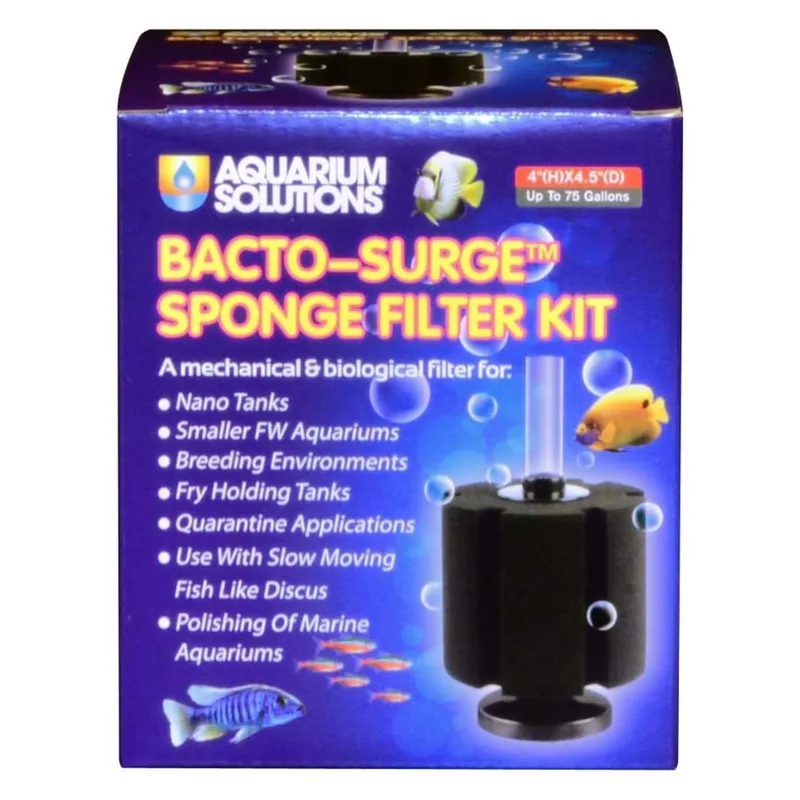
Hikari Bacto-Surge Foam Filter
Best Dense Foam- ✓ High-density foam captures very fine particles
- ✓ Available in multiple sizes up to 125-gallon tanks
- ✓ Strong biological filtration surface area
- ✓ Well-known brand with decades of reputation
- ✗ Dense foam clogs faster and needs more frequent rinsing
- ✗ Lighter base — suction cup or gravel anchoring recommended
Hikari has been in the aquarium game for decades, and the Bacto-Surge line is their take on the classic sponge filter. The foam here is denser than the Aquarium Co-Op version, which means it catches finer particles but also clogs more quickly.
For a guppy or shrimp tank, that fine filtration is actually useful. Guppy fry produce surprisingly fine waste, and dense foam traps it before it breaks down and spikes ammonia. You just need to commit to rinsing the sponge in old tank water every 10–14 days instead of stretching it to three or four weeks.
The Bacto-Surge comes in sizes from mini (5 gallons) all the way up to XL (125 gallons), so you can find the right fit regardless of tank size. The mini version is particularly good for betta tanks and shrimp-only nano setups.
One complaint: the base is lighter than I would like, and the suction cup does not inspire confidence. In tanks with active substrate-sifting fish (corydoras, for example), the filter can get knocked loose. Consider burying the base slightly in gravel for a more secure hold.
Best for: Keepers who want maximum mechanical filtration and do not mind more frequent maintenance.
3. hygger Aquarium Sponge Filter (8-20 Gallon)
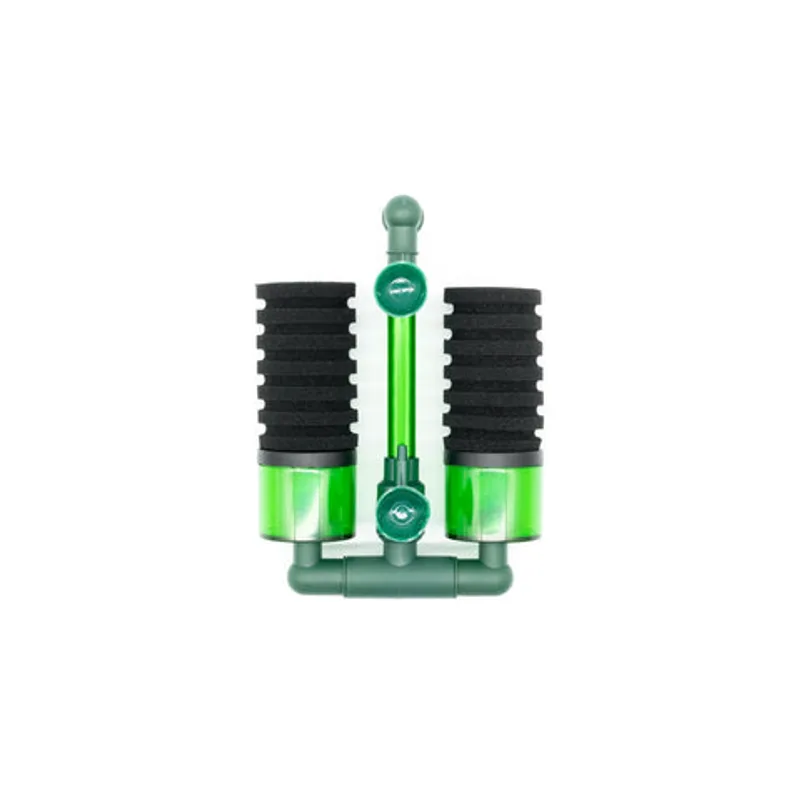
hygger Aquarium Sponge Filter (8-20 Gallon)
Best with Media Chamber- ✓ Built-in media chamber for bio ceramic balls or other filter media
- ✓ Includes a spare sponge and bio ceramic balls out of the box
- ✓ Air-powered — no separate power draw beyond the air pump
- ✓ Food-grade biochemical cotton sponge
- ✗ Only rated for tanks under 20 gallons
- ✗ Slightly more expensive than basic sponge filters
The hygger takes the basic sponge filter concept and adds a media chamber — a detachable container that holds bio ceramic balls, with a spare sponge and media included in the box. This is genuinely useful, not a gimmick.
For shrimp keepers, the media chamber opens up some real options. Drop in the included bio ceramic balls for extra biological capacity, or swap in crushed coral or another media of your choice. You get the simplicity of a sponge filter with some of the versatility of a canister.
This filter is rated for 8-20 gallon tanks under 14 inches deep, which covers most nano shrimp colonies and guppy breeding tanks.
The design is clean, air-powered, and uses a food-grade biochemical cotton sponge — you will not feel the need to hide it behind a piece of driftwood.
The limitation is tank size. If you have a 20-gallon-plus community tank with guppies and shrimp together, this filter may not provide enough flow on its own. Pair it with a second filter for larger setups.
Best for: Shrimp keepers who want to run additional media without adding a second filter.
4. UPETTOOLS Double Sponge Filter
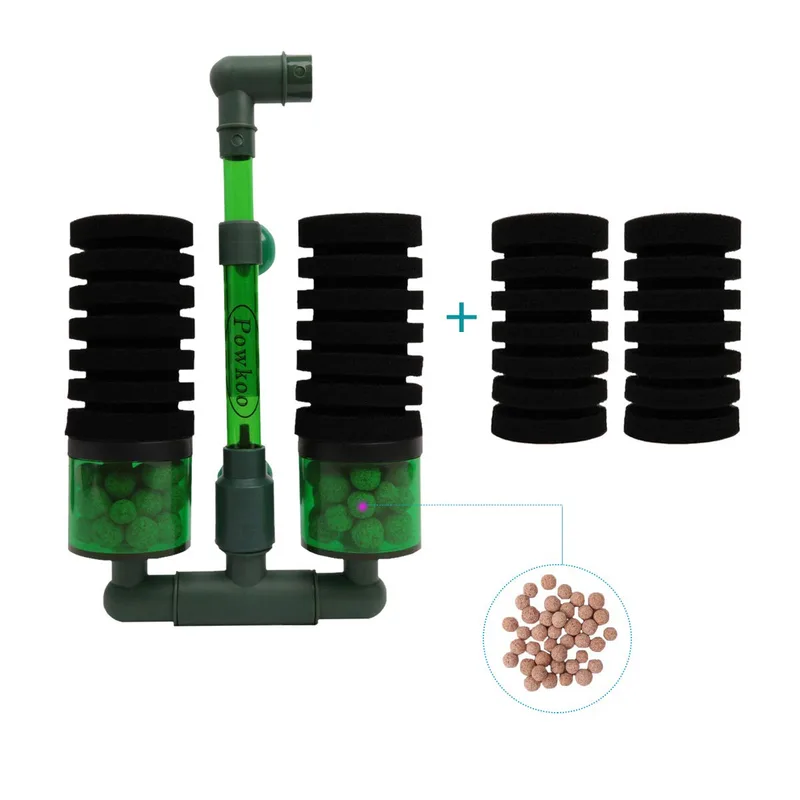
UPETTOOLS Double Sponge Filter
Best Budget Double- ✓ Two sponge heads doubles your biological filtration surface area
- ✓ Includes bio media bags and spare sponges — ready to go out of the box
- ✓ 360-degree rotatable oxygen port for positioning
- ✓ Strong review base (300+ reviews, 4.3 stars)
- ✗ Bulkier footprint than single sponge filters
- ✗ Only one size available — no nano option
The UPETTOOLS takes the “more surface area” approach by giving you two sponge heads on a 360-degree rotatable oxygen port. More sponge means more biological filtration capacity, and the included bio media bags add another layer.
For a 20- to 40-gallon guppy community tank, this filter makes a lot of sense. A single small sponge filter can struggle to keep up with the bioload of a breeding colony of guppies (and those colonies grow fast). Two sponge heads running off a single air line provide enough filtration without needing a second filter unit and air line.
The rotatable oxygen port is a nice touch — you can angle the sponges away from the glass to prevent dead spots and improve circulation. The filter also comes ready to go with bio media bags and spare sponges included, so there is no need to buy anything extra besides an air pump and airline tubing.
The tradeoff is size. This is not a nano tank filter. It takes up real estate in the aquarium, and in anything under 15 gallons it will look and feel oversized. For larger tanks, though, the footprint is reasonable relative to the filtration capacity.
Best for: Medium-sized guppy tanks (20–55 gallons) where you want maximum biological filtration from a single unit.
5. AQUANEAT Bio Sponge Filter
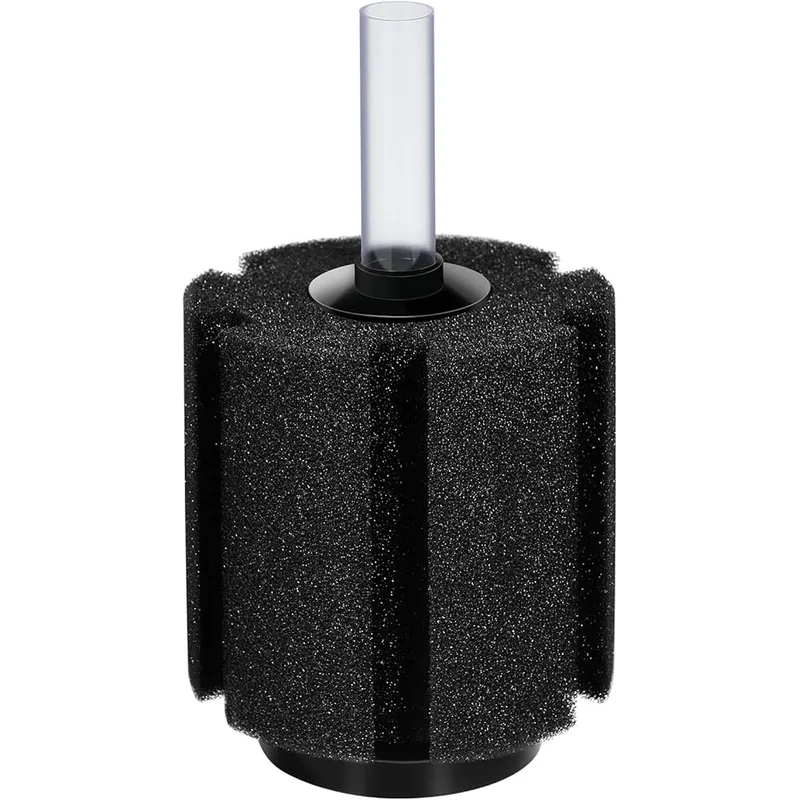
AQUANEAT Bio Sponge Filter
Best Value- ✓ Cheapest option on this list — under $5 for single filters
- ✓ Available in multi-packs (3-pack, 4-pack) for colony setups
- ✓ Multiple sizes to match your tank
- ✓ Reliable basic sponge filter that just works
- ✗ Foam quality is a step below Hikari or Aquarium Co-Op
- ✗ Suction cups can lose grip over time
- ✗ No media chamber
Sometimes you just need a cheap sponge filter that works. AQUANEAT delivers exactly that.
These filters do not have fancy foam formulations or media chambers. They are basic sponge filters with a decent amount of surface area, available in sizes from 10 to 60 gallons. What makes them worth mentioning is the price: you can grab a single filter for under $5, or a 4-pack for around $15. If you are setting up a rack of breeding tanks, that cost difference adds up fast.
The foam quality is a step below Hikari or Aquarium Co-Op — it is a bit more inconsistent in pore density, and replacement sponges are not always easy to find in the exact same formulation. But for breeding tanks, quarantine setups, and any situation where you need a lot of sponge filters on a budget, AQUANEAT is the go-to.
The suction cups are the weakest link. They tend to lose their grip after a few months, especially in warmer tanks. Keep a bag of replacement suction cups on hand, or just weigh down the base with a small rock.
Best for: Budget-conscious hobbyists setting up multiple tanks, breeding racks, or quarantine systems.
Comparison Table
| Aquarium Co-Op Sponge Filter Editor's Choice | Hikari Bacto-Surge Foam Filter Best Dense Foam | hygger Aquarium Sponge Filter (8-20 Gallon) Best with Media Chamber | UPETTOOLS Double Sponge Filter Best Budget Double | AQUANEAT Bio Sponge Filter Best Value | |
|---|---|---|---|---|---|
| Rating | 9.2/10 | 8.8/10 | 8.5/10 | 8.3/10 | 8/10 |
| Price | $8–$13 | $9.27as of Sep 27, 2026 | $13.99as of Sep 27, 2026 | $17.99as of Sep 27, 2026 | $8.99as of Sep 27, 2026 |
| Brand | Aquarium Co-Op | Hikari | hygger | UPETTOOLS | AQUANEAT |
| Sizes | Nano, Small, Medium, Large | Mini, Small, Large, XL | One size | One size | Small, Medium, M-Large, Large |
| Tank Range | 2–100+ gal | 5–125 gal | 8-20 gal (under 14in depth) | 15–55 gal | 10–60 gal |
| Media Slots | No | No | Yes — detachable, holds bio ceramic balls | Yes — includes 4 bags bio media + 4 replacement sponges | No |
| Shrimp Safe | Yes | Yes | Yes | Yes | Yes |
| Check Price → | Check Price → | Check Price → | Check Price → | Check Price → |
Prices change daily — tap Check Price for the current Amazon price. Numbers shown were verified on the "as of" date.
Sponge Filter Buying Guide
Why Sponge Filters Are Perfect for Guppy and Shrimp Tanks
Guppies and shrimp have two things in common: they breed constantly, and their babies are tiny. A hang-on-back filter with an open intake will vacuum up fry and shrimplets without mercy. Sponge filters eliminate that risk entirely because the only way water enters the filter is through the foam itself — nothing bigger than a bacterium is getting pulled through.
Beyond safety, sponge filters provide gentle water movement that both guppies and shrimp prefer. Shrimp in particular dislike strong currents, and the soft bubbling action of a sponge filter creates just enough surface agitation for gas exchange without blasting your neocaridina across the tank.
What Size Sponge Filter Do You Need?
A rough guideline: match the sponge filter rating to your tank size, or go one size up. A filter rated for 10 gallons works fine in a 10-gallon tank with a light bioload (a few shrimp), but if you have a colony of 30 guppies producing fry every month, size up.
For tanks over 30 gallons, consider running two sponge filters on opposite ends of the tank. This improves circulation and gives you a backup — if one sponge clogs or you need to clean one, the other keeps the bacteria colony alive.
Air Pump Matters
Your sponge filter is only as good as the air pump driving it. A weak pump means low flow and poor filtration. A pump that is too strong creates excessive current that stresses shrimp. Look for an adjustable air pump so you can dial in the flow rate. The Tetra Whisper and USB nano pumps from brands like Hygger work well for small tanks.
Maintenance Tips
- Rinse sponges in old tank water only. Tap water contains chlorine that kills the beneficial bacteria living in the foam.
- Never replace all your sponge filters at once. If you are running multiple sponges, stagger your cleaning schedule so you always have an established bacteria colony active.
- Squeeze, do not scrub. Gentle squeezing in a bucket of tank water is all you need. Scrubbing tears up the foam structure.
- Replace sponges every 12–18 months. Over time, the pore structure breaks down and loses filtration capacity. You will notice the foam getting softer and less springy.
Frequently Asked Questions
Are sponge filters safe for baby shrimp?
Yes — all sponge filters are inherently shrimp-safe. Water enters the filter by passing through the foam, and the pores are far too small for even newborn shrimp to get pulled through. This is the single biggest reason shrimp keepers prefer sponge filters over hang-on-back or canister filters.
Can a sponge filter be the only filter in my tank?
Absolutely. For tanks under 30 gallons with a moderate bioload (a shrimp colony, a group of guppies, a betta), a properly sized sponge filter provides all the mechanical and biological filtration you need. For larger or heavily stocked tanks, run two sponge filters or pair one with a hang-on-back.
How often should I clean a sponge filter?
Every two to four weeks for most setups. Dense foam filters like the Hikari Bacto-Surge may need rinsing every 10–14 days. Coarse foam filters like the Aquarium Co-Op can often go three to four weeks. You will know it is time when the bubble output visibly decreases — that means the foam is clogged and restricting airflow.
Do sponge filters remove ammonia?
Sponge filters provide biological filtration by hosting colonies of nitrifying bacteria on the foam surface. These bacteria convert ammonia to nitrite and then to nitrate, just like any other biological filter media. They do not chemically remove ammonia — that is what the bacteria do. A mature sponge filter (cycled for 4–6 weeks) will handle ammonia effectively.
Can I use a sponge filter in a planted tank?
Yes, and they work well in planted tanks because they do not create strong currents that uproot plants or blow around floating plants. The gentle water movement actually helps distribute CO2 and nutrients. One consideration: sponge filters do cause some surface agitation, which can off-gas CO2 in high-tech planted setups. For low-tech tanks without CO2 injection, this is not a concern.
How do I make my sponge filter quieter?
Most sponge filter noise comes from the air pump, not the filter itself. Use an adjustable air pump and turn it down until the bubbles are gentle. Adding a check valve to the airline prevents water backflow noise. You can also place the air pump on a soft surface (a folded towel or a piece of foam) to dampen vibration.
Conclusion
You cannot go wrong with any sponge filter on this list for a guppy or shrimp tank — they are all shrimp-safe, affordable, and reliable. If I had to pick just one, the Aquarium Co-Op Sponge Filter gets the nod for its clog-resistant foam and weighted base. But if you are on a tighter budget or need to outfit multiple tanks, the AQUANEAT Bio Sponge Filter at under $5 each is hard to argue with.
The most important thing is to match your filter size to your tank and bioload, run a good adjustable air pump, and stay on top of maintenance. Do that, and your guppies and shrimp will thrive.