AquaRanked is reader-supported. When you buy through links on our site, we may earn an affiliate commission.
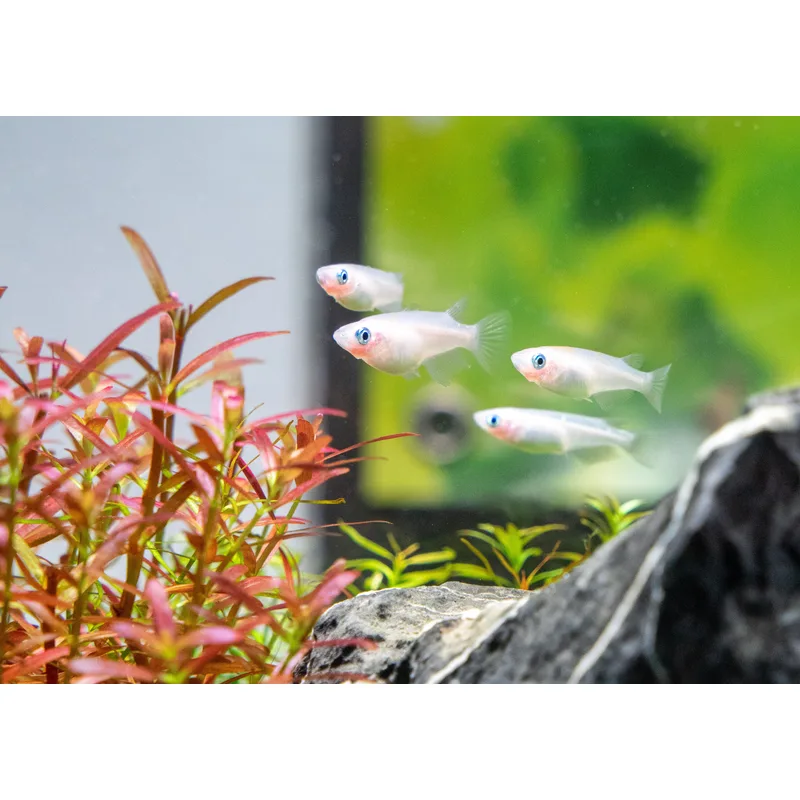
Medaka ricefish (Oryzias latipes) are the most interesting fish to hit North American freshwater keeping in recent years. These small, surface-dwelling fish have been selectively bred in Japan for centuries, producing hundreds of named strains — from the classic orange Youkihi to the iridescent Miyuki blue to translucent varieties that show internal organs under light. They thrive in conditions that would stress most tropical fish, including outdoor container ponds in warm climates.
Ricefish stay compact at about 1.5 inches, breed readily under a simple photoperiod, tolerate temperature extremes that rule out other species, and coexist peacefully with shrimp. If you want a fish that works in nano tanks, outdoor tubs, or planted shrimp setups, medaka are worth serious attention.
This guide covers everything you need — tank setup, water parameters, feeding, breeding mechanics, and egg collection — to keep medaka productively from day one.
Tank Setup
Tank Size
A 10-gallon tank comfortably houses a group of 8-12 medaka. These are social fish that show natural behavior and stay healthier in groups of at least 6. They primarily occupy the upper water column, so horizontal swimming space matters more than depth — a long, shallow tank is better than a tall one.
For breeding setups, a 5-gallon works for a trio (1 male, 2 females), though a 10-gallon gives fry more room and produces faster-growing juveniles. See our Best Nano Tanks guide for suitable options in the 5–10 gallon range.
Filtration
Sponge filters are the right choice for medaka tanks. The gentle flow suits their surface-dwelling habits — strong currents stress them and interfere with feeding. A small sponge filter provides sufficient biological filtration without the flow that pulls fry and eggs into an intake.
Aquarium Co-Op makes reliable sponge filters in sizes from nano to 40-gallon. If you want to compare options at different price points, our Best Sponge Filters roundup covers the full range.
If you use a HOB filter, baffle the output to reduce surface agitation and cover the intake with a foam prefilter. Medaka fry are small enough to get pulled through an uncovered intake.
Hardscape and Plants
Floating plants are medaka’s natural habitat. In the wild, they live in shallow, plant-dense rice paddies and irrigation channels. Water lettuce, salvinia, and frogbit all work well indoors and outdoors, providing shade, cover, and a surface for biofilm development.
Submerged plants like java moss and hornwort provide additional spawning surfaces and fry hiding spots. For breeding tanks, spawning mops positioned at the surface are more practical than live plants — easy to pull out for egg collection, reusable, and never needs trimming.
Water Parameters
Medaka are temperate fish, not tropical. Their wide temperature tolerance is their most distinctive characteristic.
| Parameter | Target Range |
|---|---|
| pH | 6.5–8.0 |
| Temperature | 64–82°F (18–28°C) |
| GH | 4–12 dGH |
| KH | 2–8 dKH |
| Ammonia | 0 ppm |
| Nitrite | 0 ppm |
| Nitrate | <30 ppm |
Temperature
Medaka tolerate temperatures from the mid-50s through the mid-80s, though their productive breeding window is 68–78°F. Below 60°F, spawning stops and metabolism slows. Above 82°F for extended periods, stress increases and disease risk goes up.
No heater is required in most homes. Room temperature in the 68–76°F range is ideal. Outdoor setups in warm climates naturally hit the breeding sweet spot through spring and summer — medaka are one of the few fish that work well in outdoor containers without temperature management.
pH and Hardness
Medaka prefer neutral to slightly alkaline water, pH 6.5–8.0. They come from mineral-rich rice paddies and handle harder water well. Standard tap water in most of the US falls right in range without adjustment.
A GH of 4–12 covers the full range, and medaka are not sensitive to the mineral precision that caridina shrimp keepers work with. Water that would be considered too hard for Crystal Red shrimp is perfectly fine for medaka.
For cycling information before your first stocking, see our Nitrogen Cycle Guide.
Feeding
Medaka are surface feeders. Their upturned mouths are built to take food from the top inch of the water column. Any prepared food should be small enough for mouths under 2mm wide and should stay at or near the surface long enough to be eaten.
Staple Diet
A high-quality micro pellet or crushed flake forms the base diet. Hikari’s Fancy Guppy is a reliable daily food for medaka — the pellet size fits their small mouths, protein content (50%) supports color and breeding condition, and spirulina adds natural color enhancement. It is designed for guppies and small tropical fish, but medaka eat it readily and thrive on it.
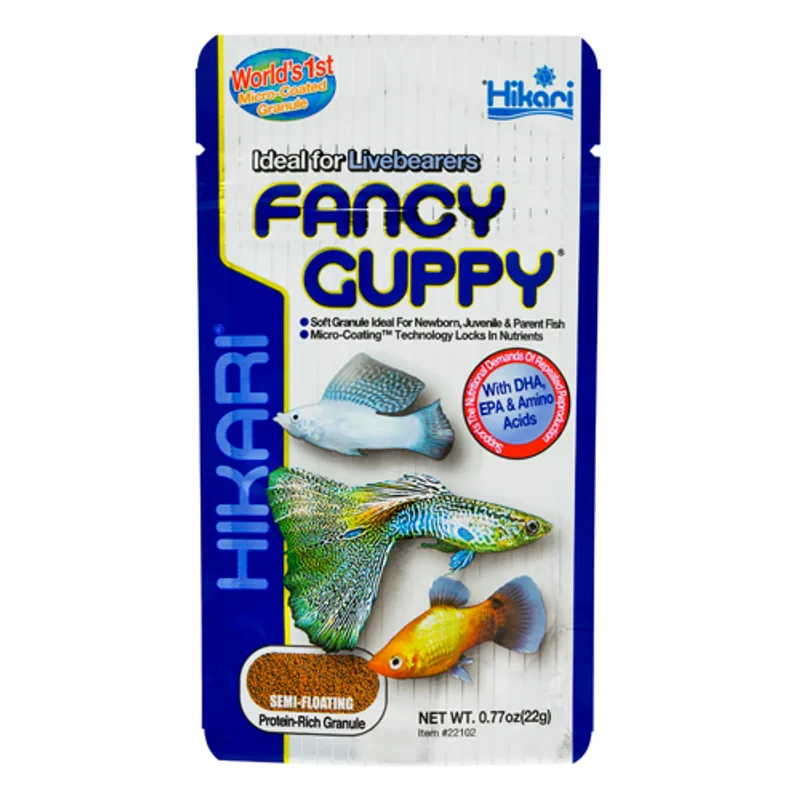
Hikari Tropical Fancy Guppy Fish Food
Best Staple Food- ✓ Micro pellet size is perfect for ricefish mouths
- ✓ High protein and krill content supports breeding condition
- ✓ Spirulina enhances natural coloration
- ✓ Works for guppies, endlers, and all livebearer tanks too
- ✗ Small container — runs out quickly when feeding multiple tanks
- ✗ Not ricefish-specific; general small-fish formula
Supplemental Foods
- Baby brine shrimp: The best live food for breeding condition and fry rearing. Adults eat them greedily at the surface.
- Daphnia: Natural food source medaka pursue actively at the surface.
- Frozen bloodworms: Crumble into small pieces before feeding; occasional treat.
- Vinegar eels and microworms: Ideal first foods for newly hatched fry.
Rotating between food types produces better breeding results than any single food source. Live food in particular drives spawning activity — medaka fed baby brine shrimp 3–4 times per week lay more eggs than those fed dry food alone.
Feeding Schedule
Feed 2–3 times daily, only as much as the fish consume in 1–2 minutes. Medaka have small stomachs. Overfeeding fouls water faster than underfeeding hurts the fish. In outdoor containers with active algae growth and insect fall-in, supplemental feeding can be reduced to once daily.
Breeding
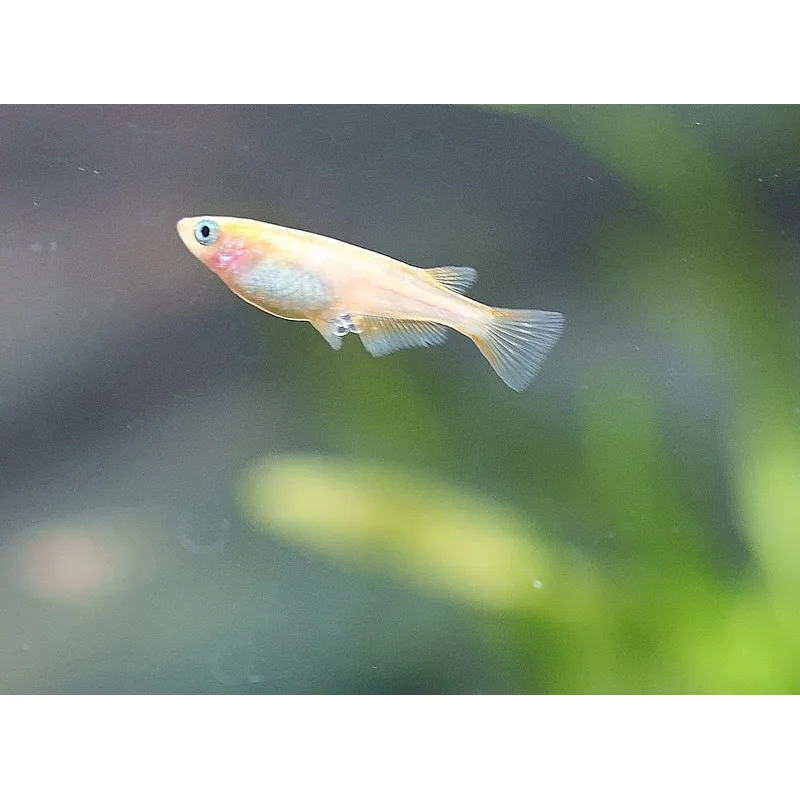
Medaka breeding is triggered by photoperiod and temperature. Females develop eggs in the morning as the lights come on. In breeding condition, you will see grape-like egg clusters attached near the female’s anal fin every morning during the active season. She carries the cluster for several hours before depositing the eggs on fine plants, moss, or spawning mops.
Setting Up a Breeding Tank
A dedicated 5–10 gallon tank with a single trio (one male, two females) is the simplest approach. Keep lights on a timer at 14 hours of light per day — this drives consistent spawning. Maintain temperature between 68–76°F. Feed a high-protein diet and supplement with live food.
Males are slimmer, more active, and display with spread fins. Females are rounder in the belly and carry the visible egg cluster when in condition. Sexing is straightforward in most named strains by 6–8 weeks of age.
Egg Collection Methods
Spawning mops: Position a floating yarn mop at the surface. Females deposit eggs on the mop fibers as part of their morning spawning routine. Remove the mop daily, pick eggs off into a hatching container, and drop the mop back in. The female reloads overnight.
The mop must float — ricefish spend their time at the surface and will not interact with a mop sitting on the bottom. Cork-float mops that keep yarn in the top 2–3 inches of water are correct. Fully sinking mops designed for bottom-spawning fish do not work for medaka.
Direct harvest: Gently hold the female and roll the egg cluster off her belly with a wet fingertip. This takes practice but becomes fast once you have the technique. Female medaka tolerate brief handling better than most small fish.
Incubation
Medaka eggs are remarkably durable — they can be rolled between fingers and handled without cracking. Incubation takes 7–14 days depending on temperature (warmer = faster; 10–12 days at 72°F is typical).
Incubate eggs in a small container of clean, dechlorinated tank water. Remove any eggs that turn white immediately — white indicates infertile or dead eggs, and fungus from them spreads to healthy eggs within hours.
The Ziss ZET-65 egg tumbler handles this automatically. Its gentle air-driven tumbling keeps eggs in motion, prevents stagnant conditions, and dramatically reduces fungal loss without any active monitoring.
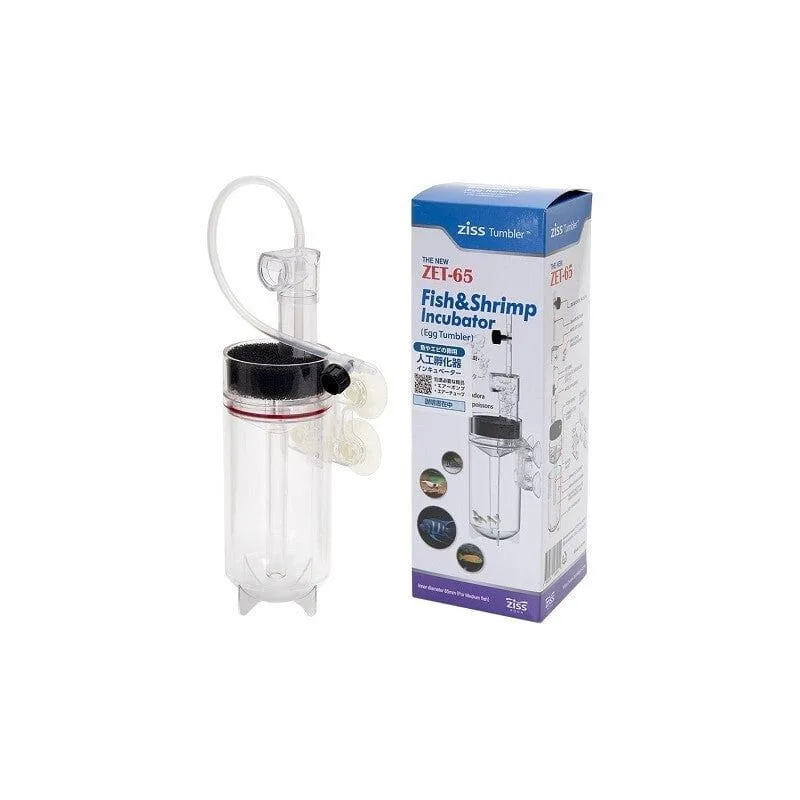
Ziss ZET-65 Egg Tumbler Incubator
Best Egg Incubator- ✓ Gentle tumbling action prevents fungus and improves hatch rates
- ✓ Air-driven — no motorized parts to fail
- ✓ Compact enough for 5-gallon tanks and small hatch containers
- ✓ Works for ricefish, killifish, rainbowfish, and corydoras eggs
- ✗ Requires air pump and airline (sold separately)
- ✗ Small chamber — batch processing needed for very prolific breeders
Fry Care
Medaka fry hatch at about 3mm — extremely small but free-swimming and feeding from day one. First foods should be fine enough for mouths under 1mm: infusoria for the first 3–5 days, baby brine shrimp nauplii starting at day 5–7. Crushed pellets can supplement starting at 2–3 weeks once fry reach 5–6mm.
Maintain water temperature at 75–80°F for fastest growth. A sponge filter on the lowest possible airflow is safe; stronger current exhausts fry this small. Move juveniles back to community tanks once they reach 1cm — at that size, adults will not eat them.
Outdoor Keeping
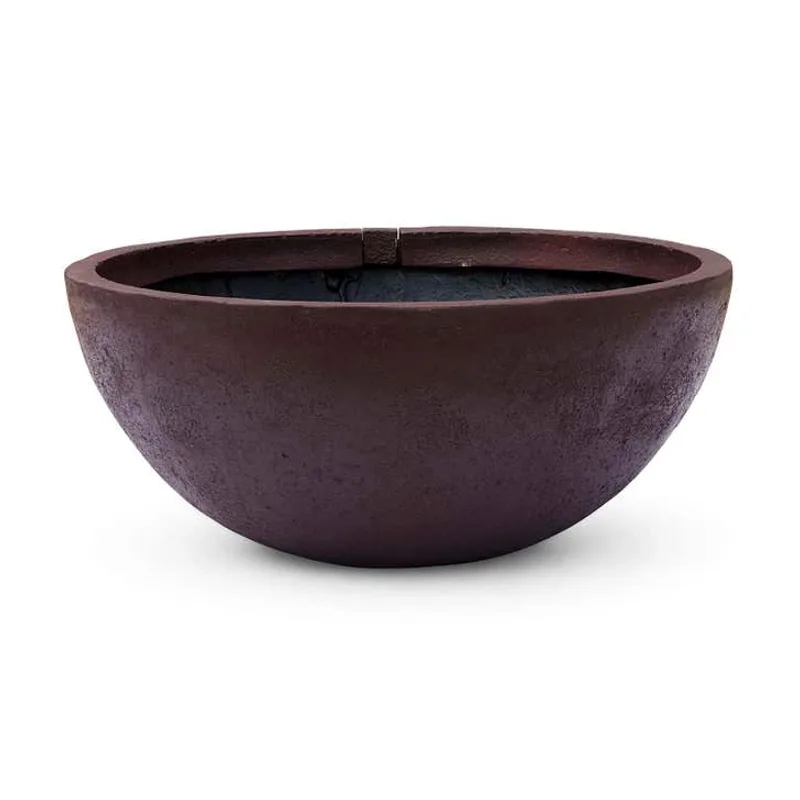
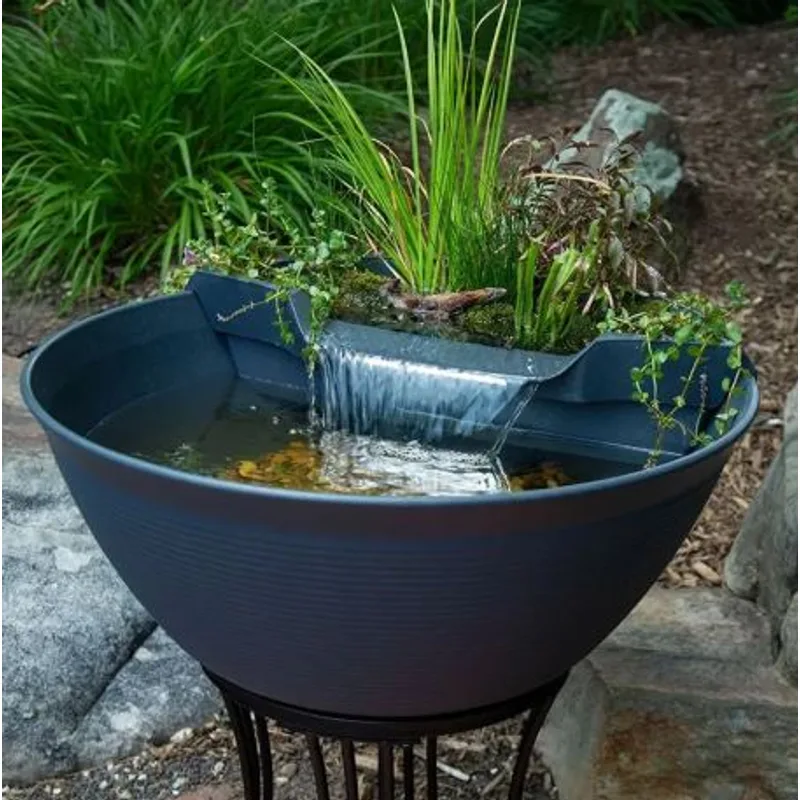
Aquascape Patio Pond 32-Inch Round
Best Outdoor Container- ✓ 20 gallons provides stable temperatures for outdoor medaka colonies
- ✓ Shallow profile suits medaka surface-dwelling behavior
- ✓ Lightweight enough to move indoors for winter
- ✓ Built-in plant shelf and plumbing ports for optional fountain
- ✗ Pump and plants sold separately
- ✗ Terra cotta finish shows water deposits over time
Medaka are the best fish for outdoor container ponds in warm climates. Their temperature tolerance, small size, and peaceful nature make them ideal for any container from a ceramic bowl to a 50-gallon stock tank. In USDA Zones 7-9, outdoor pond season typically runs March through October.
Seasonal Calendar (USDA Zones 7-9)
- March–April: Move medaka outdoors as daytime temps consistently reach 60°F+
- May–September: Peak outdoor season — active breeding, strong growth, natural food from insects and algae
- October: Monitor closely. Bring indoors when lows approach 50°F regularly
- November–February: Indoor housing required
For more container pond options, our Best Patio Pond Kits guide covers containers from 10 to 100+ gallons.
Outdoor Container Setup
A 15–20 gallon container with floating plants and some hornwort creates a complete outdoor medaka habitat. No filter is necessary in a lightly stocked, well-planted outdoor container — biofilm, algae, and natural insect fall-in supplement feeding and maintain water quality.
Position containers for morning sun and afternoon shade. Direct afternoon sun in warm southern climates can push small container temperatures above 90°F on peak summer days — add shade cloth or position containers under trees to manage peak temperature.
Predator Protection
Outdoor containers attract predators. Cats, raccoons, herons, and dragonfly larvae will all take medaka given the opportunity. Mesh covers or stretched netting over containers is non-negotiable for any unattended outdoor setup. Position containers away from areas where cats or raccoons patrol regularly.
Common Health Issues
Fin Rot
Ragged or deteriorating fins usually indicate poor water quality or a bacterial infection following injury. Improve conditions with more frequent water changes and remove any aggressive tank mates. Medaka generally recover quickly once water quality improves without medication.
Mycobacterial Wasting
Fish losing weight despite eating are a concern. Mycobacterial infections are difficult to treat, often fatal, and contagious. Quarantine affected fish immediately. There is no reliable home treatment — focus on water quality and removing visibly ill fish to prevent spread.
Ich
White spots resembling salt grains on the body and fins indicate ich. Raise temperature gradually to 82°F over 48 hours (medaka tolerate this), increase aeration (warm water holds less oxygen), and add aquarium salt at 1 teaspoon per gallon if needed. Treat the whole tank, not just the visible fish.
Overheating (Outdoor Tubs)
In warm southern climates, a small outdoor tub in direct sun can exceed 90°F on a hot afternoon. Add floating plants to shade the surface, use larger containers for more thermal mass, and move containers out of afternoon sun before summer heat peaks.
Frequently Asked Questions
How many medaka should I keep together?
A minimum of 6, ideally 8–12 for a display tank. Medaka are social fish — smaller groups result in shier, less active fish. For breeding, a trio of one male to two females per tank is efficient and produces steady egg production without competition stress.
Can medaka live with shrimp?
Yes. Medaka are among the best fish companions for shrimp tanks. They feed at the surface and largely ignore adult neocaridina shrimp. They will eat some shrimplets, but far fewer than most other fish. In a planted tank, shrimp colonies coexist with medaka comfortably.
Do medaka need a heater?
Not in most homes. Medaka tolerate temperatures from the mid-50s through the low 80s and breed actively between 68–78°F — a range many homes naturally stay within year-round. A heater helps in rooms that get below 64°F in winter, but is not required as baseline equipment.
How often do medaka lay eggs?
Under good conditions — 14-hour photoperiod, 68–78°F, quality diet — females lay egg clusters daily. Each spawn produces 5–20 eggs per female. A productive female through active breeding season can produce 200–400 eggs per month.
Can I mix different medaka strains?
You can keep them together, but they will interbreed. Offspring from mixed-strain pairings produce unpredictable color combinations, usually losing the specific traits of both parent strains within a generation or two. To maintain strain purity, house each strain separately.
Are medaka the same as killifish?
No. Medaka (Oryzias latipes) and killifish are both egg-scattering fish with similar breeding mechanics, but they belong to different families. Medaka are generally easier to keep and breed — they spawn more continuously, handle a wider parameter range, and are far more available in the US market than most killifish species.
How long do medaka live?
Typically 2–4 years in captivity. Lifespan varies by strain and temperature. Medaka kept at cooler temperatures (68–72°F) tend to live longer than those maintained consistently above 78°F.
Conclusion
Medaka ricefish combine easy care with serious depth. The basics are simple — 10-gallon tank, sponge filter, floating plants, 14-hour light cycle, quality micro pellet, and a floating spawning mop. Breeding follows without intervention. Egg collection and fry rearing give you a production system that scales to as many tanks as you want to run.
The outdoor potential is what sets medaka apart. In warm southern climates with outdoor pond season from March through October, a container pond with medaka produces more entertainment per square foot of patio space than almost any other hobby activity. The fish look better in natural light, breed actively through the warm season, and practically manage themselves in a planted container.
Start with a hardy strain like himedaka or platinum. Learn egg collection and fry rearing. Then add the metallic strains — Miyuki, Youkihi — once you have the production system working. Japanese hobbyists have kept medaka for centuries for good reason. The hobby rewards patience and rewards experience with increasingly striking fish.