A winter power outage hits an aquarium from two directions at once. The heater stops, so the water cools. The filter and air pump stop, so oxygen falls and the biofilter starts to suffocate. Of the two, oxygen is the one that kills fish first. A tank at a cool room temperature with moving, oxygenated water is far safer than a warm tank sitting still.
This guide is a plan for the first hour, the first day, and a multi-day outage, plus a short list of low-cost gear worth staging before winter. It applies to tropical community tanks, guppy and shrimp racks, and indoor setups in any climate. If your house is in a warm southern region, a hard freeze can still take the grid down, so the plan is the same.
Quick Picks: Gear Worth Staging Now
- Penn-Plax Silent-Air B11: the pump to buy if you want zero effort. It turns itself on when power drops and keeps a 10 to 29 gallon tank moving on D batteries.
- Aquatop BREZA: the cheaper automatic option. A small sensor plugs into the wall and triggers the pump when power fails.
- hygger USB rechargeable pump: the pick for people who already own power banks. It holds a charge and can be topped up during a long outage.
- Uniheat 72-hour heat packs: the no-power heat source for a sealed, insulated box.
- Polar Tech foam shipper: a cheap insulated holding box for a shrimp colony or breeding group.
- VIVOSUN digital thermometer: you cannot manage a cooling tank you are not measuring.
First Rule: Oxygen Before Heat
Most tropical freshwater fish tolerate a slow slide to the mid-60s °F for a day or two better than they tolerate a still, oxygen-starved tank. Guppies and neocaridina want water above roughly 65°F for the long term, and the species-specific ranges on our guppy care guide and neocaridina care guide apply. Stress, not instant death, is the usual result of a modest chill. A long, deep chill is a different story, which is why we plan for both.
Warm water also holds less oxygen than cool water. Once heat is gone, the oxygen demand of the fish drops as well, which buys time. That is the reason aeration is step one and heating is step two.
The First Hour
- Do not panic-feed. Skip feeding until power returns. Uneaten food decays, and a cooling fish digests slowly.
- Keep the lid and cover closed. Heat loss at the surface is the largest loss on a typical tank. A glass lid or plastic wrap over the opening slows it.
- Add wind and insulation. Drape blankets, towels, or foam board over the top and back and sides. Leave one gap at a corner so air can still exchange.
- Start moving water. If you own a battery or USB pump, connect it now. If you do not, scoop a cup of water and pour it back into the tank from a height every 20 to 30 minutes. It is crude, but it agitates the surface and adds oxygen.
- Read the thermometer. Write down the temperature and the time. The cooling rate tells you how long you have.
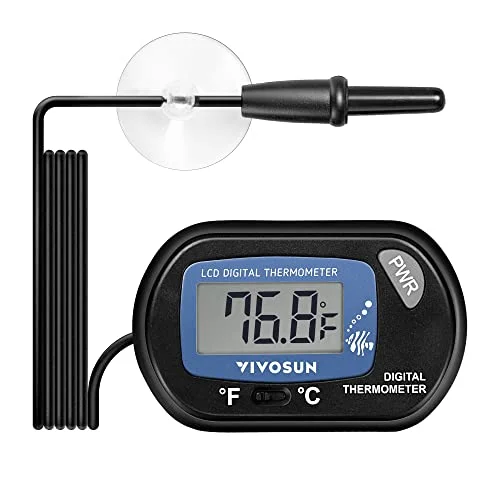
VIVOSUN LCD Digital Aquarium Thermometer
Best Value Monitor- ✓ Cheap enough to keep one in every tank
- ✓ Large display makes quick checks with a flashlight easy
- ✓ Shows exactly how fast the tank is cooling
- ✗ No alarm or logging
- ✗ Suction cup can lose grip over time
Oxygen: Battery and USB Air Pumps
A battery air pump is the best single purchase in this guide. You can run an air stone or sponge filter from it and keep the biofilter breathing. If you already use sponge filters, our best sponge filters guide covers which models pair well with a small pump, and our air pump roundup covers the plug-in pumps that run them every day.
Automatic Backup Pumps
An automatic backup pump senses the loss of AC power and starts itself. That matters because outages tend to happen when nobody is watching the tank. Both options below use disposable D batteries, so store a spare set and rotate them.
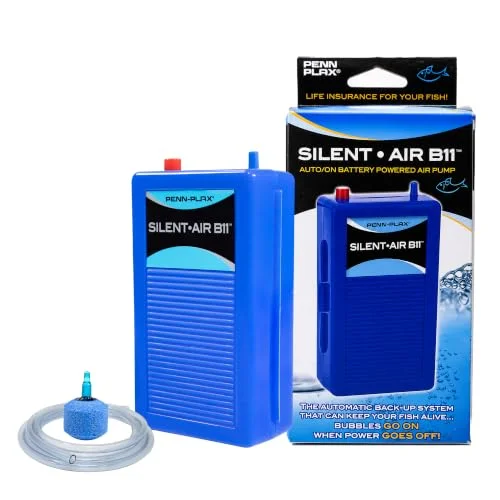
Penn-Plax Silent-Air B11 Battery Powered Air Pump
Best Automatic Backup- ✓ Switches itself on when household power drops, so it works while you are at work or asleep
- ✓ Runs on common D batteries you can keep in a drawer
- ✓ Ships with an air stone, tubing, and a mounting clip
- ✓ Sized sensibly for the 10 to 29 gallon tanks most hobbyists keep
- ✗ Batteries are not included, and rated runtime depends on battery quality
- ✗ Too small to aerate several tanks at once
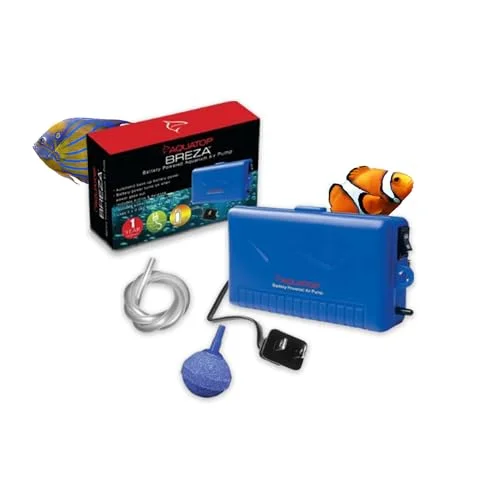
Aquatop BREZA Battery Powered Air Pump with AC Power Failure Sensor
Budget Pick- ✓ Lowest price of the automatic backup pumps here
- ✓ The sensor plugs into a wall outlet and starts the pump the moment power fails
- ✓ Includes an air stone and tubing
- ✗ Sensor must stay plugged into the same circuit as the tank to work
- ✗ Basic build with no flow adjustment
Rechargeable USB Pump
A rechargeable pump removes the battery-shopping step. The tradeoff is that it only helps if it is charged, and most people forget. Put a monthly reminder on your phone, and charge it from a power bank when the grid is down. For a longer outage, a portable power station can run a pump, a phone, and a small heater at once. BackyardRanked, our sister site, covers that in its readiness category, including the best portable power stations for an outage and a power station versus generator comparison.
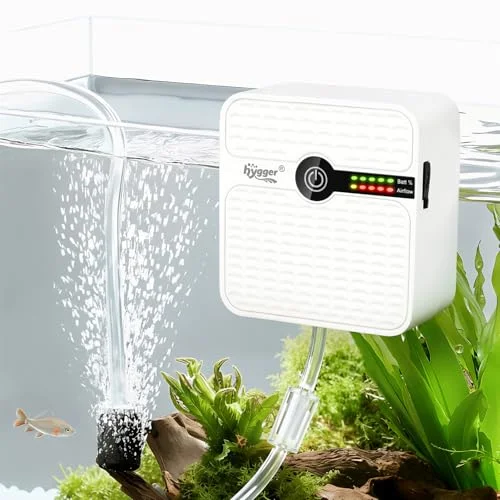
hygger Rechargeable Aquarium Air Pump (USB, 2.5W)
Best Rechargeable- ✓ No disposable batteries to forget about
- ✓ Charges from a wall adapter or a power bank, so it can be topped up during a long outage
- ✓ Continuous and intermittent modes stretch runtime
- ✗ Has to be switched on by hand if you want it as an outage-only backup
- ✗ Battery capacity fades with repeated charge cycles
Heat: What Actually Works Without Power
Insulate First
Heat that is never lost is the cheapest heat. A tank in the middle of a room loses heat faster than one against an interior wall. Wrap three sides and the top with blankets, foam board, or a sleeping bag. Moving a small tank to a bathroom or interior closet can slow cooling, as long as you handle it carefully and keep the water level and equipment secure.
Large tanks cool slowly. A 55 gallon tank can take many hours to lose a few degrees in a heated house, while a 5 gallon tank can drop quickly. Small tanks are the ones to watch, which includes most shrimp and betta setups.
Heat Packs in a Closed Box
Disposable air-activated heat packs are used to ship live fish in cold weather, and the same idea works for a short-term warm box. Two safety rules matter:
- Never put a heat pack in the water or let it touch the glass directly. Hot spots and chemical contact are risks. Tape it to the outside of an insulated container or wrap it in a towel first.
- Do not seal the packs airtight. They need oxygen to produce heat, so leave most of the surface open to air.
A common guideline from hobbyists is roughly one pack per 20 to 30 gallons of water in an insulated setting, adjusted to the temperature you see on the thermometer. Treat that as a starting point, not a promise.

Uniheat 72-Hour Heat Packs (5 Pack)
Best Heat Source- ✓ Needs no electricity, outlets, or batteries
- ✓ Designed for live-animal shipping, so it is built for a closed insulated box
- ✓ Light and compact enough to store with the emergency kit
- ✗ Single use, and output depends on airflow and the surrounding temperature
- ✗ Must never touch fish or sit inside the water
A Warm Holding Box for Small Livestock
If a tank is cracking, leaking, or heading below the safe range for sensitive species, move the livestock to a foam container with water from the tank, an air stone running, and a heat pack on the outside. This is the standard fallback for breeders and shrimp keepers. For caridina shrimp, which prefer cooler water than neocaridina, the goal is stable temperature and oxygen rather than heat, so keep that box cool and aerated rather than warm.
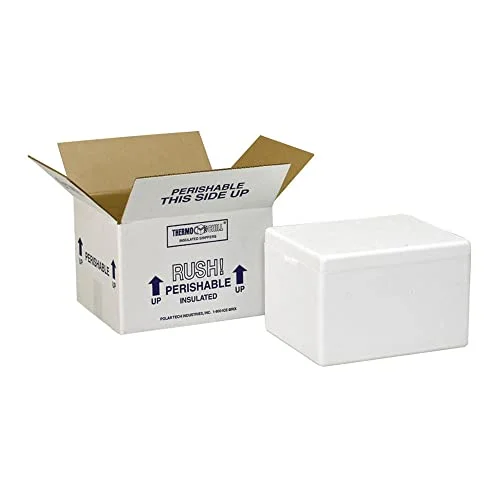
Polar Tech 245C Thermo Chill Insulated Foam Shipper (Medium)
Best Insulated Holding Box- ✓ Foam insulation holds heat far better than a plastic bucket
- ✓ Gives shrimp or small fish a safe fallback container if a tank cracks or chills
- ✓ Pairs with a heat pack for a self-contained warm box
- ✗ Holds a small number of fish, not a full community
- ✗ Another bulky item to store
Warm Water Bottles
For a longer outage, warm dechlorinated water in a sealed bottle floated in the tank gives gentle heat. Use warm, not hot. Water that is too hot can shock fish near the bottle. If you only have tap water, treat it with a dechlorinator first; our dechlorinator guide lists shrimp-safe options.
Shrimp and Sensitive Livestock
Shrimp are more sensitive than most fish to oxygen drops and to sudden swings. Do not use any heat packs, medications, or additives inside a shrimp tank during an outage. Avoid products that contain copper, because copper is toxic to invertebrates. Keep water movement gentle and temperature changes slow. Neocaridina handle roughly 65 to 80°F, while caridina prefer 60 to 74°F, so what is a mild chill for one group is closer to normal for the other. Do not apply the same rule to both.
The Biofilter During a Long Outage
Without flow, the bacteria in a filter run out of oxygen and can die off. When power returns, a stalled filter can release a wave of ammonia and nitrite. Rinse sponge media in a bucket of tank water, never tap water, then restart. Check the water with a test kit for several days afterward and do small water changes if readings climb. Our nitrogen cycle explainer shows what to look for, and our ammonia remover guide covers products for short-term ammonia spikes.
Heaters: What to Do Before and After
A heater is the main thing you lose in an outage, so it is worth knowing what is already on your tanks. Our best aquarium heaters roundup covers current options. After power returns, do not assume the tank is back to normal. Check the thermometer and let the heater bring the temperature up gradually. Some heaters have thermal protection and may behave oddly after a surge, so watch the first cycle.
Outage Checklist for Winter
Print this and keep it next to the tanks.
- Spare D batteries and a flashlight stored near the pump.
- A charged USB pump or power bank.
- Towels, blankets, or foam board cut to the size of your biggest tank.
- An insulated container and heat packs for small livestock.
- A thermometer in every tank.
- A bucket and an air-stone-ready length of tubing.
- A written list of which tanks matter most, in case you need to prioritize.
For the household side of an outage, BackyardRanked’s week without power checklist is a useful companion.
Frequently Asked Questions
How long can aquarium fish survive without power in winter?
It depends on tank size, room temperature, and species. Large tanks in a heated house can stay safe for many hours. Small tanks cool faster. Oxygen is usually the more urgent problem, so aeration should come before heating.
Do I need a heater if I have a battery air pump?
For a short outage, no. A pump keeps water oxygenated while the temperature drifts down slowly. For a multi-day outage, add insulation and a safe heat source.
Can I use a heat pack directly in the tank?
No. Keep heat packs outside the water, wrapped or taped to an insulated container. They also need airflow to work, so do not seal them in plastic.
Will my shrimp survive a power outage?
Often yes, if the outage is short and the water stays oxygenated. Keep changes slow, avoid copper-containing products, and use the right temperature range for neocaridina or caridina.
Should I feed my fish during a power outage?
No. Skip feeding until power and filtration return. Fish can go several days without food, and uneaten food adds ammonia to a stalled tank.
What should I do when power comes back on?
Check the temperature, rinse sponge media in tank water, restart the filter, and test the water for ammonia and nitrite for several days.
Conclusion
If you buy one thing, buy an automatic battery air pump. The Penn-Plax Silent-Air B11 is our top pick because it needs no action from you when power fails, and the Aquatop BREZA is the budget alternative. Add a digital thermometer to every tank, cut insulation to size now, and keep heat packs and a foam box for small livestock as a last resort. Oxygen first, then heat, then patience.
The hygger USB pump is the runner-up for anyone who already owns power banks, and pairs well with a portable power station for longer outages. Staging this gear costs less than replacing one tank of fish.