Southern winters are mild compared to the Midwest or Northeast, but they are not frost-free. USDA Zones 7-9 means average minimum temperatures between 10degF and 20degF, with most winters seeing at least a few nights below freezing and occasional dips into the low 20s. That is cold enough to kill tropical fish in shallow patio ponds and damage frost-sensitive aquatic plants.
The good news is that overwintering a patio pond in USDA Zones 7-9 is straightforward once you understand which species tolerate cold, when to stop feeding, and how to prevent catastrophic freeze events. Most years, a well-prepared pond can stay outside all winter with minimal intervention.
Know Your Fish Temperature Limits
Not all patio pond fish handle cold equally. Here is a practical breakdown:
Cold-Hardy Species (Survive to 32-40degF)
- Medaka ricefish: Tolerate near-freezing water as long as the pond does not freeze solid. They become dormant below 45degF and stop feeding below 50degF.
- White Cloud Mountain minnows: Hardy to near freezing. One of the best choices for USDA Zones 7-9 ponds that stay outside year-round.
- Rosy red minnows: Extremely cold-hardy feeder fish that thrive in outdoor ponds. Will survive USDA Zones 7-9 winters without supplemental heat.
- Goldfish: Most varieties handle USDA Zones 7-9 winters easily as long as the pond is deep enough to prevent full freezing (12+ inches minimum).
Moderate Cold Tolerance (Minimum 50-55degF)
- Endler’s livebearers: Can tolerate brief dips to 55degF but extended cold below 60degF is risky. Bring inside by late October.
Tropical Species (Minimum 65degF)
- Guppies: Need minimum 65degF water. In the South, guppies can live outdoors March through October, but must come inside before the first fall cold snap. November is usually too late.
- Platies: Similar requirements to guppies. Indoor overwintering required.
- Mollies: Least cold-tolerant of common livebearers. Bring inside when water drops below 68degF.
When to Start Winter Prep
In the South, start preparing your patio pond for winter in mid-to-late October. Night temperatures begin dropping below 50degF around this time, and the first frost typically arrives in November.
October Checklist
- Test water parameters and do a large water change to start winter with clean water
- Remove dead plant material — rotting leaves consume oxygen and produce ammonia
- Reduce feeding to every other day, then stop entirely when water temperature stays below 50degF
- Decide which fish stay and which come inside based on the temperature thresholds above
- Position the pond in the most sheltered location possible — against a south-facing wall is ideal
November Actions
- Stop feeding all fish if water temperature is consistently below 50degF
- Move tropical fish indoors to a heated tank
- Add a floating de-icer if temperatures are forecast below 25degF
- Cover with a sheet of bubble wrap or foam board during cold snaps to insulate the surface
Insulation Methods
Bubble Wrap Float
Cut a sheet of large-bubble greenhouse bubble wrap to fit inside your pond surface. Float it directly on the water. This creates an insulating air layer that significantly reduces heat loss through the surface. Remove during milder periods to allow light and gas exchange.
Foam Board Cover
A sheet of rigid foam insulation (1-2 inch thick) cut to fit over the pond acts as a lid during freezing nights. Prop one edge up slightly for airflow. Remove during the day to prevent total darkness.
Blankets and Tarps
Old blankets or moving pads draped over the pond during extreme cold provide emergency insulation. Weight the edges to prevent wind from blowing them off. This is a temporary solution for cold snaps, not a permanent winter setup.
De-Icers
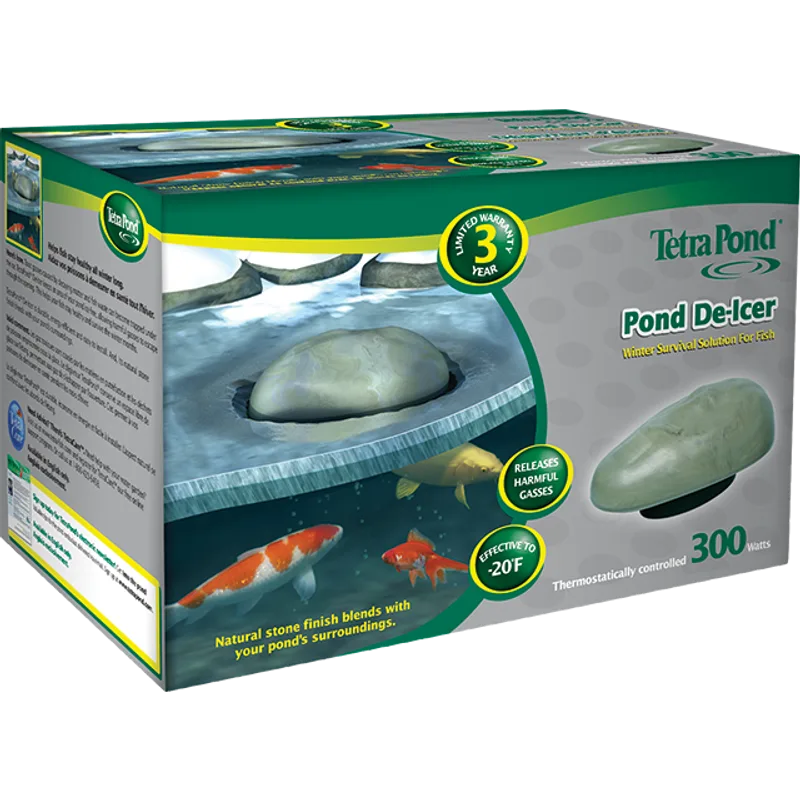
Tetra Pond De-Icer
Best De-Icer- ✓ Thermostat activates only when water nears freezing
- ✓ Keeps a breathing hole open for gas exchange
- ✓ Floats — no mounting needed
- ✗ Uses significant electricity when active
- ✗ Only prevents ice in immediate area, not entire surface
A floating de-icer keeps a small area of the surface ice-free, which is critical for gas exchange. Without an opening, toxic gases from decomposition become trapped under ice and can suffocate fish. The Tetra Pond De-Icer has a built-in thermostat that only activates when water approaches freezing, saving electricity during milder periods.
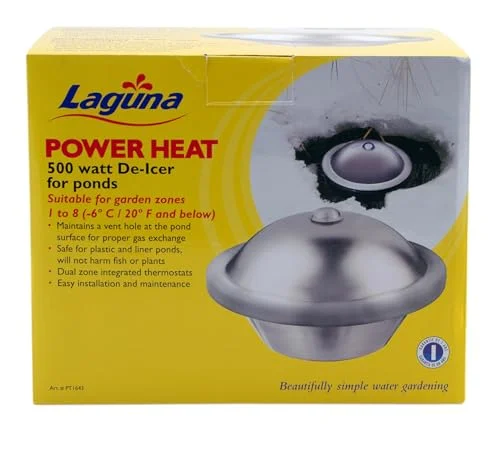
Laguna PowerHeat 500W Pond Heater
Best for Small Ponds- ✓ Thermostat-controlled — only activates near freezing
- ✓ Safe for plastic and liner ponds
- ✓ LED indicator confirms operation
- ✗ Not powerful enough for very large ponds
- ✗ Requires nearby electrical outlet
For smaller patio ponds and tubs, a heated cable wrapped around the outside or submerged along the bottom prevents localized freezing without the energy draw of a full de-icer.
Plant Overwintering
Hardy Aquatic Plants (Leave Outside)
- Hornwort: Dies back in cold water but regrows from fragments in spring. Leave it in the pond.
- Anacharis: Semi-hardy. May survive mild USDA Zones 7-9 winters submerged. Expect some die-back.
- Water lily (hardy varieties): Trim dead foliage, lower the pot to the deepest point in the pond, and leave it. Hardy lilies survive USDA Zones 7-9 easily.
- Sweet flag (Acorus): Hardy perennial. Leave in place — it will go dormant and return in spring.
Tropical Plants (Bring Inside or Treat as Annual)
- Water hyacinth: Will not survive freezing. Bring inside to a sunny window and a tub of water, or compost and buy new in spring.
- Water lettuce: Same as water hyacinth — frost kills it. Indoor overwintering is possible but fussy.
- Tropical water lilies: Must be stored indoors. Remove the tuber, wrap in damp newspaper, and store in a cool (50-60degF) dark place until spring.
Floating Plants
Most floating plants are tropical and will die at the first frost. Red root floaters, dwarf water lettuce, and salvinia are all cold-sensitive. The easiest approach is to bring a small starter portion inside under a grow light and use it to reseed your pond in spring.
Feeding in Cold Weather
The single most common winter mistake is continuing to feed fish in cold water. Fish metabolism slows dramatically below 55degF. Uneaten food sinks, decomposes, and produces ammonia in water where beneficial bacteria are also functioning at reduced capacity.
Above 60degF: Feed normally 50-60degF: Feed sparingly, once every 2-3 days, using easily digestible food (wheat germ-based formulas if available) Below 50degF: Stop feeding entirely Below 40degF: Fish are dormant. Do not disturb them
Resume feeding gradually in spring when water temperature consistently stays above 55degF for at least a week.
Water Quality in Winter
Biological filtration slows in cold water because nitrifying bacteria become less active below 55degF. This is actually fine as long as you are not adding waste through feeding.
Do not do water changes in cold weather unless you detect ammonia. Adding cold tap water can shock dormant fish. If a water change is necessary, match the temperature carefully and change no more than 10-15%.
Keep an eye on water level. Evaporation continues in winter, especially in dry or windy conditions. Top off with dechlorinated water as needed, but add slowly to avoid temperature shock.
Emergency Cold Snap Protocol
When the South gets an unusual hard freeze (below 20degF), take immediate action:
- Cover the pond completely with foam insulation or heavy blankets
- If possible, place a de-icer or small aquarium heater (set to 40degF) in the water
- Check for ice formation every few hours — if ice forms, never break it by hitting the surface (the shockwave can kill fish). Instead, melt a hole by setting a pot of hot water on the ice surface.
- Once the cold snap passes, remove covers gradually to prevent temperature shock from sudden warming.
Bringing Fish Inside: Setup Tips
For tropical species that must come indoors, you do not need an elaborate setup. A simple heated tank with a sponge filter works for overwintering:
- A 10-gallon tank holds a dozen guppies or endlers comfortably
- Set the heater to 72-74degF — just enough to keep them comfortable, not a full tropical setup
- A sponge filter provides adequate filtration for a lightly-stocked overwintering tank
- Feed lightly — fish metabolism is lower in smaller indoor tanks than in summer ponds
- Perform 20% water changes weekly
Move fish indoors in October before temperatures drop — acclimating fish from 70degF pond water to a 74degF indoor tank is much less stressful than emergency transfer from a 50degF pond.
Frequently Asked Questions
Can guppies survive winter outdoors in the warm southern US?
Not reliably. While some hobbyists report guppies surviving mild USDA Zones 7-9 winters in deep, sheltered ponds, the risk of lethal cold snaps is too high. Guppies need a minimum of 65degF, and the South regularly drops below this from November through March. Bring them inside.
Should I run my pond filter in winter?
If the pond does not freeze, a low-flow filter helps with gas exchange and keeps the water circulating. Turn it to its lowest setting to avoid cooling the water by increasing surface evaporation. If ice forms, turn the filter off — circulating near-freezing water actually cools the deeper zones where fish shelter.
How deep does a patio pond need to be to overwinter fish?
For USDA Zones 7-9, at least 12 inches deep for cold-hardy species. Deeper is better — water at the bottom of a 18-24 inch pond stays warmer than the surface. Shallow container ponds (under 8 inches) freeze through too quickly and are not suitable for overwintering any fish.
Can I leave my patio pond empty over winter?
Yes. If you bring all fish and plants inside, drain the pond and store it inverted or covered to prevent water collection and freeze damage to the container. Some resin and ceramic containers can crack if water freezes and expands inside them.
When can I put fish back outside in spring?
Wait until water temperatures consistently stay above 55degF for cold-hardy species, or above 65degF for tropical fish like guppies. In the South, this is typically mid-March for hardy species and late April for tropicals. Test the water before reintroducing fish — ammonia and nitrite can spike in a pond that has been dormant all winter.