Guppies (Poecilia reticulata) and Endler’s livebearers (Poecilia wingei) are close enough, genetically, to cross and produce fully fertile offspring in every generation. That single fact drives two opposite corners of the livebearer hobby: breeders who deliberately cross the two species for new color combinations, and breeders who treat a single stray male as a strain-ending disaster. Both groups need to understand the same genetics.
Our Endler’s Livebearer Care Guide covers the N-Class/P-Class/K-Class system at a general level, and our Guppy Strains and Color Guide covers guppy-only color inheritance. This guide goes further into what actually happens, generation by generation, when the two species cross — how to read a hybrid fish, how to run an intentional hybrid project without contaminating pure stock, and how to back-cross a line that got contaminated by accident.
As of 2024, Poecilia wingei carries an IUCN Endangered listing, with hybridization against wild-type populations named as one of the direct threats. Most fish sold as “Endler’s” in the pet trade today are already hybridized to some degree — practical fishkeeping sources estimate the wild-type-only share of the retail market is small. Understanding the genetics below is not just a breeding-project curiosity; it’s the difference between actually keeping Poecilia wingei and keeping a guppy that looks like one.
Why the Cross Works
Guppies and Endler’s share a genus, a nearly identical chromosome count, and a very recent common ancestor — recent enough that reproductive isolation never fully developed between the two populations. Unlike most interspecies hybrids in the aquarium hobby, which are frequently sterile or produce only a first-generation (F1) litter before hitting a genetic wall, guppy-Endler hybrids stay fertile indefinitely. F1 fish breed with each other, with F2 offspring, and with either parent species, producing viable fry every time.
That absence of a fertility barrier is exactly why a single accidental pairing is permanent. There’s no “one generation and it’s over” reset. Once the two gene pools mix, they stay mixed unless a breeder actively works to separate them back out.
What Happens Generationally
F1: The First Cross
A cross between a pure N-Class Endler male and a common female guppy (or the reverse pairing) produces F1 offspring with a blended phenotype. Body size typically lands between the two species — larger than a pure Endler, smaller than a fancy guppy strain. Fin shape usually leans toward the guppy parent, since guppy fin genes tend to be additive and dominant over the compact Endler fin type. Color pattern in F1 fish is often a genuine blend: Endler-style metallic patches layered under guppy-style tail extension and pattern spread.
F1 males mature and display gonopodium development faster than pure guppies but slightly slower than pure Endler’s — maturation speed is one of the more reliable early tells that a fish carries mixed ancestry, even before color and fin shape are obvious.
F2: Trait Segregation
This is where things get genuinely unpredictable, and it’s also why intentional hybrid projects target the F2 generation specifically. F1 fish carry one full gene set from each parent species. When two F1 fish breed, independent assortment and recombination during gamete formation re-shuffle those genes into new combinations — including combinations that never appeared in either pure parent or in the F1 generation itself.
This is the genetic mechanism behind K-Class hybrids showing color patterns neither an N-Class Endler nor a common guppy produces on its own. A recessive Endler color gene that was masked in F1 can pair up with another copy of itself in F2 and show through. Breeders working intentional hybrid color lines almost always describe their best, most novel-looking fish as F2 or F3 stock, not F1 — the segregation event is where the new combinations actually surface.
F3 and Beyond: The Drift Toward Guppy
Left unmanaged — bred without selection, just colony-style — a hybrid population drifts toward guppy-dominant traits by the third generation. Larger body size, longer fin rays, slower maturation, and less saturated Endler-style metallic color become more common with each unselected generation. This happens because guppy genes for fin length and body size behave as dominant, additive traits across a mixed gene pool, while the compact Endler phenotype requires more specific gene combinations to express.
By F3, most unselected hybrid colonies look like small, oddly colored fancy guppies rather than Endler’s. This is the practical basis for the warning in most Endler’s care content: “one stray guppy male ruins a strain within a few generations.” The genetics explain why — it isn’t that the guppy genes are simply more numerous, it’s that they express more readily once mixed.
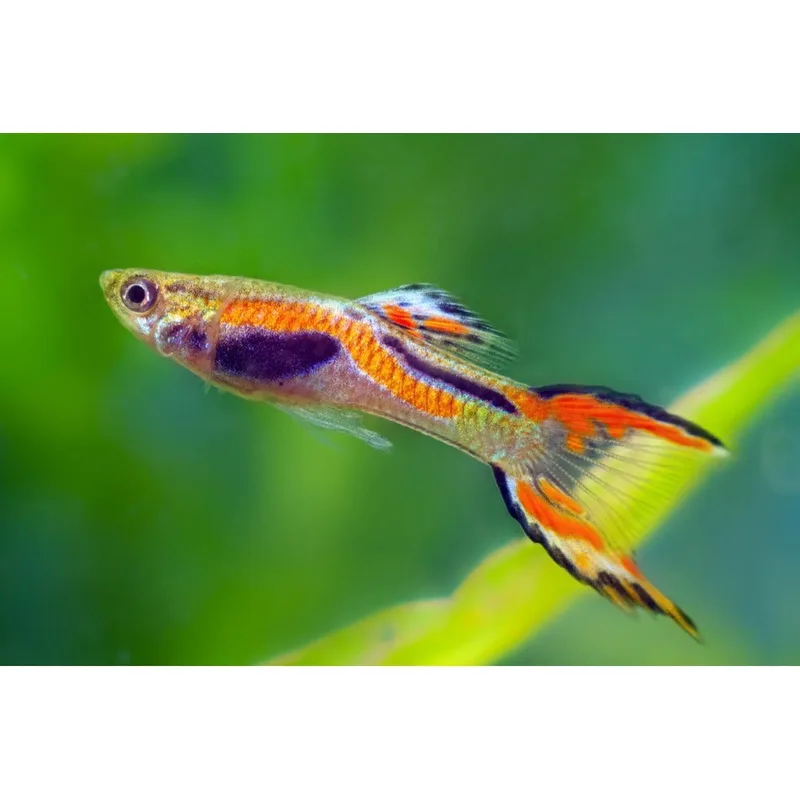
Identifying a Hybrid vs. a Pure Fish
Visual identification gets more reliable with practice, but no single trait is a guarantee on its own. Look at the combination.
| Trait | Pure N-Class Endler | Guppy-Endler Hybrid | Common Guppy |
|---|---|---|---|
| Adult male size | Under 1 in | 1-1.5 in | 1.5-2.5 in |
| Dorsal fin | Small, rounded | Intermediate, variable | Large, often flowing |
| Tail shape | Rounded or slightly pointed | Variable, often elongated | Fan, delta, veil, or lyretail |
| Color pattern | Bold metallic patches, defined edges | Mixed metallic + spread pattern | Solid color or defined pattern, less metallic |
| Maturity speed | Fastest (5-6 weeks) | Intermediate | Slowest (6-8 weeks) |
| Gonopodium development | Visible earliest (~4 weeks) | Slightly delayed vs. pure Endler | Latest to fully develop |
A single trait out of range isn’t conclusive — tail shape especially varies within pure Endler strains. Body size combined with fin shape and maturity speed together is a far more reliable read than any one trait alone. When in doubt, the fish’s third or fourth generation of offspring will confirm it: pure lines breed true, hybrid lines keep producing variable results.
Intentional Hybrid Projects (K-Class)
Not every hybrid is a mistake. A meaningful part of the livebearer hobby deliberately crosses guppies and Endler’s to chase color combinations that don’t exist in either pure species — the segregation event in F2 is the entire point. Breeders running this kind of project treat it the same way a guppy strain breeder treats any new line: select the best F2 and F3 fish for the traits they want, cull the rest, and stabilize the line over several more generations of selective breeding.
The one non-negotiable rule for K-Class projects: label them honestly and isolate them permanently. K-Class fish get sold and displayed as known hybrids, never as Endler’s, and they never share a tank, net, or gravel siphon with an N-Class breeding program. The moment a K-Class male reaches an N-Class tank, the purity work in that tank is over.
Protecting Strain Purity: Physical Isolation
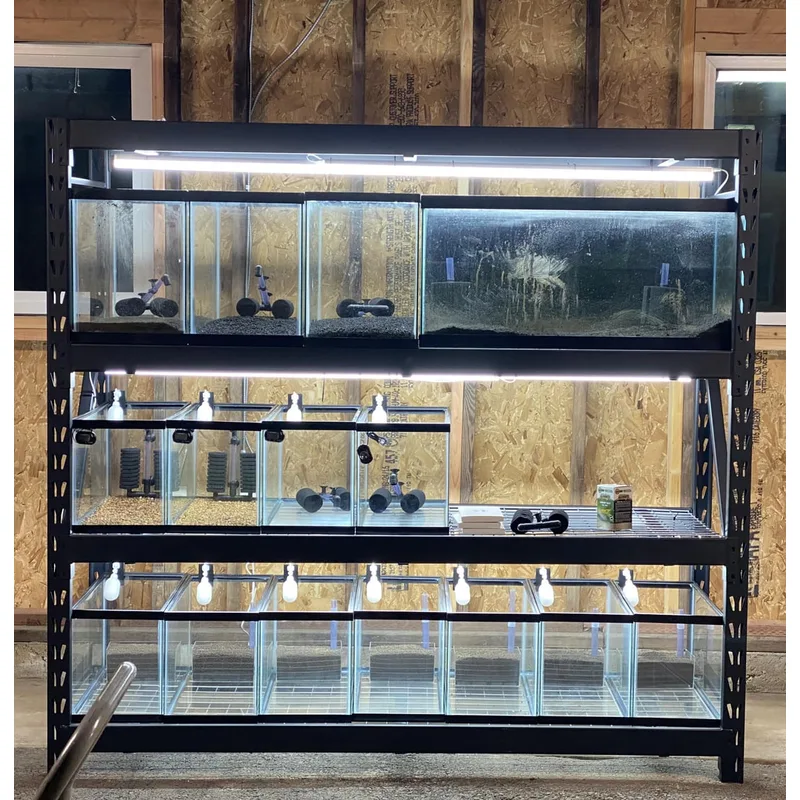
The practical side of strain-purity work is almost entirely about physical separation, not genetics knowledge. Dedicated tanks per line, dedicated equipment per line, and a hard rule against moving fish between lines without a documented reason.
A divider panel lets a single tank host two genuinely separated groups when you don’t have rack space for another full setup — useful for holding a newly acquired, unverified batch of “Endler’s” apart from a confirmed N-Class colony while you evaluate them over a generation or two.
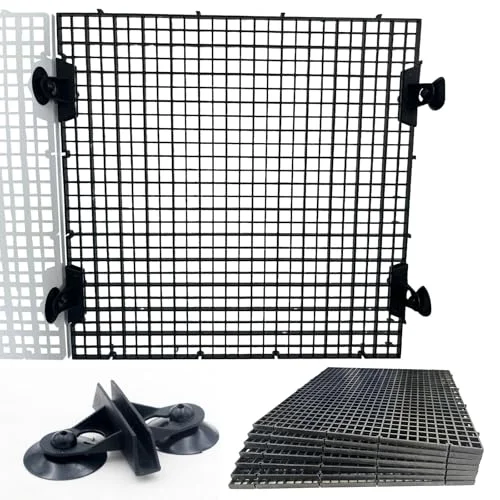
TQDXZA Aquarium Divider Panel (8-Pack Grid)
Best for In-Tank Isolation- ✓ Eight panels combine to fit most standard tanks, so one tank can host two separated colonies
- ✓ Perforated design keeps water chemistry and temperature identical on both sides
- ✓ Suction-cup mount requires no drilling or permanent tank modification
- ✓ Inexpensive way to add a second isolation zone without buying another tank
- ✗ 0.35-inch holes are wide enough for newborn fry to pass through — don't rely on this to stop fry from crossing sides
- ✗ Suction cups can lose grip on silicone seams over time and need occasional reseating
Keep in mind the perforations that let water circulate freely between sides also let newborn fry through. A divider like this separates adult breeding stock reliably; it does not substitute for pulling gravid females before they drop fry into a shared water column. For that step, an external holding box lets you isolate a suspect female completely until she gives birth, so you can evaluate the fry in complete isolation from either colony.
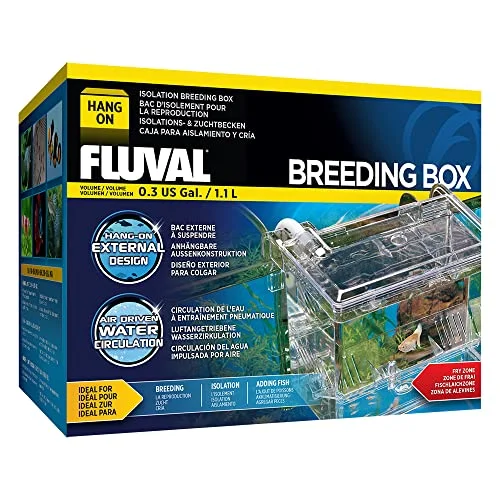
Fluval Multi-Chamber Holding and Breeding Box (Medium)
Best for Isolating Gravid Females- ✓ External mounting holds a female outside the tank without losing internal space
- ✓ Multiple chambers separate a pregnant female from her fry after she gives birth
- ✓ Clear plastic walls make it easy to check for early signs of hybrid traits in the fry
- ✓ Air-pump-driven flow keeps water in the box matched to the main tank
- ✗ Slots between chambers are wide enough for guppy- and Endler-sized fry to slip through, so it's not fully fry-proof
- ✗ Requires an air pump and airline running continuously
For a broader range of separation equipment, our Best Breeder Boxes and Best Fry Traps roundups cover options beyond what’s featured here.
Quarantine Every New Fish as a Suspect Hybrid
Any Endler’s purchased without a documented N-Class pedigree — which describes most fish sold at chain pet stores — should be treated as P-Class (unverified) until proven otherwise. Hold new stock in an isolated tank for at least one full generation. If the resulting fry breed true to Endler-type traits across that generation, the line is probably clean. If fry show guppy-type drift, it confirms hybrid ancestry before it ever reaches an established colony.
Matching water parameters across isolated tanks removes one variable from that evaluation. If a quarantine tank runs noticeably different hardness or TDS than the main colony, phenotype differences in the fry could be a nutrition or water-quality effect rather than genetics. A TDS meter run across every tank on a rack keeps that comparison honest.
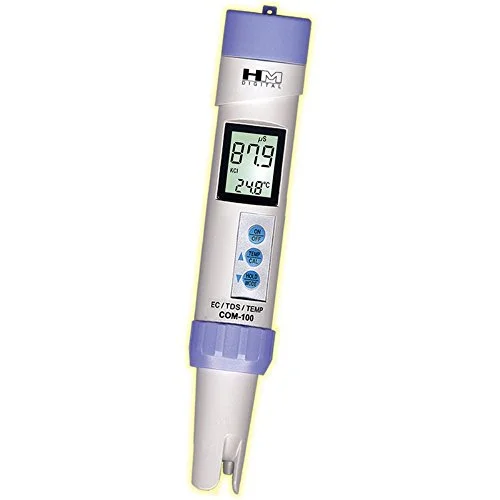
HM Digital COM-100 Waterproof EC/TDS/Temp Combo Meter
Best for Matching Parameters Across Colonies- ✓ Keeps every isolated colony tank on matched TDS, which removes water-parameter drift as a confounding variable in a purity or breeding project
- ✓ Waterproof housing survives being dunked directly into a breeding tank
- ✓ Auto-off and a durable housing hold up to daily use across a breeding rack
- ✓ One meter covers every tank instead of buying separate strip tests per rack
- ✗ Manual calibration is an extra step most single-tank keepers skip
- ✗ Reads TDS/EC only — pair with a liquid test kit for ammonia, nitrite, and pH
Back-Crossing to Recover a Contaminated Line
When contamination happens anyway — and on a multi-tank rack, it eventually does — back-crossing is the only path to recovering something close to pure stock, and it only works with access to verified N-Class fish to cross back into.
The math is straightforward. Each back-cross generation roughly doubles the percentage of the target species’ genome recovered in the offspring, assuming the breeder always crosses back to a verified pure parent:
- F1 hybrid: 50% Endler genome, 50% guppy genome
- BC1 (F1 x pure N-Class Endler): approximately 75% Endler genome
- BC2 (BC1 x pure N-Class Endler): approximately 87.5% Endler genome
- BC3 (BC2 x pure N-Class Endler): approximately 93.75% Endler genome
Even after several back-cross generations, the line is never provably 100% pure without genetic testing most home breeders don’t have access to — there’s always a residual guppy fraction, mathematically halved each generation but never fully eliminated. This is why serious N-Class breeders treat documented, never-contaminated lineage as irreplaceable. A contaminated line can be pushed very close to pure again; it can’t be certified pure the way an unbroken N-Class line can.
Feeding a Mixed Breeding Program
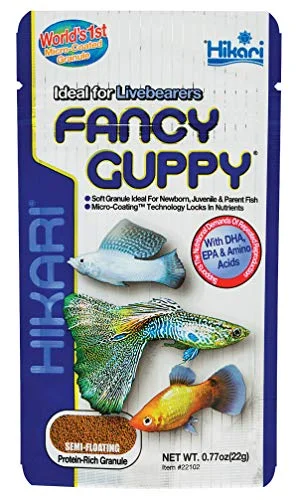
Diet doesn’t need to change between pure and hybrid colonies — a high-protein micro pellet with spirulina works identically across guppies, Endler’s, and every hybrid generation in between, and consistent feeding removes another variable when you’re trying to judge whether a phenotype difference is genetic or nutritional.
Hikari Tropical Fancy Guppy Fish Food
Best Breeding-Condition Food- ✓ Micro pellet size fits both guppy and Endler mouths at any generation
- ✓ High protein and krill content support breeding condition in males and gravid females
- ✓ Spirulina content brings out color, which matters when you're visually tracking hybrid traits
- ✓ Works identically across pure and hybrid colonies, so feeding stays simple
- ✗ Small container empties fast when feeding several isolated colony tanks
- ✗ Not species-specific — a general small-livebearer formula, not a purity aid
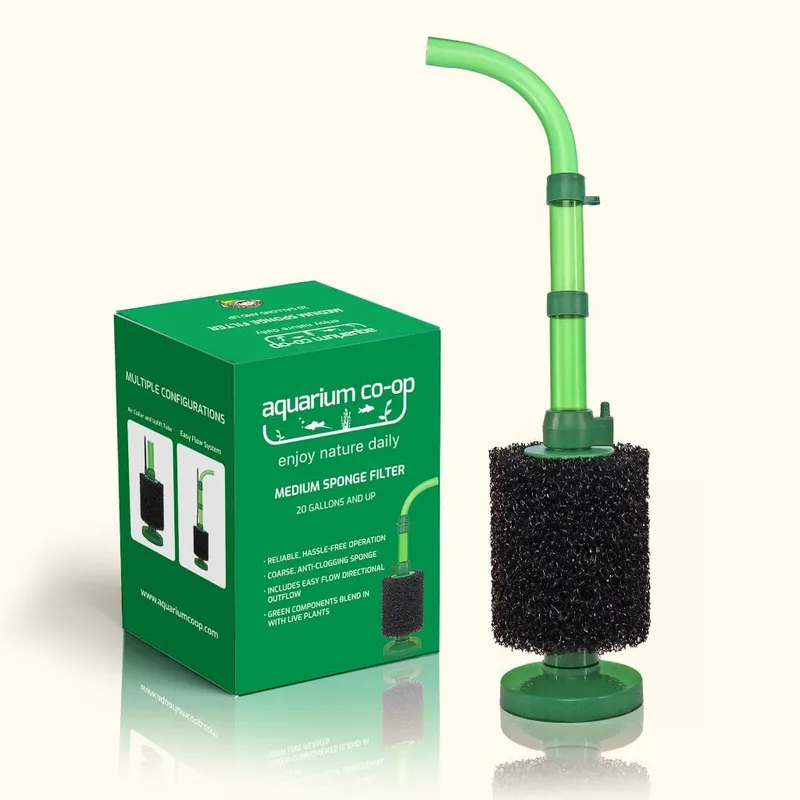
Run the same sponge filter model across every tank on the rack. Beyond the fry-safety benefit, using identical equipment across isolated tanks means any trait difference you observe between colonies is more likely to be genuine genetics rather than a side effect of different flow, filtration, or turnover between setups. The gentle flow is also shrimp-safe, which matters if any of your isolation tanks double as neocaridina shrimp colonies — the same sponge won’t pull in shrimplets the way an HOB intake can.
Aquarium Co-Op Small Sponge Filter
Best Filter for Isolated Colony Tanks- ✓ Gentle flow means fry from any cross survive filtration in the first weeks
- ✓ Cheap enough to dedicate one filter per isolated colony tank without a big equipment bill
- ✓ Sponge surface grows biofilm that fry graze between feedings
- ✓ Simple to run across an entire breeding rack without sourcing multiple filter models
- ✗ Requires a separate air pump and airline tubing per tank
- ✗ Provides no chemical filtration, so water changes still matter
Frequently Asked Questions
Can guppies and Endler’s actually interbreed?
Yes, readily, and the offspring are fertile in every subsequent generation — there’s no sterility barrier like the kind that stops many interspecies crosses after F1. This is exactly why accidental contamination is permanent without active back-crossing.
How can I tell if my “Endler’s” are actually hybrids?
Look at the combination of body size, fin shape, color pattern, and maturation speed rather than any single trait. Pure N-Class males stay under an inch with rounded fins and bold, sharply defined metallic patches; hybrids trend larger with more guppy-style fin extension and blended color patterns. The most reliable test is breeding them — pure lines produce consistent offspring, hybrid lines produce variable results.
Is it wrong to intentionally breed guppy-Endler hybrids?
No, as long as the fish are labeled and sold honestly as K-Class hybrids and kept permanently separate from documented N-Class breeding stock. Plenty of hobbyists run dedicated hybrid color projects. The problem is only ever undocumented, accidental, or mislabeled crossing.
How many generations does it take for a guppy male to ruin an Endler colony?
Guppy-dominant traits are usually visibly established by F3, sometimes earlier. Fin length, body size, and reduced metallic color intensity increase with each unselected generation because guppy genes for those traits tend to express more readily than the compact Endler phenotype once the gene pools mix.
Can back-crossing fully restore a contaminated line to pure N-Class status?
Not with certainty. Each back-cross generation to a verified pure parent roughly halves the remaining non-target genome — 50% after F1, 75% after one back-cross, 87.5% after two — but a residual fraction always remains without genetic testing most hobbyists don’t have access to. Back-crossing gets a line very close to pure; it doesn’t make it provably pure the way an unbroken N-Class lineage is.
Do I need different water parameters for a hybrid colony versus a pure Endler or guppy colony?
No. Guppies and Endler’s overlap closely enough in water parameter tolerance that hybrids fall within the same range as either parent. The reason to keep parameters matched across isolated tanks isn’t a hybrid-specific requirement — it’s to remove water quality as a confounding variable when you’re trying to judge whether an observed trait difference is genetic.
Where do I get verified N-Class Endler’s for a back-crossing program?
The same sources recommended for starting a pure Endler’s colony in the first place — dedicated livebearer breeders with documented lineage, most commonly found through hobbyist forums and Facebook breeding groups. Flip Aquatics is one of the few commercial sources that maintains documented N-Class strains. Chain pet stores are not a reliable source for back-crossing stock.
Conclusion
The genetics behind a guppy-Endler cross explain both sides of this topic: why an intentional hybrid project can chase genuinely new color combinations through F2 segregation, and why a single accidental pairing permanently threatens a pure N-Class line with no sterility reset to undo it. Both outcomes come from the same underlying biology — full fertility across every generation, and guppy-dominant traits that express readily once the two gene pools mix.
If strain purity is the goal, physical isolation is what actually protects it — separate tanks, separate equipment, and a quarantine generation for any new stock without documented lineage. If a line gets contaminated anyway, back-crossing to verified N-Class fish is the recovery path, understanding that each generation gets closer to pure without ever reaching a provable 100%. And if novel hybrid color is the goal instead, there’s nothing wrong with running that project openly — just keep it labeled honestly as K-Class and permanently separated from any pure breeding program in the same fish room.