AquaRanked is reader-supported. When you buy through links on our site, we may earn an affiliate commission.
Guppy genetics are deceptively complex. What looks like a simple “blue fish” or “red fish” is actually the result of multiple genes interacting — color genes, pattern genes, tail shape genes, and modifiers that alter how all of those express. Understanding even the basics of guppy genetics helps you breed more predictable results, maintain strain purity, and appreciate why that Moscow Blue male looks the way he does.
This guide covers the major guppy strain categories, color genetics, tail types, and practical advice for maintaining strains in a home breeding setup.
Color Genetics Basics
Guppy color is controlled by multiple gene types working together:
Base Body Color
The base body color gene determines the underlying color of the fish. The three main types:
- Grey (wild-type): The natural background color. Grey-bodied guppies have dark melanophores that create a greyish undertone. Most fancy guppies are built on a grey base.
- Blonde (golden): A recessive mutation that reduces dark melanophores, making colors appear lighter and more vivid. Blonde guppies look “washed out” compared to grey-bodied fish of the same strain.
- Albino: Eliminates dark pigment entirely. Albino guppies have red or pink eyes and display only yellow, orange, and red pigments. True albinos are recessive — both parents must carry the gene.
Color Pigments
Guppies produce color through specialized cells:
- Melanophores: Black and brown pigments. These create the dark patterns, spots, and body coloring in many strains.
- Xanthophores: Yellow and orange pigments. Responsible for yellow, gold, and orange coloration.
- Erythrophores: Red pigments. Create the vivid reds in strains like Red Moscow and Full Red.
- Iridophores: Metallic and iridescent pigments. These produce the blues, greens, and purples that make guppies shimmer. Iridophore expression is what separates a good blue guppy from a great one.
Y-Linked vs. X-Linked Color
Many guppy color genes are sex-linked — they sit on the X or Y chromosome:
- Y-linked traits pass from father to son. Male coloration often comes from Y-linked genes, which is why sons frequently resemble their fathers.
- X-linked traits pass from mother to sons (and from both parents to daughters). Some color patterns are X-linked, meaning the mother’s genetics heavily influence her male offspring’s appearance.
- Autosomal traits (on non-sex chromosomes) pass equally from both parents and affect both sexes.
Understanding which traits are Y-linked, X-linked, or autosomal helps you predict offspring when crossing strains.
Major Guppy Strains
Solid Color Strains
Full Red: Entire body and tail covered in deep red. One of the most popular strains. Good Full Reds have no blue, green, or black spots — just solid red from nose to tail tip. Maintaining purity requires culling fish with any non-red coloring.
Moscow Blue: Dense, metallic blue covering the body and extending into the tail. The “Moscow” gene creates a full-body metallic sheen that other blue strains lack. Moscow Blues are darker and more intense than standard blue guppies.
Moscow Green: Similar genetics to Moscow Blue but expressing green iridophores instead of blue. True Moscow Greens are harder to find and maintain, as green tends to drift toward blue over generations without careful selection.
Albino Full Red: A Full Red on an albino base. The absence of melanophores makes the red appear even more intense, almost neon. The red eyes are a giveaway for the albino gene. These fish are more light-sensitive than non-albino strains.
Platinum White: A strain with dense iridophores that create a solid white or platinum appearance. The body looks metallic silver-white, and the tail may carry slight coloring depending on the line.
Patterned Strains
Cobra (King Cobra/Snakeskin): Distinctive snakeskin pattern across the body with rosette-like markings. The cobra pattern is controlled by an autosomal dominant gene, meaning it shows up in first-generation crosses. Cobra guppies often have intricate patterns in the tail as well.
Tuxedo: The back half of the body is dark (black or very dark blue), creating a “tuxedo” effect. The front half and tail can be any color. Tuxedo is a popular base for multi-colored strains like Tuxedo Red and Tuxedo Koi.
Japanese Blue: A metallic blue-green strip running along the body, typically paired with a colored tail. Japanese Blue is X-linked, so it passes from mothers to sons. Crossing a Japanese Blue female with a Red male can produce stunning Japanese Blue Red offspring.
Koi: Named for the resemblance to koi fish, these guppies have patches of red, white, and sometimes black. Koi guppies are typically built on a blonde or albino base with irregular color patches. No two Koi guppies look exactly alike, which is part of their appeal.
Dumbo Ear (Elephant Ear): Not a color strain but a fin morph. Dumbo guppies have enlarged pectoral fins that look like elephant ears. These can be combined with any color strain — Dumbo Red, Dumbo Blue, Dumbo Cobra, etc.
Tail Shape Categories
Tail shape is separate from color genetics and can be combined with any color strain:
- Delta/Triangle Tail: The most common fancy guppy tail. Fan-shaped with a wide spread, ideally 60+ degrees. This is the standard for show guppies.
- Halfmoon: An extreme delta with a 180-degree spread. Difficult to breed consistently and the tails are fragile.
- Round Tail: A shorter, rounded tail. Common in wild-type and some pet store guppies.
- Sword Tail (top/bottom/double): Extensions from the top, bottom, or both edges of the tail. Top swords have an extension from the upper edge. Bottom swords from the lower edge. Double swords have both.
- Lyretail: A forked tail with elongated upper and lower rays and a shorter center. Elegant but delicate.
- Pin Tail (Needle Tail): An extremely narrow, pointed tail. Less common in hobby circles.
- Spade Tail: A pointed tail shaped like a spade. A classic look that has fallen somewhat out of fashion.
- Flag Tail: A rectangular tail with straight edges. Popular in some Asian breeding lines.
Maintaining Strain Purity
Colony Breeding vs. Line Breeding
Colony breeding involves keeping a group of males and females together and letting them breed freely. This is the easiest approach and works fine for pet-quality guppies. Over time, the strain may drift as random genetic combinations produce variation.
Line breeding is more controlled. You select specific males and females based on desired traits and pair them deliberately. Offspring are culled (removed from the breeding program, not necessarily killed) if they do not meet the standard. Line breeding produces more consistent, higher-quality fish but requires more tanks and more effort.
The Three-Tank Method
Serious guppy breeders use a minimum of three tanks:
- Breeding tank: One selected male with 2–3 selected females
- Male grow-out tank: Young males growing out for evaluation
- Female grow-out tank: Young females growing out for evaluation (females must be separated before they reach sexual maturity to prevent uncontrolled breeding)
As males develop color (usually by 8–12 weeks), you evaluate them against your strain standard. The best males go back into the breeding tank. The rest are sold, given away, or kept as pets in a separate tank.
Equipment for the Three-Tank Method
Running three tanks per strain means either buying more tanks or splitting the ones you already have. Both approaches are common in a working fish room.
Splitting one tank into two: An acrylic divider turns a single 20-gallon into a functional two-section setup for less than the price of another aquarium. This is the fastest way to separate males from females before you are ready to commit a whole tank to grow-out, or to isolate one pairing without pulling a tank out of rotation.
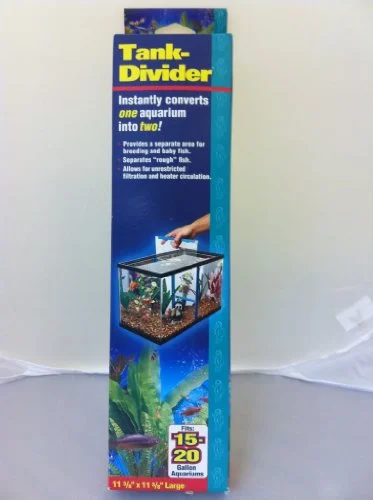
Penn-Plax Aquarium Tank Divider, Clear Blue
Best for Splitting One Tank- ✓ Converts one tank into two functional spaces for less than a second aquarium costs
- ✓ Clear acrylic does not block light or visibility between sections
- ✓ Suction-cup mounting is quick to install and reposition
- ✗ Not a full water-quality barrier — waste and ammonia still mix through the water column
- ✗ Sizing is tank-specific, so measure before buying
A dedicated grow-out tank: Once fry are large enough to sex reliably (6–8 weeks), mixed-sex grow-out tanks become accidental breeding tanks. A basic 10-gallon setup with filtration and heat built in is enough space for one generation of juveniles from a single pairing.
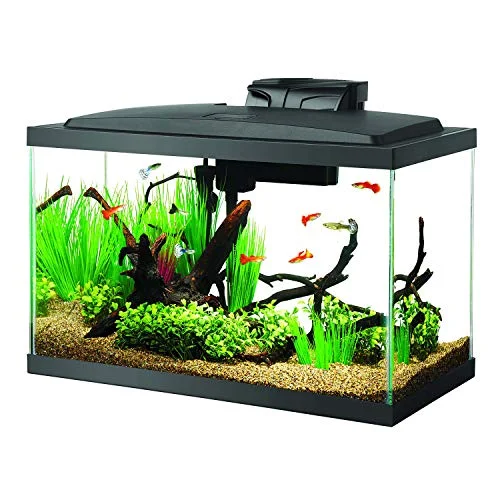
Aqueon 10 Gallon Aquarium Starter Kit
Best Grow-Out Tank- ✓ Everything needed for a dedicated grow-out tank in one box
- ✓ 50W preset heater holds guppy-safe temperature without a separate controller
- ✓ USA-made glass aquarium is durable for a rack setup that gets moved and reused
- ✗ Included HOB filter intake needs a pre-filter sponge to stop small fry from being pulled in
- ✗ LED hood is basic — fine for grow-out, not built for a planted display
For fry too small for a normal filter, a sponge filter is the safer call over a hang-on-back — no intake risk, and you can seed a new grow-out tank fast by moving over media from an established one. Sponge filters are also the standard choice if your grow-out rack shares space with a shrimp colony, since there is no impeller to pull in shrimplets and nothing in the filter itself that affects water chemistry.
Handling fish without damaging fins: Fancy tail types are fragile, and a stiff or coarse net will tear a halfmoon or lyretail. A soft, fine-mesh net reduces that risk during routine transfers between grow-out and breeding tanks.
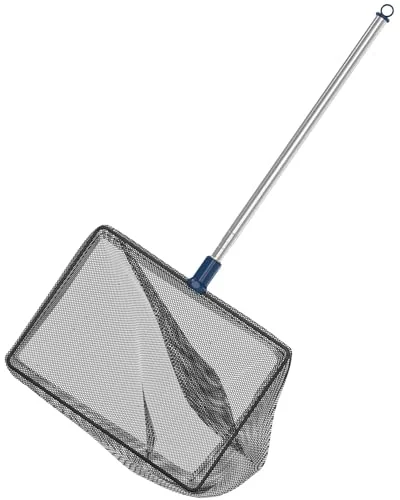
Pawfly 3 Inch Aquarium Fish Net, Soft Fine Mesh
Best for Fragile Fin Types- ✓ Soft fine mesh will not snag or tear halfmoon and lyretail fins
- ✓ Small size gives precise control when netting one fish out of a colony
- ✓ Telescoping handle reaches into deep or tall grow-out tanks
- ✗ Too small for scooping large batches of fry at once
- ✗ Stainless handle needs a rinse after use to prevent water spots
To catch a pregnant female’s drop in the first place, a breeder box or fry trap keeps the fry contained until you can sort and move them to grow-out — see those guides for options sized to your tanks. For tank setup and water parameters before any of this, our guppy care guide covers the basics.
Culling for Quality
Culling does not mean killing fish. It means removing fish from your breeding program that do not meet the standard. Fish with off-colors, poor tail shape, body defects, or weak finnage get moved to a pet tank or sold. Only the best examples breed the next generation.
For most hobby breeders, keeping 2–3 “cull” tanks of mixed guppies alongside a breeding program is the norm. These fish are perfectly healthy and beautiful — they just do not meet the specific criteria for the strain you are developing.
Avoiding Inbreeding Depression
Line breeding necessarily involves some inbreeding, and over many generations, this can lead to reduced fertility, smaller broods, weaker immune systems, and increased deformities. To counter this:
- Outcross periodically. Every 6–8 generations, introduce an unrelated male or female of the same strain from a different breeder. This refreshes the gene pool without losing strain characteristics.
- Keep colony size reasonable. Larger breeding groups have more genetic diversity than a single pair.
- Track generations. Keep a simple log of which fish bred which offspring. When you notice smaller broods or increased deformities, it is time to outcross.
Common Color Combinations and Crosses
Predictable Crosses
- Full Red x Full Red: Produces Full Red offspring (most of the time). Occasional throwbacks with reduced red coverage need culling.
- Moscow Blue x Moscow Blue: Consistent Moscow Blue offspring. The Moscow gene is relatively stable.
- Cobra x any solid color: First-generation offspring will show the cobra pattern (dominant gene). The color from the solid parent modifies the cobra pattern coloring.
Unpredictable Crosses
- Two different solid colors (e.g., Red x Blue): First generation may look muddy or intermediate. Sorting requires multiple generations to stabilize a new look.
- Koi x Koi: Koi pattern is inherently variable. Each fry looks different, and replicating a specific Koi pattern is nearly impossible.
- Mixing Y-linked and X-linked strains: Results depend on which parent carries which linked genes. Without knowing the specific genetic background, outcomes are unpredictable.
Frequently Asked Questions
How old do guppies need to be before I can identify their strain?
Males start showing color at 4–6 weeks and are fully colored by 12–16 weeks. You cannot reliably evaluate a male’s final coloring until at least 10 weeks. Females show much less color but can be assessed for body shape and tail form by 8–10 weeks.
Can I create my own guppy strain?
Yes, but it takes time and many tanks. Select a trait you want to develop, pair fish that express it, cull offspring that do not, and repeat for 8–15 generations (roughly 2–3 years). By that point, the trait should breed true in most offspring.
Why do my guppies look different from the parents?
Guppy genetics involve multiple genes, and offspring inherit a random combination from each parent. Add in sex-linked genes that express differently in males and females, and the variation is normal. Line breeding over many generations reduces variation by concentrating desired genes.
Are fancy guppy strains fragile?
Some highly inbred show strains are more susceptible to disease and have shorter lifespans than wild-type guppies. Pet-quality fancy guppies from reputable breeders are generally hardy. The key is buying from breeders who outcross regularly to maintain genetic health.
How many guppy strains can I keep without mixing?
Each strain needs its own tank (or at minimum, its own breeding group in separate compartments). Most hobby breeders maintain 1–3 strains simultaneously. Serious breeders with fish rooms may manage 5–10 strains, but each one requires its own grow-out and breeding infrastructure.
What is the difference between a strain and a variety?
In guppy terminology, a “strain” usually refers to a line-bred population that breeds true for specific traits. A “variety” is a broader category describing a color or pattern type. For example, “Moscow Blue” is a variety, but your specific line of Moscow Blues that you have been breeding for five years is your strain.
Conclusion
Guppy genetics reward patience and attention. You do not need a degree in genetics to breed beautiful guppies — you need good observation skills, a willingness to cull, and enough tanks to separate your breeding groups. Start with one strain that you find attractive, learn its genetics, and build from there. The complexity is part of what makes guppy keeping endlessly interesting.