A frozen pond is not what kills fish in winter. A sealed one is. When ice caps the surface for weeks, gases from decaying leaves and fish waste have nowhere to go, and oxygen exchange stops. Koi and goldfish are cold-hardy and can sit nearly dormant at the bottom, but they cannot survive a sealed, gassing pond. A de-icer’s job is simple: hold one small hole open so the pond can breathe.
This roundup is for people with koi, goldfish, or other cold-hardy fish in an outdoor pond. We compared six de-icers and a thermometer on wattage, floating versus submersible design, safety listings, and cord length, based on manufacturer listings and owner reports. In USDA Zones 7-9, outdoor pond season typically runs March through October, and hard freezes are occasional rather than constant, so a small de-icer is usually plenty. If you keep tropical fish like guppies, a de-icer is not enough, since they need water at 65°F or above; read our pond heater roundup for that case.
| Tetra Pond De-Icer 300W Best Overall | K&H Thermo-Pond 3.0 Floating De-Icer 100W Best for Small Ponds | K&H Perfect Climate Submersible Pond De-Icer 300W Lowest Price | Farm Innovators Ice Chaser 1250W Floating De-Icer Best for Large Ponds and Stock Tanks | Dreyoo 100W Floating Pond De-Icer Best Budget Small-Pond Pick | TURBRO Floating Pond De-Icer with 32.8 ft Cord Best for Distant Outlets | VIVOSUN LCD Digital Aquarium Thermometer Best Add-On: Thermometer | |
|---|---|---|---|---|---|---|---|
| Rating | 9/10 | 8.4/10 | 7.8/10 | 8.1/10 | 7.6/10 | 7.9/10 | 8/10 |
| Price | $72.91as of Nov 29, 2026 | $63.98as of Nov 29, 2026 | $33.21as of Nov 29, 2026 | $52.99as of Nov 29, 2026 | $45.99as of Nov 29, 2026 | $85.49-$99.99as of Nov 29, 2026 | $5.94-$7.99as of Nov 29, 2026 |
| Wattage | 300W | 100W | 300W | 1250W | 100W | — | — |
| Cord | 15 ft | — | — | — | 9.84 ft | 32.8 ft | — |
| Rated To | As low as -20°F | — | — | — | — | — | — |
| Design | Floating, stone finish | — | Submersible | Floating, chew-proof cord guard | — | — | — |
| Hole Size | — | About 12 in | — | — | — | — | — |
| Minimum Depth | — | 18 in pond depth | — | — | — | — | — |
| Safety | — | MET Labs certified | Safety certified per the listing | — | — | — | — |
| Material | — | — | Safe for liners and preformed ponds | Cast aluminum | — | — | — |
| Warranty | — | — | — | 3 years | — | — | — |
| Thermostat | — | — | — | — | On below 60°F, off above | — | — |
| Coverage | — | — | — | — | About 70 gallons near the unit | — | — |
| Housing | — | — | — | — | — | Stainless steel | — |
| Rating | — | — | — | — | — | IP68 | — |
| Plug | — | — | — | — | — | GFCI leakage protection plug | — |
| Range | — | — | — | — | — | — | -58°F to 158°F |
| Cable | — | — | — | — | — | — | About 6.5 ft |
| Accuracy | — | — | — | — | — | — | +/-1°C |
| Check Price → | Check Price → | Check Price → | Check Price → | Check Price → | Check Price → | Check Price → |
Prices change daily — tap Check Price for the current Amazon price. Numbers shown were verified on the "as of" date.
Quick Picks
- Tetra 300W — best overall. A 15 ft cord, a listed rating down to -20°F, and a wattage that suits the typical backyard pond.
- K&H Thermo-Pond 3.0 100W — best for small ponds. Safety certified and cheap to run, enough for one vent hole.
- K&H Perfect Climate Submersible 300W — lowest price. Sits on the pond bottom; stock was scarce when we checked.
- Farm Innovators Ice Chaser 1250W — best for large ponds and stock tanks. Cast aluminum and a 3-year warranty, but overkill for small ponds.
- Dreyoo 100W — best budget small-pond pick. Similar idea to the K&H 100W at a lower price.
- TURBRO — best for distant outlets. A 32.8 ft cord and a built-in GFCI plug.
- VIVOSUN thermometer — best add-on. Know your real water temperature.
Buying Guide
What a De-Icer Actually Does
A de-icer is a thermostat-controlled heating element that keeps a patch of water from freezing. It is not a pond heater. Most listings describe a hole around 12 inches across, and one K&H listing says plainly that it will not keep other areas of the pond open. That is all you need. Koi and goldfish do not need warm water; they need gas exchange.
Wattage and Pond Size
Match watts to volume and climate. A 100W unit suits a small pond or half barrel. A 300W unit covers most backyard ponds. Save 1000W and above for stock tanks and large ponds, where the extra heat is absorbed by a lot of water. Bigger units cost more to run when they cycle on. Manufacturer zone charts, like the one K&H references on its other de-icer listings, are the best sizing tool.
Floating or Submersible
Floating de-icers sit at the surface and are easy to check by eye. Submersible models lie on the bottom, away from ice and wind, but you cannot see whether they are on. Whichever you pick, the listings are clear that the element must stay fully underwater when running.
Depth Matters
Depth does more for overwintering than wattage. One listing recommends a pond at least 18 inches deep. Deeper water holds a stable temperature near the bottom, where koi and goldfish settle. In warm southern climates, a pond that shallow can freeze solid or swing widely in a cold snap, so deeper is safer.
Electrical Safety
Plug into a GFCI-protected outlet and leave a drip loop in the cord. Look for a stated safety certification: the K&H units list MET Labs certification, and the TURBRO has a built-in GFCI plug. Mineral buildup on an element can trip a GFCI, so rinse the unit when you clean the pond in spring. Keep snow cleared from the top of units that warn about it.
Cord Length and Chewing
A short cord forces an extension cord outdoors, which is a hazard. Check the distance from the outlet to the water edge before buying. Where raccoons or pets roam, a chew-proof cord guard like the one on the Farm Innovators is worth having.
Shrimp-Safe Notes
If you keep cold-tolerant shrimp in an outdoor pond, they are sensitive to copper and to sudden temperature swings. The de-icers here use cast aluminum, stainless steel, or sealed plastic housings, and none of the listings mention copper. Even so, rinse any new unit in plain water before use. De-icers are not meant for tropical shrimp, which should come inside for winter.
Keep the Rest of Winter in Mind
A de-icer solves one problem. Also stop feeding heavy food when water drops, keep leaves out of the pond with netting, and test for ammonia on mild days. Our patio pond winter care guide and seasonal pond care guide cover the full plan, and our pond test kit roundup helps you check water quality. For the warmer months, see our solar pond aerator picks.
Detailed Reviews
1. Tetra Pond De-Icer 300W
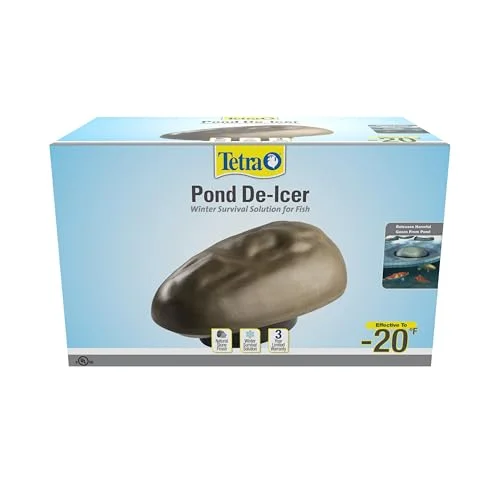
Tetra Pond De-Icer 300W
Best Overall- ✓ Listing says it works in temperatures as low as -20°F
- ✓ 15 ft cord is longer than most floating de-icers
- ✓ Stone finish blends into a planted pond edge
- ✓ Thermostatic shutoff
- ✗ Highest price among the mainstream floating units
- ✗ Listing does not state a safety certification
- ✗ Heavier than the cast-aluminum alternatives
This is the one we would buy first for a typical backyard koi or goldfish pond. The 300W size is right for most ponds, the 15 ft cord keeps you off extension cords, and the listing says it works in temperatures as low as -20°F. The stone finish also looks better in a planted pond than a black or silver unit. The price is the hurdle, and the listing does not name a safety certification, so keep it on a GFCI outlet.
2. K&H Thermo-Pond 3.0 Floating De-Icer 100W
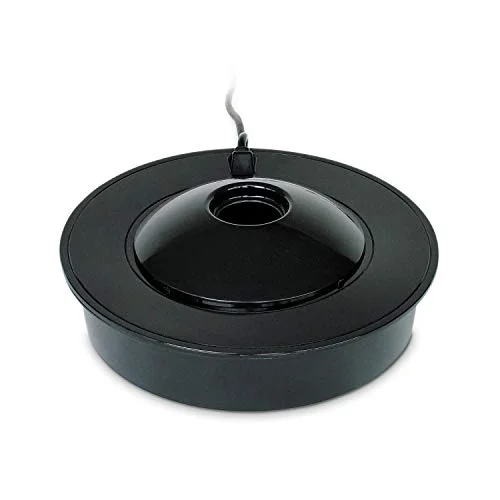
K&H Thermo-Pond 3.0 Floating De-Icer 100W
Best for Small Ponds- ✓ Only 100W, so running cost stays low
- ✓ Listing says it is safe with liners and plastic ponds
- ✓ MET Labs safety certification per the listing
- ✓ Enough to hold one vent hole in a small pond
- ✗ Listing says it will not keep other areas of the pond open
- ✗ Snow must be kept cleared from the top, or the seal can fail
- ✗ Costs more than larger-wattage alternatives
At only 100W this holds a single vent hole of about 12 inches, per the listing, and it is meant for ponds at least 18 inches deep. It suits a small patio pond or a half barrel of hardy fish, and the MET Labs safety certification is a plus. Clear snow from the top, since the listing warns that buildup can break the seal. It costs more than some larger units, so you are paying for the low running cost and the safety listing.
3. K&H Perfect Climate Submersible Pond De-Icer 300W
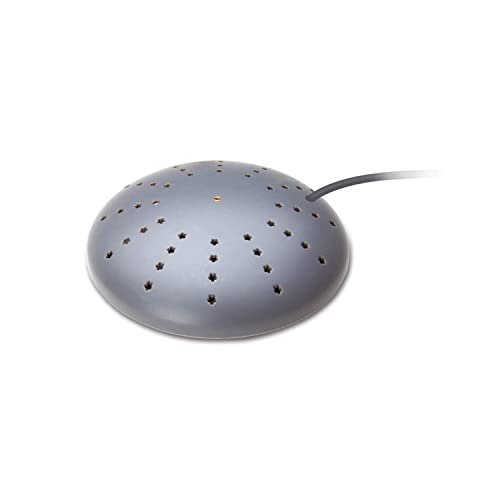
K&H Perfect Climate Submersible Pond De-Icer 300W
Lowest Price- ✓ Lowest price in the roundup
- ✓ Listing says no cages or guards are needed
- ✓ Safe for preformed ponds and liners per the listing
- ✓ Sits on the pond bottom, out of the way of floating debris
- ✗ Amazon showed scarce stock, so availability may change
- ✗ Submersible placement is less visible, so you cannot see if it is working
- ✗ Listing gives no cord length
The cheapest option, and a good one if you prefer a unit that stays on the bottom. The listing says no cages or guards are needed and that it is safe for liners and preformed ponds. Amazon showed scarce stock, so if it sells out, the Tetra is the best substitute.
4. Farm Innovators Ice Chaser 1250W Floating De-Icer
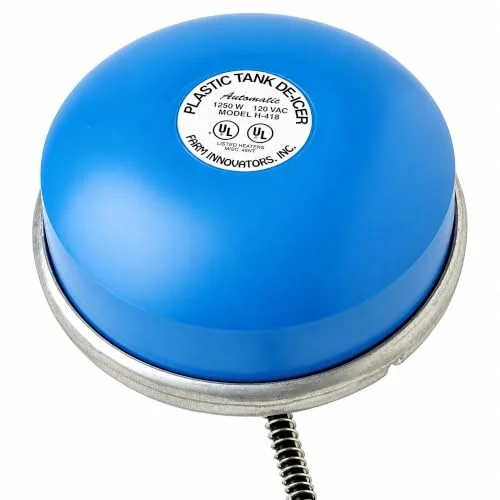
Farm Innovators Ice Chaser 1250W Floating De-Icer
Best for Large Ponds and Stock Tanks- ✓ Cast aluminum with a 3-year manufacturer warranty per the listing
- ✓ Listing says it is safe in plastic buckets without warping
- ✓ Anti-chew cord protector helps where raccoons or pets visit
- ✓ Plenty of capacity for a large tank or pond
- ✗ 1250W is far more power than a small pond needs
- ✗ Marketed as a tank de-icer, not a koi-pond product
- ✗ No published setpoint beyond preventing icing
This is a livestock tank de-icer, and it fits a large pond or stock tank holding koi or goldfish. Cast aluminum, a 3-year warranty, and an anti-chew cord protector make it rugged. For a patio pond it is too big, and a smaller unit will do the same job for less electricity.
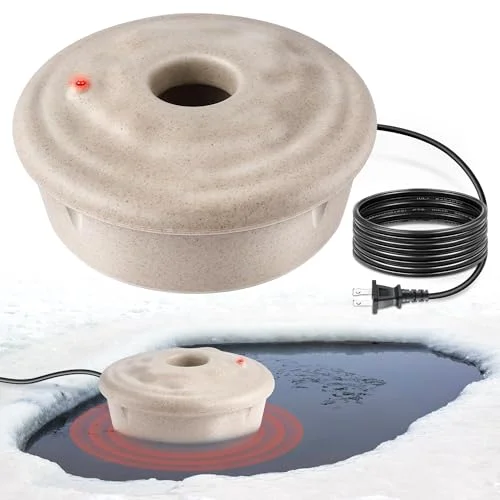
5. Dreyoo 100W Floating Pond De-Icer
Dreyoo 100W Floating Pond De-Icer
Best Budget Small-Pond Pick- ✓ Low 100W draw, with the listing citing about 2.4 kWh per day
- ✓ Floating design is safe with liners and plastic ponds per the listing
- ✓ Priced below the K&H 100W
- ✗ Short cord at under 10 ft
- ✗ Unfamiliar brand with a thinner track record
- ✗ The 60°F thermostat runs it often in mild weather
A budget alternative for small ponds. The listing says its thermostat switches on below 60°F, which means it runs more often than a freeze-only unit during mild weather; the listing says it uses about 2.4 kWh per day. The 9.84 ft cord is short, and the brand is less established, so keep a backup in the garage.
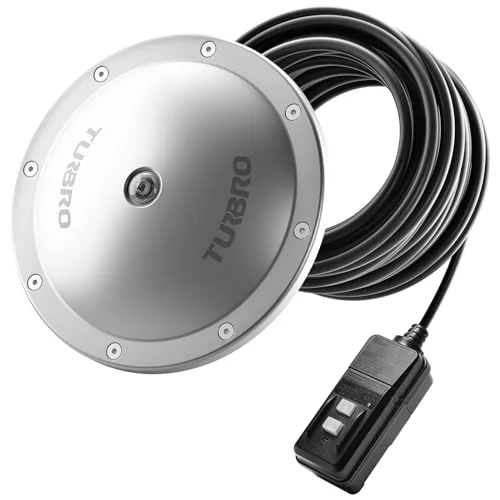
6. TURBRO Floating Pond De-Icer with 32.8 ft Cord
TURBRO Floating Pond De-Icer with 32.8 ft Cord
Best for Distant Outlets- ✓ Very long cord reaches outlets far from the water
- ✓ Built-in GFCI plug and overheat protection per the listing
- ✓ Stainless steel housing resists corrosion
- ✓ Indicator light shows red when heating and green when idle
- ✗ Most expensive unit in the roundup
- ✗ Listing gives no wattage in its feature bullets, so confirm the size before buying
- ✗ Price varies by variant
The cord is the selling point. If your pond sits far from the nearest outlet, 32.8 ft means no extension cord. The stainless housing, IP68 rating, and built-in GFCI plug are real safety features per the listing. It is the priciest here, and the listing does not put a wattage in its bullets, so confirm the size on the product page before you order.
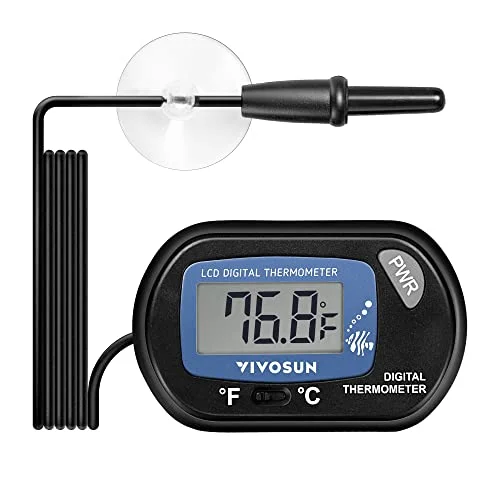
7. VIVOSUN LCD Digital Aquarium Thermometer
VIVOSUN LCD Digital Aquarium Thermometer
Best Add-On: Thermometer- ✓ Probe cable reaches the water from the pond edge
- ✓ Range covers deep winter cold up to hot summer water
- ✓ Inexpensive enough to keep a spare
- ✗ Needs batteries
- ✗ Display is not weatherproof, so keep it out of the rain
Cheap insurance. Drop the probe in near the de-icer and another at the far end of the pond to see how much water the unit actually warms. For more options, see our aquarium thermometer roundup.
Which Pond De-Icer Should You Choose?
For a typical backyard pond, buy the Tetra and a thermometer. For a small tub or half barrel, the K&H Thermo-Pond 3.0 or the Dreyoo is enough. For a large pond or stock tank, step up to the Farm Innovators. If the outlet is far away, the TURBRO’s long cord removes the extension-cord problem. If you keep tropical guppies, none of these hold a tropical temperature; bring them inside, as described in our outdoor tub setup guide.
Frequently Asked Questions
Do koi and goldfish really need a de-icer?
In places where the surface freezes for days at a time, yes. A sealed surface traps gases from waste and decaying plants. Koi and goldfish handle cold well, but they do not handle trapped gas. In mild winters in USDA Zones 7-9, a short freeze may not need one, but a de-icer is cheap insurance.
How many watts does a pond de-icer need?
For small ponds, 100W is often enough to hold one hole. Typical backyard ponds suit 250W-300W. Large ponds and stock tanks may need 1000W or more. Check the manufacturer’s zone chart.
Can I leave a de-icer on all winter?
Yes. They are thermostatically controlled and cycle on only when needed. Keep the element underwater and the cord on a GFCI outlet.
Should I break the ice if it freezes over?
No. Hitting the ice sends shock waves through the water that can stress fish. If a hole has frozen over, pour warm water on it or restore power to the de-icer.
Do de-icers keep the whole pond warm?
No. They hold a small area open. Fish stay in the deeper, steadier water below.
Should I feed koi and goldfish in winter?
Stop heavy feeding when water temperatures fall and fish slow down. Their digestion slows with the cold. Many keepers switch to a wheat-germ-based food in cool water and stop entirely in the coldest months.
Are pond de-icers safe for shrimp?
The housings listed here are cast aluminum, stainless steel, or sealed plastic, and none of the listings mention copper. Rinse before use and watch the first day. Tropical shrimp should still be moved indoors for the winter.
Can I use a de-icer for guppies?
No. De-icers hold water just above freezing, but guppies need a minimum of 65°F. Use a pond heater with a higher setpoint, or bring the fish indoors.
Conclusion
For most readers, the Tetra 300W is the best pond de-icer. It has a wattage that suits most backyard ponds, a 15 ft cord, and a listed rating down to -20°F. The runner-up is the K&H Thermo-Pond 3.0 100W, which is safety certified and cheap to run for small ponds.
Remember what a de-icer can and cannot do. It keeps one hole open so a pond with koi or goldfish can breathe. It will not turn a shallow pond into a safe winter home, and it will not keep tropical fish alive. Depth, a thermometer, and a GFCI outlet matter as much as the unit you buy.
Our Top Pick