Ask a first-time livebearer breeder why a cross came out looking nothing like either parent, and the honest answer is usually “no idea.” Ask an experienced breeder the same question, and they can typically walk you through which genes are dominant, which are sex-linked, and which generation the surprise trait is going to show up in again. The difference isn’t luck. It’s a working knowledge of how color inherits in guppies, platies, swordtails, and mollies.
This guide covers the genetics fundamentals that apply across all four common livebearer genera — the vocabulary, the inheritance patterns, and enough Punnett square practice to predict a cross before you make it. Guppies get the deepest published genetics research in the hobby, so if you keep guppies specifically, our Guppy Strains and Color Guide goes further into strain-specific inheritance, and our Guppy-Endler Hybrid guide covers cross-species genetics between guppies and Endler’s. This guide is the foundation that applies before you specialize into any one species.
Genetics Vocabulary Every Breeder Needs
A handful of terms cover almost everything you need for practical breeding decisions:
- Gene: A unit of inheritance that controls a trait, like body color or fin pattern.
- Allele: A version of a gene. A color gene might have a “red” allele and a “grey” allele.
- Genotype: The actual genetic makeup a fish carries, whether or not it’s visible.
- Phenotype: What you can actually see — the fish’s physical appearance.
- Homozygous: Carrying two matching copies of an allele (two red alleles, for example).
- Heterozygous: Carrying two different alleles for the same gene (one red, one grey) — often called a “carrier” when the visible trait is masked.
- Dominant: An allele that shows up in the phenotype even when only one copy is present.
- Recessive: An allele that only shows up in the phenotype when two copies are present.
- F1, F2, F3: Shorthand for filial generations — F1 is the direct offspring of a cross, F2 is the offspring of two F1 siblings, and so on.
Every inheritance pattern below is built from these same eight ideas. Once they’re familiar, the rest is just applying them to specific traits.
Three Inheritance Patterns in Livebearers
Autosomal Traits (Both Parents, Either Sex)
Most named color varieties across platies, swordtails, and mollies — wagtail fin coloring, tuxedo patterning, dalmatian spotting, red and black body color — are autosomal. Autosomal genes sit on non-sex chromosomes, so both parents contribute equally and both male and female offspring can display or carry the trait. This is the inheritance pattern classic Mendelian ratios were built around:
- Dominant x dominant (homozygous) = all offspring show the dominant trait
- Dominant x recessive = all offspring show the dominant trait, but every offspring carries one recessive copy
- Carrier x carrier (both heterozygous) = roughly 3:1, dominant-to-recessive, in the offspring
- Carrier x recessive = roughly 1:1, dominant-to-recessive, in the offspring
Because most livebearer color genetics research and hobby breeding records center on this pattern, autosomal traits are also the most predictable place to start if you’re new to tracking crosses.
Sex-Linked Traits (X and Y Chromosomes)
Sex-linked genes sit on the X or Y chromosome. Livebearers are XY like most vertebrates — males are XY, females are XX — which creates two distinct sex-linked patterns:
- Y-linked traits pass father to son only. A male with a Y-linked pattern passes it to every son; daughters never display or carry it, because they never inherit a Y chromosome.
- X-linked traits pass from mothers to sons and from both parents to daughters. Because males only carry one X chromosome, they express any X-linked allele they receive, dominant or recessive. Females need two copies of a recessive X-linked allele to display it, but can carry one copy invisibly and pass it on.
Guppies are the best-documented example of sex-linked color genetics in the aquarium hobby — a large share of fancy guppy tail and body patterns are Y-linked or X-linked, which is a big part of why guppy strain work is so structured around tracking male lineage. Sex-linked patterns are documented in platies and swordtails as well, though less extensively studied than in guppies; most named platy and swordtail color varieties in circulation today are autosomal rather than sex-linked.
Polygenic Traits (Multiple Genes, One Trait)
Some traits aren’t controlled by a single gene at all. Full-body color saturation, some spotting density patterns, and sword length in swordtails behave polygenically — several genes each contribute a small effect, and the combined result is a gradient rather than a clean on/off trait. Polygenic traits don’t follow simple Punnett square math, and they dilute heavily in a first-generation outcross before slowly re-concentrating over several generations of selective breeding. If a cross’s offspring look like a “watered down” version of an impressive parent, polygenic dilution is usually why.
Species Snapshots
Platies (Xiphophorus maculatus and X. variatus)
Platies carry some of the best-documented color genetics of any livebearer outside guppies, largely because platies and swordtails share a genus and have been used in classic pigment-cell genetics research for decades. Wagtail (black fins and tail against a colored body), tuxedo (a dark, sharply defined patch along the body), and the various solid reds, blues, and golds are almost all autosomal, single-gene traits with straightforward dominant/recessive relationships. This is what makes platies a genuinely good starting species for a hobbyist who wants to practice genetics before tackling something more complicated.
Swordtails (Xiphophorus hellerii and hybrids)
Swordtails share a genus with platies and can hybridize with them, which is why most commercial “platy” and “swordtail” color strains today carry mixed ancestry from decades of crossing between the two. Solid color and pattern traits (red, black, marigold, pineapple) largely follow the same autosomal inheritance as platies. Sword length itself is more complex — it’s influenced by multiple genes plus hormonal factors, which is why sword length in crosses is harder to predict cleanly than a simple color trait.
Mollies (Poecilia sphenops, P. latipinna, P. velifera)
Molly color genetics are less thoroughly documented in hobby literature than platies or guppies, but black body color is widely reported as dominant, which is part of why solid black mollies breed relatively true even in mixed community tanks — a single black parent frequently produces a majority-black litter. Dalmatian (white body with black speckling) and silver/gold base colors follow separate genes layered on top of the black/non-black trait. Because molly color genetics are less rigorously mapped than platy or guppy genetics, treat specific inheritance ratios in mollies as a working estimate rather than a guarantee, and expect more surprises in F1 litters.
Guppies (Poecilia reticulata)
Guppies use all three inheritance patterns covered above for different traits, and fancy guppy strain work is built entirely around understanding which pattern controls which trait. This guide only covers guppies at a summary level — for the full breakdown of Y-linked, X-linked, and autosomal guppy traits, strain maintenance, and the three-tank method for protecting a line, see the Guppy Strains and Color Guide.
Working Through a Punnett Square
Punnett squares predict the odds of a given genotype or phenotype showing up in offspring. Take a simplified autosomal example using platy wagtail coloring, where the wagtail allele (W) is dominant over non-wagtail (w):
Cross a heterozygous wagtail platy (Ww) with a non-wagtail platy (ww):
| W | w | |
|---|---|---|
| w | Ww (wagtail) | ww (non-wagtail) |
| w | Ww (wagtail) | ww (non-wagtail) |
The result: roughly 50% of offspring show the wagtail trait (Ww) and 50% do not (ww), a 1:1 ratio consistent with a carrier crossed to a recessive. Cross two heterozygous carriers (Ww x Ww) instead, and the math shifts to a 3:1 ratio — 75% wagtail, 25% non-wagtail — because two copies of the recessive allele are needed to produce a non-wagtail fish from two carrier parents.
This same four-square method works for any single-gene autosomal trait across platies, swordtails, and mollies. It breaks down for polygenic traits (too many genes involved for a simple grid) and needs the sex-chromosome adjustment described above for Y-linked and X-linked traits.
Building a Line-Breeding Setup
Tracking genetics seriously requires physically separating lines and removing every variable that isn’t genetics itself.
Start with a way to isolate a single planned cross from the rest of the colony. A dedicated breeder box holds a gravid female until she drops fry, keeping that litter’s parentage unambiguous — which matters when you’re trying to confirm a specific cross rather than guess which male in a colony tank sired a litter.
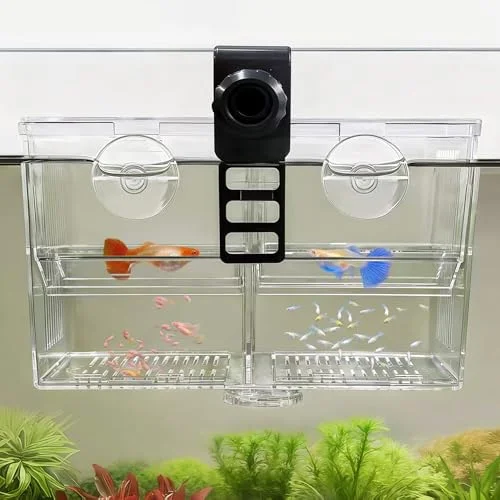
BaoZqua Dual-Chamber Breeder Box
Best for Isolating a Single Cross- ✓ Two chambers let a gravid female drop fry into a separate compartment automatically
- ✓ Works identically across every livebearer genus, so one box style covers a whole rack
- ✓ Cheap enough to run one per planned cross without a big equipment outlay
- ✓ Clear plastic makes it easy to check fry for early color and pattern differences
- ✗ Small internal volume stresses larger swordtail and molly females
- ✗ Not a permanent housing solution — fry need to move to a grow-out tank within days
If you’re running more lines than you have tanks for, a divider panel lets one tank host two or more separated groups without the cost of another full setup.
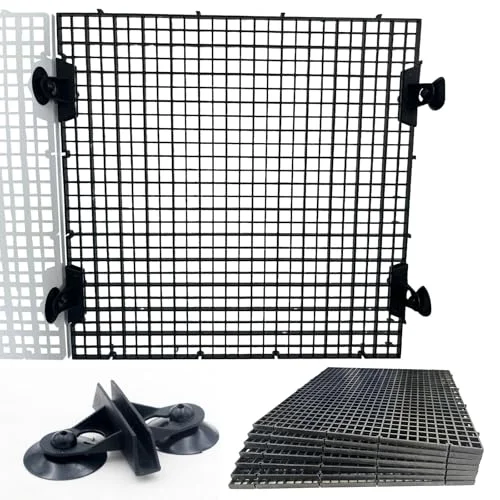
TQDXZA Aquarium Divider Panel (8-Pack Grid)
Best for Running Parallel Lines- ✓ Eight panels combine to fit most standard tanks, so one tank can host two or more separated lines
- ✓ Perforated design keeps temperature and chemistry identical on both sides
- ✓ No drilling or permanent tank modification required
- ✓ Cheaper than buying a second tank for every line you want to track separately
- ✗ Holes are wide enough for newborn fry to cross sides, so it won't stop unplanned crosses between lines
- ✗ Suction cups need occasional reseating on older silicone seams
Water parameters matching across every line tank removes a second variable from the comparison. If one line’s tank runs noticeably harder or softer water than another, phenotype differences between the lines could reflect a water-quality effect rather than genetics.
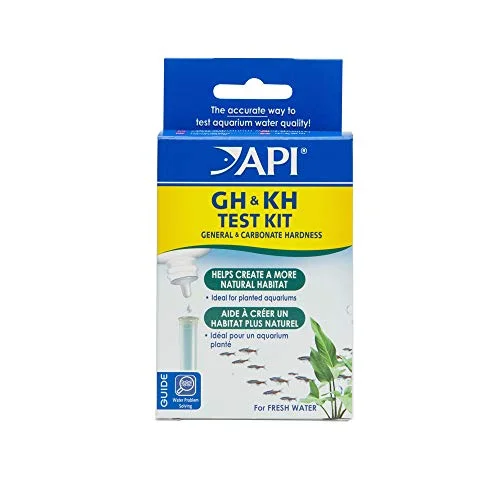
API GH & KH Test Kit
Best for Matching Line-Tank Parameters- ✓ Removes water hardness as a confounding variable when comparing offspring across separated line tanks
- ✓ Drop-count titration gives a precise number instead of a strip-test color guess
- ✓ One kit lasts many tests across a full breeding rack
- ✓ Same kit doubles for general water-quality monitoring outside genetics work
- ✗ Manual titration takes longer than a test strip
- ✗ Covers GH and KH only — pair with a full liquid kit for ammonia, nitrite, and pH
Diet is the third variable worth controlling. The same color-enhancing food across every line tank means any pigment difference you observe between lines is more likely to be genuine genetic variation rather than a nutrition difference.
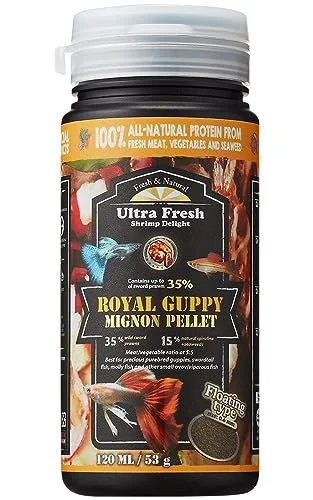
Ultra Fresh Royal Guppy Mignon Pellet
Best Color-Enhancing Food- ✓ Micro pellet size fits the mouths of fry-stage and adult livebearers across every genus covered here
- ✓ Spirulina and astaxanthin content brings out red, orange, and black pigmentation, which matters when you're visually grading a cross
- ✓ Consistent feeding across every line tank removes diet as a variable when comparing offspring
- ✓ Slow-sinking format reaches bottom-feeding platies and mollies as well as mid-water guppies
- ✗ Small container empties fast when feeding several isolated line tanks
- ✗ Color enhancement affects pigment expression, not the underlying genetics — it won't make a recessive trait dominant
None of this works without records. Every cross, every generation, and every phenotype count needs to be written down at the moment you make the observation — memory alone does not hold up across multiple lines and multiple generations.

Rite in the Rain Weatherproof Side Spiral Notebook
Best for Cross Records- ✓ Weatherproof paper survives the inevitable splashes and wet hands of fishroom record-keeping
- ✓ Spiral binding lays flat on a rack shelf while you count and log fry phenotypes
- ✓ Dedicated cross records are the single biggest predictor of a breeding program's long-term success
- ✓ Cheap enough to keep one per genus or project line without a second thought
- ✗ Manual logging takes more discipline than a phone app, and it's easy to fall behind
- ✗ Not searchable — a spreadsheet backup helps once you're tracking many generations
For more isolation and holding equipment beyond what’s featured here, our Best Breeder Boxes and Best Breeding Nets roundups cover a wider range of options.
Common Genetics Mistakes
-
Assuming one visible trait tells the whole story. A fish can carry recessive alleles for several traits without displaying any of them. Two “plain” parents can produce a strikingly different-looking litter once hidden recessive alleles pair up.
-
Giving up after a disappointing F1 generation. An outcross between two established lines often produces plain-looking F1 offspring, especially when a trait is recessive or polygenic. The interesting combinations usually don’t show up until F2.
-
Mixing genetics questions with water-quality or nutrition questions. A pale or undersized fish isn’t necessarily expressing a recessive gene — check water parameters and diet before assuming a genetic cause.
-
Not keeping records. Without a written log of which cross produced which result, patterns across generations are impossible to confirm and mistakes get repeated.
-
Crossing too many lines at once. Combining three or four color lines in one project creates so many possible genotype combinations that predicting outcomes becomes close to guesswork. Stabilize one cross before adding a third line.
Frequently Asked Questions
Do platies, swordtails, and mollies use the same genetics as guppies?
The underlying rules — dominant, recessive, autosomal, sex-linked, polygenic — are the same set of inheritance patterns across all livebearers. The difference is which pattern controls which specific trait, and how well-documented that trait’s inheritance is. Guppy color genetics are the most thoroughly mapped of the four; platy and swordtail genetics are also well documented thanks to their shared genus; molly color genetics are the least rigorously mapped in hobby literature.
Why did my cross produce fish that look nothing like either parent?
This is normal for a first-generation (F1) cross, especially between two established but different lines. Recessive traits stay hidden when paired with a dominant allele, and polygenic traits dilute heavily in an outcross. The traits you expected to see often reappear, sometimes in new combinations, once you breed F1 siblings together to produce F2.
Can platies and swordtails interbreed?
Yes. Both belong to the genus Xiphophorus, and hybridization between the two has been common in the ornamental fish trade for decades — much of what’s sold today as pure platy or pure swordtail strains carries some mixed ancestry from historical crosses.
How many generations does it take to stabilize a new color line?
Most hobbyists report 3-5 generations of selective breeding — choosing the best offspring each generation and culling the rest — to fix a new trait combination reliably. Simple single-gene autosomal traits stabilize faster than polygenic traits like sword length or full-body color saturation.
Do I need a genetics background to breed for color successfully?
No. The Mendelian basics in this guide cover what most hobby breeding projects actually need. What separates a successful line-breeding project from a random one is usually record-keeping and patience through disappointing F1 generations, not advanced genetics training.
Is a Punnett square accurate for real breeding outcomes, or just a rough guide?
For single-gene autosomal and sex-linked traits, a Punnett square predicts the statistical odds accurately over a large enough sample of offspring — a single litter of 20-30 fry is close enough to test the prediction, though small litters can deviate from the exact ratio by chance. Punnett squares don’t work for polygenic traits, since those involve more genes than a simple grid can represent.
Conclusion
Livebearer color genetics comes down to a small set of inheritance patterns applied consistently: autosomal traits following classic Mendelian ratios, sex-linked traits splitting along the X and Y chromosome, and polygenic traits that resist simple prediction. Platies and swordtails offer the clearest starting point for practicing this because most of their named color varieties are single-gene autosomal traits. Mollies add more uncertainty, and guppies reward the deepest specialization once the fundamentals here are second nature.
The equipment side of genetics work is less about any single gadget and more about consistency — isolating crosses, matching water and diet across line tanks, and writing every result down. Get those fundamentals in place before chasing a specific rare color combination, and the genetics stop feeling random.