AquaRanked is reader-supported. When you buy through links on our site, we may earn an affiliate commission.
Platies (Xiphophorus maculatus) are the fish worth recommending to anyone who wants a livebearer colony that just works. They eat anything, tolerate a wide range of water parameters, breed reliably without intervention, and come in more color varieties than most hobbyists ever fully explore. They also handle the beginner mistakes — an occasional missed water change, a slightly inconsistent temperature — that would stress more sensitive fish.
Running platys alongside guppies and ricefish confirmed something worth stating clearly: platies are genuinely easier to keep than guppies while still producing the same rapid reproductive cycle that makes livebearers so compelling. Females drop fry every 28-35 days, fry are born large enough to eat crushed food immediately, and the colony expands quickly with minimal management.
This guide covers everything you need — tank setup, water chemistry, color varieties, breeding, fry care, and compatible tank mates — based on verified specs and community-documented hobbyist experience.
Species Overview
- Scientific name: Xiphophorus maculatus
- Origin: Central America (Mexico, Belize, Guatemala)
- Lifespan: 3–5 years
- Adult size: 1.5–2.5 inches (females slightly larger than males)
- Temperament: Peaceful, active, robust
- Minimum tank size: 10 gallons
- Water type: Freshwater; prefers harder, alkaline conditions
Platys belong to the Poeciliidae family — the same family as guppies, mollies, and swordtails. Unlike guppies, both male and female platys carry solid body mass, and females often display color nearly as vivid as males depending on the variety. They hybridize readily with swordtails (X. hellerii), and many fish sold as “platies” in retail stores are actually platy-swordtail hybrids that retain the platy body shape.
Color Varieties
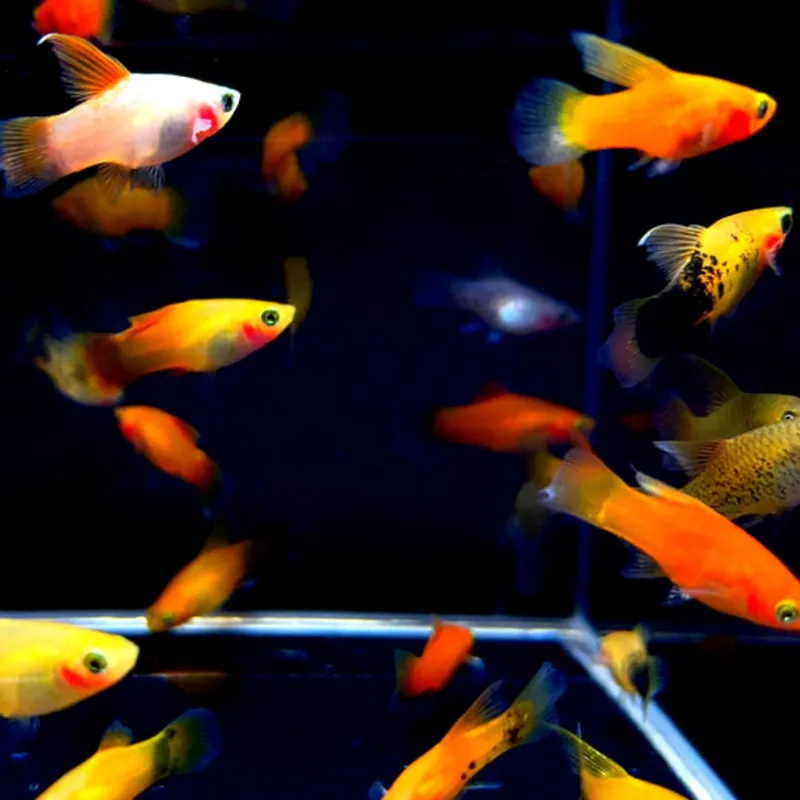
Platys have been selectively bred for decades, producing a wide range of colors and fin patterns. This is one of their underappreciated strengths — you can collect multiple varieties and keep them in a single community tank.
Solid Body Colors
- Red (Coral, Brick, Blood Red): Solid red body with matching finnage — classic and widely available at any fish store
- Sunset: Orange-to-yellow gradient body, often paired with blue-black tail fin for strong contrast
- Blue Mirror: Iridescent blue-silver body that catches light dramatically under direct tank illumination
- Gold (Yellow): Pale yellow to deep gold body — excellent visual contrast in planted tanks with dark substrate
- Black: Solid black body with occasional metallic highlights — dramatic look but can appear washed out in poor water conditions
Patterned Varieties
- Tuxedo: Dark body from the midsection back with a contrasting lighter colored front half
- Mickey Mouse: Distinctive three-spot cluster on the tail base forming the recognizable silhouette
- Salt and Pepper: Scattered dark spots across a lighter base color
- Rainbow: Multicolor patches of red, yellow, blue, and orange — offspring pattern is less predictable than solid varieties
Fin Pattern Varieties
- Wag (Black-fin): Any base color with solid black fins — Red Wag platy is one of the most popular varieties in the hobby
- Hi-Fin (Sail-fin): Extended dorsal fin that fans out like a sail; both sexes can carry this trait
- Twin Bar: Two dark horizontal bars running through the tail fin
Tank Setup
Tank Size
A 10-gallon tank handles a small group of 4-6 platys. For a breeding colony or community setup, a 20-gallon long is the practical standard. The longer footprint gives females room to evade persistent males, and the larger water volume maintains more stable parameters between water changes.
For selective breeding across multiple lines, 10-gallon tanks work well as dedicated strain tanks — they are inexpensive, fit efficiently on wire shelving racks, and hold enough fish to maintain genetic diversity within a line.
Water Parameters
| Parameter | Ideal Range |
|---|---|
| Temperature | 70–82°F (74–78°F optimal) |
| pH | 7.0–8.0 (up to 8.5 tolerated) |
| GH | 10–25 dGH |
| KH | 4–10 dKH |
| Ammonia | 0 ppm |
| Nitrite | 0 ppm |
| Nitrate | <40 ppm |
Platys are the hardiest mainstream livebearer available. They tolerate pH as low as 6.8 and as high as 8.5 without immediate distress, but long-term health and breeding output peaks in the 7.2–7.8 range. Unlike guppies, platys genuinely prefer harder water — a GH of 10-15 dGH is not just tolerated, it is where they thrive.
If your tap water is soft (GH below 6), remineralizing with Seachem Equilibrium or adding crushed coral to the filter is worthwhile. Platys kept long-term in very soft water develop more slowly, show reduced coloration, and produce smaller broods across generations.
Filtration
A hang-on-back filter rated for your tank size works well for adult platys. They handle moderate current unlike shrimp and bettas that prefer still water. If you plan to keep fry in the main tank, cover the filter intake with a foam pre-filter — bare plastic intakes pull in newborn fry.
Sponge filters are the better choice for dedicated breeding and grow-out tanks. They cannot trap fry, the biofilm on the sponge surface provides supplemental food for newborns, and they are inexpensive enough to run one per tank without budget pressure. Running multiple breeding lines means sponge filters over hang-on-backs for everything except display tanks.
Decoration and Plants
Platys do not demand elaborate decor, but planted tanks produce higher fry survival and less stress behavior overall:
- Floating plants: Java moss, guppy grass, hornwort — essential fry cover at the surface where newborns spend their first days
- Background plants: Vallisneria, hornwort — breaks line of sight for male-female chasing
- Mid-ground: Java fern, Anubias — durable across a wide pH and hardness range
- Hardscape: Rocks and driftwood create territory boundaries and visual breaks
Dark substrate significantly enhances the color display of bright platy varieties — red, sunset, and wag platys look visibly more vivid over black sand compared to light gravel. Worth doing once and not changing.
Feeding
Platys are omnivores and genuinely unfussy eaters. They readily accept micro pellets, flake food, frozen foods, and blanched vegetables.
Recommended Diet
- Staple: High-quality micro pellets or flake food — feed 2-3 times daily in amounts consumed within 2-3 minutes
- Vegetables: Blanched spinach, zucchini, cucumber, romaine lettuce — offered 2-3 times per week. Platys graze on these eagerly, and the plant fiber supports gut health and breeding output in females
- Protein enrichment: Frozen bloodworms, brine shrimp, or daphnia — 2-3 times per week for conditioning breeding pairs
- Color foods: Spirulina flake or pellet — enhances reds, oranges, and yellows noticeably over weeks of consistent feeding
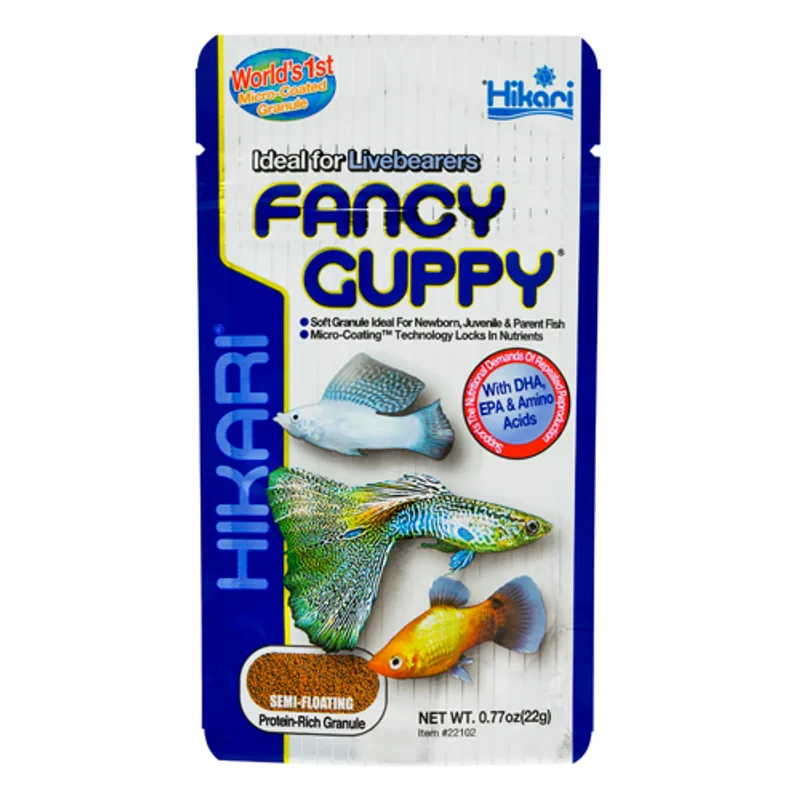
A high-protein micro pellet handles the bulk of nutritional requirements. Hikari Fancy Guppy is sized correctly for adult and juvenile platys (above 0.5 inches) and provides the protein levels that keep active breeding females in good condition. The krill and spirulina content actively improves color in both males and females over time.
Hikari Fancy Guppy
Best Staple Food- ✓ 50% protein supports active breeding and vivid color development in both males and females
- ✓ Micro pellet size works for adult platys and juveniles once they reach 0.5 inches
- ✓ Spirulina content brings out reds, oranges, and blues over weeks of consistent feeding
- ✓ Low-waste formula reduces ammonia load compared to flake foods in colony tanks
- ✗ Small 22g container runs out fast when feeding a colony — buy multi-packs for better value
- ✗ Very fine pellets can cloud water briefly if overfed in one spot
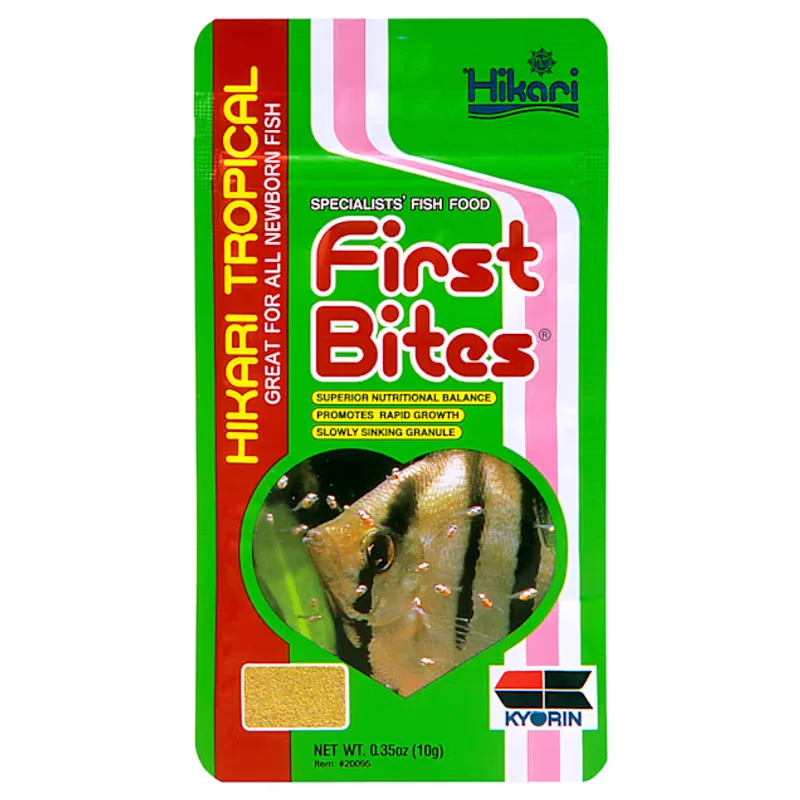
For newborn fry during the first 4-5 weeks, First Bites or finely crushed adult food is necessary — standard pellets are too large for newborns to consume. Feed fry 4-5 times daily in small pinches. Fry growth rate correlates directly with feeding frequency in the first 6 weeks — more frequent, smaller meals outperform two large feedings every time.
Hikari Tropical First Bites
Best Fry Food- ✓ Particle size proportioned for platy fry from day one — no crushing required
- ✓ 48% protein drives fast growth during the critical first 4-6 weeks
- ✓ Semi-floating formula means fry catch food throughout the water column
- ✓ Small container stays fresh longer — fry food degrades quickly once opened
- ✗ Clouds water temporarily — target-feed in small pinches using a pipette
- ✗ Transition fry to crushed adult food by week 5-6 as they outgrow the particle size
Breeding
Platys breed willingly without any intervention beyond providing healthy conditions. Understanding the cycle makes colony management predictable.
Sexing Platys
Males and females are easy to distinguish:
- Males: Smaller, slimmer body; gonopodium (modified pointed anal fin used for fertilization); often brighter or more intensely colored
- Females: Larger, rounder belly; standard fan-shaped anal fin; gravid spot (dark triangular area ahead of the anal fin) that darkens and enlarges as pregnancy advances
Juveniles can be sexed reliably by 4-6 weeks of age. The gonopodium is most obvious at 6-8 weeks when it elongates noticeably.
The Breeding Cycle
- A male fertilizes a female through repeated mating attempts — females often evade initially
- Gestation lasts 28-35 days depending on temperature — warmer water (78-80°F) shortens the cycle
- Females store sperm and can produce multiple broods from a single mating event
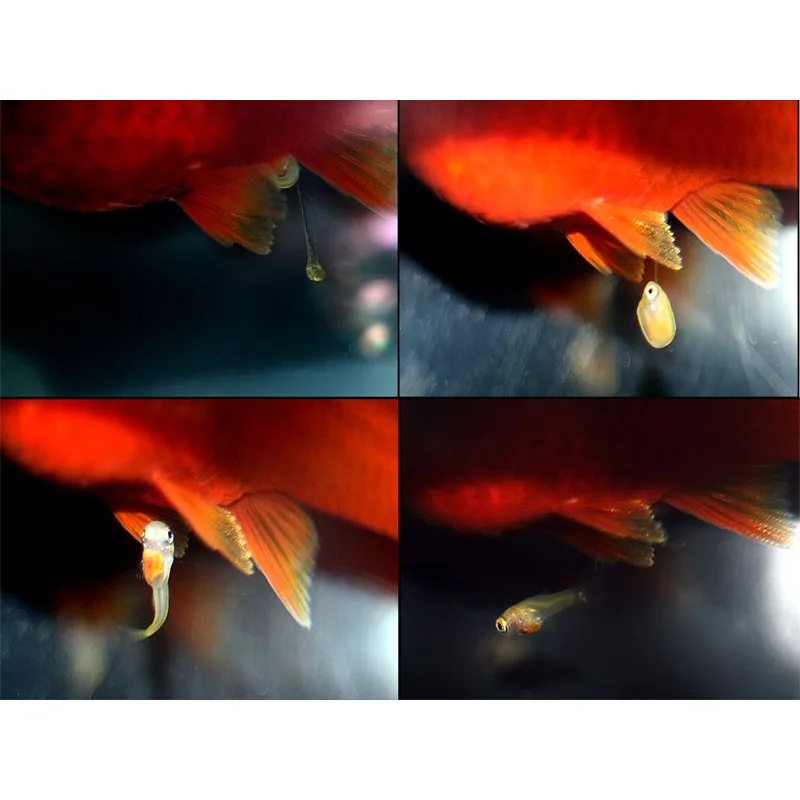
- A gravid female’s belly becomes noticeably box-shaped near the anal fin in the 24-48 hours before delivering
- Brood size ranges from 10-80 fry depending on the female’s age, condition, and size — older, well-fed females consistently produce larger drops
- Fry are born fully formed and free-swimming, capable of eating immediately after birth
Maintain a ratio of at least 2-3 females per male. Male platys are persistent in pursuing females and will stress a single female to the point of reduced feeding and smaller broods if she cannot escape.
Fry Survival Options
Option 1 — Dense plants only: Java moss, guppy grass, and floating hornwort naturally conceal fry at the surface. In a well-planted 20-gallon, 20-30% of fry survive to adulthood without any active intervention. Acceptable for a display colony with no production goals.
Option 2 — Breeding box: Move the visibly gravid female into a hang-on breeding box 24-48 hours before the estimated drop date. Survival rates approach 90%+ when fry are isolated from adults. The Fluval Large Breeding Box provides three chambers — keep the female in one chamber during birth, then move fry into an adjacent chamber as she delivers. Remove the female within 48 hours of dropping to minimize stress and protect subsequent brood quality.
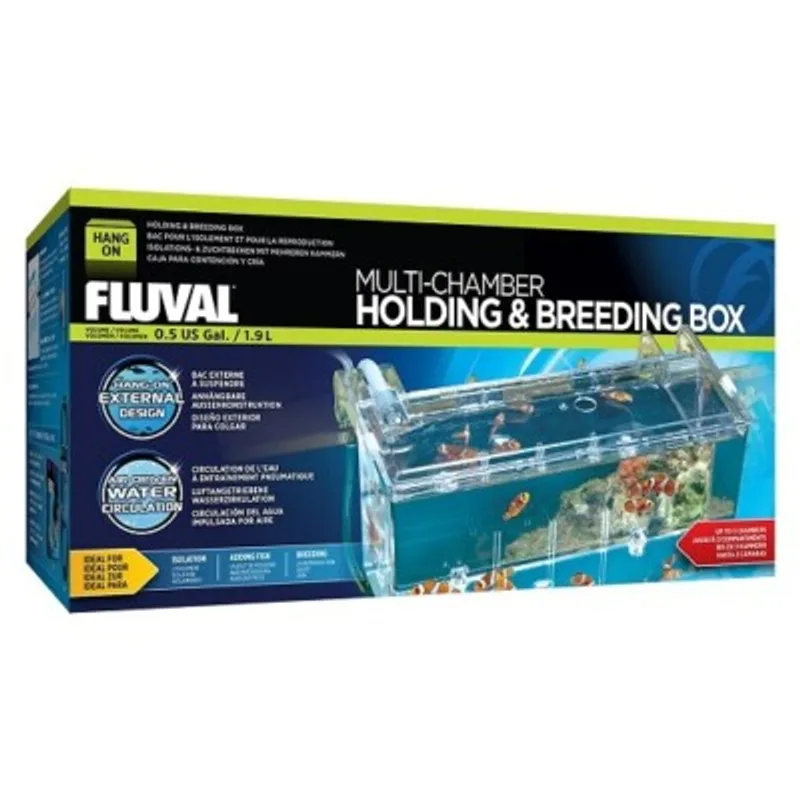
Fluval Multi-Chamber Holding and Breeding Box, Large
Best Breeding Setup- ✓ Three-compartment design lets you separate the gravid female, newborn fry, and older juveniles
- ✓ Uses circulated main tank water — no separate heater or cycling required
- ✓ External hang-on design does not reduce main tank swimming space
- ✓ Clear acrylic panels allow continuous monitoring of female condition before and during birth
- ✗ Requires a separate air pump to circulate water — not included
- ✗ Confined space stresses some females — remove her within 48 hours of dropping
Option 3 — Separate fry tank: The most effective method for serious production. Set up a 5-10 gallon tank with a mature sponge filter and dense java moss. Move the gravid female a few days before her estimated drop date, let her birth in the dedicated tank, then return her to the main colony immediately after. Near-complete fry survival with minimal female stress compared to the breeding box method.
Water Conditioning
Platys are tolerant fish, but consistent conditioning prevents the stress accumulation that quietly degrades long-term health.
Why Hard Water Matters for Platys
Platys originate from mineral-rich Central American rivers and streams. They benefit from calcium and magnesium in the water — GH of 10-15 dGH supports immune function, female reproductive output, and the structural quality of finnage and scales. If your tap water runs soft (GH under 6), supplementing is worthwhile for a breeding colony, not just optional.
Seachem Equilibrium raises GH without affecting KH, giving you precise control over mineral content. It contains calcium, magnesium, and potassium with no sodium or chloride, making it suitable for planted tanks where excess sodium inhibits plant nutrient uptake.
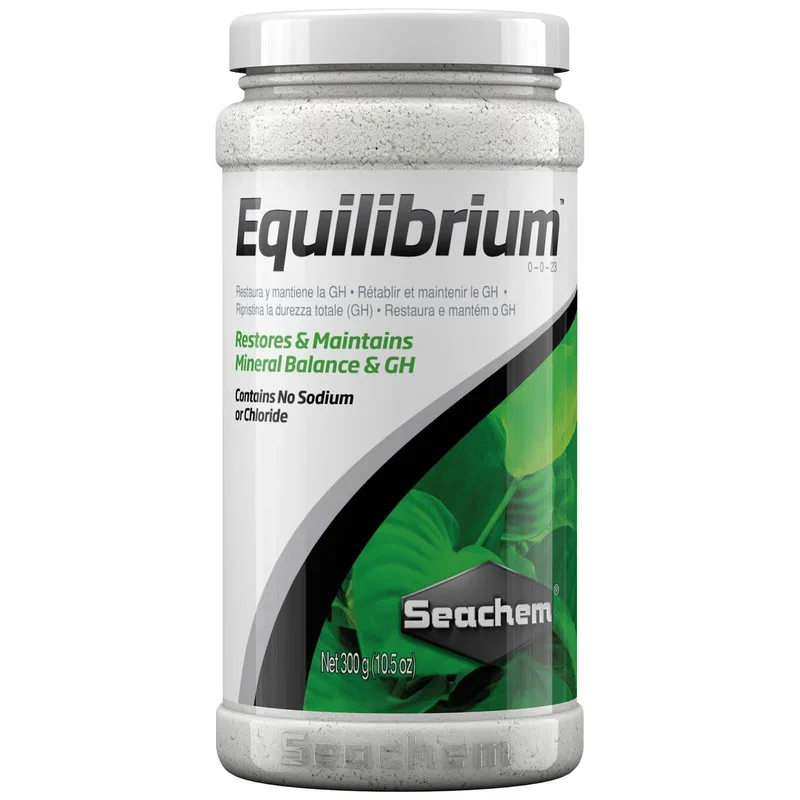
Seachem Equilibrium 300g
Best Mineral Supplement- ✓ Raises GH without affecting KH — precise control for platy water chemistry
- ✓ No sodium or chloride — ideal for remineralizing RO or soft tap water in planted setups
- ✓ Calcium and magnesium support platy immune function, breeding output, and color quality
- ✓ 300g lasts months in small to mid-size tanks with regular use
- ✗ Does not raise KH — add crushed coral or a separate buffer if alkalinity is also deficient
- ✗ Dissolves slowly in cooler water — pre-mix in a cup of tank water before adding to the tank
Water Changes and Conditioning
Weekly 25-30% water changes maintain stable nitrates in a healthy platy tank. In a colony tank where females are dropping regularly, twice-weekly changes keep conditions clean enough for newborn fry, which are more sensitive to nitrate than adults.
Always treat new water with Seachem Prime before adding it to the tank. Prime removes chlorine and chloramine instantly and detoxifies ammonia and nitrite for 48 hours — critical after water changes when the biological filter briefly adjusts to new chemistry. One 500ml bottle treats 5,000 gallons total, making it economical across multiple tanks.
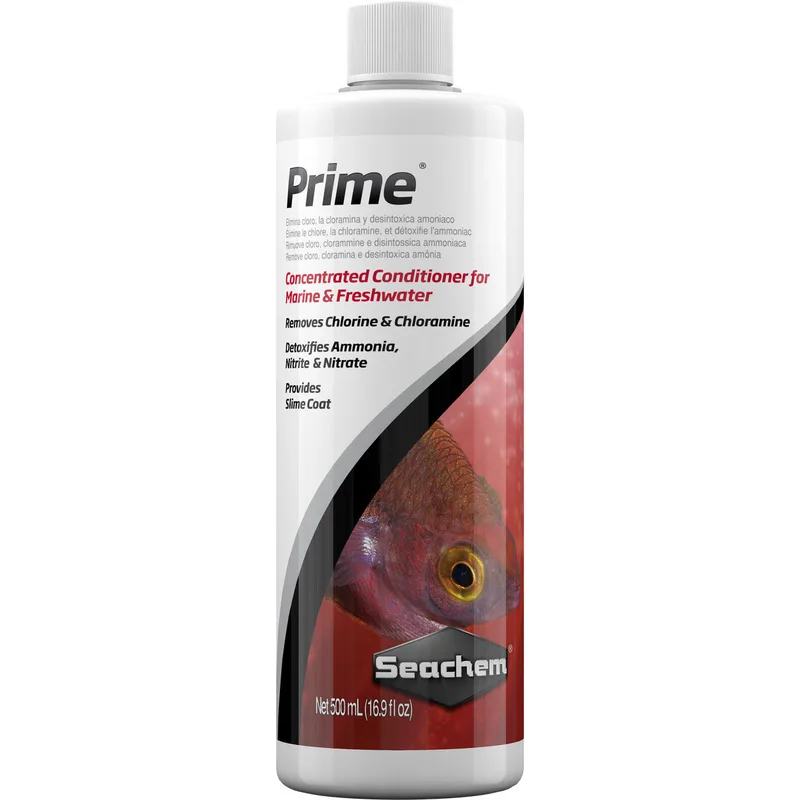
Seachem Prime 500ml
Best Water Conditioner- ✓ Detoxifies ammonia and nitrite for 48 hours — critical during tank cycling and water changes
- ✓ Removes chlorine and chloramine instantly — works on all municipal water sources
- ✓ 500ml bottle treats 5,000 gallons — economical for breeding operations with multiple tanks
- ✓ Shrimp-safe — safe for invertebrates and planted setups without removing trace minerals
- ✗ Strong sulfur smell straight from the bottle — normal, dissipates quickly in tank water
- ✗ Dosing cap markings are small — measure carefully to avoid overdosing on small tanks
Tank Mates
Platys are peaceful community fish. Their preference for hard, slightly alkaline water at moderate temperatures aligns well with several popular species.
Compatible Tank Mates
- Other livebearers: Guppies, mollies, swordtails, Endler’s — all share similar water chemistry requirements. Keep platys and swordtails separate if maintaining pure strains, as they interbreed readily
- Corydoras catfish: Excellent bottom cleaners that ignore platys and fry completely. Pygmy corys, emerald corys, and peppered corys all thrive in platy-compatible water
- Bristlenose plecos: Hardy algae eaters that stay under 5 inches and work well in platy water parameters
- Nerite snails: Active algae eaters that do not breed in freshwater and cause no problems in platy tanks
- Cherry shrimp: Adult cherry shrimp coexist with adult platys in a planted tank. Platys will eat both baby shrimp and platy fry, so separate the species if breeding both
Fish to Avoid
- Tiger barbs: Relentless fin nippers — will repeatedly attack platy fins, especially hi-fin and wag varieties
- Cichlids: Most cichlids are too aggressive for platy community setups, including many dwarf species
- Bettas: Male bettas attack the flowing fins of male platys — do not mix
- Buenos Aires tetras and similar large tetras: Nippy at adult size despite matching temperature requirements
- Goldfish: Wrong temperature range (goldfish prefer 60-72°F versus platys’ 70-82°F) and goldfish will consume platy fry
Common Health Issues
Ich (White Spot Disease)
White pinhead-sized spots covering the body and fins, combined with rubbing against decor and clamped fins. Platys are susceptible to ich during acclimation stress and temperature drops. Treat with temperature increase to 82-86°F for 10-14 days, or use Ich-X at label dose. Aquarium salt (1 tablespoon per 5 gallons) combined with temperature increase accelerates resolution.
Velvet (Oodinium)
Gold or rust-colored dust visible when shining a flashlight at low angle across the fish. More aggressive than ich — spreads through a colony fast. Treat with copper-based medication (remove invertebrates before dosing) or methylene blue. Temperature increase to 82-84°F during treatment shortens the parasite life cycle and speeds recovery.
Fin Rot
Ragged, deteriorating fins with white or darkened margins — almost always a water quality problem first, bacterial infection second. Address water parameters (check nitrate below 40 ppm, maintain regular water changes) before reaching for medication. Persistent cases respond to API Fin & Body Cure or kanamycin. Never use copper-containing medications if shrimp or snails share the system.
Wasting Disease (Fish Tuberculosis)
Progressive weight loss, curved spine, sunken belly, and clamped fins — caused by Mycobacterium species. No reliable treatment exists. Affected fish should be humanely euthanized. Disinfect the tank with diluted bleach solution before reuse. This disease spreads through shared water and equipment — always disinfect nets between tanks to prevent colony-to-colony transmission.
Swim Bladder Issues
Platys showing erratic swimming, floating at the surface, or sinking to the bottom may have swim bladder problems from overfeeding or constipation. Fast the fish for 2 days, then offer a small piece of blanched pea with the skin removed. Reduce feeding frequency going forward and vary the diet to include higher-fiber foods.
Frequently Asked Questions
What is the minimum tank size for platys?
Ten gallons is the practical minimum for a small group of 4-6 platys. Smaller tanks make stable water conditions harder to maintain, especially with the ongoing bioload from frequent breeding. A 20-gallon long is the better choice for a colony or community setup.
Can male and female platys be kept together?
Yes, but maintain a ratio of at least 2-3 females per male. Male platys constantly pursue females for mating. A single female with multiple males will be stressed, reduce feeding, and produce smaller broods. More females distribute the male’s attention and give each female adequate recovery time.
How often do platy fish have babies?
Under good conditions, platy females drop fry every 28-35 days. Temperature directly affects gestation length — warmer water (78-80°F) produces shorter cycles. A female fertilized once can continue producing broods for several months from stored sperm without additional contact with a male.
Do platys eat their fry?
Yes. Adult platys eat newborn fry readily if given the opportunity. Dense floating plants reduce predation significantly but will not eliminate it entirely. For maximum fry survival, use a breeding box, a dedicated fry tank, or java moss coverage across at least 40% of the tank surface area.
Can platys live in a pond outdoors?
Yes, in warm climates. Platys need water temperatures above 65°F at minimum and breed most actively above 72°F. In USDA Zones 7-9, outdoor pond season runs approximately April through October. Bring platys indoors before overnight temperatures consistently drop below 60°F. During summer heat above 88°F, provide shade and surface aeration to maintain dissolved oxygen levels.
What do I feed newborn platy fry?
Hikari First Bites, finely crushed adult flake food, or live baby brine shrimp all work well from day one. Feed fry 4-5 times daily in small amounts for the first 4-6 weeks. Once fry reach approximately 0.5 inches, transition to crushed adult pellets on a 2-3 times daily schedule.
Can platys breed with guppies or swordtails?
Platys cannot successfully hybridize with guppies — despite being in the same family, they belong to different genera. However, platys (Xiphophorus maculatus) hybridize readily with swordtails (Xiphophorus hellerii), producing fertile offspring. If you keep both species together, expect hybridization. Separate them if maintaining strain purity is a goal.
Conclusion
Platys are the most beginner-friendly livebearer in the hobby, and one of the most underrated fish available once you start exploring color varieties seriously. They tolerate imperfect water chemistry, breed reliably, accept any nutritious food offered, and coexist peacefully with a wide range of tank mates.
The starting recommendation for a new platy keeper: a 20-gallon long with a hang-on-back filter fitted with a foam pre-filter, dark substrate, and a mix of floating plants — java moss and hornwort at minimum. Stock with 2 males and 5-6 females across two or three different color varieties. Feed Hikari Fancy Guppy twice daily, supplement with blanched vegetables twice per week, and do 25% water changes weekly. Fry will appear within 30-45 days without additional intervention.
Once the colony is established, the real interest comes from color selection — separating the best-expressing offspring, running them as dedicated lines, and tracking what pattern combinations your strains produce across generations. Platys reward consistent, attentive care with vivid coloration and a constantly active tank that earns immediate reactions from anyone who hasn’t kept livebearers before.