Shrimp are not difficult to feed, but they do need variety. A colony of cherry shrimp or crystal reds cannot thrive on a single food alone — they need a rotation of protein, plant matter, minerals, and biofilm to molt successfully, breed reliably, and display their best coloration.
The biggest mistake new shrimp keepers make is overfeeding. Shrimp eat slowly and produce waste that breaks down in the water column. A small colony in a 10-gallon tank needs far less food than most people think. Feed a small amount every other day, remove anything uneaten after a few hours, and let biofilm do the rest.
Here are the five best shrimp foods in 2026 — a combination of staple pellets, biofilm supplements, and specialty foods that together provide complete nutrition.
| Shrimp King Complete Best Overall | GlasGarten Bacter AE Best Biofilm Booster | Hikari Shrimp Cuisine Best Value | Aquarium Co-Op Easy Shrimp and Snail Shells Best Calcium Supplement | GlasGarten Shrimp Baby Food Best for Shrimplets | |
|---|---|---|---|---|---|
| Rating | 9.4/10 | 9.2/10 | 8.8/10 | 8.6/10 | 8.4/10 |
| Price | Unavailable | $21.99as of Sep 27, 2026 | $6.89-$7.25as of Sep 27, 2026 | $3.99 | Unavailable |
| Brand | Dennerle | GlasGarten | Hikari | Aquarium Co-Op | GlasGarten |
| Type | Sinking pellet/pad | Micro powder supplement | Sinking mini pellet | Slow-dissolving calcium shell | Ultra-fine powder |
| Size | 45g | 70g | 10g | 4-pack | 38g |
| Ingredients | Stinging nettle, spinach, kelp, walnut leaves, proteins | Amino acids, enzymes, microorganisms | Spirulina, krill, vegetable matter, color enhancers | Calcium sulfate, plankton, spirulina algae meal, magnesium sulfate | Micro-ground plant matter, proteins, vitamins |
| Suitable For | All dwarf shrimp | All shrimp (especially shrimplets) | All freshwater shrimp | Shrimp and snails needing supplemental calcium | Newborn and juvenile shrimp |
| Check Price → | Check Price → | Check Price → | Check Price → | Check Price → |
Prices change daily — tap Check Price for the current Amazon price. Numbers shown were verified on the "as of" date.
Quick Picks
- Best Overall: Shrimp King Complete — the gold standard staple food for all dwarf shrimp
- Best Biofilm Booster: GlasGarten Bacter AE — dramatically improves shrimplet survival
- Best Value: Hikari Shrimp Cuisine — affordable, color-enhancing, available everywhere
- Best Calcium Supplement: Aquarium Co-Op Easy Shrimp and Snail Shells — slow-dissolving calcium from a trusted source
- Best for Shrimplets: GlasGarten Shrimp Baby Food — ultra-fine powder for newborn shrimp
Detailed Reviews
1. Shrimp King Complete
Shrimp King Complete
Best Overall- ✓ 100% natural ingredients — no artificial colors or preservatives
- ✓ Water-stable for 24+ hours without dissolving or fouling water
- ✓ Complete nutrition for all dwarf shrimp species
- ✓ Thin pad shape lets multiple shrimp feed simultaneously
- ✗ Premium price per gram compared to Hikari
- ✗ 45g container is small — runs out fast for larger colonies
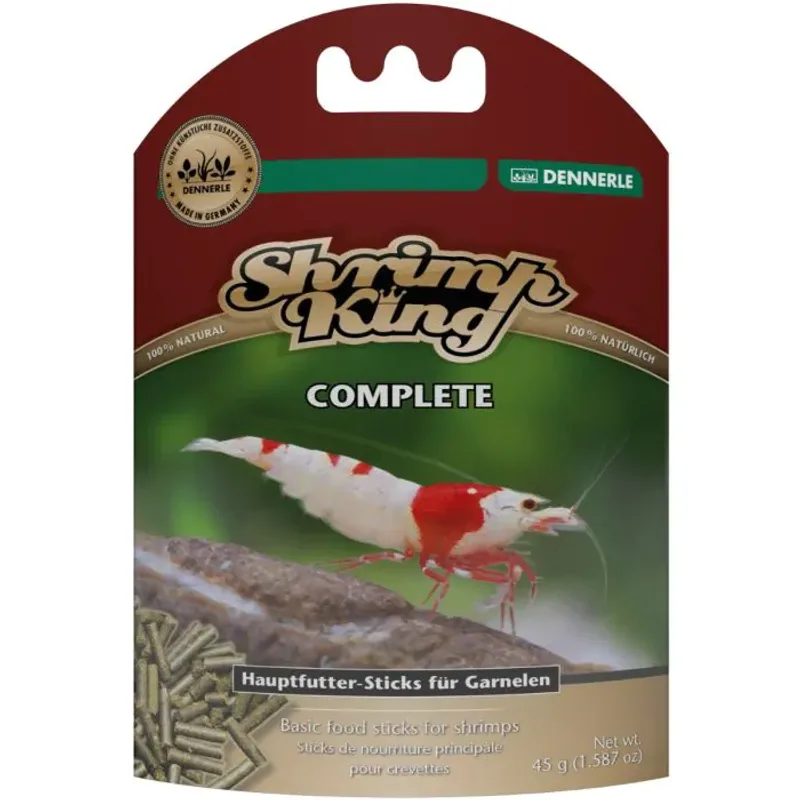
Shrimp King Complete by Dennerle is the food most experienced shrimp breeders reach for first. The formula uses 100% natural ingredients — stinging nettle, spinach, kelp, walnut leaves, and aquatic animal proteins — without artificial colors or preservatives.
The food comes as thin, flat pads rather than round pellets. This shape lets multiple shrimp feed on a single piece simultaneously, which reduces aggression and ensures smaller shrimp get access. In a colony of 30+ shrimp, you will see ten or more crowded onto a single Shrimp King pad within minutes of dropping it in.
Water stability is excellent. The pads hold together for 24+ hours without dissolving into a mess. You can leave a pad in overnight and remove whatever remains in the morning. Many other foods break apart within hours, fouling the water and making cleanup difficult.
The 45g container is the one complaint. For a large colony eating every other day, it does not last long. Buy two containers at a time, or look for the larger bulk sizes when available.
Best for: Primary staple food for any Neocaridina or Caridina colony.
2. GlasGarten Bacter AE
GlasGarten Bacter AE
Best Biofilm Booster- ✓ Dramatically increases biofilm growth — the primary food source for baby shrimp
- ✓ Improves shrimplet survival rates significantly
- ✓ Works as a supplement alongside regular feeding
- ✓ A little goes a long way — one container lasts months
- ✗ Overdosing can spike nitrates and reduce dissolved oxygen
- ✗ Not a complete food — must be used alongside pellets or other food
- ✗ Powder can cloud water temporarily if overdosed
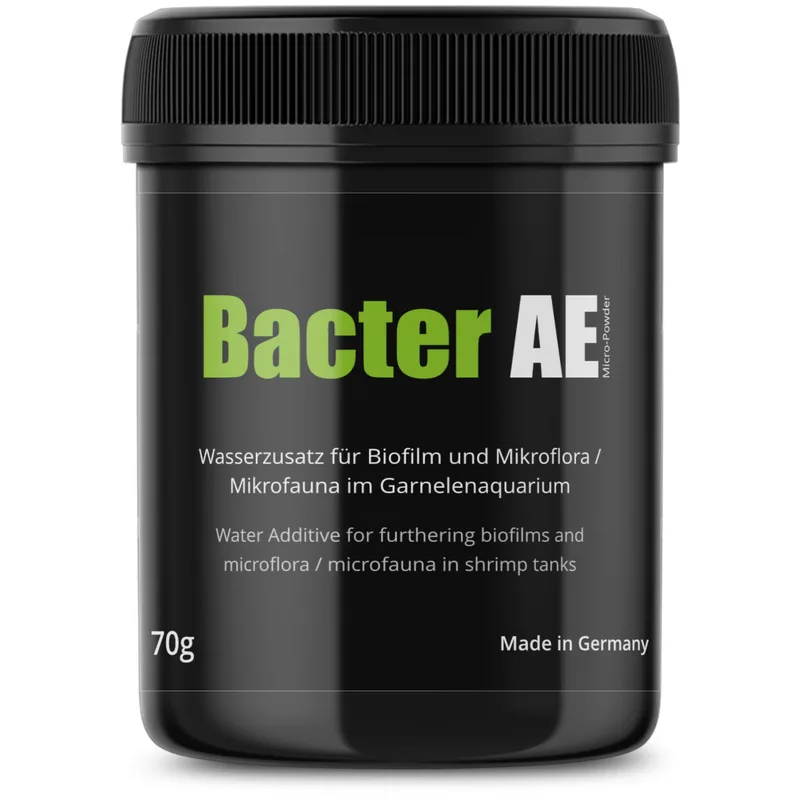
Bacter AE is not technically a food — it is a biofilm enhancer. You add a tiny scoop to the tank water, and it feeds the microorganisms that produce biofilm on every surface. That biofilm is the primary food source for baby shrimp (shrimplets), which cannot eat pellets or large food particles.
The impact on shrimplet survival is dramatic. In tanks without Bacter AE, new keepers often see high mortality in baby shrimp because the tank does not have enough biofilm to sustain them. Adding Bacter AE 2–3 times per week creates a visible film of biofilm on glass, driftwood, and leaves that shrimplets graze on constantly.
Dosing is critical. A tiny amount goes a long way — use the included micro scoop and add less than you think is needed. Overdosing creates an organic load that spikes nitrates, reduces dissolved oxygen, and can kill shrimp. Start with half the recommended dose and increase only if you see no negative effects.
Bacter AE is a supplement, not a replacement for solid food. Adult shrimp still need pellets, vegetables, and protein. Think of Bacter AE as the foundation that supports babies while regular food sustains adults.
Best for: Any colony where shrimplet survival matters — which is every breeding colony.
3. Hikari Shrimp Cuisine
Hikari Shrimp Cuisine
Best Value- ✓ Affordable entry point for shrimp feeding
- ✓ Color-enhancing ingredients bring out reds and blues
- ✓ Small pellet size appropriate for dwarf shrimp
- ✓ Sinks quickly — shrimp find it fast
- ✗ Breaks down faster in water than Shrimp King
- ✗ 10g container is tiny — larger colonies need frequent repurchasing
- ✗ Some keepers report it clouds water if uneaten pieces remain
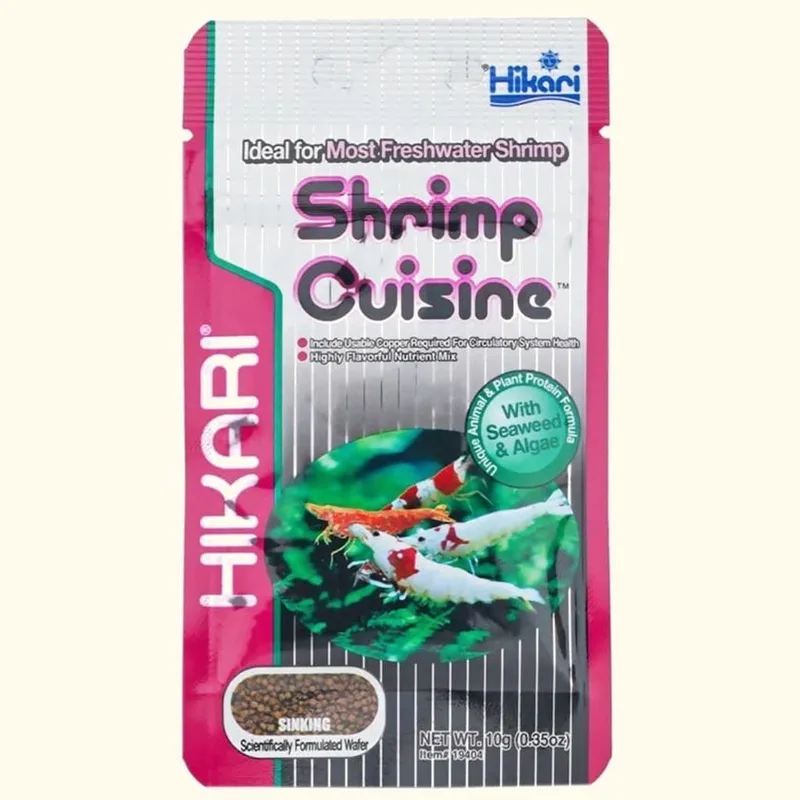
Hikari Shrimp Cuisine is the entry-level shrimp food that gets the job done without breaking the bank. The small sinking pellets contain spirulina, krill, and color-enhancing ingredients that maintain vibrant reds and blues in Neocaridina colonies.
At $5.99-$7.99 for a 10g container, it is the cheapest quality shrimp food available. The pellets sink quickly and attract shrimp within minutes. The color enhancement is noticeable — keepers who switch to Hikari from generic fish food often report brighter coloration within a few weeks.
The downside is water stability. Hikari pellets break down faster than Shrimp King pads, and uneaten pieces can dissolve into a mess if left for too long. Feed only what your colony will consume in 2–3 hours, and remove leftovers. For small colonies (under 20 shrimp), half a pellet every other day is often sufficient.
The 10g container is small — plan on buying replacements frequently or look for multi-packs.
Best for: Budget-conscious keepers who want quality shrimp food at the lowest price.
4. Aquarium Co-Op Easy Shrimp and Snail Shells
Aquarium Co-Op Easy Shrimp and Snail Shells
Best Calcium Supplement- ✓ Calcium sulfate base raises GH gradually — supports successful molting
- ✓ Spirulina coating attracts shrimp so they graze the shell directly
- ✓ One shell lasts about a month in a typical nano colony
- ✓ Dissolves gradually — no risk of dosing too much at once
- ✗ Only available direct from Aquarium Co-Op website
- ✗ A mineral supplement, not a standalone food — pair with a staple pellet
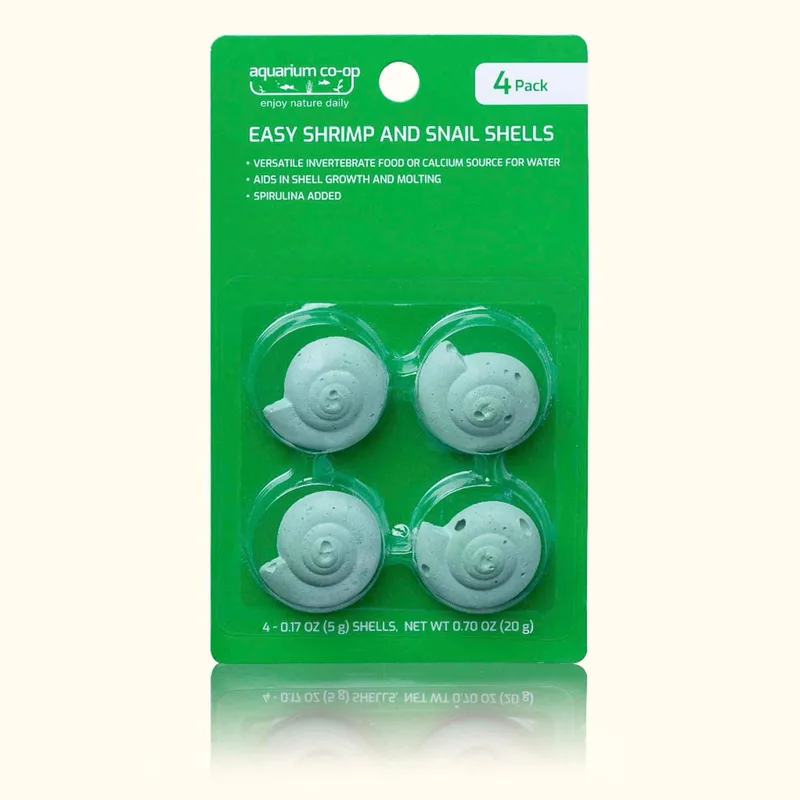
This is not a pellet food — it is a slow-dissolving calcium shell, and it belongs in this roundup because calcium is the piece most beginner shrimp keepers get wrong. Shrimp shed and regrow their entire exoskeleton every few weeks. Without enough calcium available, molts fail and shrimp die mid-molt or shortly after.
Drop one shell in the tank and it dissolves gradually over roughly a month, raising GH in small, steady increments rather than dumping a spike of hardness all at once. The spirulina coating gets shrimp and snails to graze directly on the shell surface, so it functions as both a mineral source and a supplemental food.
At $3.99 for a 4-pack, this is the cheapest product in this roundup and one of the highest-value additions to a shrimp tank’s routine. It is not a substitute for a protein-based staple food like Shrimp King — pair the two rather than choosing one over the other.
It is only available direct from Aquarium Co-Op’s own site, not on Amazon. Order it alongside other Co-Op supplies to combine shipping.
Best for: Keepers who want steady, low-effort calcium supplementation alongside a staple food.
5. GlasGarten Shrimp Baby Food
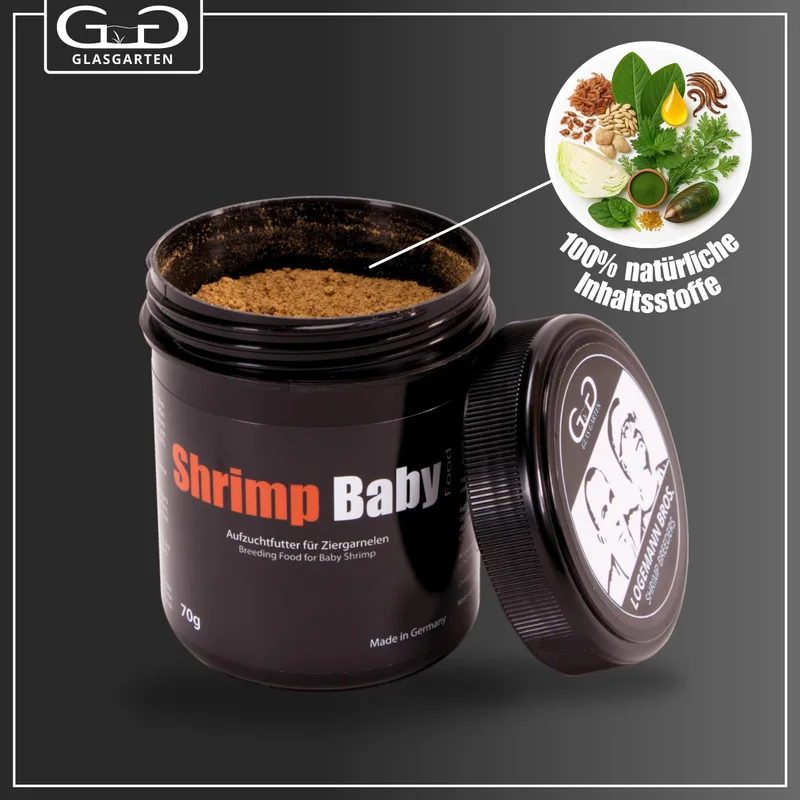
GlasGarten Shrimp Baby Food
Best for Shrimplets- ✓ Ultra-fine particle size that baby shrimp can actually consume
- ✓ Specifically formulated for shrimplet nutrition
- ✓ Disperses throughout the water column — all fry get access
- ✓ Supports rapid early growth
- ✗ Clouds water noticeably when added — use sparingly
- ✗ Can contribute to biofilm growth on glass (cosmetic issue)
- ✗ Not a standalone food for adult shrimp
Shrimp Baby Food fills the gap between Bacter AE (which feeds biofilm) and regular pellets (which are too large for babies). It is an ultra-fine powder that disperses throughout the water column, settling on surfaces where baby shrimp can graze on it directly.
The particle size is the key difference. Adult shrimp foods are pellets or pads — too large for shrimplets to consume. Bacter AE feeds microorganisms, not shrimp directly. Shrimp Baby Food provides actual nutrition in particles small enough for a 1-week-old shrimp to eat.
Use it sparingly — a tiny pinch disperses widely and provides food across the entire tank. Overdoing it clouds the water and contributes to nutrient buildup. Add it 2–3 times per week alongside Bacter AE for maximum shrimplet growth.
Once shrimp reach juvenile size (roughly 4–6 weeks old), they can eat crushed regular pellets and no longer need the powdered food. Transition gradually by offering both, then dropping the powder.
Best for: Breeders maximizing baby shrimp survival and early growth rates.
Buying Guide: Shrimp Feeding Basics
How Often to Feed
- Established colonies with biofilm: Every other day with pellets/pads, plus Bacter AE 2–3 times per week
- New tanks with little biofilm: Daily feeding in small amounts until biofilm establishes
- Breeding colonies: Daily feeding to support pregnant females and growing juveniles
- Shrimp-only tanks: Less food needed than tanks with fish, since shrimp produce less waste
How Much to Feed
Less than you think. A single Shrimp King pad or 2–3 Hikari pellets feeds a colony of 20–30 shrimp for a day. If food remains after 3–4 hours, you are feeding too much. Overfeeding is the number one cause of water quality problems in shrimp tanks.
Rotation Strategy
A healthy shrimp diet rotates between:
- Protein pellets (Shrimp King, Hikari): 3–4 times per week
- Vegetables (blanched spinach, zucchini): 1–2 times per week
- Biofilm supplement (Bacter AE): 2–3 times per week
- Mineral supplement (calcium sticks, cuttlebone): Always available
Foods That Improve Color
- Spirulina enhances blue and green hues
- Astaxanthin (in krill-based foods) enhances reds
- Paprika powder (yes, from your kitchen) enhances reds and oranges
- Indian almond leaves provide tannins that can deepen overall coloring
Beyond the Bowl: Feeding Accessories That Round Out the Routine
A staple food and a biofilm supplement cover nutrition, but three cheap accessories make the feeding routine easier to manage and keep water quality in check.
Aquatic Arts Cuttlebone (3-Pack)
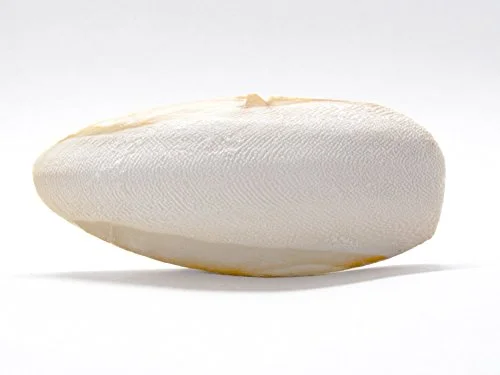
Aquatic Arts Cuttlebone (3-Pack)
Best Long-Term Calcium Source- ✓ Raises GH and KH slowly over weeks, not all at once
- ✓ Shrimp and snails graze it directly for calcium
- ✓ One piece lasts a long time in a nano or small colony tank
- ✓ No dosing math — just drop a piece in and monitor hardness
- ✗ Slower-acting than a liquid remineralizer if GH crashes suddenly
- ✗ Can raise pH slightly — watch parameters in soft-water Caridina tanks
Cuttlebone works alongside a calcium shell or on its own — drop a piece in and shrimp graze on it while it slowly raises GH and KH over weeks. It is a backup line of defense for colonies where diet alone isn’t holding hardness steady.
SunGrow Borosilicate Glass Shrimp Feeding Dish
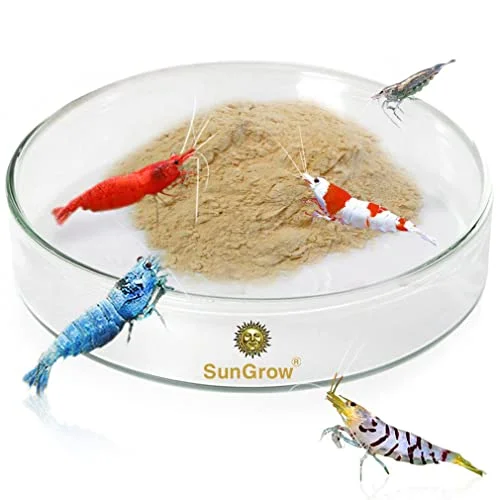
SunGrow Borosilicate Glass Shrimp Feeding Dish
Best Feeding Dish- ✓ Keeps food in one spot so you can see exactly how much is left uneaten
- ✓ Makes it easy to remove leftovers before they foul the water
- ✓ Heavy enough to stay put, doesn't float or tip in flow
- ✓ Doubles as a feeding spot for snails and bottom dwellers
- ✗ Glass can be knocked around by larger tank mates
- ✗ Needs occasional scrubbing — biofilm builds up on the rim
Dropping pellets loose on bare glass makes it hard to tell how much food is actually left after a few hours. A dedicated feeding dish keeps portions contained in one spot, so judging whether you are overfeeding takes a glance instead of a guess.
Aquarium Choice Vegetable Feeding Clip (2-Pack)
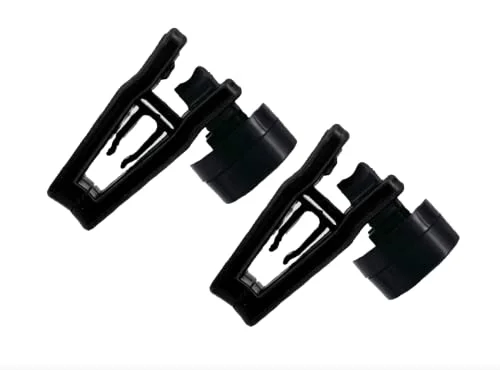
Aquarium Choice Vegetable Feeding Clip (2-Pack)
Best for Blanched Veggies- ✓ Holds blanched vegetables at a fixed depth instead of drifting loose
- ✓ Rust-proof construction holds up to daily use in a shrimp tank
- ✓ Makes removing spent vegetable matter fast and mess-free
- ✓ Suction cups hold securely on glass
- ✗ Vegetables still need to be blanched or softened before clipping
- ✗ Not needed if you feed only pellets and powders
Blanched spinach and zucchini are a good addition to the weekly rotation, but loose vegetable matter drifts around and is a pain to fish out. A suction-cup clip anchors it at a fixed depth and makes cleanup fast when feeding time is over.
Frequently Asked Questions
Can I feed shrimp regular fish food?
In a pinch, yes. Crushed tropical fish flakes provide basic nutrition. But fish food is formulated for fish metabolism, not shrimp. Shrimp-specific foods contain more plant matter, calcium, and ingredients that support exoskeleton health. Long-term, use shrimp food.
How do I know if I am overfeeding?
Signs of overfeeding: cloudy water, visible uneaten food after several hours, planaria or detritus worm explosions, rising nitrate levels between water changes, and green water or algae blooms. Cut feeding in half if you see any of these.
Do shrimp eat algae?
Yes, but not as aggressively as people assume. Shrimp graze on soft biofilm and some types of algae (diatoms, soft green algae), but they will not clear a tank of tough algae like black beard algae or green spot algae. They are grazers, not algae exterminators.
Is Bacter AE safe for fish?
Yes, Bacter AE is safe in community tanks with fish. However, overdosing in any tank — fish or shrimp — can reduce dissolved oxygen. Dose conservatively and increase aeration if you use it in heavily stocked tanks.
Can baby shrimp eat adult shrimp food?
Not effectively. Newborn shrimp are tiny and cannot handle the particle size of pellets or pads. They rely on biofilm for the first 2–4 weeks. Bacter AE and Shrimp Baby Food supplement that natural biofilm. Once juveniles reach about 5mm in length, they can start eating crushed adult food.
How long can shrimp go without feeding?
A healthy colony in a mature tank with established biofilm can go 1–2 weeks without supplemental feeding. The biofilm, algae, and decomposing plant matter provide background nutrition. That said, regular feeding supports breeding and growth — skip feeding only when traveling, not as a routine practice.
Conclusion
Build your shrimp feeding routine around Shrimp King Complete as the staple pellet and GlasGarten Bacter AE as the biofilm supplement. Those two products cover 80% of your colony’s nutritional needs. Add blanched vegetables twice a week, keep a cuttlebone in the tank for calcium, and your shrimp will breed, molt, and color up reliably.
For budget colonies, Hikari Shrimp Cuisine does the job at a fraction of the cost. And if you are breeding and want maximum baby survival, add GlasGarten Shrimp Baby Food to the rotation for the first month of life.