A dedicated shrimp breeding setup does not require expensive equipment or complicated technology. What it requires is stability — stable temperature, stable parameters, and a safe environment where baby shrimp can grow without being eaten or sucked into filter intakes.
The best shrimp breeding setups are simple. A 10-gallon tank, a sponge filter, appropriate substrate, and consistent water parameters will produce hundreds of shrimp per year with minimal intervention. The key is getting the fundamentals right from the start and then leaving the tank alone as much as possible.
Quick Picks
| Need | Our Pick |
|---|---|
| Best breeding tank | Aqueon 10-Gallon Standard |
| Best filter | Aquarium Co-Op Coarse Sponge Filter |
| Best substrate | Fluval Stratum |
| Best remineralizer | SaltyShrimp GH/KH+ |
| Best food | Dennerle Shrimp King Complete |
Choosing a Tank Size
Why 10 Gallons is the Sweet Spot
Shrimp do not need much space individually, but water stability requires volume. A 5-gallon tank can house shrimp, but parameters swing faster in small volumes — a small temperature spike, a missed water change, or a dead snail can push ammonia up quickly. A 10-gallon tank provides enough buffer that small mistakes do not become catastrophes.
The 10-gallon standard (20 x 10 x 12 inches) also offers enough footprint for shrimp to spread out, establish territories, and find food without competing intensely. Most hobbyists report better breeding results in 10-gallon and larger tanks compared to nano setups.
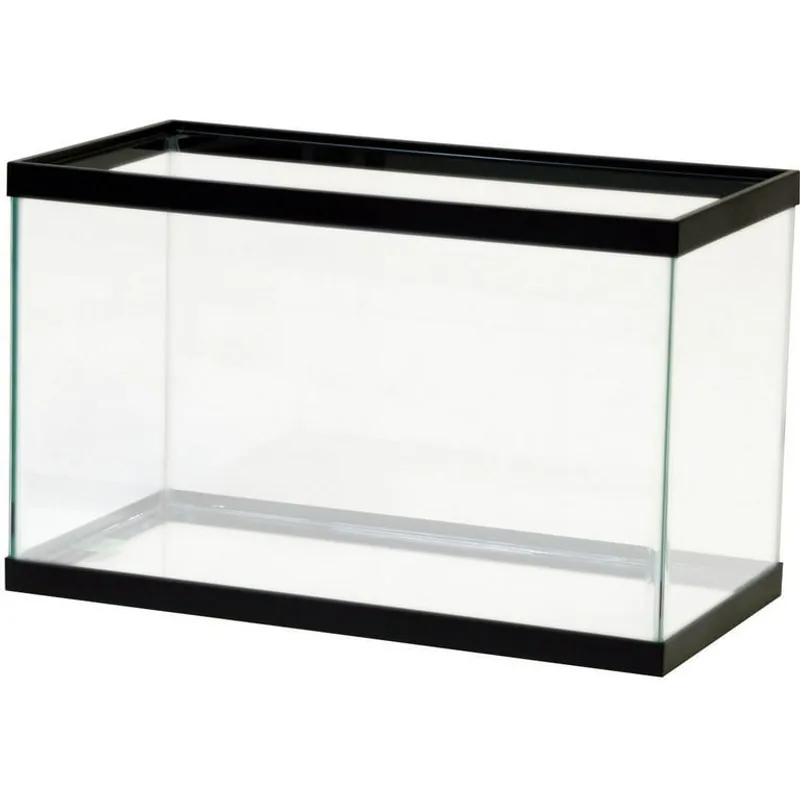
Aqueon Standard 10-Gallon Tank
Best Tank- ✓ Perfect size for a dedicated shrimp colony
- ✓ Widely available and inexpensive
- ✓ Standard dimensions fit most equipment
- ✓ Easy to maintain water stability
- ✗ Plain design — no rimless aesthetic
- ✗ 10 gallons is minimum for colony stability
Going Bigger
If space allows, a 20-gallon long (30 x 12 x 12 inches) is even better. The larger footprint gives shrimp more grazing surface area, and the increased water volume provides maximum parameter stability. A single 20-gallon long can sustain a colony of 200+ neocaridina with proper care.
Filtration: Sponge Filters Are Non-Negotiable
For shrimp breeding, sponge filters are not just a budget option — they are the best option. Here is why:
- Zero risk to baby shrimp. No intake to suck in shrimplets. Every baby born in the tank survives the filtration system.
- Biofilm factory. The sponge surface grows biofilm that shrimp graze on 24/7. Your filter is both filtration and food source.
- Gentle flow. Air-driven sponge filters produce minimal current, which shrimp prefer.
- Biological filtration. The porous sponge material provides enormous surface area for nitrifying bacteria.
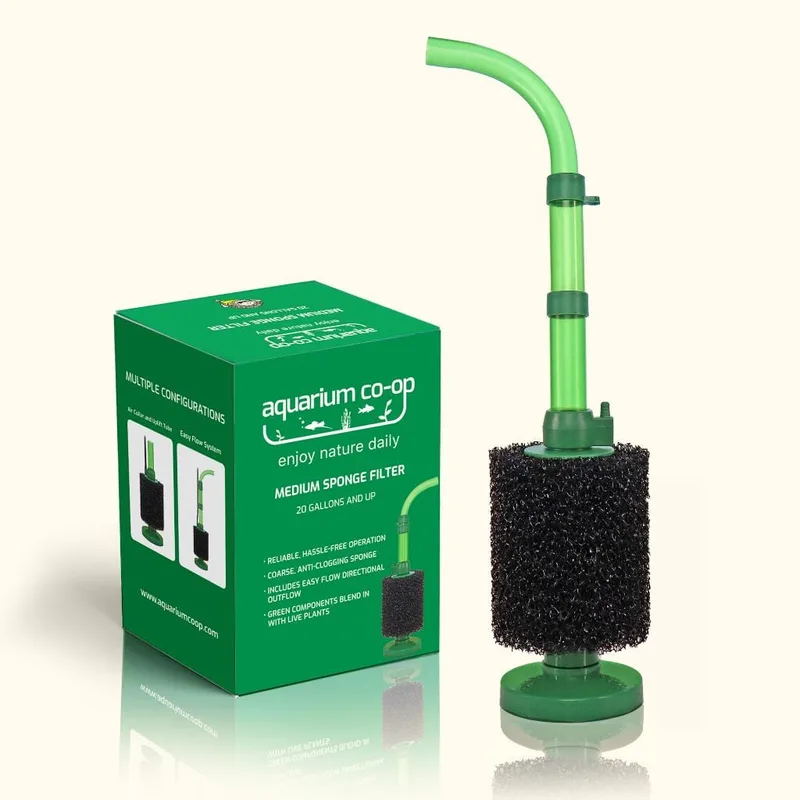
Aquarium Co-Op Coarse Sponge Filter
Best Filter- ✓ Completely shrimp-safe — no intake to trap babies
- ✓ Grows biofilm that shrimp graze on
- ✓ Provides biological and mechanical filtration
- ✓ No moving parts to fail
- ✗ Requires a separate air pump
- ✗ Takes up visible space in the tank
- ✗ Less mechanical filtration than HOB or canister
Run the sponge filter for at least 4 weeks before adding shrimp to establish both the nitrogen cycle and a healthy biofilm layer. An established sponge filter is visibly coated in a light brown film — this is food for your shrimp.
Air Pump Selection
Any basic air pump works. A small USB-powered pump ($8-12) is sufficient for a single sponge filter. For multiple tanks, a linear piston pump with a gang valve manifold distributes air to multiple filters from a single source.
Substrate Options
For Neocaridina (Cherry Shrimp)
Neocaridina shrimp are adaptable and breed in both active and inert substrates:
Inert substrates (sand, gravel): Do not affect water chemistry. Pair with your tap water or remineralized RO water. Simple and long-lasting. Black sand or dark gravel shows off shrimp coloration best.
Active substrates (Fluval Stratum, Controsoil): Buffer pH downward and provide trace minerals. Not required for neocaridina but beneficial for plant growth. Exhaust after 12-18 months.
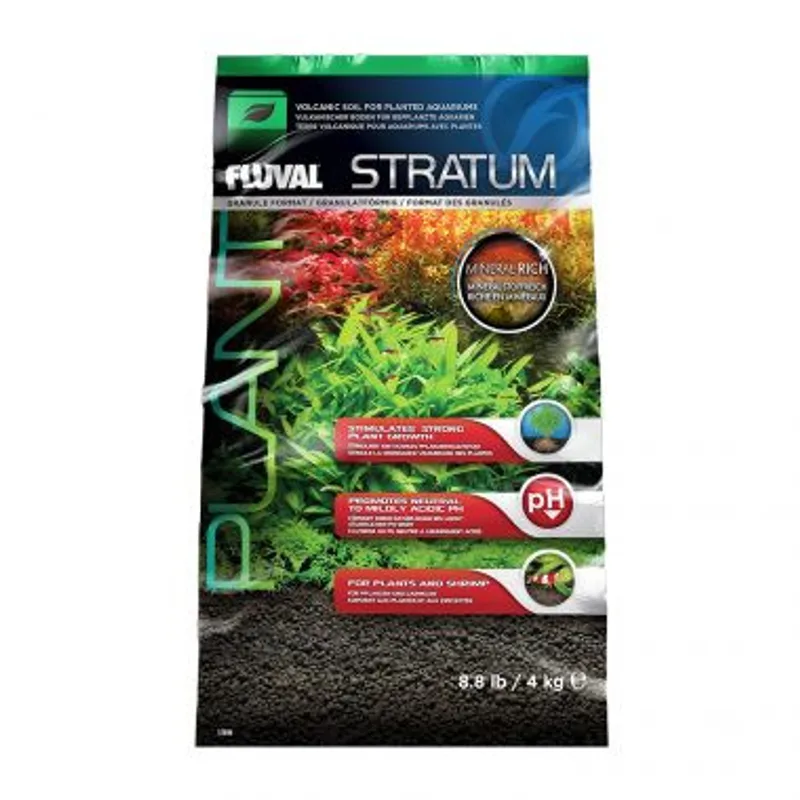
Fluval Stratum Substrate
Best Substrate- ✓ Buffers pH to ideal shrimp range
- ✓ Provides beneficial minerals for molting
- ✓ Porous surface supports biofilm growth
- ✓ Does not compact like sand
- ✗ Exhausts buffering capacity after 12-18 months
- ✗ Can cloud water during initial setup
- ✗ Breaks down into dust over time
- ✗ More expensive than inert substrates
For Caridina (Crystal, Bee Shrimp)
Caridina shrimp require active substrate. These shrimp need acidic conditions (pH 5.5-6.8) that only active substrates can reliably maintain long-term. The substrate absorbs KH from the water and releases hydrogen ions, maintaining the low pH that caridina require.
Recommended active substrates for caridina: ADA Amazonia, Controsoil, Fluval Stratum, SL-Aqua Nature Soil.
Water Parameters
Neocaridina Targets
| Parameter | Range |
|---|---|
| Temperature | 70-76degF |
| pH | 6.5-7.5 |
| GH | 6-8 dGH |
| KH | 2-5 dKH |
| TDS | 150-250 ppm |
| Ammonia | 0 ppm |
| Nitrite | 0 ppm |
| Nitrate | Below 20 ppm |
Caridina Targets
| Parameter | Range |
|---|---|
| Temperature | 66-74degF |
| pH | 5.8-6.6 |
| GH | 4-6 dGH |
| KH | 0-1 dKH |
| TDS | 100-150 ppm |
| Ammonia | 0 ppm |
| Nitrite | 0 ppm |
| Nitrate | Below 10 ppm |
Water Source
Tap water (for neocaridina): If your tap water naturally falls within neocaridina parameters, you can use it directly with dechlorinator. Test your tap monthly — municipal water quality varies seasonally.
RO water + remineralizer (for caridina, recommended for neocaridina): Reverse osmosis water starts at 0 TDS and is remineralized to exact target parameters. This provides perfect consistency and eliminates the variable of municipal water changes.
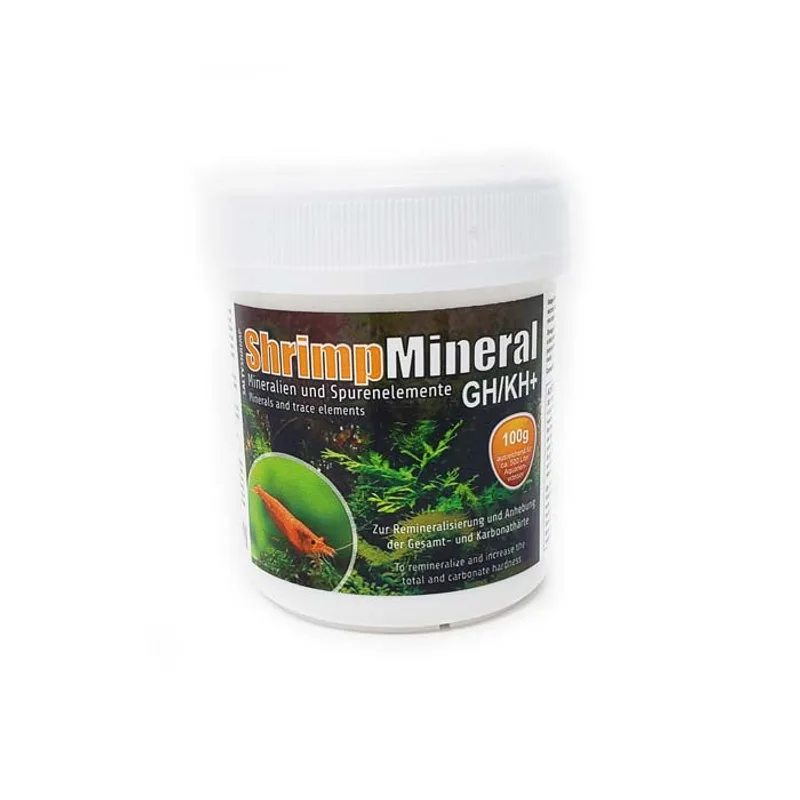
SaltyShrimp GH/KH+
Best Remineralizer- ✓ Precisely raises GH and KH for neocaridina
- ✓ Consistent mineral content batch to batch
- ✓ A little goes a long way — 100g lasts months
- ✓ Industry standard for shrimp breeders
- ✗ Only for neocaridina — caridina needs GH+ only
- ✗ Requires RO water for proper use
- ✗ Premium price compared to generic alternatives
SaltyShrimp GH/KH+ is the standard remineralizer for neocaridina. Mix into RO water before water changes until TDS reaches your target (usually 180-200 ppm). For caridina, use SaltyShrimp GH+ (without the KH component) to raise only GH while the active substrate handles pH and KH.
Feeding
Shrimp in a well-established, planted tank need minimal supplemental feeding. Biofilm, algae, and decaying plant matter provide the majority of their nutrition. Overfeeding is far more dangerous than underfeeding — uneaten food fouls water and spikes ammonia.
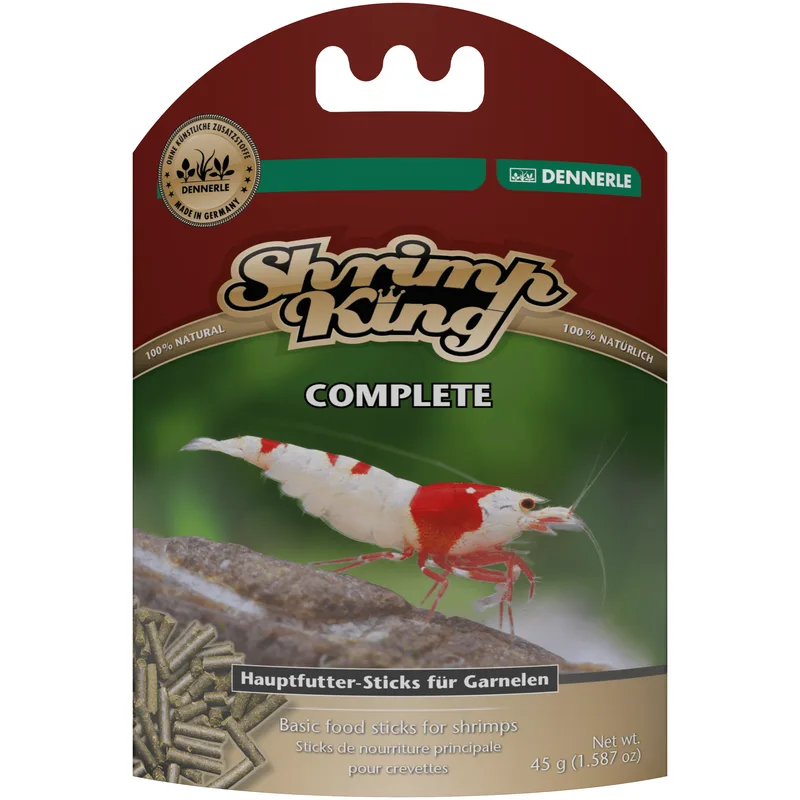
Dennerle Shrimp King Complete
Best Shrimp Food- ✓ Balanced nutrition supports breeding and molting
- ✓ Sinks quickly to substrate where shrimp feed
- ✓ Does not dissolve quickly — reduces water fouling
- ✓ Formulated specifically for dwarf shrimp
- ✗ Small container — heavy feeders go through it fast
- ✗ Premium price per gram
Feeding schedule: One small piece of food (a single Shrimp King wafer or equivalent) every other day for a colony of 20-50 shrimp. If food is not consumed within 2-3 hours, you are feeding too much or too often.
Variety: Rotate between mineral-rich foods (for molting support), protein foods (for breeding females), and vegetable-based foods. Blanched spinach, zucchini, and mulberry leaves are excellent supplements.
Plants for Breeding Tanks
Plants serve three purposes in a shrimp breeding setup:
- Surface area for biofilm. More plant surface = more grazing area = more food for shrimp.
- Hiding spots for molting. Shrimp are vulnerable during and after molting. Dense plant cover provides safe spaces.
- Water quality maintenance. Plants absorb nitrate and other waste products.
Best plants for shrimp breeding tanks:
- Java moss (creates dense mats where baby shrimp hide)
- Subwassertang (similar to java moss but grows faster)
- Anubias nana petite (attaches to hardscape, low maintenance)
- Bucephalandra (slow-growing, beautiful, shrimp-safe)
- Floating plants (red root floaters, salvinia — absorb excess nutrients)
Temperature and Breeding Triggers
Shrimp breed most actively at the upper end of their comfort range. For neocaridina, 74-76degF produces the highest breeding rates. Below 70degF, breeding slows significantly. Above 78degF, shrimp become stressed and molting issues increase.
Water changes can trigger molting and subsequent breeding. A 10-15% water change with slightly cooler, fresh water mimics rainfall events that signal breeding conditions in the wild. Many breeders deliberately use small, cool water changes to stimulate breeding cycles.
Colony Management
Starting Size
Begin with at least 10-12 shrimp — ideally 20 or more. A larger starting colony establishes faster, provides genetic diversity, and reaches self-sustaining breeding numbers more quickly. Ordering online from a reputable breeder (rather than buying pet store shrimp) gives you healthier, more colorful starting stock.
Growth Expectations
A healthy neocaridina colony doubles approximately every 2-3 months. Starting with 20 shrimp:
- Month 2: ~40 shrimp
- Month 4: ~80 shrimp
- Month 6: ~150-200 shrimp
- Month 8+: Colony stabilizes based on tank carrying capacity
A 10-gallon tank typically stabilizes at 150-250 shrimp depending on feeding and biofilm availability.
Culling for Color
If breeding for specific color grades (fire red, painted fire red, bloody mary), cull any shrimp that show wild-type coloration (clear, brown, or poorly colored). Move culls to a separate tank or sell them as lower-grade pets. Consistent culling over generations produces increasingly intense coloration.
Frequently Asked Questions
Do shrimp need a heater?
In most homes, yes — especially for consistent breeding. An adjustable heater set to 74degF prevents temperature fluctuations that stress shrimp and interrupt breeding cycles. In hot climates or warm rooms, you may not need one during summer.
How often should I do water changes?
For established shrimp tanks: 10-15% weekly is sufficient. Avoid large water changes (more than 20%) as sudden parameter shifts stress shrimp and can trigger failed molts. Consistency matters more than volume.
Can I breed neocaridina and caridina together?
They cannot crossbreed (different genera), so they can coexist. However, they have different water parameter requirements, so optimizing for one species means the other is in suboptimal conditions. Most breeders maintain separate tanks for each.
How do I know if my shrimp are breeding?
Look for berried females — females carrying a cluster of eggs under their abdomen (the swimmerets). Eggs are visible as a mass of tiny spheres, usually green or yellow. Females carry eggs for 28-35 days before releasing miniature versions of the adults.
What kills shrimp most often?
In order of frequency: ammonia spikes (from overfeeding or inadequate cycling), copper contamination (from medications or old plumbing), rapid parameter changes (large water changes), and failed molts (from inadequate GH or temperature instability).