AquaRanked is reader-supported. When you buy through links on our site, we may earn an affiliate commission.
Moss is one of the few upgrades that improves a shrimp tank on every front at once. It gives shrimp fry somewhere to hide from adults and filter intakes, it grows a permanent crop of biofilm for grazing, and it dresses up bare driftwood and rock without asking for CO2 injection or high light. For a breeding operation running a rack of colony tanks, a few dollars of moss cutting does more for fry survival than almost anything else you can buy.
The catch is that “moss” isn’t one product. Java moss, Christmas moss, Flame moss, and Weeping moss all behave differently — different growth shapes, different growth speeds, different mounting needs. Picking the wrong one for a fast-turnaround breeding tank versus a slow-grown aquascape wastes money and patience.
This roundup compares five moss types plus the mounting glue you’ll actually need to get them to stay put, with an eye toward what actually works across multiple tanks rather than a single showcase aquarium.
| SoShrimp Java Moss Live Plant (3x3 Inch) Best Overall | Aquarium Co-Op Java Moss Mat Best Pre-Mounted | Christmas Moss Vesicularia Montagnei Live Plant Best for Aquascaping | Canton Aquatics Flame Moss (Taxiphyllum 'Flame') Best for Vertical Growth | Canton Aquatics Weeping Moss (Vesicularia Ferriei) Best for Draping Hardscape | Moss for Aquariums Java Moss (4 oz Cup) Best Budget / Bulk | Seachem Flourish Glue Best Mounting Glue | MICROBE-LIFT Plantscaper Super Glue (50g) Best for Large Aquascapes | |
|---|---|---|---|---|---|---|---|---|
| Rating | 9/10 | 8.8/10 | 8.7/10 | 8.5/10 | 8.3/10 | 8/10 | 8.6/10 | 8.2/10 |
| Price | $16.95as of Sep 27, 2026 | $9.99 | $11.97as of Sep 27, 2026 | $14.63as of Sep 27, 2026 | $14.93as of Sep 27, 2026 | $5.95as of Sep 27, 2026 | $9.45as of Sep 27, 2026 | $20.67as of Sep 27, 2026 |
| Species | Vesicularia dubyana | Vesicularia dubyana | Vesicularia montagnei | Taxiphyllum sp. 'Flame' | Vesicularia ferriei | Vesicularia dubyana | — | — |
| Growth Pattern | Shaggy, no fixed shape | — | Triangular, tree-like fronds | Vertical, flame-shaped spirals | Drooping, teardrop-shaped fronds | — | — | — |
| Light | Low to high, tolerant | Low to medium | Low to medium | Low to medium | Low to medium | Low to high, tolerant | — | — |
| Best For | Beginners, shrimp colonies, breeding tanks | Skipping the tie-down step entirely | Structured hardscape, aquascaped shrimp tanks | Driftwood branches, vertical hardscape accents | Draping over branches and ledges | Multi-tank breeding racks, stocking up cheaply | Small mounting jobs, single moss portions | Full hardscape builds, multiple driftwood pieces |
| Mount | — | Pre-attached to flexible wire mesh | — | — | — | — | — | — |
| Format | — | — | — | — | — | 4 oz loose portion cup | — | — |
| Type | — | — | — | — | — | — | Cyanoacrylate gel | Cyanoacrylate gel |
| Cure Time | — | — | — | — | — | — | Seconds underwater | — |
| Shrimp-Safe | — | — | — | — | — | — | Yes, once fully cured | Yes, once fully cured |
| Size | — | — | — | — | — | — | — | 50g |
| Check Price → | Check Price → | Check Price → | Check Price → | Check Price → | Check Price → | Check Price → | Check Price → |
Prices change daily — tap Check Price for the current Amazon price. Numbers shown were verified on the "as of" date.
Quick Picks
Buying Guide: What to Look for in Shrimp Tank Moss
Growth Shape Determines the Look You Get
Every moss on this list traps biofilm and shelters shrimp fry about equally well. What actually differs is the shape it grows into:
- Java moss grows shaggy and directionless — great coverage fast, less great if you want a tidy look.
- Christmas moss branches into a triangular, tree-like pattern that holds structure without constant trimming.
- Flame moss grows straight up in loose spirals, best used as a vertical accent on branches rather than a carpet.
- Weeping moss droops downward in teardrop fronds and needs to be mounted high to show off its habit.
Match the growth shape to where the moss is going before you buy — a moss that droops needs a high branch, not a flat rock on the substrate.
Mounting: Tie, Glue, or Pre-Mounted
New moss almost never comes attached to anything. You have three practical options:
- Cotton thread or fishing line — free if you already have it, but fiddly and the thread eventually needs cutting away once the moss roots in.
- Cyanoacrylate gel glue — bonds in seconds underwater and disappears once the moss grows over it. This is what most breeders settle on for speed.
- Pre-mounted mesh — buy it already attached to a wire grid and skip the mounting step entirely. Costs more per square inch but saves real time across a multi-tank rack.
For a single showpiece tank, tying moss by hand onto a specific branch gives the most control. For a breeding rack where you’re mounting moss across a dozen tanks, glue or pre-mounted mesh is worth the extra cost in saved time.
New Moss Needs a Quarantine, Not Just a Rinse
This is the step breeders skip and regret. Moss imported or shipped loose can carry planaria, hydra, dragonfly nymph larvae, or snail eggs — all of which can prey on or outcompete shrimp fry once established. Some overseas-grown moss has also tested positive for pesticide residue strong enough to wipe out an entire shrimp colony on contact.
Before moss goes anywhere near a shrimp tank:
- Rinse thoroughly under running water and pick through it by hand for visible pests or eggs.
- Quarantine in a bare container with a small fish (not shrimp) for 1-2 weeks to flag pesticide contamination before it reaches your colony.
- Skip bleach or hydrogen peroxide dips unless you’re experienced — Java moss tolerates a light dip, but Christmas, Flame, and Weeping moss are more delicate and can be killed outright.
A dead shrimp colony from contaminated moss costs far more than the moss itself. Quarantine every new batch, no exceptions.
Light and Growth Speed Across Species
None of the mosses in this roundup require CO2 injection or high-output lighting, but growth speed under identical conditions varies widely. Java moss fills in fastest, useful for breeders who need coverage established before the next spawn. Christmas and Weeping moss grow at a moderate pace. Flame moss is the slowest of the group — expect months, not weeks, before it fills out a driftwood branch.
Bulk Buying for Breeding Racks
Running multiple tanks changes the math. A single 4 oz portion of loose Java moss divides cleanly across 4-6 nano tanks and regrows to full coverage within a few weeks in each one. Buying five small “showcase” portions for five tanks costs several times more than dividing one bulk cup — the same logic that applies to bulk catappa leaves and bulk sponge filters applies here.
Detailed Reviews
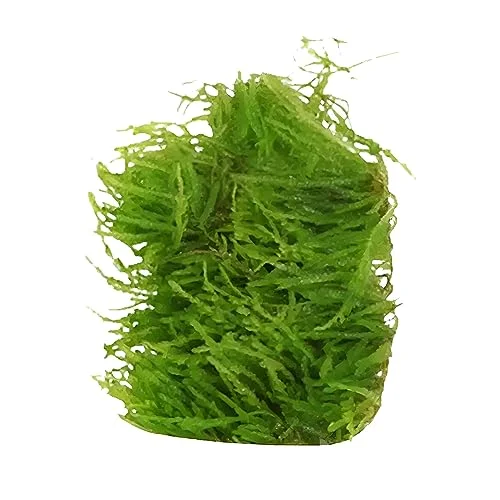
SoShrimp Java Moss Live Plant (3x3 Inch)
SoShrimp Java Moss Live Plant (3x3 Inch)
Best Overall- ✓ Tolerates the widest range of water parameters of any moss on this list
- ✓ Grows in low or high light without special CO2 injection
- ✓ Dense mat structure traps biofilm fast, feeding shrimp fry within days
- ✓ Cheapest way to establish moss coverage across multiple tanks
- ✗ Shaggy, undefined growth needs regular trimming to stay tidy
- ✗ Loose strands break off easily and drift into filter intakes
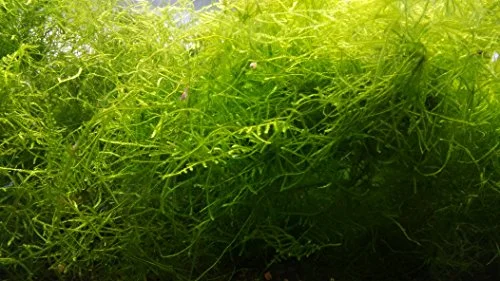
Java moss earns the top spot because it is the most forgiving plant in this entire roundup. Vesicularia dubyana tolerates a wide swing in temperature, hardness, and light without stalling out, which matters when you’re running a mix of tank setups rather than one tightly controlled aquascape.
The 3x3 inch portion is enough to establish a starter clump on a piece of driftwood or divide into a couple of smaller sections for separate tanks. Shrimp start grazing the surface within days as biofilm accumulates in the dense, tangled structure. For a breeding tank where fry survival is the priority over aesthetics, Java moss is the standard recommendation for good reason.
The tradeoff is shape. Java moss doesn’t hold a defined pattern — left untrimmed, it turns into a shapeless mass that traps detritus along with biofilm. A monthly trim with scissors keeps it productive without smothering itself.
Verdict: The right first moss for almost any shrimp tank. Hardy, fast-growing, and cheap enough to buy in quantity for a full breeding rack.
Aquarium Co-Op Java Moss Mat
Aquarium Co-Op Java Moss Mat
Best Pre-Mounted- ✓ Arrives already attached to a wire grid — sinks and holds shape immediately
- ✓ No thread, fishing line, or glue needed to anchor it
- ✓ Grid can be trimmed or wrapped around driftwood and rock
- ✓ Sourced through a vetted supplier, less risk of contaminated stock
- ✗ Direct-only — no Prime shipping or bundling with other Amazon orders
- ✗ Costs more per square inch than loose portions
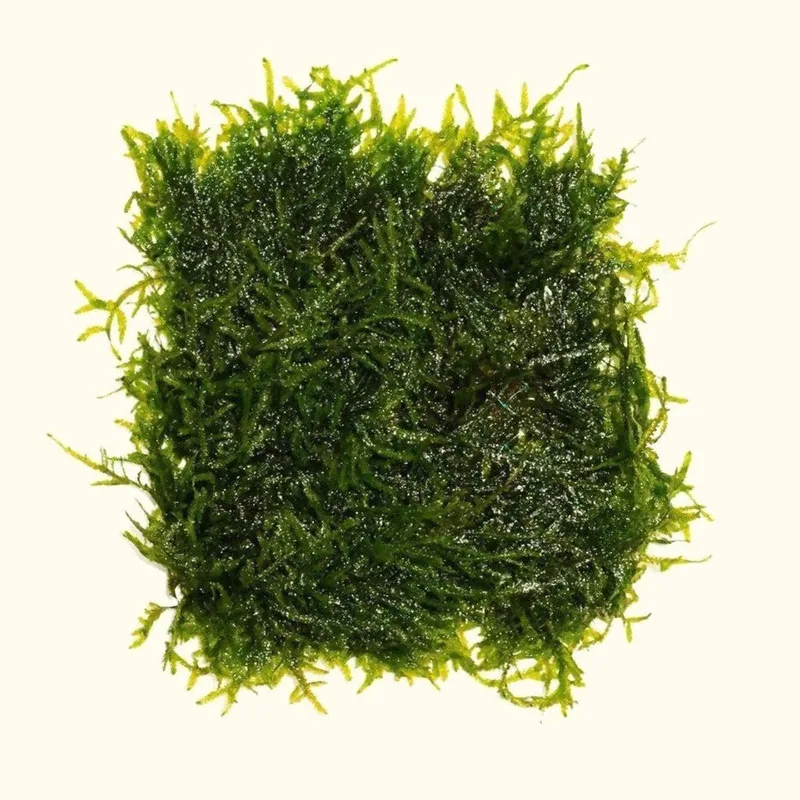
This is the same forgiving Java moss species, sold pre-attached to a flexible wire mesh grid instead of as a loose clump. The practical benefit is real: there’s no tying, no gluing, no waiting for it to root before it stops drifting around the tank. Drop it in, weight it down or wrap it around a branch, and it holds its position immediately.
For anyone setting up several tanks in a single afternoon, skipping the mounting step on each one adds up to meaningful time saved. The mesh also gives you a trim option loose moss doesn’t — cut the grid itself into smaller pieces to cover multiple tanks from one mat.
Being direct-only means no Prime shipping and no bundling with an existing Amazon order, and the per-square-inch cost runs higher than loose Amazon portions. Buying through a curated supplier does reduce the odds of unwanted hitchhikers arriving with the moss, though a quarantine period is still worth doing regardless.
Verdict: Worth the premium if your time mounting moss across tanks is worth more than the price difference. A clean, low-friction way to add moss without the DIY step.
Christmas Moss Vesicularia Montagnei Live Plant
Christmas Moss Vesicularia Montagnei Live Plant
Best for Aquascaping- ✓ Distinct triangular frond pattern holds a neater shape than Java moss
- ✓ Slower growth means less frequent trimming
- ✓ Dense fronds still trap plenty of biofilm for shrimp grazing
- ✓ Reads as more deliberate on driftwood and rock than shaggier mosses
- ✗ Grows noticeably slower — takes longer to fill in bare hardscape
- ✗ More sensitive to poor water flow than Java moss
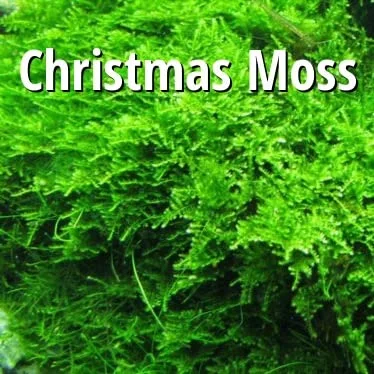
Christmas moss trades some of Java moss’s speed for a noticeably neater growth habit. The triangular, branching fronds resemble small conifer sprigs, and that structure holds up over time without collapsing into the shapeless mat Java moss can become.
That makes it the better choice for an aquascaped shrimp tank where appearance matters alongside function — mounted along a piece of spiderwood, Christmas moss reads as a deliberate design choice rather than an afterthought. It still grows dense enough to shelter shrimp fry and support biofilm grazing, just at a slower pace than Java moss.
Water flow matters more here than with Java moss. Christmas moss in low-flow, stagnant corners tends to accumulate detritus and grow patchy rather than filling in evenly. Position it somewhere with gentle circulation for the best results.
Verdict: The pick for shrimp keepers who want their tank to look intentional. Slower growing than Java moss, but the structured shape is worth the wait.
Canton Aquatics Flame Moss (Taxiphyllum ‘Flame’)
Canton Aquatics Flame Moss (Taxiphyllum 'Flame')
Best for Vertical Growth- ✓ Grows upward in a spiraling flame shape unlike any other common moss
- ✓ Easy to cultivate across a wide range of tank conditions
- ✓ Grown on-site by a US nursery — less transit stress than imported stock
- ✓ Distinct look makes it a strong focal point on tall driftwood
- ✗ Slowest grower on this list — patience required to fill in
- ✗ Loses its vertical shape and gets shaggy without regular trimming
Flame moss is the one moss on this list that grows as a focal point rather than a background carpet. Taxiphyllum sp. ‘Flame’ sends up loose, spiraling shoots that genuinely resemble flickering flames when mounted vertically on a driftwood branch — nothing else in the shrimp-keeping hobby grows quite like it.
Canton Aquatics grows their stock on-site rather than importing it, which shows up as healthier tissue and less transplant shock than moss shipped internationally. It still tolerates a range of tank conditions without CO2 injection, making it approachable despite the distinctive look.
Patience is the real requirement. Flame moss is the slowest grower in this roundup by a clear margin — expect to wait months rather than weeks for a branch to fill out. Left untrimmed for too long, it also loses the spiral shape and starts looking like ordinary shaggy moss, so occasional light trimming actually helps it hold its signature form.
Verdict: The showpiece choice for a driftwood centerpiece. Not the moss to buy if you need fast coverage for a new breeding tank.
Canton Aquatics Weeping Moss (Vesicularia Ferriei)
Canton Aquatics Weeping Moss (Vesicularia Ferriei)
Best for Draping Hardscape- ✓ Distinctive downward-drooping fronds unlike upright mosses
- ✓ No CO2 injection required to maintain healthy growth
- ✓ Works well tied high on branches where it can hang naturally
- ✓ Creates dense curtain-like cover shrimp use as a safe zone
- ✗ Needs to be mounted high to show off its draping habit — awkward on flat substrate
- ✗ Slow to establish in the first few weeks after planting
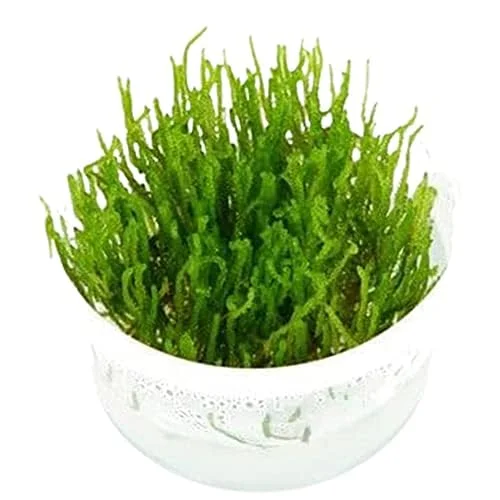
Weeping moss fills a niche none of the other mosses on this list cover: fronds that grow downward instead of up or outward. Mounted high on a branch or ledge, it drapes in a curtain that shrimp use as a shaded retreat, and the visual effect on driftwood is distinct from anything upright moss provides.
The catch is placement. Mounted low or flat, weeping moss doesn’t get to demonstrate its growth habit and just looks like a slower, less interesting Java moss substitute. It needs height to work as intended, which means planning your hardscape layout around it rather than adding it as an afterthought.
Like Christmas and Flame moss, it establishes slowly in the first few weeks after mounting before growth picks up. Give it time before judging whether the placement is working.
Verdict: A strong pick specifically for draping over high branches and ledges. Skip it if you don’t have a spot that lets it hang.
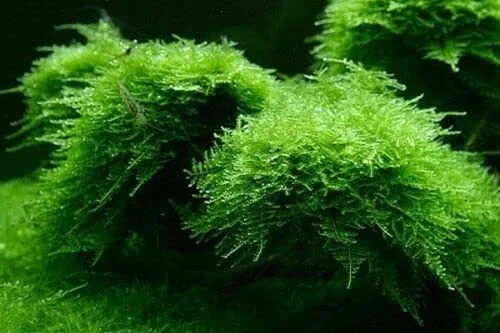
Moss for Aquariums Java Moss (4 oz Cup)
Moss for Aquariums Java Moss (4 oz Cup)
Best Budget / Bulk- ✓ Lowest price per tank covered on this entire list
- ✓ One cup easily divides across 4-6 nano breeding tanks
- ✓ Same forgiving Java moss species as the premium pick
- ✓ Fast enough growth to fill divided portions back out within weeks
- ✗ Loose, unsorted portion — more debris and trimming needed on arrival
- ✗ No pre-attachment, so you're tying or gluing it yourself
For anyone running more than two or three tanks, this is the pick that actually makes financial sense. Same forgiving Java moss species as the premium portion above, sold as a larger 4 oz loose cup that divides cleanly across four to six nano breeding tanks.
Splitting one cup across a rack costs a fraction of buying individual small portions per tank, and Java moss regrows a divided section back to full coverage within a few weeks under normal conditions. For a breeding operation prioritizing fry survival across many tanks over the appearance of any single one, this is the most cost-effective way to get moss into every enclosure.
Being an unsorted loose portion, expect more incidental plant debris and the occasional stray strand of a different plant mixed in — sort through it before dividing and mounting.
Verdict: The bulk buy for multi-tank fish rooms. Stretches further per dollar than any other option on this list.
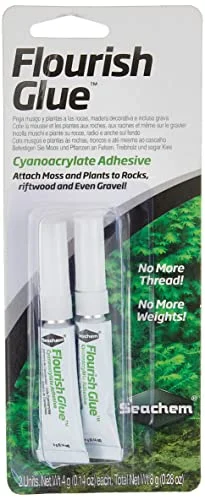
Seachem Flourish Glue
Seachem Flourish Glue
Best Mounting Glue- ✓ Bonds moss to driftwood or rock in seconds, even underwater
- ✓ Gel consistency stays put instead of running into substrate
- ✓ Small tube is enough for dozens of individual mounting spots
- ✓ Widely used and reported safe around shrimp once cured
- ✗ Small bottle empties fast if you're mounting moss across a full aquascape
- ✗ Releases mild fumes while curing — apply outside the tank when possible
Once you’ve picked a moss, you still need to get it to stay where you put it. Seachem’s Flourish Glue is a cyanoacrylate gel that bonds moss to driftwood or rock in seconds, even fully submerged, and the gel consistency keeps it from running down into the substrate the way thinner glues do.
A single small tube covers dozens of individual mounting points, which is plenty for outfitting one or two tanks. It cures fast enough that moss stops drifting almost immediately, and it’s widely reported as safe for shrimp tanks once fully cured — the brief curing period is the only window where care matters.
Apply it outside the tank when practical, since it releases mild fumes while curing. For a single tank or occasional touch-ups, the small bottle size is a feature rather than a limitation.
Verdict: The default glue pick for anyone mounting moss on a normal schedule. Fast, effective, and shrimp-safe once cured.
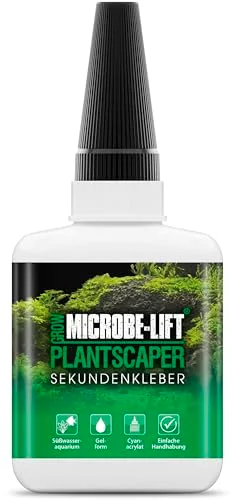
MICROBE-LIFT Plantscaper Super Glue (50g)
MICROBE-LIFT Plantscaper Super Glue (50g)
Best for Large Aquascapes- ✓ 50g size lasts through an entire aquascape build without running out
- ✓ Formulated specifically for aquascaping mosses and plants
- ✓ Thick gel holds moss clumps in place on vertical driftwood faces
- ✓ Cost-efficient for anyone rebuilding hardscape across several tanks
- ✗ More glue than a casual single-tank keeper needs
- ✗ Higher upfront cost than a single small tube
For anyone rebuilding hardscape across several tanks at once — a common breeding-rack scenario when reorganizing tanks or setting up new ones — the 50g size of MICROBE-LIFT’s Plantscaper glue lasts through far more mounting points than a small tube. It’s formulated specifically for aquascaping mosses and plants, and the thick gel holds clumps in place even on vertical driftwood faces where gravity works against you.
The larger size only pays off if you’re actually doing enough mounting to use it before it degrades. A single-tank keeper doing an occasional touch-up is better served by a smaller bottle.
Verdict: The economical choice for full aquascape builds or multi-tank rack setups. Overkill for a single small mounting job.
Frequently Asked Questions
Is moss safe for all shrimp species?
Yes. Live aquarium moss carries no copper and no synthetic chemicals, and it’s beneficial for both Neocaridina (Cherry Shrimp, Blue Dream) and Caridina (Crystal Red, Taiwan Bee) colonies. The main safety concern isn’t the moss itself but what may hitch a ride on it — pests, snail eggs, or pesticide residue from poorly quarantined stock. Always rinse and quarantine new moss before it goes into a shrimp tank.
Which moss is best for shrimp fry survival?
Java moss and the Aquarium Co-Op Java moss mat both establish the fastest and trap the most biofilm early on, which matters most in the first few weeks of a fry’s life. Denser, slower-growing mosses like Christmas or Flame moss eventually offer similar shelter but take longer to build up coverage.
Do I need CO2 injection to grow moss?
No. Every moss in this roundup grows without CO2 injection under low to medium light. CO2 speeds up growth and produces denser, greener moss, but it’s optional rather than required for any species covered here.
How do I attach moss to driftwood or rock without glue?
Cotton thread or fine fishing line works — wrap it loosely around the moss and the hardscape, and trim away the thread once the moss has rooted in on its own, usually within 3-6 weeks. This method costs nothing if you already have thread on hand, but it’s slower and fiddlier than gel glue for mounting multiple pieces.
How often should shrimp tank moss be trimmed?
Java moss benefits from a light monthly trim to prevent it from collapsing into a shapeless, detritus-trapping mass. Christmas, Flame, and Weeping moss grow slower and hold their shape longer, so trimming every 6-8 weeks is usually enough — more often just to maintain a specific look than out of necessity.
Can moss carry pests or diseases into my tank?
Yes, and this is the most common way shrimp keepers unintentionally wipe out a colony. New moss can carry planaria, hydra, dragonfly nymph larvae, snail eggs, or pesticide residue from the growing facility. Quarantine every new moss purchase — rinse thoroughly, inspect by hand, and hold it in a separate container with a hardy fish (not shrimp) for 1-2 weeks before adding it to a colony tank.
What’s the cheapest way to add moss to multiple breeding tanks?
Buy a larger loose portion — a 4 oz cup rather than a small pre-portioned clump — and divide it across tanks yourself. One bulk cup covers four to six nano tanks for a fraction of the cost of buying individual small portions for each one, and Java moss regrows to full coverage within weeks of dividing.
Conclusion
Our Top Pick
For most shrimp keepers, SoShrimp Java Moss is the right starting point — cheap, forgiving, and productive enough to feed a growing fry population within days of planting. If skipping the mounting step is worth a few extra dollars, the Aquarium Co-Op Java Moss Mat delivers the same species already attached to mesh.
For a tank where appearance matters as much as function, Christmas Moss holds a tidier shape without sacrificing the biofilm benefits shrimp rely on, while Flame Moss and Weeping Moss serve as deliberate accent pieces once you have a specific spot in mind for their distinctive growth habits.
Running more than a couple of tanks changes the math entirely — the 4 oz bulk Java moss cup divides across a full breeding rack for less than the cost of one showcase portion. Whichever moss you choose, quarantine it before it touches a shrimp colony, and keep a tube of Flourish Glue or MICROBE-LIFT’s larger gel on hand to mount it without the wait.
For more on getting new moss and hardscape into a colony safely, see the Neocaridina Shrimp Care Guide and Cherry Shrimp Breeding Guide for full setup and colony management recommendations.