Plants take nutrients two ways: through their leaves from the water column, and through their roots from the substrate. Liquid fertilizers feed the first route, root tabs feed the second, and most planted tanks do best when you use the right one for the plants you actually keep. This page sorts out which is which and compares eight picks.
If you run swords, crypts or a carpet, buy root tabs. If your tank is mostly stems, floaters, java fern and anubias, a liquid does the job. Many keepers use both. Our planted tank LED roundup covers the light side, because fertilizer without matching light mostly grows algae.
Shrimp-safe status. Check the label before you dose any shrimp tank. Fertilizers sold for ponds or hydroponics can contain copper, and copper is lethal to shrimp even in small amounts. We only label a pick shrimp-safe when the seller or manufacturer states it on the listing: the NilocG liquids, Montorchid tabs and Seachem Flourish carry that statement. The API products and the NilocG and Seachem tabs do not state it on their listings, so read the packaging and, if you keep shrimp, start at half dose and watch behavior for a few days.
We picked these by comparing live Amazon listings, seller-stated nutrient contents, dosing directions and owner reports. We have not run lab analysis on any formula, so treat dosing as a starting point.
| NilocG Thrive All-in-One Liquid Fertilizer Best Overall Liquid | NilocG Thrive+ All in One Liquid Fertilizer Best for High-Tech Tanks | Seachem Flourish Comprehensive Plant Supplement Best Micronutrient Supplement | API Leaf Zone Plant Fertilizer Best Budget Liquid | NilocG ThriveTabs Root Fertilizer, 75 Count Best Overall Root Tab | Montorchid Slow-Release Root Tabs, 100 Count Best Value Root Tab | API Root Tabs, 10 Count Best for Small Tanks | Seachem Flourish Tabs, 10 Count Best for Soft Water Tanks | |
|---|---|---|---|---|---|---|---|---|
| Rating | 9.2/10 | 8.9/10 | 8.6/10 | 7.8/10 | 9/10 | 8.4/10 | 7.9/10 | 8.2/10 |
| Price | $27.54-$28.99as of Nov 17, 2026 | $27.99as of Nov 17, 2026 | $16.94as of Nov 17, 2026 | $11.67-$12.28as of Nov 17, 2026 | $16.99as of Nov 17, 2026 | $11.03-$12.26as of Nov 17, 2026 | $9.45-$9.95as of Nov 17, 2026 | $12.97as of Nov 17, 2026 |
| Type | All-in-one liquid | All-in-one liquid, high-demand formula | Liquid micro and trace elements | Liquid, chelated iron and potassium | Root tablet | Root tablet, 1 g each | Root tablet | Root tablet |
| Size | 500 mL | 500 mL | — | 16 oz | — | — | — | — |
| Dosing | 1 mL per 5 gallons, 1-3 times per week | 1 mL per 5 gallons, up to 3 times per week | — | 5 mL per 10 gallons weekly | — | — | — | — |
| Shrimp Safe | Yes, per listing | Yes, per listing | Yes, per Seachem's Flourish safety statement | Not stated on listing | — | Yes, per listing | — | Not stated on listing |
| Nitrogen/Phosphorus | — | — | No significant levels | — | — | — | — | — |
| Use | — | — | Pair with a macro source | — | — | — | — | — |
| Count | — | — | — | — | 75 tablets | 100 tablets | 10 tablets | 10 tablets |
| Nutrients | — | — | — | — | NPK plus magnesium, iron, micronutrients | — | Iron, potassium and carbon | — |
| Best For | — | — | — | — | Swords, crypts, carpets | — | — | — |
| Release | — | — | — | — | — | 2-3 months per listing | — | — |
| Schedule | — | — | — | — | — | — | Add monthly | — |
| pH Effect | — | — | — | — | — | — | — | Does not alter pH; slightly acidic in soft, unbuffered water |
| Check Price → | Check Price → | Check Price → | Check Price → | Check Price → | Check Price → | Check Price → | Check Price → |
Prices change daily — tap Check Price for the current Amazon price. Numbers shown were verified on the "as of" date.
Quick Picks
Buying Guide: Root Tabs vs Liquid
Which Plants Feed Where
Heavy root feeders such as Amazon swords, cryptocoryne, vallisneria and most carpeting plants pull nutrients mainly from the substrate. Water-column feeders such as hornwort, floaters, stem plants, java fern and anubias take most of theirs from the water. Rhizome plants like java fern and anubias do not benefit much from root tabs because their roots mainly anchor.
Root Tabs
Tablets get pushed into the substrate near the plant’s roots. They release slowly, so you replace them on a schedule rather than every week. Space them out: the Montorchid listing recommends roughly one tablet per 5 inches of substrate, and the API box says to add tablets monthly. Inert gravel and sand gain the most, while nutrient-rich aquasoil needs them less. Our shrimp substrate roundup covers which substrates already carry nutrients.
Liquid Fertilizers
Liquids go straight into the water and reach every plant at once. They come in two types: all-in-one formulas like Thrive, which carry macros, micros and minerals together, and single-purpose bottles like Seachem Flourish (micro and trace elements) or API Leaf Zone (iron and potassium). All-in-ones are simpler. Single-purpose bottles let you fix a specific deficiency without adding nutrients you already have plenty of.
Match Dose to Light
More light and CO2 means plants use more nutrients. Low-tech tanks with weak light need very little, and overdosing is a fast route to algae. If you are not sure, dose lightly and increase only when plants show pale new growth or pinholes. A freshwater test kit helps you watch nitrate, and a light timer keeps the photoperiod steady. If algae takes over anyway, see our algae control lights page.
Fish Waste Is Already Fertilizer
A stocked tank produces nitrate and phosphate from fish waste. That is why a lightly planted tank with a healthy fish load often needs only micros and potassium. Check your nitrate before you add more nitrogen.
Detailed Reviews
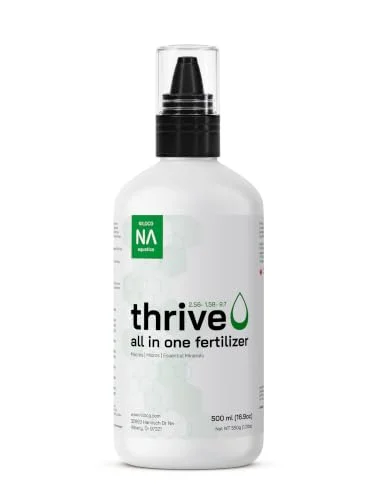
NilocG Thrive All-in-One Liquid Fertilizer
NilocG Thrive All-in-One Liquid Fertilizer
Best Overall Liquid- ✓ One bottle supplies macros, micros and minerals
- ✓ Seller states it is safe for fish, shrimp and snails when dosed as directed
- ✓ Works for low-tech and moderate-tech tanks
- ✓ Concentrated, so one bottle lasts a long time
- ✗ Costs more up front than single-nutrient bottles
- ✗ Fixed ratio, so you cannot fine-tune individual nutrients
Thrive is the pick for keepers who want one bottle and no math. The listing describes a blend of macronutrients, micronutrients and minerals, with dosing of 1 mL per 5 gallons, one to three times per week. The seller states it is safe for fish, shrimp and snails when used as directed, which is the statement we want to see before recommending anything for a shrimp room.
Start at the low end of that range and move up only if plants ask for it. A 500 mL bottle goes a long way, which matters when you run several tanks.
Shrimp-safe: yes, per the listing. Best for: low to moderate-tech tanks with mixed plants.
NilocG Thrive+ All in One Liquid Fertilizer
NilocG Thrive+ All in One Liquid Fertilizer
Best for High-Tech Tanks- ✓ Built for strong light and CO2 injection
- ✓ Same simple dosing as the standard formula
- ✓ Seller states it is safe for fish, shrimp and snails
- ✗ Too much for low-light tanks, where it can feed algae
- ✗ Needs matching light and CO2 to be worth buying
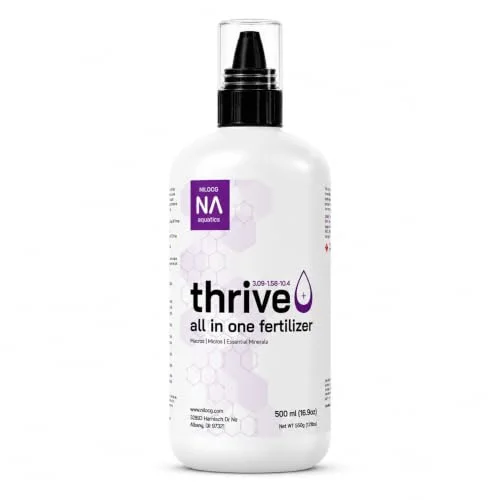
Thrive+ is the high-demand version, aimed at strong light and supplemental CO2. Dosing stays at 1 mL per 5 gallons, with up to three doses per week in high-light tanks and one to two in lower-light tanks.
If your tank has no CO2 and moderate light, buy the standard Thrive instead. Extra nutrients with nothing to use them are an invitation to algae.
Shrimp-safe: yes, per the listing. Best for: high-light, CO2-injected planted tanks.
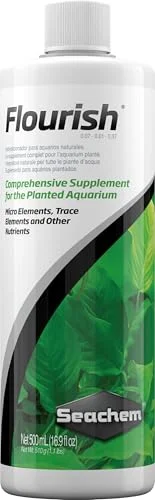
Seachem Flourish Comprehensive Plant Supplement
Seachem Flourish Comprehensive Plant Supplement
Best Micronutrient Supplement- ✓ Seachem states Flourish is safe for invertebrates such as shrimp
- ✓ Fills the micro and trace gaps tank water and fish waste leave
- ✓ Pairs well with a nitrogen, phosphorus or potassium source
- ✗ Not a complete fertilizer on its own
- ✗ Heavy feeders will need a separate macro source
Flourish is a micro and trace element supplement. Seachem states it contains no significant levels of nitrogen or phosphorus, and that it is designed to be used alongside other macro and micronutrient supplements. Treat it as one half of a system rather than a complete fertilizer.
It makes sense in a stocked tank where fish waste already supplies nitrogen and phosphorus. The manufacturer’s listing for the Flourish line states it is safe for invertebrates such as shrimp.
Shrimp-safe: yes, per Seachem. Best for: fish-heavy planted tanks that need micros.
API Leaf Zone Plant Fertilizer
API Leaf Zone Plant Fertilizer
Best Budget Liquid- ✓ Low cost per bottle and easy to find
- ✓ Chelated iron and potassium for leaf color
- ✓ Simple weekly dosing
- ✗ Listing makes no shrimp-safety statement, so check the label first
- ✗ Iron and potassium only, with no nitrogen or phosphorus
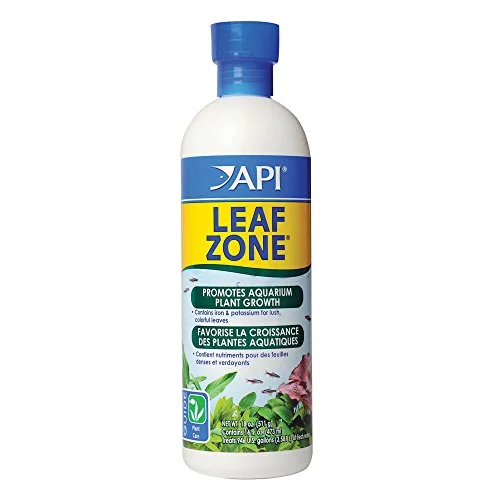
Leaf Zone is the budget bottle. The listing describes chelated iron and potassium, absorbed through the leaves, dosed at 5 mL per 10 gallons weekly. Iron and potassium cover the most common deficiencies in lightly planted tanks, such as pale new leaves.
It does not supply nitrogen or phosphorus, so it will not carry a heavily planted tank alone. The listing makes no shrimp-safety statement, so read the bottle before using it around shrimp.
Shrimp-safe: not stated. Best for: budget low-tech tanks with fish.
NilocG ThriveTabs Root Fertilizer, 75 Count
NilocG ThriveTabs Root Fertilizer, 75 Count
Best Overall Root Tab- ✓ Complete root nutrition, not just iron
- ✓ 75 tablets stretches across several tanks
- ✓ Same brand as the liquid, so the two work together
- ✗ Listing gives no shrimp-safety statement for this tablet, so check the label
- ✗ Slower to show results than liquid
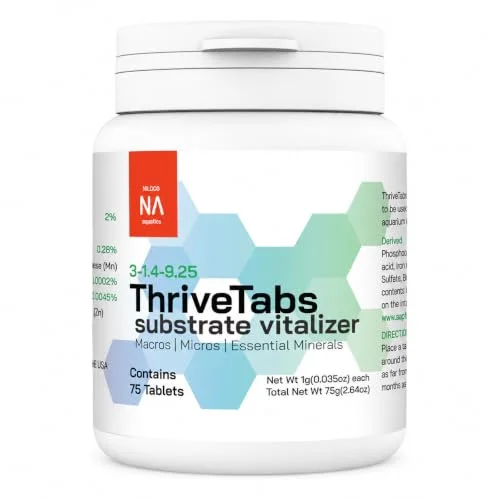
ThriveTabs supply NPK plus magnesium, iron and micronutrients straight into the substrate. That makes them a complete root feed rather than an iron-only tablet, which suits swords, crypts and carpeting plants on inert substrate.
At 75 tablets, a single pack covers several tanks over a few months. The listing does not make a shrimp-safety statement for the tablets, so check the packaging if you keep shrimp, and bury the tablets deep so little reaches the water.
Shrimp-safe: not stated on the tablet listing. Best for: root feeders in sand or gravel.
Montorchid Slow-Release Root Tabs, 100 Count
Montorchid Slow-Release Root Tabs, 100 Count
Best Value Root Tab- ✓ 100 tablets at the lowest cost per tab here
- ✓ Seller states it is safe for fish and shrimp
- ✓ Low-nitrogen, low-phosphorus, high-potassium formula
- ✗ Small brand with little track record
- ✗ Tablets can cloud the water briefly after planting
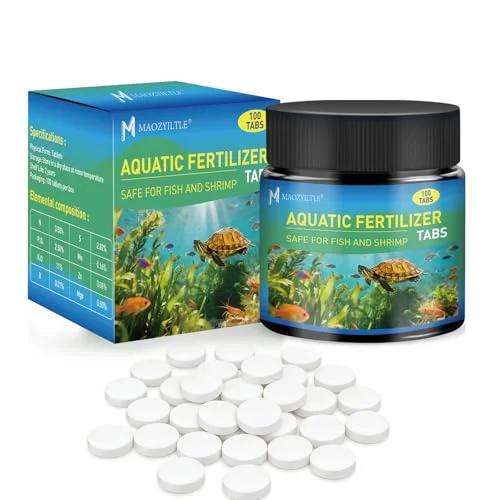
Montorchid gives you 100 one-gram tablets with a listed NPK ratio of 1:0.5:2.8, low in nitrogen and phosphorus and high in potassium. The seller describes a release over two to three months and states the tablets are safe for fish and shrimp.
The seller recommends starting at 80% of the full dose on first use. Expect a brief white haze after planting that the listing says clears within hours. It is a small brand, so we rank it on value, not track record.
Shrimp-safe: yes, per the listing. Best for: big tank collections and breeding rooms where cost per tablet matters.
API Root Tabs, 10 Count
API Root Tabs, 10 Count
Best for Small Tanks- ✓ Easy to find and cheap to try
- ✓ Small box suits one or two nano tanks
- ✓ Clear monthly schedule
- ✗ No shrimp-safety statement on the listing
- ✗ 10 tablets run out fast in larger tanks
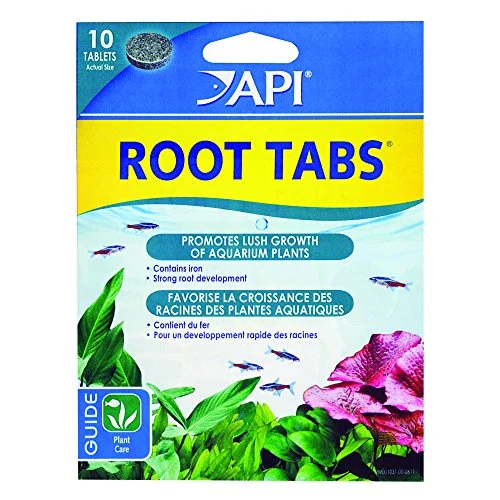
API Root Tabs are the easy entry point: a small box, a monthly schedule and a nutrient list of iron, potassium and carbon. Ten tablets is enough to test the idea in one nano tank before buying more.
The listing carries no shrimp-safety statement. In a shrimp tank, check the box and push tablets well into the substrate.
Shrimp-safe: not stated. Best for: trying root tabs in one small tank.
Seachem Flourish Tabs, 10 Count
Seachem Flourish Tabs, 10 Count
Best for Soft Water Tanks- ✓ Seachem states it will not alter pH
- ✓ Trusted brand that pairs with Flourish liquids
- ✓ Good for a handful of heavy root feeders
- ✗ Costs more per tablet than bulk options
- ✗ No shrimp-safety statement on the listing
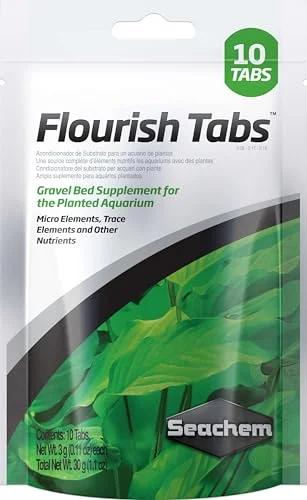
Flourish Tabs are the pick for soft or poorly buffered water. Seachem states they will not alter pH, with a slightly acidic effect in very soft, unbuffered water similar to peat moss. For hard water that does not matter, and for soft-water tanks it is worth knowing.
The price per tablet is higher than the bulk options. No shrimp-safety statement appears on the listing, so verify on the packaging.
Shrimp-safe: not stated. Best for: a few heavy root feeders in a soft-water tank.
Frequently Asked Questions
Do I need both root tabs and liquid fertilizer?
Not always. Root feeders on inert substrate usually need tabs, and water-column feeders need liquid. A tank with both kinds of plant benefits from both, but a tank of only anubias and java fern can run on a light liquid dose alone.
Are plant fertilizers safe for shrimp?
Many are, but not all. Copper is the main danger, and it shows up in some pond and hydroponic products. Use fertilizers whose listing or manufacturer states shrimp safety, and dose at the low end. See our aquarium botanicals roundup for other shrimp-friendly tank additions.
How often should I replace root tabs?
Follow the package: API says monthly, and the Montorchid listing describes a two to three month release. Replace sooner if new growth turns pale on heavy root feeders.
Will fertilizer cause algae?
Excess fertilizer with too much light can. Algae usually follows an imbalance between light, nutrients and CO2, not fertilizer alone. Keep the photoperiod steady and raise doses slowly.
Can I use root tabs in sand or gravel?
Yes, that is where they help most. Inert substrates carry no nutrients, so root feeders depend on tabs or a nutrient-rich layer underneath.
Can I use pond fertilizer in an aquarium?
We do not recommend it. Pond fertilizers are built for different volumes and can contain ingredients that harm shrimp. For outdoor containers, see our pond plant basket roundup, which covers pond-specific feeding.
Do floating plants need root tabs?
No. Floaters take nutrients from the water column, so liquid fertilizer is the right tool for them.
Conclusion
For most planted tanks, buy NilocG Thrive for the water column and NilocG ThriveTabs for the substrate. Together they cover macros, micros and root feeding without hunting for several bottles, and the Thrive listing carries a clear shrimp-safe statement.
The runner-up is the Montorchid Root Tabs if you run several tanks and want the lowest cost per tablet with a stated shrimp-safe formula. Add Seachem Flourish when a fish-heavy tank only needs micros.
Whatever you pick, dose lightly, match it to your light and CO2, and read the label on anything you drop into a shrimp tank.
Our Top Pick