Your filter is only as good as the media inside it. A canister filter with the wrong media is just an expensive water pump. The right combination of biological, mechanical, and chemical media keeps ammonia at zero, water crystal clear, and your nitrogen cycle stable through feeding mistakes, fish additions, and seasonal changes.
Most filters ship with mediocre stock media. Upgrading to purpose-built media is one of the highest-impact changes you can make to any aquarium setup — and it costs less than a water change kit.
Here is what each type of media does, which products perform best, and how to layer them in your filter for maximum effectiveness. Every product listed here is shrimp-safe for filtration setups in tanks with Neocaridina or Caridina colonies.
| Seachem Matrix (1 Liter) Editor's Choice | Fluval BioMax Bio Rings (500g) Best Bio Rings | Seachem Purigen (100ml) Best Chemical Media | Fluval BIO-FX Biological Media (2L) Best for Large Tanks | THREELIN Foam Filter Pads for Fluval FX4/FX5/FX6 (12-Pack) Best Mechanical Media | Seachem MatrixCarbon (250ml) Best Activated Carbon | Aquatic Experts Filter Floss (12in x 72in Roll) Best Polishing Media | Aquatic Experts High Flow Filter Media Bag (3in x 8in, 4-Pack) Best Media Bag | |
|---|---|---|---|---|---|---|---|---|
| Rating | 9.4/10 | 9/10 | 9.3/10 | 8.7/10 | 8.4/10 | 8.3/10 | 8.6/10 | 8.5/10 |
| Price | $18.74as of Sep 29, 2026 | $17.91as of Sep 29, 2026 | $9.89as of Sep 29, 2026 | $21.99-$25.90as of Sep 29, 2026 | $24.96as of Sep 29, 2026 | $13.72as of Sep 29, 2026 | $21.84-$22.99as of Sep 29, 2026 | $11.39-$11.99as of Sep 29, 2026 |
| Brand | Seachem | Fluval | Seachem | Fluval | THREELIN | Seachem | Aquatic Experts | Aquatic Experts |
| Type | Biological | Biological | Chemical (synthetic resin) | Biological | Mechanical (foam) | Chemical (activated carbon) | Mechanical (polishing floss) | Accessory (media bag) |
| Size | 1 Liter | 500g (17.63 oz) | 100ml bag | 2L | 12 pads | 250ml / 15 cu. in. | 12in x 72in roll | 3in x 8in, 4-pack |
| Material | Pumice stone | Ceramic rings | Synthetic polymer | Ceramic | Polyurethane foam | Bituminous coal, spherical bead | Bonded polyester fiber | High-flow mesh |
| Treats | Up to 100 gallons | Varies by filter | Up to 100 gallons | Large tanks and sumps | — | Varies by filter | — | — |
| Shrimp Safe | Yes | Yes | Yes | Yes | Yes | Yes | Yes | Yes |
| Fits | — | — | — | — | Fluval FX4/FX5/FX6 | — | Cut to size — any filter | Loose media — Matrix, BioMax, carbon, Purigen |
| Check Price → | Check Price → | Check Price → | Check Price → | Check Price → | Check Price → | Check Price → | Check Price → |
Prices change daily — tap Check Price for the current Amazon price. Numbers shown were verified on the "as of" date.
Quick Picks
Filter Media Buying Guide
The Three Types of Filtration
Every aquarium filter should run all three types of filtration in sequence:
- Mechanical (first): Catches physical debris. Foam pads, filter floss, poly pads. Protects biological media from clogging.
- Biological (second): Hosts nitrifying bacteria that convert ammonia → nitrite → nitrate. Ceramic rings, pumice stone, bio balls.
- Chemical (third, optional): Removes dissolved chemicals, tannins, odors, and discoloration. Activated carbon, Purigen, zeolite.
Water should flow through mechanical media first, then biological, then chemical. This order prevents debris from clogging bio media and ensures chemically treated water exits the filter last.
How Much Bio Media Do You Need?
A rough guideline: 1 liter of quality bio media (Matrix or equivalent) per 25 gallons of tank volume for a moderately stocked community tank. Heavily stocked tanks or messy eaters (goldfish, large cichlids) benefit from 1 liter per 15–20 gallons.
You cannot have too much biological media. Extra capacity provides a buffer during feeding accidents, fish additions, or mini-cycles. On a breeding rack running a dozen tanks off shared media reactors, oversizing bio media is cheap insurance against the ammonia spike a missed feeding schedule can cause.
When to Replace vs. Rinse
- Mechanical foam pads and filter floss: Rinse foam in old tank water every 2–4 weeks; replace when it loses structure (every 3–6 months). Filter floss is finer and clogs faster — replace it every water change rather than fighting to rinse it clean.
- Biological media: Never replace all at once. If replacing, swap half and wait 4–6 weeks before swapping the other half. Seachem Matrix never needs replacing. Ceramic rings should be replaced every 6–12 months.
- Chemical media: Activated carbon exhausts in 4–6 weeks. Purigen lasts until it turns dark brown (weeks to months depending on organic load). Regenerate or replace as needed.
Shrimp Tank Filtration Considerations
In shrimp tanks, stable water chemistry is more important than raw filtration power. A mature biological filter with oversized bio media (more than the tank technically needs) provides a buffer against parameter swings that kill shrimp. Consider:
- Using Seachem Matrix or similar high-surface-area bio media
- Running a sponge pre-filter on HOB and canister intakes to prevent shrimplet casualties
- Avoiding activated carbon in shrimp tanks for routine use — it strips trace minerals shrimp need and is best reserved for pulling out medication after a treatment
- Using Purigen instead of carbon if you want ongoing chemical filtration
Detailed Reviews
1. Seachem Matrix (1 Liter)
Seachem Matrix (1 Liter)
Editor's Choice- ✓ Extremely porous pumice structure provides enormous surface area for bacteria
- ✓ Internal pore structure supports anaerobic denitrification — reduces nitrates
- ✓ Lasts indefinitely — never needs replacing, only rinsing
- ✓ Works in any filter type: canister, HOB, sump, or media reactor
- ✗ Heavier than ceramic media — needs adequate filter basket support
- ✗ Dusty out of the bag — requires thorough rinsing before use
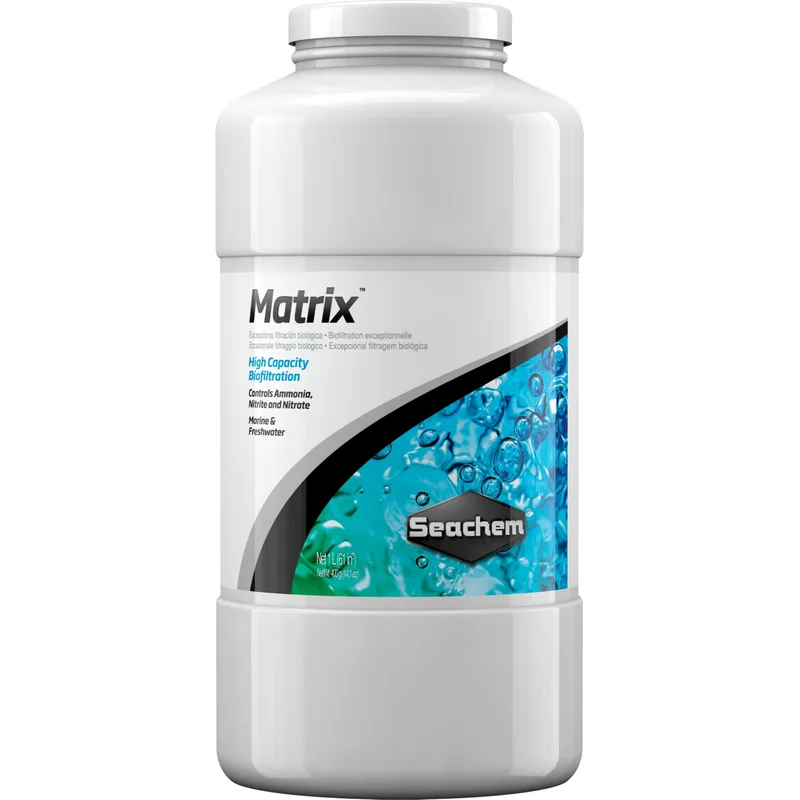
Seachem Matrix is pumice stone — volcanic rock with an extraordinarily high internal porosity. One liter of Matrix provides the same surface area for bacterial colonization as roughly 170 liters of plastic bio balls. That is not marketing fluff — pumice genuinely has macro and micro pores throughout its structure that support both aerobic bacteria (which process ammonia and nitrite) and anaerobic bacteria (which reduce nitrate).
That last point is what makes Matrix special. Most biological media only handles the aerobic part of the nitrogen cycle — ammonia to nitrite to nitrate. Nitrate then builds up until you do a water change. Matrix’s deep internal pores create oxygen-depleted zones where denitrifying bacteria convert nitrate to nitrogen gas. In practice, this does not eliminate the need for water changes, but it noticeably slows nitrate accumulation.
Matrix is also permanent media. Unlike ceramic rings that clog and need replacing, or carbon that exhausts in a few weeks, Matrix just needs an occasional rinse in old tank water. The pumice structure does not degrade — a bag of Matrix seeded once will keep working for the life of the filter, which is exactly the kind of set-and-forget reliability a multi-tank breeding rack needs.
For shrimp tanks, Matrix is an excellent choice because it provides stable, mature biological filtration that prevents parameter swings. Shrimp are more sensitive to ammonia and nitrite spikes than most fish, so the extra bacterial capacity is genuine insurance.
Best for: Any aquarium where you want maximum biological filtration capacity in a compact space.
2. Fluval BioMax Bio Rings (500g)
Fluval BioMax Bio Rings (500g)
Best Bio Rings- ✓ Complex internal pore system creates ideal environment for nitrifying bacteria
- ✓ Ring shape allows excellent water flow through the media
- ✓ Compatible with virtually every canister and HOB filter
- ✓ Affordable and widely available
- ✗ Less porous than Seachem Matrix — lower total surface area per volume
- ✗ Should be replaced every 6–12 months as pores clog with mineral deposits
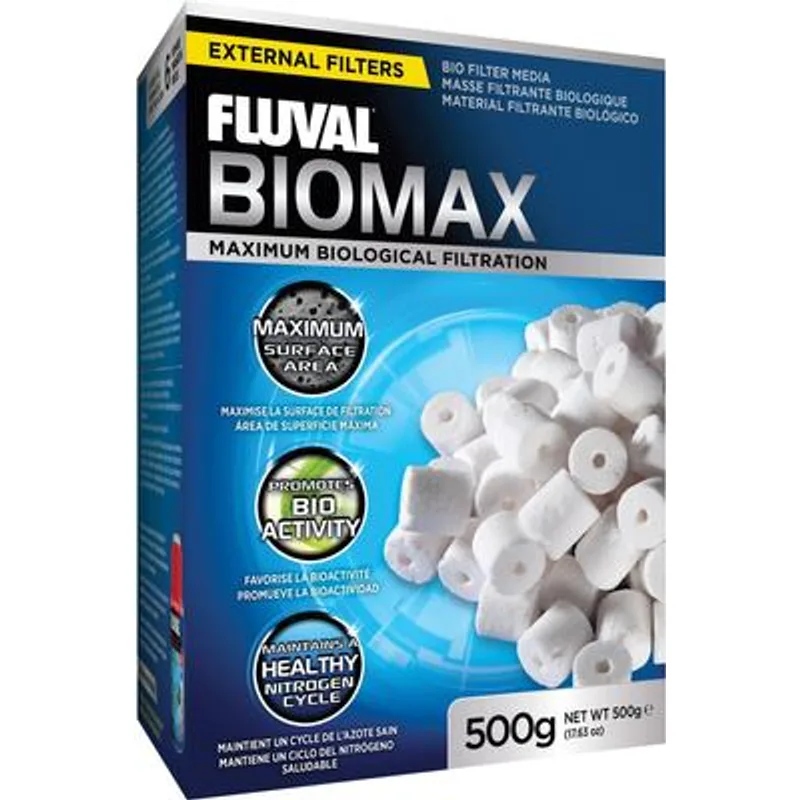
Fluval BioMax rings are the standard ceramic bio media that ships with Fluval filters and works in practically any filter on the market. The ring shape allows water to flow both around and through each piece, which maximizes contact between water and bacteria-colonized surfaces.
BioMax is less porous than Seachem Matrix — it does not have the deep internal pore structure that supports anaerobic denitrification. But it is an excellent aerobic biological media that handles ammonia and nitrite conversion reliably. For most community tanks where you do regular water changes, the lack of denitrification capacity is not a meaningful limitation.
The price is the big advantage. A 500g bag of BioMax costs about half what a liter of Matrix costs, and it fills a typical HOB or canister filter basket adequately. For a breeding operation running many tanks off individual sponge or HOB filters, that price difference adds up fast — BioMax is the media you can afford to buy by the case.
Replace BioMax every 6–12 months. Over time, mineral deposits from hard water clog the pores and reduce the available surface area for bacteria. When you replace it, swap only half the media at a time to preserve your bacteria colony during the transition.
Best for: Budget-friendly biological filtration in HOB and canister filters, especially across multiple tanks.
3. Seachem Purigen (100ml)
Seachem Purigen (100ml)
Best Chemical Media- ✓ Removes organic waste, tannins, and discoloration — polishes water to clarity
- ✓ Rechargeable with bleach soak — one bag lasts years
- ✓ Does not release anything back into the water like activated carbon can
- ✓ Color changes from white to brown to indicate when it needs regeneration
- ✗ Must be recharged when exhausted — requires a bleach soak and dechlorination
- ✗ Removes tannins — not suitable if you want blackwater conditions
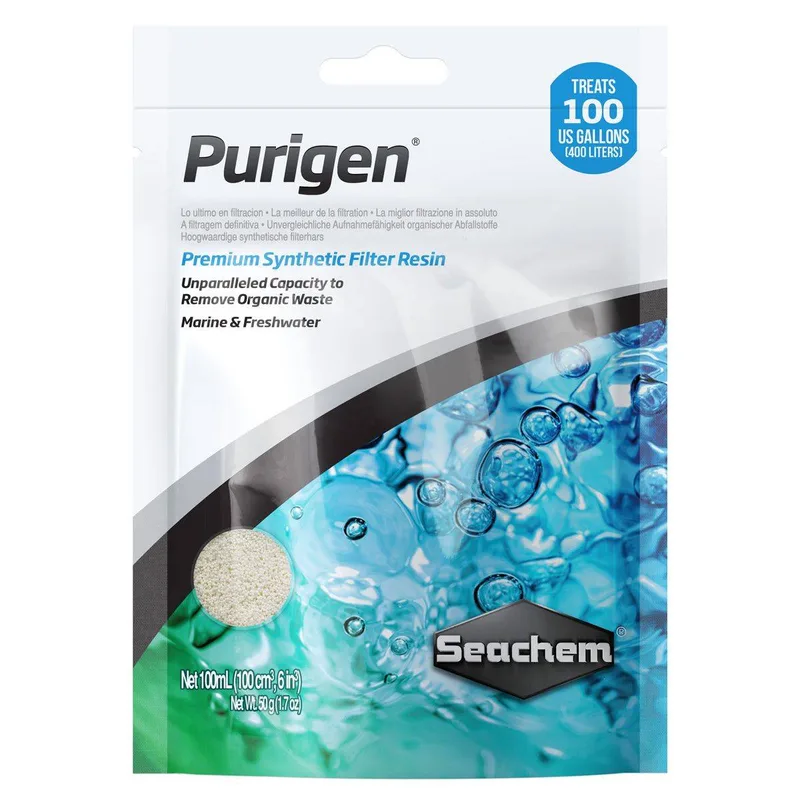
Purigen is not like activated carbon. Carbon adsorbs chemicals indiscriminately and can re-release them when exhausted. Purigen is a synthetic polymer that absorbs organic waste — dissolved proteins, tannins, phenols, and other compounds that discolor water and contribute to odor — and holds them permanently until you regenerate the resin.
The effect on water clarity is dramatic. Within 24–48 hours of adding a bag of Purigen to a filter, yellowed or tea-colored water becomes crystal clear. In tanks with driftwood that leach tannins, Purigen eliminates the amber tint completely. If you want blackwater, do not use Purigen — it will remove the tannins you are trying to keep.
The rechargeable feature is what makes Purigen cost-effective long term. When the resin turns from white to dark brown, soak it in a bleach solution (1:1 bleach to water) for 24 hours, then rinse and soak in dechlorinator. The resin turns white again and regains full capacity. One bag can be regenerated dozens of times over several years.
For shrimp tanks, Purigen is safe and beneficial. It reduces organic waste that can spike ammonia, and cleaner water means less stress on sensitive invertebrates. Just make sure to dechlorinate thoroughly after bleach regeneration before putting the bag back in a shrimp tank.
Best for: Crystal-clear water in any freshwater tank, especially those with tannin-leaching wood.
4. Fluval BIO-FX Biological Media (2L)
Fluval BIO-FX Biological Media (2L)
Best for Large Tanks- ✓ 2-liter container provides excellent value for medium and large tanks
- ✓ Dense ceramic with a deep pore structure — rated at roughly 2,250 m² of surface area per liter
- ✓ Textured surface promotes rapid bacterial colonization
- ✓ Designed for Fluval FX series but works in any large filter
- ✗ Less proven long-term than Seachem Matrix
- ✗ Ceramic material adds more weight to filter baskets than lightweight synthetic bio media
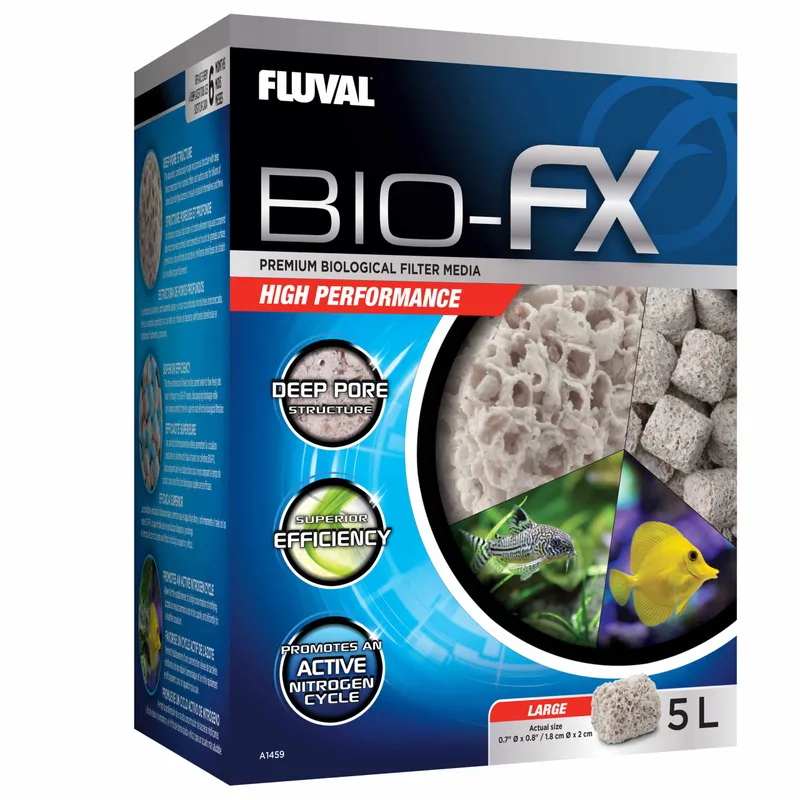
BIO-FX is Fluval’s premium biological media designed for their FX series canister filters and large sump systems. The 2-liter container provides enough media for a mid-size to large setup, and you can add multiple bags for larger systems.
The material is a dense ceramic rather than a lightweight plastic bio-ball. Fluval rates it at roughly 2,250 square meters of surface area per liter thanks to a deep pore structure with interconnected micro-tunnels, which is what gives it strong biological capacity for a relatively compact volume.
The textured surface colonizes quickly — within 2–3 weeks you will have a mature bacterial coating. The porosity is good but not quite at the level of Seachem Matrix’s pumice structure. For most large community tanks, the difference is academic. BIO-FX handles the bioload of a heavily stocked tank without issues.
If you run a Fluval FX4 or FX6, BIO-FX is the natural upgrade from the stock media baskets. For other filter brands or custom sumps, Seachem Matrix may still be the better per-volume value for denitrification, but BIO-FX is a solid ceramic media choice if you already run Fluval FX equipment.
Best for: Large canister filters and sumps where dense, high-surface-area ceramic biological media is needed.
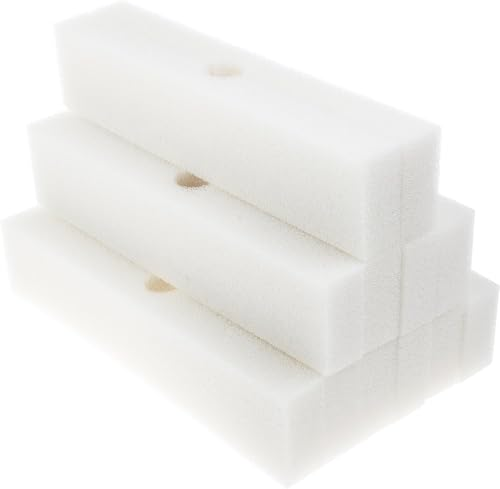
5. THREELIN Foam Filter Pads for Fluval FX4/FX5/FX6 (12-Pack)
THREELIN Foam Filter Pads for Fluval FX4/FX5/FX6 (12-Pack)
Best Mechanical Media- ✓ 12-pack provides years of replacement pads at a fraction of Fluval OEM price
- ✓ Coarse foam traps debris while allowing good water flow
- ✓ Easy to rinse and reuse multiple times before replacing
- ✓ Compatible with one of the most popular canister filter lines
- ✗ Third-party product — quality can vary slightly between batches
- ✗ Only fits Fluval FX series — not universal
Mechanical filtration is the first stage — catching debris, fish waste, uneaten food, and plant matter before it reaches your biological media. Foam pads are the workhorse of mechanical filtration, and THREELIN makes aftermarket pads for the Fluval FX series at a fraction of the OEM price.
A 12-pack of THREELIN pads costs a fraction of what Fluval charges for the same count of branded pads. The quality is comparable — medium-density polyurethane foam that traps particulate while allowing adequate flow. Each pad can be rinsed and reused several times before the foam structure breaks down and needs replacing.
The coarse foam is appropriate for the first stage of mechanical filtration. If you want polishing (removing very fine particles for crystal-clear water), add a layer of filter floss after the foam stage. The foam catches the big stuff, the floss catches the rest.
For shrimp-safe filtration, foam pads are inherently safe — no chemicals, no residues, just physical particle removal. Rinse pads in old tank water to preserve the bacteria that colonize the foam surface.
Best for: Fluval FX canister owners who want affordable mechanical filtration pads in bulk.
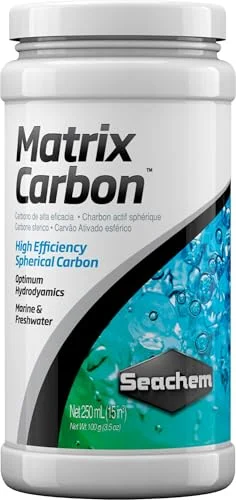
6. Seachem MatrixCarbon (250ml)
Seachem MatrixCarbon (250ml)
Best Activated Carbon- ✓ Spherical bead shape maximizes flow and contact area — resists packing/channeling
- ✓ Very low ash content — minimal impact on pH, low leachable phosphate
- ✓ Useful for pulling medications or tannins out of the water column quickly
- ✓ Works in any media basket, bag, or reactor
- ✗ Exhausts in 4–6 weeks — not a permanent media like Matrix or BioMax
- ✗ Redundant with Purigen for everyday organics — best reserved for medication removal
MatrixCarbon is Seachem’s spherical activated carbon — a bituminous coal-based bead shape designed to maximize water contact while resisting the packing and channeling that plagues granular carbon in a media basket.
Carbon is not a permanent fixture in most setups. Its real job is pulling something specific out of the water fast: medication after a treatment course, a sudden tannin surge from new driftwood, or an odor problem that needs a quick fix. For everyday organic removal, Purigen does the job better and lasts longer — carbon’s advantage is speed and its ability to bind medication compounds that Purigen does not target.
MatrixCarbon’s low ash content means it will not push pH up the way cheaper carbons can, which matters if you are dosing it into a soft-water Caridina tank. Budget one bag per filter and expect to swap it every 4–6 weeks of active use — it is not a set-and-forget media like Matrix or BioMax.
For shrimp tanks, use carbon sparingly and only when you have a specific reason. Routine carbon use strips trace minerals shrimp need for molting; save it for post-medication cleanup.
Best for: Pulling medication, tannins, or odors out of the water fast — not for everyday chemical filtration.
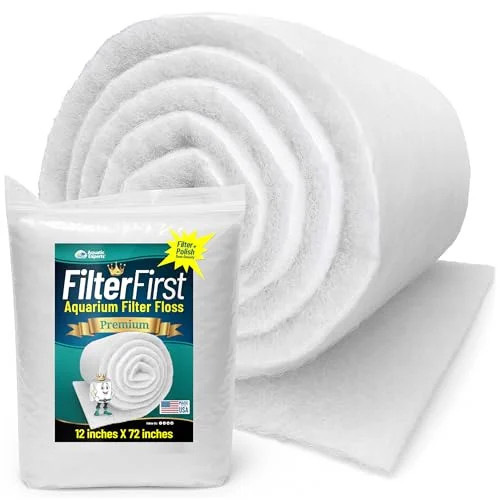
7. Aquatic Experts Filter Floss (12in x 72in Roll)
Aquatic Experts Filter Floss (12in x 72in Roll)
Best Polishing Media- ✓ Cut-to-size roll works in canisters, HOB filters, sumps, and reactors
- ✓ Fine weave catches particulate that coarse foam pads miss — polishes water clear
- ✓ Durable resin-bonded fibers hold together through multiple rinses
- ✓ Far cheaper per filter change than pre-cut cartridge replacements
- ✗ Fine weave clogs faster than coarse foam — needs more frequent rinsing
- ✗ Not reusable indefinitely — replace once fibers start breaking down
Filter floss is the polishing stage most tanks skip. Foam pads and sponges catch the big particles, but fine suspended debris — the stuff that keeps water looking faintly cloudy even in a well-cycled tank — slips right through coarse foam. A layer of bonded polyester floss after the foam stage traps that fine particulate and delivers genuinely clear water.
The roll format is the value play here. A 12in x 72in roll cuts into dozens of custom pads sized to whatever filter tray, HOB cartridge, or canister basket you are running. Across a breeding rack with a mix of sponge, HOB, and canister filters, one roll replaces buying a dozen different proprietary cartridge shapes.
Floss clogs faster than foam because the weave is finer — that is the tradeoff for the polishing effect. Rinse or replace it more often than your foam stage, and treat it as consumable rather than long-term media.
Best for: The final polishing stage in any filter, especially useful when running mixed filter types across several tanks.
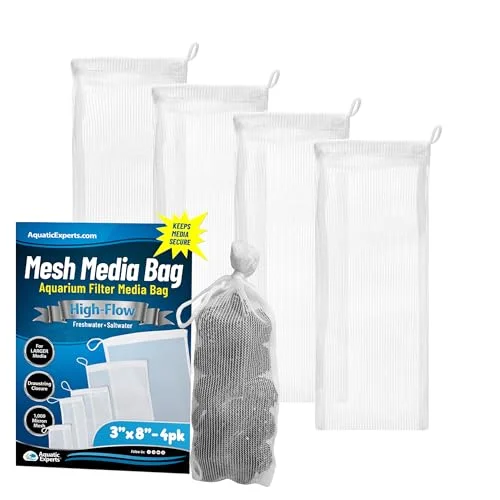
8. Aquatic Experts High Flow Filter Media Bag (3in x 8in, 4-Pack)
Aquatic Experts High Flow Filter Media Bag (3in x 8in, 4-Pack)
Best Media Bag- ✓ Drawstring closure keeps loose media contained without restricting flow
- ✓ High-flow mesh avoids the choke point cheap fine-mesh bags create
- ✓ Reusable across water changes and media swaps — durable stitching
- ✓ 4-pack is enough to organize a full canister basket by media type
- ✗ Loose media in a bag colonizes slightly slower than media packed directly in a basket
- ✗ Mesh eventually needs replacing if it snags or tears
Loose media like Matrix, BioMax, and carbon needs to stay contained without choking off flow, and this is where a lot of cheap mesh bags fail — fine mesh restricts water contact with the media inside it. The Aquatic Experts bag uses a high-flow weave specifically to avoid that problem.
The drawstring closure keeps loose bio media, carbon, or Purigen organized by type instead of dumped loose in a basket, which makes swapping half your bio media at replacement time much faster — pull one bag, drop in a fresh one, and the other bag of established media keeps the colony going undisturbed.
At 3in x 8in, one bag holds a modest amount of media — plan on multiple bags per filter if you are running a full basket of mixed media types. The 4-pack is sized for organizing a single canister by media stage (bio, carbon, Purigen) rather than for bulk loose media storage.
Best for: Keeping loose media organized and easy to swap, especially when running more than one media type per filter.
Frequently Asked Questions
Is Seachem Matrix better than ceramic bio rings?
In terms of raw surface area and denitrification potential, yes. Matrix’s pumice structure is more porous than any ceramic ring, and the deep internal pores support anaerobic bacteria that reduce nitrate. However, ceramic rings like Fluval BioMax are cheaper and perform adequately for most setups. Matrix is the premium option; BioMax is the budget-friendly option that gets the job done.
Can I use Purigen and activated carbon at the same time?
You can, but for everyday filtration it is redundant. Purigen does most of what carbon does for organic waste, discoloration, and odor, and does it without re-releasing compounds when exhausted. Where carbon still earns a spot is pulling medication out of the water after a treatment — reach for MatrixCarbon there, and rely on Purigen for ongoing chemical filtration.
How often should I rinse biological media?
Only when flow through the filter noticeably decreases. Over-cleaning bio media kills beneficial bacteria. When you do rinse, use old tank water (never tap water with chlorine) and gently swish — do not scrub. Many keepers go months between bio media rinses with no issues.
Does filter media order in the canister matter?
Yes. Water should hit mechanical media first (foam pads, filter floss, bottom tray), then biological media (middle trays), then chemical media (top tray). This prevents debris from clogging bio media and ensures the cleanest water contacts chemical media for maximum effectiveness.
Is activated carbon necessary in a freshwater tank?
Not for routine use. Carbon is useful for removing medications after treatment, clearing tannins from new driftwood, and addressing specific water quality issues. For everyday filtration, biological and mechanical media are sufficient. If you want ongoing chemical polishing, Purigen is a better long-term investment than disposable carbon.
Can I mix different brands of bio media?
Absolutely. Using Matrix in one tray and BioMax in another is perfectly fine. The bacteria do not care what brand the media is. Mix and match based on what fits your filter baskets and budget.
Do I need a media bag for loose bio media?
Not strictly, but it makes maintenance much easier. Media bags let you pull and replace half your bio media at once without spilling loose pumice or ceramic rings into the filter, and they keep different media types separated so you know exactly what you are swapping out.
Conclusion
For the best biological filtration money can buy, fill your filter with Seachem Matrix. It lasts forever, provides the highest surface area per volume, and supports denitrification that actively reduces nitrate buildup. Pair it with foam pads and a layer of filter floss for mechanical filtration, and a bag of Seachem Purigen for crystal-clear water, and you have a filtration setup that handles anything a freshwater tank can throw at it.
On a budget, Fluval BioMax provides solid biological filtration at half the cost. Replace it annually and it will keep your nitrogen cycle stable in any reasonably stocked community tank.
Our Top Pick