Swordtails (Xiphophorus hellerii) are one of the most recognizable freshwater fish in the hobby — the elongated lower tail fin on males is unmistakable. They are hardy, colorful, and prolific breeders, making them excellent fish for both beginners and experienced keepers who want reliable livebearers with more size and personality than guppies.
Swordtails grow larger than guppies (3–5 inches versus 1–2 inches), swim more actively, and have a wider range of color varieties than most people realize. They also have more complex social dynamics — males can be aggressive toward each other, and dominant males actively chase females for mating. Understanding these behaviors is key to keeping them successfully.
Species Overview
- Scientific name: Xiphophorus hellerii
- Origin: Central America (Mexico, Guatemala, Honduras)
- Lifespan: 3–5 years
- Adult size: Males 4–5 inches (including sword), females 4–5 inches
- Temperament: Active, semi-aggressive males, peaceful females
- Minimum tank size: 20 gallons (29 gallons preferred)
- Schooling: Keep in groups with more females than males (2–3:1 ratio)
Tank Setup
Size Requirements
Swordtails need more space than most beginners expect. Their active swimming behavior and size (up to 5 inches) means a 10-gallon tank is too small. A 20-gallon long is the minimum for a small group, and a 29-gallon or 30-gallon is much better for a breeding colony.
The “long” tank dimension matters because swordtails are horizontal swimmers — they cruise back and forth across the tank. Height is less important than length. A 20-gallon long (30 inches) is better than a 20-gallon high (24 inches) for swordtails.
Water Parameters
| Parameter | Ideal Range |
|---|---|
| Temperature | 72–82°F (75–78°F optimal) |
| pH | 7.0–8.4 |
| GH | 8–20 dGH |
| KH | 4–12 dKH |
| Ammonia | 0 ppm |
| Nitrite | 0 ppm |
| Nitrate | <40 ppm |
Swordtails prefer hard, alkaline water — similar to their Central American habitat. Soft, acidic water stresses them and can lead to health problems. If your tap water is naturally hard (GH 10+, KH 6+), swordtails will thrive without any modification.
Test before you buy, rather than guessing at what your tap water provides.
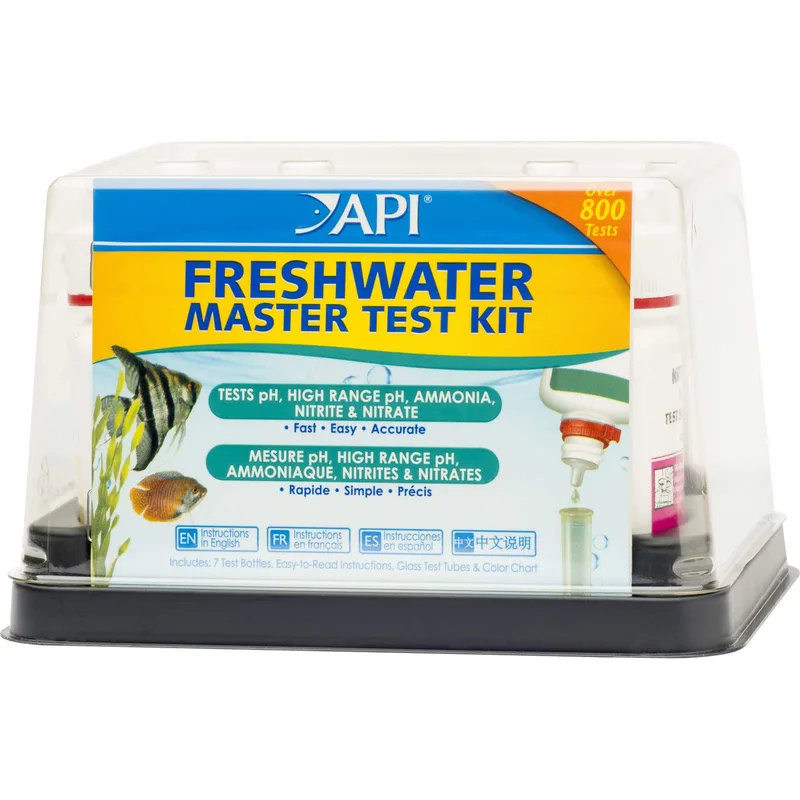
API Freshwater Master Test Kit
Essential Water Testing- ✓ Covers the four critical parameters swordtails are sensitive to
- ✓ Liquid reagents are far more accurate than test strips
- ✓ 800+ tests make it cost-effective for a breeding operation
- ✓ High Range pH test matters for the alkaline water swordtails prefer
- ✗ Only 4 glass tubes for 5 tests, so tubes must be rinsed between uses
- ✗ No GH or KH test included — buy the API GH/KH kit separately
The API Freshwater Master Test Kit covers pH, ammonia, nitrite, and nitrate — the four parameters that matter most day to day. It does not test GH or KH, so add a dedicated GH/KH kit if you want to confirm your water is hard enough for swordtails without guesswork.
Heating
Swordtails tolerate a wider temperature band than shrimp or many nano fish, but stability still matters more than hitting an exact number. Sudden swings below 72°F stress the immune system and open the door to ich and fin rot.

Cobalt Aquatics Neo-Therm Pro Heater 100W
Best Heater- ✓ Electronic thermostat holds temperature far tighter than dial glass heaters
- ✓ Shatterproof housing reduces the breakage risk of glass heaters during tank work
- ✓ Fully submersible with flexible mounting orientation
- ✓ Reputable brand with a strong track record across breeding racks
- ✗ Costs more upfront than a basic glass heater
- ✗ Plastic housing feels less premium than glass to some keepers
A 100W electronic heater comfortably covers a 20-30 gallon swordtail tank and holds temperature tighter than a basic glass dial heater — worth the extra cost if you are running more than one tank and cannot check each one daily. Size up to 150-200W for anything larger than 40 gallons.
Filtration
A hang-on-back filter rated for your tank size works well for swordtails. They appreciate moderate to strong flow, unlike shrimp and bettas that prefer calm water. A filter rated slightly above your tank size (e.g., a filter rated for 30 gallons on a 20-gallon tank) provides the current and filtration capacity swordtails prefer.
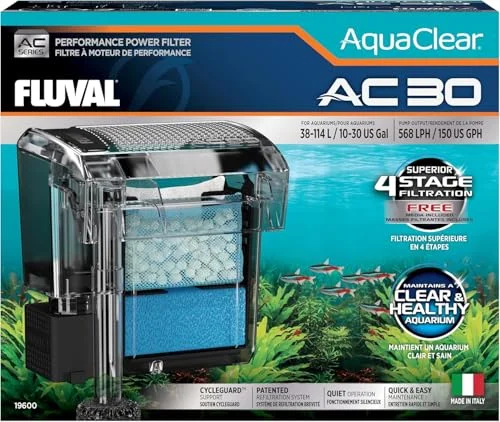
Fluval AquaClear 30 Power Filter
Best Filtration- ✓ Adjustable flow control delivers the current swordtails like without overpowering smaller tanks
- ✓ Large media basket means longer intervals between cleanings
- ✓ Quiet operation and simple media swaps
- ✓ Rated capacity comfortably covers 20-30 gallon swordtail setups
- ✗ Full flow can pull in unprotected fry — add a sponge pre-filter for breeding tanks
- ✗ Carbon media needs periodic replacement, an ongoing cost
The Fluval AquaClear 30 covers 10-30 gallon tanks with adjustable flow from 50 up to 150 GPH, so you can dial in current strength as fry grow into adults. If you keep fry in the same tank, cover the intake with a sponge prefilter — adult swordtails are too large to be harmed by standard intakes, but fry are not.
Decoration and Plants
Swordtails appreciate:
- Open swimming space in the center and front of the tank
- Dense plantings along the back and sides for females to escape male attention
- Floating plants for fry cover
- Driftwood and rocks for territory boundaries between males
Good plant choices: vallisneria (tall background), java fern (mid-ground), water sprite (floating or planted), hornwort (floating).
Types and Color Varieties
Swordtails come in a stunning range of colors and patterns, many developed through decades of selective breeding:
Solid Colors
- Red Velvet: Deep, solid red covering the entire body and fins
- Pineapple: Yellow-orange body with red accents
- Green: Iridescent green body with a dark lateral stripe (closest to wild-type)
- Black: Solid black body — dramatic but can be prone to melanoma
- Albino: White/pink body with red eyes
Patterned Varieties
- Tuxedo: Dark body with lighter colored fins and tail
- Koi: Patches of red, white, and black in irregular patterns
- Neon: Bright, iridescent blue-green with vivid coloring under light
- Wag: Any base color with solid black fins and tail (e.g., Red Wag, Pineapple Wag)
- Hi-Fin (Lyretail): Elongated dorsal fin that flows like a sail — combined with any color
Tail Variations
- Standard Sword: Classic single extension from the lower tail edge (males only)
- Lyretail: Both upper and lower tail extensions, plus elongated dorsal
- Double Sword: Extensions from both upper and lower tail edges
- Platy-shaped: Some female swordtails and short-sword males resemble platies
Feeding
Swordtails are omnivores and easy to feed:
- Staple food: Quality tropical flake or pellet food (Omega One, Hikari, New Life Spectrum)
- Vegetables: Blanched spinach, zucchini, cucumber — provide 2–3 times per week
- Protein: Frozen or live bloodworms, brine shrimp, daphnia — provide 2–3 times per week
- Color enhancement: Spirulina flakes or pellets enhance reds and oranges

Omega One Super Color Flakes
Best Color-Enhancing Food- ✓ Made from whole fish and shrimp rather than fish meal fillers
- ✓ Visible color improvement in red and orange varieties within a few weeks
- ✓ Low-waste formula helps water quality between changes
- ✓ Floats then slowly sinks, suiting swordtails' mid-to-surface feeding habit
- ✗ Costs more per ounce than generic flake food
- ✗ Strong fish odor noted by some keepers
Omega One Super Color Flakes are made from whole salmon, herring, and shrimp rather than fish meal fillers, and the added astaxanthin and canthaxanthin noticeably deepen red and orange coloring in varieties like Red Velvet and Pineapple over a few weeks of regular feeding.
Feed 2–3 times daily in amounts consumed within 2–3 minutes. Swordtails are greedy eaters and will gorge if given the opportunity, which leads to water quality problems from excess waste.
Breeding
Swordtails are prolific livebearers that breed readily in captivity with minimal intervention.
Sexing
Males have the distinctive sword extension on the lower tail fin and a gonopodium (modified anal fin used for mating). Females lack the sword and have a standard fan-shaped anal fin. Males are usually slimmer; females have rounder bellies, especially when gravid.
Sex change note: Female swordtails can develop male characteristics (including the sword and gonopodium) later in life. This is a well-documented phenomenon in Xiphophorus — late-developing males are sometimes mistaken for “sex-changed females.” True sex reversal where a breeding female becomes a functional male is extremely rare and debated among biologists.
Breeding Setup
- Ratio: 1 male to 2–3 females minimum (males harass females relentlessly)
- Dense floating plants provide fry cover
- Gestation: 28–40 days
- Brood size: 20–80+ fry per drop (larger, older females produce more)
- Fry size at birth: 7–10mm — larger than guppy fry
Fry Care
Swordtail fry are large enough at birth to eat crushed flake food and baby brine shrimp immediately. They grow quickly in warm water (78–80°F) with frequent feeding and water changes. Separate fry from adults or provide dense plant cover — adult swordtails will eat their own fry.
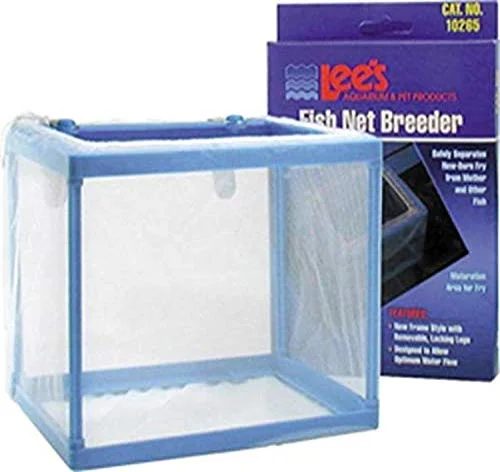
Lee's Net Breeder
Best Fry Isolation- ✓ Inexpensive way to separate a pregnant female from a community tank
- ✓ Fine mesh lets water and food through while containing newborn fry
- ✓ Doubles as a hospital or quarantine container in a pinch
- ✗ Limited internal volume can stress a large, heavily gravid female
- ✗ Mesh restricts water flow, so it needs decent circulation nearby
A net breeder like Lee’s is the cheapest way to isolate a gravid female for a few days before she drops. Move her in once she squares off and darkens at the gravid spot, and move her back out immediately after the fry are born — the confined space stresses a large, heavily pregnant swordtail if she is left in it too long.
Growth to sellable size takes 3–4 months. Males begin showing the sword extension at 3–4 months, with full development by 6 months.
Tank Mates
Compatible
- Platies (closely related, similar requirements)
- Mollies (similar water parameters)
- Corydoras catfish
- Bristlenose plecos
- Tetras (larger species like black skirts or buenos aires)
- Rainbowfish
- Peaceful barbs (cherry barbs, gold barbs)
Avoid
- Aggressive cichlids
- Fin-nipping species (tiger barbs, serpae tetras)
- Very small fish that swordtails might bully
- Slow-moving fish with long fins (male swordtails may nip)
- Other male livebearers that compete for territory
Male Aggression
Male swordtails establish dominance hierarchies. In a tank with multiple males, the dominant male chases and harasses subordinates. This is manageable if:
- You keep 1 male (simplest solution)
- You keep 3+ males (aggression is spread across the group, no single target)
- You provide line-of-sight breaks (plants, driftwood, rocks)
- You maintain a tank large enough (29+ gallons) that subordinates can escape
Never keep exactly 2 males — one will relentlessly bully the other with no way to distribute aggression.
Common Health Issues
Ich (White Spot Disease)
Small white dots on the body and fins. Treat with temperature increase (82–86°F for 2 weeks) or ich medication. Swordtails are moderately susceptible.
Fin Rot
Frayed, deteriorating fins — usually caused by poor water quality or bacterial infection. Fix water parameters first, then treat with antibacterial medication if needed.
Melanoma
Black swordtails and heavily pigmented varieties are prone to melanoma — visible as irregular black growths on the body. This is a genetic issue related to melanophore production and has no cure. Affected fish may live for months or years depending on tumor progression.
Swim Bladder Issues
Swordtails that swim erratically, float, or sink may have swim bladder problems. Often caused by overfeeding or constipation. Fast the fish for 2 days, then feed blanched pea.
Frequently Asked Questions
What is the minimum tank size for swordtails?
Twenty gallons long is the absolute minimum for a small group (1 male, 2–3 females). A 29-gallon or larger is much better for a breeding colony or community tank. Swordtails are active swimmers and need horizontal space.
Can swordtails live with guppies?
Yes, but with caveats. Swordtails are larger and more boisterous than guppies. Male swordtails may chase male guppies, and the size difference means swordtails dominate feeding time. In a large enough tank (30+ gallons) with plenty of food, they coexist fine. In a small tank, guppies may get stressed.
Do swordtails jump?
Yes. Swordtails are known jumpers, especially when startled or when males are chasing females. Always use a lid on a swordtail tank. Gaps in the lid should be covered with tape or mesh.
How many swordtails can I keep together?
In a 20-gallon long: 1 male, 3 females. In a 29-gallon: 2 males, 5–6 females. In a 40-gallon: 3 males, 8–10 females. Always maintain a ratio of at least 2–3 females per male to spread harassment.
Can swordtails hybridize with platies?
Yes. Swordtails (Xiphophorus hellerii) and platies (Xiphophorus maculatus) can cross-breed, producing viable hybrid offspring. If you keep both species, they may interbreed. The offspring are fertile and can breed with either parent species. Keep them separate if you want to maintain strain purity.
How fast do swordtail fry grow?
Swordtail fry reach about 1 inch at 4–6 weeks, 2 inches at 8–12 weeks, and near adult size (3–4 inches) by 4–6 months. Growth rate depends heavily on feeding frequency, water change schedule, and tank temperature. Warmer water and frequent feeding accelerate growth.
Conclusion
Swordtails are hardy, beautiful, and engaging fish that reward basic good fishkeeping. Provide them with a tank of at least 20 gallons, hard alkaline water, a proper male-to-female ratio, and a varied diet, and they will breed prolifically and display stunning colors. Their larger size and active personalities make them more visually impressive than guppies while remaining just as easy to keep.