Miyuki medaka are the strain that hooked me on ricefish. The first time I saw a group of them catch the light — that electric blue line running along the dorsal ridge, the full-body shimmer that seems to glow from inside — I understood why Japanese hobbyists have been obsessing over these fish for centuries.
The name “Miyuki” translates roughly to “deep snow” or “beautiful snow” in Japanese, but the strain is better known in the hobby as the “blue light” or “platinum blue” medaka. What makes Miyuki distinct from other medaka strains is their hikari (external light) trait: a thick, reflective guanine layer along the top of the body that produces an intense metallic sheen. In the best specimens, this light line extends from the head all the way to the tail, and the entire body carries a blue-white iridescence.
What Makes Miyuki Different from Other Medaka
All medaka (Oryzias latipes) share the same basic biology — they are small, surface-dwelling killifish native to Japan, Korea, and parts of China. What separates strains is selective breeding for color, fin shape, and scale type.
Miyuki medaka carry the hikari phenotype, meaning their reflective guanine crystals are concentrated on the outer surface of the body rather than deep in the tissue. This is what creates that bright metallic line along the back. The trait is recessive, so both parents must carry it for offspring to display the full light line.
The grading system for Miyuki goes roughly like this:
- Weak hikari — short, broken light line covering less than half the back
- Medium hikari — light line extends from mid-body to tail
- Strong hikari (full body) — continuous light line from head to tail tip, with body shimmer
- Super/extreme hikari — full light line plus intense lateral body glow; the rarest and most expensive grade
When you buy Miyuki online, you will usually get medium-grade fish unless the seller specifies otherwise. That is fine — you can selectively breed toward stronger hikari expression over a few generations.
Tank Setup and Water Parameters
Miyuki medaka are among the hardiest aquarium fish available. They tolerate a wide parameter range and adapt to almost any freshwater setup. That said, you will get the best color display with a deliberate setup.
Ideal parameters:
| Parameter | Range |
|---|---|
| Temperature | 64–82°F (18–28°C) |
| pH | 6.5–8.0 |
| GH | 4–12 dGH |
| KH | 2–10 dKH |
| Ammonia/Nitrite | 0 ppm |
| Nitrate | Under 20 ppm |
Tank size: A 10-gallon tank comfortably holds 8–12 adult Miyuki. They are active surface swimmers and appreciate horizontal swimming space more than depth. Long, shallow tanks or tub-style containers work exceptionally well.
Substrate: Dark substrate is non-negotiable if you want to see the hikari trait at its best. Black sand, dark gravel, or even a bare-bottom dark container will make those blue light lines pop. On light substrate, the fish look washed out and the metallic sheen is barely visible.
Lighting: Moderate to bright lighting from above enhances the hikari reflection. LED lights angled to hit the water surface at a slight angle create the most dramatic effect. Avoid purely front-lit setups — the hikari trait is a dorsal reflection, so top-down light is what activates it.
Filtration: Sponge filters are the standard for medaka tanks. These fish produce minimal waste and prefer calm water. Strong currents stress them and push eggs and fry around. A small sponge filter on a gentle air pump is all you need.
Plants: Floating plants like hornwort, water lettuce, and salvinia are perfect. Medaka are surface fish and floating plants give them cover, reduce light stress, and provide spawning surfaces. Moss (java moss, Christmas moss) also works well as an egg-catching medium.
Feeding Miyuki Medaka
Ricefish are omnivores with small mouths. They feed almost exclusively at the surface, so floating foods are essential.
Daily diet options:
- Crushed high-quality flakes (Hikari, Xtreme)
- Medaka-specific micro pellets (Hikari makes a dedicated medaka food imported from Japan)
- Freeze-dried daphnia or cyclops
- Live baby brine shrimp (especially for conditioning breeders)
Feeding schedule: Two small feedings per day. Medaka have fast metabolisms and do better with frequent small meals than one large one. Feed only what they consume in 60 seconds — these fish are enthusiastic eaters and will overeat if you let them.
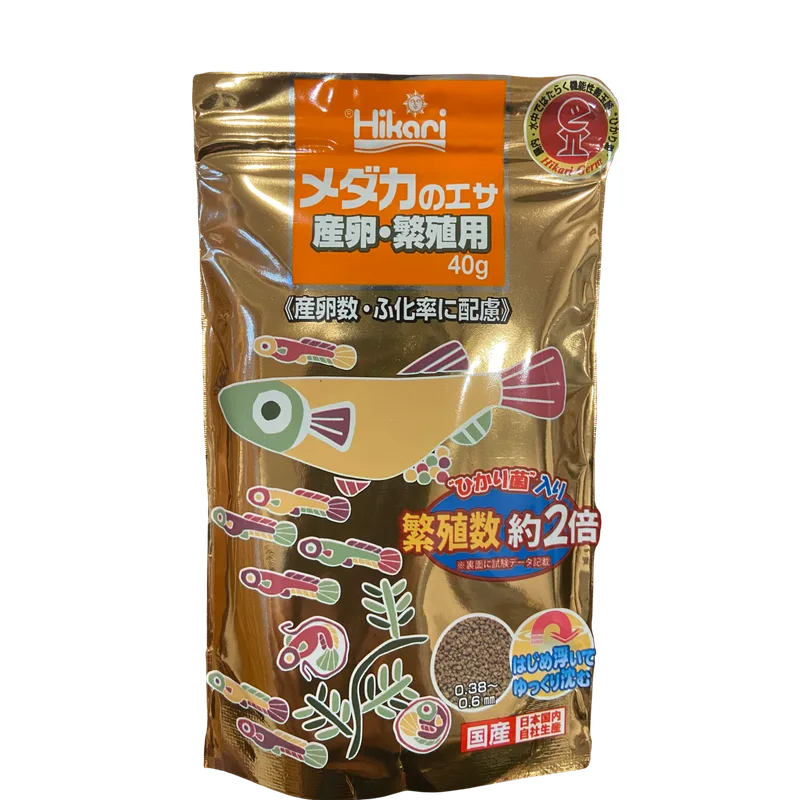
Hikari Food for Medaka (Breeding)
Best Medaka Food- ✓ Formulated specifically for medaka metabolism and egg production
- ✓ Contains highly unsaturated fatty acids and phospholipids for breeding condition
- ✓ Micro-sized pellets float perfectly at the surface where ricefish feed
- ✓ From the same Hikari line used by Japanese medaka breeders
- ✗ Imported from Japan so availability can be spotty
- ✗ 130g bag is large — may expire before a small colony uses it all
- ✗ Pricier than generic tropical flakes
For general maintenance, any good micro pellet will work. The Hikari Tropical Micro Pellets are widely available and affordable.
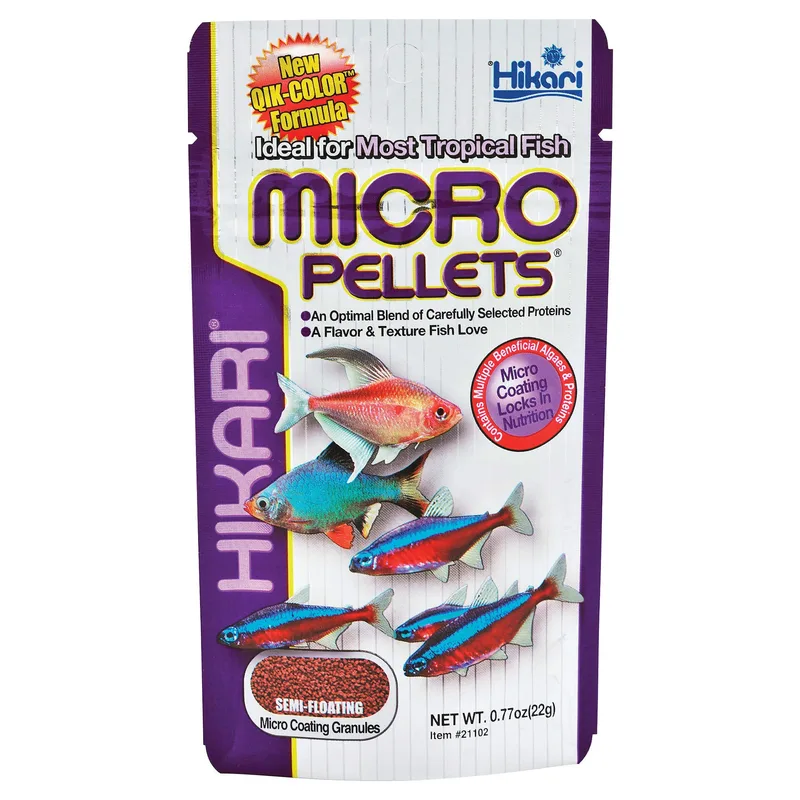
Hikari Tropical Micro Pellets
Budget Alternative- ✓ Affordable and widely available at any pet store
- ✓ Semi-floating pellets work well for surface-feeding ricefish
- ✓ Small enough for adult medaka mouths
- ✓ Good protein content for general maintenance feeding
- ✗ Not specifically formulated for medaka breeding
- ✗ Pellets sink faster than dedicated medaka food
- ✗ 0.77 oz bag is quite small
Breeding Miyuki Medaka
This is where medaka really shine as a hobby fish. They are prolific, easy breeders that spawn daily once conditions are right.
Triggering spawning:
- Temperature above 75°F (24°C)
- 12+ hours of light per day (natural or artificial)
- High-protein diet with live or frozen foods
- Clean water with regular changes
How spawning works: Females produce a cluster of eggs each morning, which hang from their vent like a tiny bunch of grapes. The male fertilizes them, and the female carries them for several hours before depositing them on plants, moss, or spawning mops. A healthy female can produce 10–30 eggs per day.
Egg collection: If you want to maximize fry survival, collect eggs daily. Gently pluck them from the female (they are surprisingly tough) or harvest them from spawning mops. Place eggs in a separate container with clean water and a drop of methylene blue to prevent fungus.
Incubation: Eggs hatch in 10–14 days at 77°F. Warmer water speeds this up, cooler water slows it down. You can see the developing embryos through the clear egg membrane — the eyes become visible about halfway through development.
Fry care: Newly hatched fry are tiny but fully formed. They can eat infusoria, vinegar eels, or powdered fry food from day one. After a week, they are large enough for baby brine shrimp. Growth is fast — fry reach adult size in about 3–4 months.
Selective Breeding for Stronger Hikari
To improve the hikari line quality in your colony:
- Grade juveniles at 6–8 weeks when the light line first becomes visible
- Separate the top 20% — fish with the longest, brightest, most continuous light lines
- Cull or rehome weak-hikari fish to prevent diluting the trait
- Pair strong-hikari males with strong-hikari females — both parents contribute to offspring quality
- Keep records of which pairings produce the best fry
The hikari trait is polygenic, meaning multiple genes influence its expression. You will see variation in every spawn, but consistent selection pressure over 3–5 generations produces noticeably stronger fish.
Outdoor Keeping
Miyuki medaka are outstanding pond and tub fish. In the South (USDA Zones 7-9), they can live outdoors from March through October with water temperatures above 65°F. They handle summer heat well — medaka are comfortable up to 86°F in outdoor containers with shade available.
Outdoor setup tips:
- Whiskey barrel halves, stock tanks, and large plastic tubs all work
- Add floating plants for shade and egg deposition
- No filter needed in planted outdoor setups with moderate stocking
- Mosquito control is built in — medaka eat mosquito larvae aggressively
- Bring fish indoors or provide a heated greenhouse when nighttime lows consistently drop below 55°F
Miyuki look incredible in outdoor tubs. Natural sunlight activates the hikari trait more intensely than any aquarium light, and the overhead viewing angle is exactly how medaka are traditionally appreciated in Japan.
Common Health Issues
Medaka are disease-resistant fish, but a few issues come up regularly:
- Cotton mouth / columnaris — bacterial infection that appears as white patches around the mouth. Treat with Kanaplex or erythromycin. Usually triggered by poor water quality or temperature swings.
- Ich / white spot — rare in medaka but possible, especially after shipping stress. Raise temperature to 82°F and treat with ich medication.
- Internal parasites — wild-caught or pond-raised medaka sometimes carry parasites. Quarantine new fish for 2 weeks and treat with Prazipro if you see weight loss or white stringy feces.
- Egg binding — females occasionally retain eggs. Usually resolves on its own with clean water and good nutrition. If persistent, a brief salt bath (1 tablespoon per gallon for 15 minutes) can help.
Tankmates
Miyuki medaka are peaceful and can live with other calm community fish. Good tankmates include:
- Other medaka strains (they will interbreed, so separate strains if you want to keep lines pure)
- Cherry shrimp and other neocaridina (medaka may eat newborn shrimplets but generally coexist well with adults)
- Amano shrimp
- Small snails (nerite, mystery, ramshorn)
- Endlers (similar size and temperament)
- White Cloud Mountain minnows (similar temperature range)
Avoid housing Miyuki with anything large enough to eat them or aggressive enough to nip their fins — bettas, cichlids, and large tetras are all poor choices.
Where to Buy Miyuki Medaka
Miyuki medaka have become much more available in the US market over the past few years. Sources include:
- Amazon — several sellers now ship live Miyuki medaka. Expect to pay $30–$60 for a group of 6–8 fish. Quality varies by seller, so check reviews.
- Aquabid — the best source for high-grade specimens from serious breeders
- Local aquarium clubs and Facebook groups — often the cheapest option and you can see the fish before buying
- Specialty online retailers — sites like Flip Aquatics occasionally stock medaka
When buying online, look for sellers who show photos of their actual breeding stock, not stock images. The hikari grade you receive makes a big difference in how impressive the fish look.
Final Thoughts
Miyuki medaka are one of the most rewarding freshwater fish you can keep. They are hardy enough for beginners, beautiful enough for experienced hobbyists, and their breeding is endlessly engaging if you enjoy selective breeding projects. The blue light shimmer on a well-bred Miyuki under proper lighting is genuinely stunning — no photo does it justice.
Start with a group of 8–12, set up a dark-substrate tank with floating plants and gentle filtration, and give them good food and clean water. Within a month, you will have eggs. Within a year, you will have a colony. And once you see what a full-body hikari Miyuki looks like in person, you will understand why this strain has captivated hobbyists for generations.