AquaRanked is reader-supported. When you buy through links on our site, we may earn an affiliate commission.
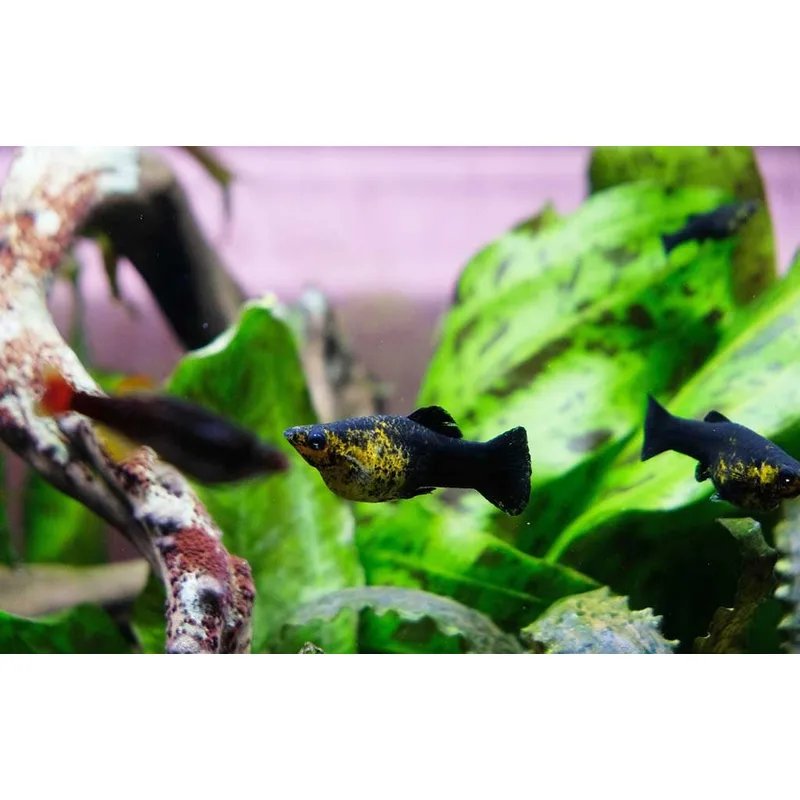
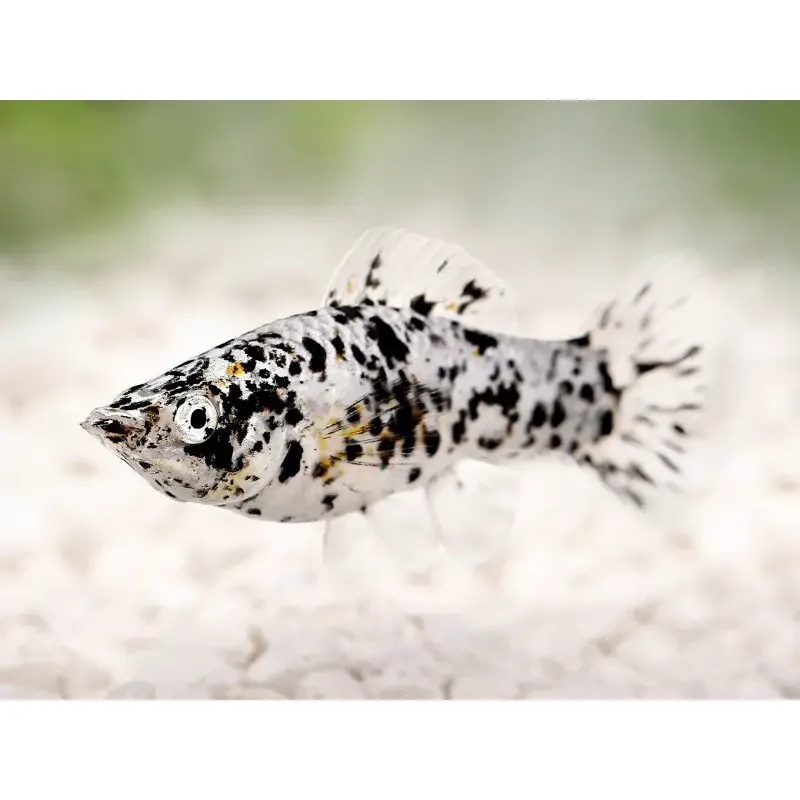
Mollies (Poecilia sphenops, P. latipinna, P. velifera, and related species) are among the most popular livebearers in the hobby. They come in dozens of color variants — black mollies, dalmatian mollies, sailfin mollies, lyretail mollies, balloon mollies — and they breed readily in captivity. A single female can produce 20-100 fry every 60-70 days.
The problem is that mollies are routinely sold as beginner fish when they are actually more demanding than guppies or platies on water chemistry. Mollies originate from hard, alkaline coastal environments — estuaries, brackish lagoons, and mangrove swamps across Central America and the Gulf Coast. They are highly adaptable in many ways, but low mineral content and soft, acidic water consistently cause health problems. Get the parameters right, and mollies are hardy and long-lived. Keep them in soft water with no salt, and you will lose fish to shimmying disease, bacterial infections, and wasting.
This guide covers everything: water parameters, tank setup, the brackish question, feeding, breeding, and common diseases.
Water Parameters
Mollies need hard, alkaline water. This is the single most important thing to get right.
| Parameter | Target Range |
|---|---|
| pH | 7.5–8.5 |
| Temperature | 75–82°F (24–28°C) |
| GH | 12–25 dGH |
| KH | 6–12 dKH |
| Ammonia | 0 ppm |
| Nitrite | 0 ppm |
| Nitrate | <30 ppm |
| Salt (optional) | 1–2 tbsp per 5 gal |
If your tap water is naturally hard and alkaline (GH 15+, pH 7.8+), mollies will thrive with minimal intervention. If your water is soft — as it is in much of the Southeast and Pacific Northwest — you need to either buffer it with crushed coral or cichlid minerals, or add a consistent salt regimen.
Test your water before buying mollies. Do not guess.
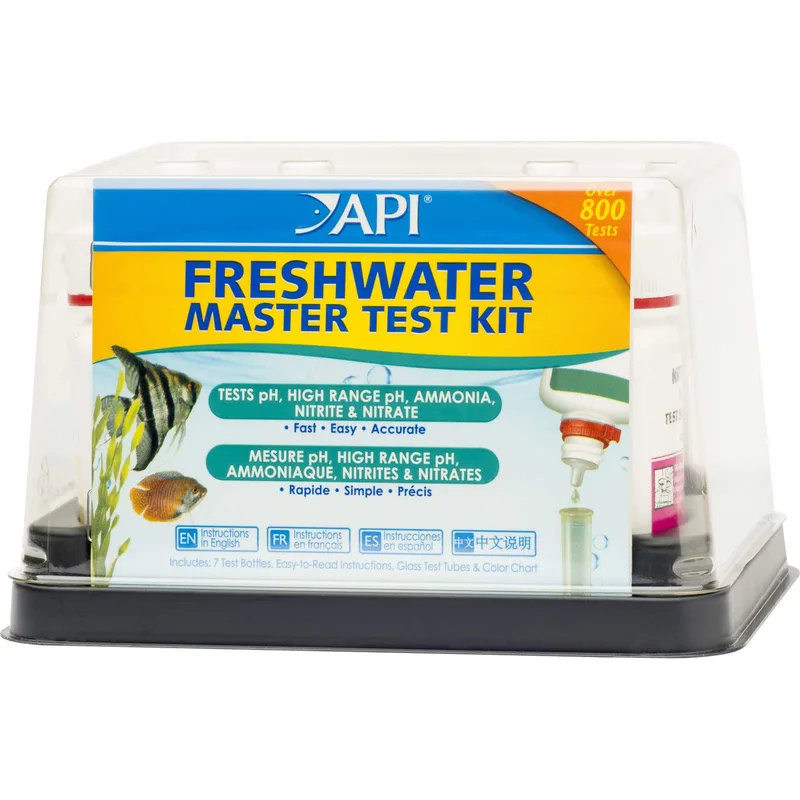
API Freshwater Master Test Kit
Essential Water Testing- ✓ Covers all critical parameters mollies are sensitive to
- ✓ Liquid reagents far more accurate than strips
- ✓ 800+ tests make it cost-effective for regular monitoring
- ✓ High Range pH test is important for the alkaline conditions mollies prefer
- ✗ No GH or KH tests — buy the API GH/KH Test Kit separately for mollies
- ✗ Nitrate reagent #2 requires vigorous shaking or readings are low
The API Freshwater Master Test Kit handles the four critical parameters — pH, ammonia, nitrite, and nitrate. For mollies specifically, you also want GH and KH readings. The API GH/KH Test Kit is a $6 add-on worth buying alongside the master kit.
Tank Setup
Tank Size
Mollies are larger and more active than most hobbyists expect:
- Short-finned mollies (common, black, dalmatian): 20-gallon minimum
- Sailfin mollies (P. latipinna, P. velifera): 30-gallon minimum — they grow to 5-6 inches and are strong swimmers
- Balloon mollies: 20-gallon minimum, though the compressed body form causes internal issues that shorten lifespans
A 10-gallon is not appropriate for mollies regardless of what some pet store employees suggest. Mollies are larger fish with high bioloads. Overcrowding drives aggression, degrades water quality, and shortens fish lives.
Heating
Mollies need stable temperatures between 75–82°F. Temperature swings kill mollies faster than most hobbyists realize — a drop to 70°F can trigger shimmying and bacterial infection within days.
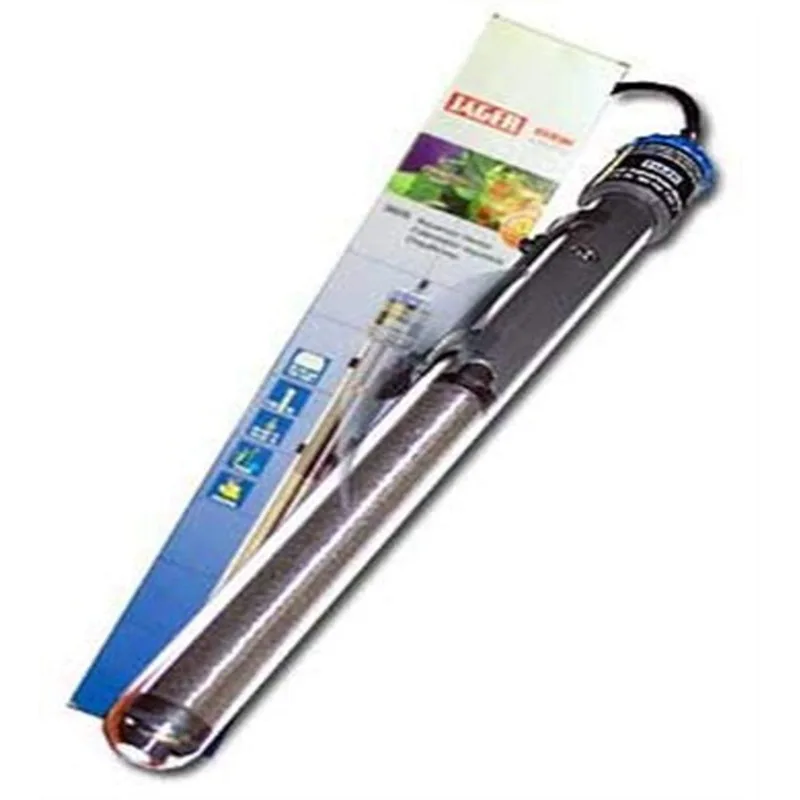
Eheim Jager 50W Submersible Heater
Reliable Heater- ✓ Laboratory-grade glass construction resists breakage and holds calibration
- ✓ TruTemp dial is easy to adjust and holds set temperature accurately
- ✓ Auto-shutoff when out of water prevents element burnout
- ✓ Trusted brand with proven longevity across breeding operations
- ✗ 50W suited for tanks under 20 gallons — larger tanks need 100W or 150W
- ✗ Glass construction means careful handling during tank maintenance
The Eheim Jager 50W covers tanks up to 20 gallons. For 20-30 gallon tanks, step up to the Eheim Jager 100W. For 30-gallon+ sailfin tanks, the 150W or 200W model is appropriate. Eheim Jagers hold calibration better than most heaters in this price range and include auto-shutoff when removed from water.
Filtration
Mollies produce substantial waste for their size. A HOB filter or canister rated for at least twice the tank volume is the baseline for a community setup. For dedicated molly breeding tanks, a sponge filter is the better choice — the intake cannot harm fry, and the sponge surface supports biological bacteria colonies.
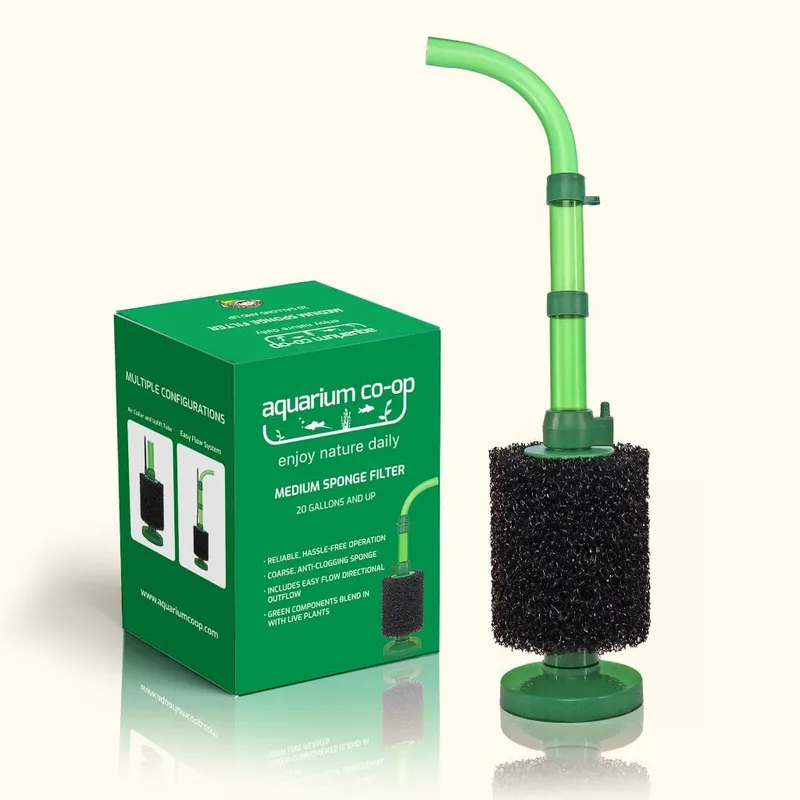
Aquarium Co-Op Small Sponge Filter
Best Fry-Safe Filter- ✓ Fry-safe intake prevents newborn mollies from being pulled into the filter
- ✓ Sponge surface provides supplemental feeding ground for fry
- ✓ Reliable biological filtration with no moving parts to fail
- ✓ Inexpensive enough to use on every tank in a breeding operation
- ✗ Requires a separate air pump and airline tubing
- ✗ Sponge needs regular rinsing in tank water to maintain flow
If you are running a breeding operation with multiple molly tanks, sponge filters driven by a single centralized air pump are the most cost-effective and reliable setup. No impellers to replace, no plastic housings to crack, and fry-safe from day one. For a general community tank, pair a sponge filter with a HOB for extra mechanical filtration. See the best sponge filters for shrimp and breeding tanks for more options.
The Brackish Question
Wild mollies are estuarine fish. They naturally occupy brackish water zones — where freshwater rivers meet saltwater coastal areas — and they handle salinity changes that would kill most freshwater fish. They can survive in full freshwater, but many keepers observe better health, brighter coloration, and fewer disease incidents with added aquarium salt.
Low-salt method (recommended for most setups): 1 tablespoon of aquarium salt per 5 gallons. This barely registers as brackish but provides the electrolytes mollies benefit from and inhibits external parasites and bacterial infections.
True brackish setup: Specific gravity of 1.002–1.005. Use marine salt (Instant Ocean or similar) rather than freshwater aquarium salt to achieve proper salinity. This approach requires a refractometer to monitor salinity and is best for dedicated molly-only tanks.
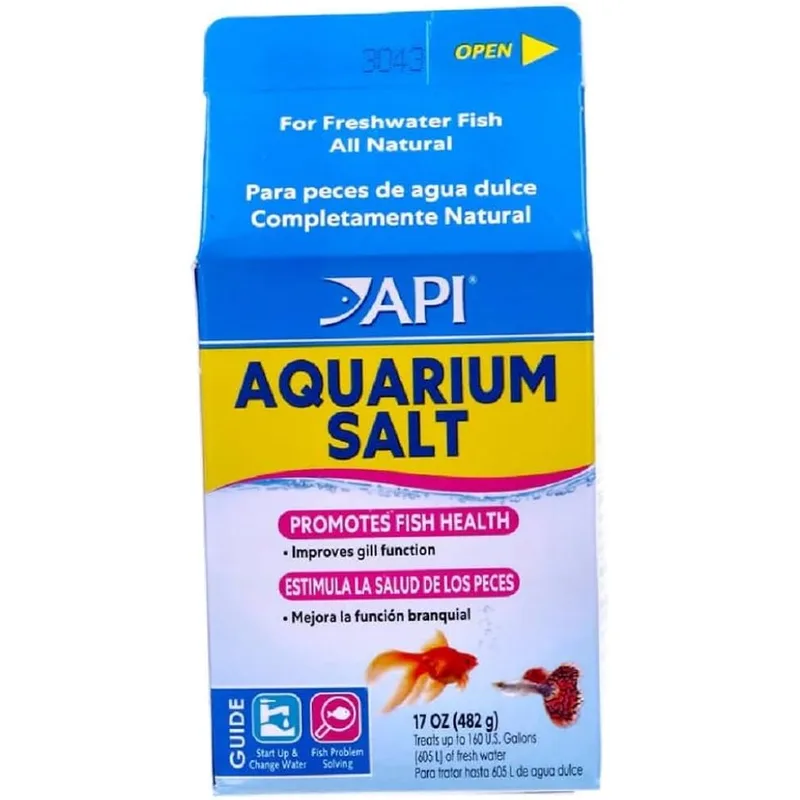
API Aquarium Salt 67 oz
Best for Molly Health- ✓ Provides electrolytes that improve gill function and reduce shimmying
- ✓ Helps prevent fungal and bacterial infections common in mollies
- ✓ Affordable and widely available
- ✓ 67-oz box lasts a long time at typical molly dosing rates
- ✗ Incompatible with neocaridina or caridina shrimp tank mates
- ✗ Freshwater plants sensitive to salt should be avoided in salted tanks
API Aquarium Salt is evaporated sea salt with natural electrolytes. It is not iodized table salt (never use table salt in aquariums) and is not the same as marine salt used in reef tanks. At the low dosing rate used for mollies — 1–2 tablespoons per 5 gallons — it provides a health benefit without creating a full brackish environment.
Critical compatibility note: Salt is incompatible with neocaridina shrimp and caridina shrimp. Cherry shrimp, amano shrimp, and other freshwater shrimp do not tolerate salt, even at low concentrations. If you want to keep shrimp alongside mollies, skip the salt — or keep them in separate tanks.
Feeding
Mollies are omnivores with a strong herbivorous streak. In nature, they spend most of their time grazing on algae and biofilm. A diet that consists entirely of protein-heavy pellets leads to digestive issues, bloating, and a shortened lifespan.
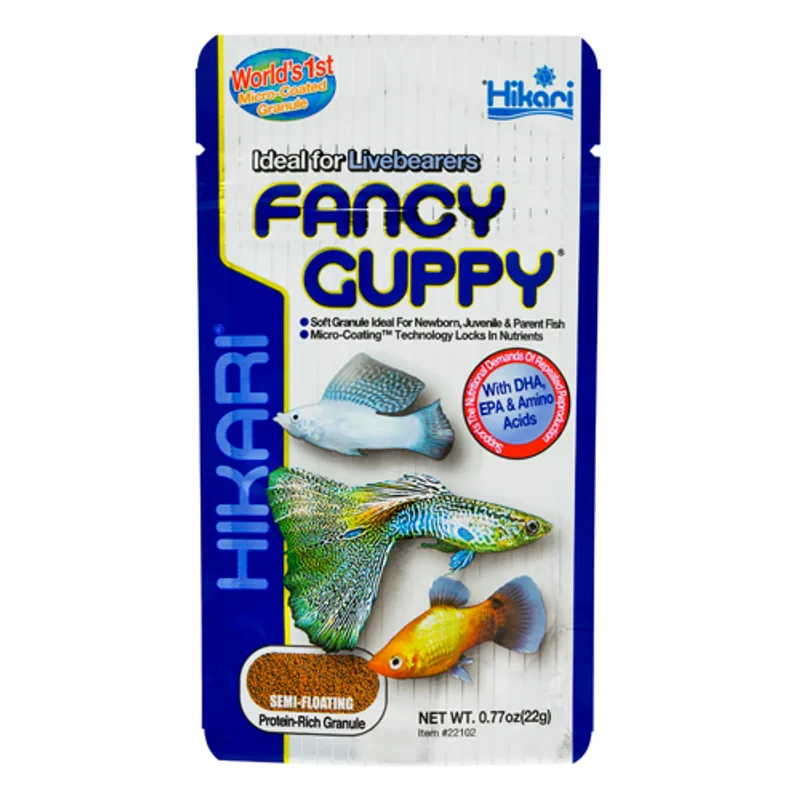
Hikari Tropical Fancy Guppy Food
Good Staple Food- ✓ Spirulina content provides vegetable matter mollies need daily
- ✓ Semi-floating behavior suits molly surface feeding
- ✓ High protein supports growth and breeding condition
- ✓ Affordable and readily available at most fish stores
- ✗ Small pellet size may be less ideal for large adult sailfin mollies
- ✗ Protein-heavy — supplement with blanched vegetables regularly
The Hikari Fancy Guppy pellet works well as a daily staple because of its spirulina content — it covers the plant protein mollies need without being pure fish meal. Feed it as the base, then supplement consistently.
Supplemental Foods
- Blanched vegetables: Zucchini, romaine lettuce, spinach (remove any uneaten portions after 24 hours)
- Spirulina wafers: Algae wafers once or twice a week
- Brine shrimp or daphnia: Live or frozen, 2-3 times per week as protein treats
- Tank algae: Leave some algae growth on tank walls — mollies graze naturally and benefit from it
Feeding Schedule
Feed 2-3 small meals daily rather than one large feeding. Mollies graze constantly in nature. Multiple small feedings reduce waste accumulation and match their natural feeding behavior.
Breeding
Mollies are prolific livebearers and breed readily in well-maintained tanks. A well-conditioned female in good water will drop fry every 60-70 days without fail.
Gestation
Gestation runs 60-70 days — longer than guppies (28-30 days) or platies (24-35 days). Females become visibly large in the final two weeks, developing a squared-off belly profile as the batch approaches.
Batch Size
Short-finned mollies produce 20-60 fry per batch. Sailfin molly females routinely deliver 80-120 fry in a single batch — a stocking challenge that novice keepers underestimate.
Fry Care
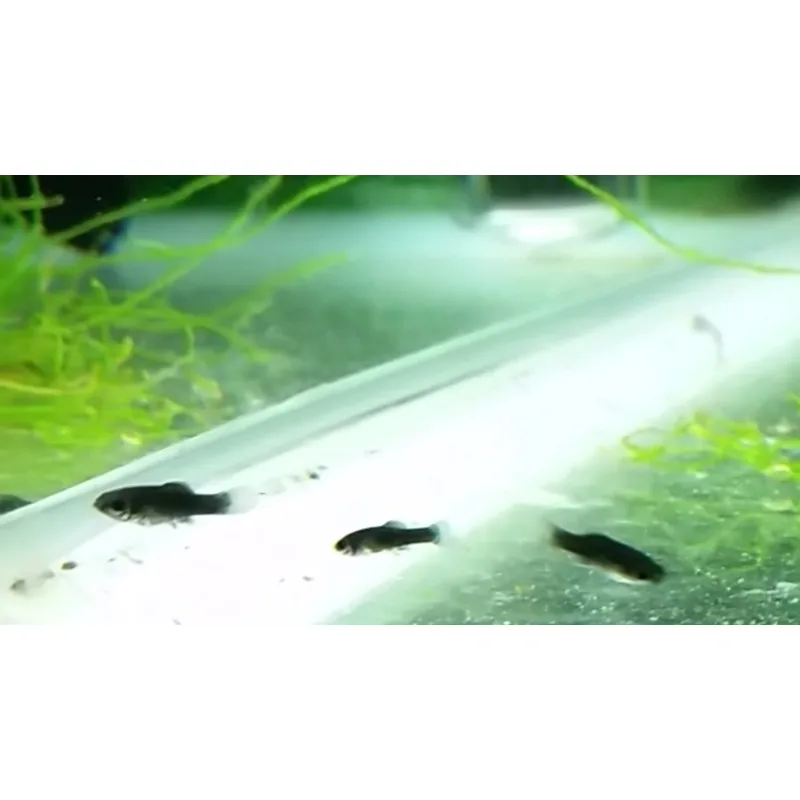
Molly fry are born large enough to eat crushed flake food immediately. They grow faster than guppy fry on a high-frequency feeding schedule — four to five small feedings daily for the first month. Dense plant cover (java moss, guppy grass, hornwort, floating plants) dramatically improves fry survival in community tanks, where adults will eat newborns opportunistically.
For controlled breeding, a breeder box or separate fry tank allows you to capture the female before birth. See the best breeder boxes for livebearers and fry for options. Separate females at least 3-5 days before the expected drop date.
Male-to-Female Ratio
Keep a minimum of 2-3 females per male. Male mollies harass females persistently — a single female in a tank with one or more males will be stressed to the point of exhaustion. Multiple females distribute the attention and give each one time to rest.
Common Health Issues
Shimmying (Molly Disease)
The most distinctive molly ailment. Affected fish rock from side to side without moving forward, often while holding position in the current. Caused by low mineral content, cold water, or high nitrates — not a parasite or infection.
Treatment: Raise temperature to 78-80°F, add aquarium salt at 1 tablespoon per 5 gallons, and do a 30% water change. If your GH is below 10, add cichlid buffer or crushed coral to the filter. Fish that shimmy repeatedly are usually in unsuitable water parameters.
Ich
White spot disease appears as fine salt-like grains on fins and body. Mollies are susceptible when water temperature drops or fluctuates. Treatment: raise temperature gradually to 82-84°F over 48 hours and add aquarium salt at 1 tablespoon per 5 gallons. Mollies tolerate heat and salt treatments far better than most freshwater fish.
Fin Rot
Ragged, deteriorating fin edges caused by bacterial infection. Usually triggered by poor water quality, stress from overcrowding, or aggression injuries. Treatment: water changes to reduce nitrates, aquarium salt, and antibiotics (API Fin & Body Cure) for severe cases.
Bloating and Constipation
Mollies are prone to digestive issues from protein-heavy diets or overfeeding. Prevention: feed blanched peas weekly, rotate vegetables into the diet, avoid pure protein foods. Treatment: fast for 24-48 hours, then offer deshelled, blanched peas.
Wasting Disease
Gradual emaciation despite eating — fish eats normally but loses body mass over weeks. Usually caused by internal parasites (Camallanus worms are common in mollies from pet stores) or mycobacteriosis. Treatment: API General Cure for internal parasites. Mycobacteriosis has no reliable treatment and affected fish should be euthanized to prevent spread.
Tank Mates
Mollies are peaceful community fish, but their preference for hard, alkaline water, and the frequent addition of salt, limits compatible tank mates.
Good choices:
- Platies — nearly identical water requirements, peaceful
- Swordtails — compatible parameters, similar size class
- Corydoras catfish — tolerate moderate hardness, good bottom dwellers (skip if salting)
- Bristlenose plecos — handle hard water, great algae control
- Guppies and Endlers — compatible parameters; note that guppies can occasionally hybridize with Endlers, so keep pure strains separate
Avoid:
- Soft water species: neon tetras, cardinal tetras, discus, German blue rams
- Aggressive species: cichlids (other than shell dwellers or other alkaline-tolerant types)
- Freshwater shrimp: incompatible with salt additions; cherry shrimp and amano shrimp cannot tolerate even low salinity
See the Endler’s Livebearer Care Guide and Guppy Care Guide for compatible tank mate options across the livebearer family.
Buying Guide: What to Look for When Selecting Mollies
At the Fish Store
Inspect fish carefully before buying. Common problems in pet store mollies:
- Shimmying — swaying without forward movement means water quality issues in the store tank. Pass on these fish.
- Clamped fins — fins held tight to the body indicate stress or infection
- Hollow belly — visible concavity behind the gills indicates wasting
- Bent spine — a curved spine is a genetic defect or tuberculosis indicator
Ask the store what their molly tank’s GH and pH are. If the store keeps mollies in soft, acidic water, the fish may have been struggling for weeks. Acclimating them to proper parameters afterward is possible but takes time.
Selecting Variants
- Common mollies (P. sphenops): Black, dalmatian, white, and color variants. Hardy and easy to keep. Best for beginners.
- Sailfin mollies (P. latipinna): Large, stunning dorsal fin on males. Require 30+ gallons and are less forgiving of poor parameters.
- Lyretail mollies: Fin variant of common mollies. More delicate fins prone to fin rot if water quality slips.
- Balloon mollies: Bred for a compressed body form. Prone to swim bladder issues and organ compression. Not recommended for keepers focused on fish welfare.
Frequently Asked Questions
Do mollies need salt in their water?
Salt is not strictly required, but it is beneficial. Mollies originate from brackish environments and consistently show better health, fewer infections, and reduced shimmying incidents when kept with 1-2 tablespoons of aquarium salt per 5 gallons. Think of it as an optional supplement that improves outcomes — particularly if your tap water is on the softer side.
Can mollies live in a 10-gallon tank?
A 10-gallon is too small for adult mollies. Short-finned varieties need 20+ gallons; sailfin mollies need 30+. A 10-gallon is only appropriate for a temporary fry grow-out tank, not for adult fish.
How many mollies should I keep together?
Start with a group of 6: 4 females and 2 males. This gives females room to avoid persistent male attention. Mollies are social and do poorly in isolation — a single molly in a 20-gallon by itself will be stressed.
Why do my mollies keep shimmying or dying?
The most common causes: soft or acidic water (GH below 10, pH below 7.5), cold temperature (below 72°F), ammonia or nitrite exposure, or overcrowding. Mollies have less tolerance for soft water than most hobbyists assume. Test GH specifically — the API Freshwater Master Kit does not test GH, so you need a separate GH/KH kit.
Can mollies live with shrimp?
It depends. Adult neocaridina cherry shrimp can coexist with mollies in a large enough tank — mollies typically ignore shrimp they cannot easily swallow. However, mollies will eat shrimplets on sight. If you add salt for mollies, shrimp cannot be kept in the same tank; freshwater shrimp do not tolerate any salinity.
How long do mollies live?
Typically 3-5 years in proper conditions. Poor water quality, soft water, overcrowding, and overfeeding are the main life-shortening factors. Sailfin mollies kept in brackish conditions with proper hardness regularly reach 4-5 years.
Do mollies breed without a male present?
Yes. Females store sperm after mating and can produce fertile batches for up to 6 months without a male. This means a single “female only” fish purchased from a community tank may arrive pregnant.
What is the white stuff growing from my molly’s mouth?
Most likely Columnaris (cotton mouth disease) or Saprolegnia fungus. Both appear as white fuzzy growth around the mouth or body. Treat with API Melafix and Pimafix combined, or Seachem Kanaplex for more severe infections. Address water quality issues — both are opportunistic infections that exploit stressed fish.
Conclusion
Mollies are rewarding, entertaining fish when their basic requirements are met. The two non-negotiables: hard, alkaline water (pH 7.5-8.5, GH 12-25) and adequate tank size (20 gallons for common mollies, 30+ for sailfins). Everything else is secondary.
If your tap water tests naturally hard (GH 15+), mollies are a solid choice with minimal intervention beyond regular water changes, appropriate feeding, and a good filter. If your water is soft, either commit to consistent buffering — crushed coral in the filter, regular mineral additions, or low-dose salt — or choose easier livebearers. Guppies and Endlers are far more forgiving of soft water and are better entry points if you are new to livebearers.
Before you buy, run the nitrogen cycle in your tank fully, test your tap water parameters, and confirm your setup matches what mollies actually need — not what the pet store tag says they can handle.