Guppy breeding can absolutely generate income, but the hobbyists making real money are not selling feeder guppies to the local pet store for $0.25 each. They are selling selectively bred strains — high-quality lines with consistent color, pattern, and fin type — to other hobbyists, breeders, and specialty stores at $5-25 per pair or more.
The barrier to entry is low. Guppies breed prolifically with minimal intervention. The real work is in strain maintenance, culling, and finding buyers willing to pay premium prices for quality fish. This guide covers the practical side of turning guppy breeding from a hobby into a side income.
Choosing Profitable Strains
Not all guppy strains command the same prices. The market rewards rarity, consistency, and visual impact.
High-Value Strains
- Moscow Blue/Green/Purple: Solid-color Moscows with deep, consistent coloration across the entire body command $10-20 per pair. The key is body coverage — a Moscow guppy with incomplete color or bleed-through of the base color is worth much less.
- Platinum Dumbo Ear: Large pectoral fins combined with platinum body color. Popular on social media and with newer hobbyists. $8-15 per pair.
- Japanese Blue Endler Hybrids: The metallic blue body color of Japanese Blue crosses combined with endler patterns. $10-20 per pair for well-established lines.
- Galaxy/Dragon Head: Multi-colored patterns with intense body markings. Harder to maintain genetically but command premium prices. $15-25 per pair.
- Albino Full Red: Solid red coloration on an albino base. Striking appearance and moderate difficulty to maintain. $8-15 per pair.
Medium-Value Strains
- Cobra Pattern: Snakeskin body pattern in various colors. Widely available but still popular. $5-10 per pair.
- Tuxedo varieties: Half-colored body pattern. Established and stable lines. $5-8 per pair.
- Metalhead: Platinum head with colored body. Distinctive look. $6-12 per pair.
Low-Value (Avoid for Profit)
- Mixed/mutt guppies: No genetic consistency. Hard to sell above $1-2 each.
- Feeder guppies: High volume, very low margin. Not worth the effort for profit.
- Common pet store varieties: Already oversaturated in the market.
Breeding Setup
Tank Configuration
A functional breeding operation needs three types of tanks:
Breeding tanks (10-20 gallons each): One tank per strain with a trio (1 male, 2 females) or a colony (2-3 males, 5-6 females). More females than males reduces harassment stress.
Fry grow-out tanks (10-20 gallons each): Separate tanks for growing fry to sellable size. You will need multiple grow-out tanks because batches are born every 25-30 days.
Culling/holding tanks (5-10 gallons): Tanks for sorting fish by quality and holding sellable stock for shipping.
Essential Equipment per Tank
- Sponge filter (shrimp-safe, gentle flow for fry)
- Heater set to 78-80degF
- Basic LED light on a timer (8 hours)
- Floating plants (java moss, guppy grass) for fry cover
Water Parameters
Guppies are adaptable, but for optimal breeding and color development:
- pH: 7.0-7.8
- GH: 8-12 dGH
- KH: 4-8 dKH
- Temperature: 78-80degF for maximum breeding output
- Ammonia/Nitrite: 0 ppm
- Nitrate: Below 20 ppm
Feeding for Growth and Color
Fry need high-protein food 3-4 times daily for the first 6 weeks to maximize growth rate. After that, twice daily is sufficient.
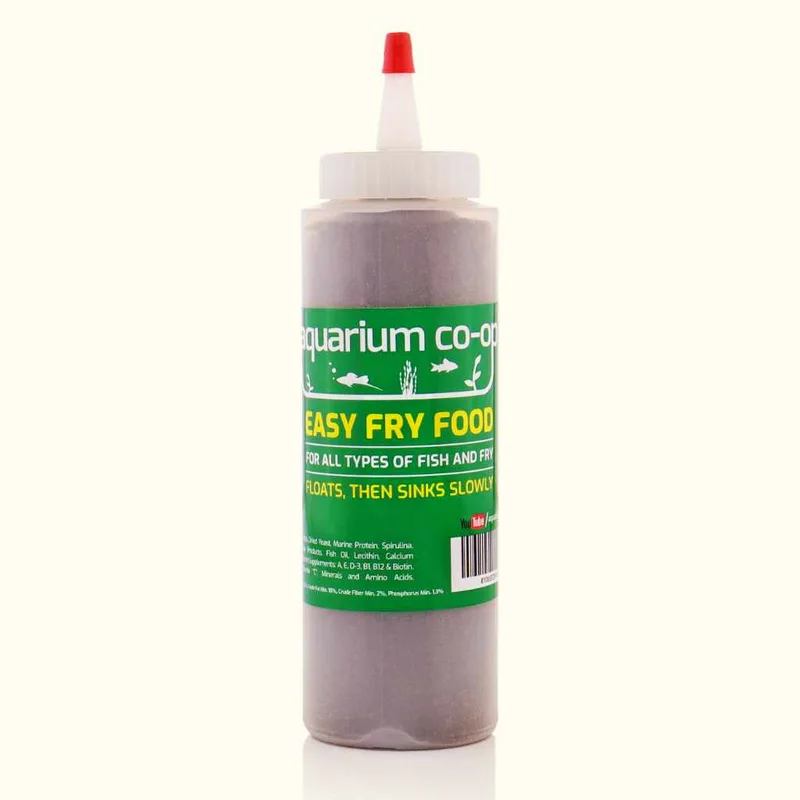
Aquarium Co-Op Easy Fry and Small Fish Food
Best Fry Food- ✓ Perfect particle size for newborn guppy fry
- ✓ High protein content accelerates growth
- ✓ Clean formula does not foul water quickly
- ✗ Only available direct from Aquarium Co-Op
- ✗ Small container needs frequent reordering for large operations
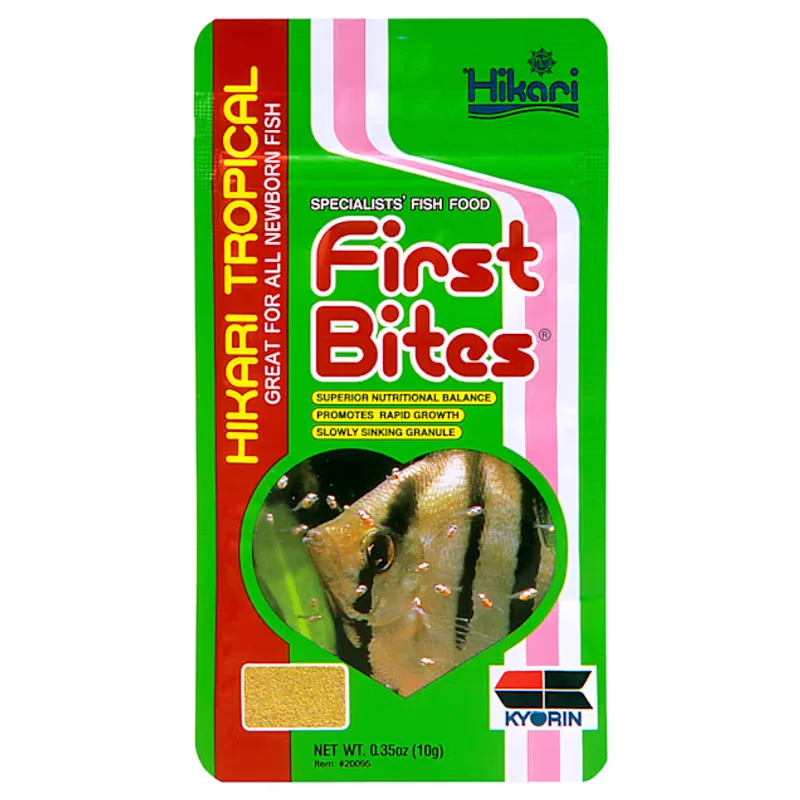
Hikari First Bites
Best Budget Fry Food- ✓ Widely available at pet stores and online
- ✓ Semi-floating formula keeps food accessible longer
- ✓ High protein for rapid fry growth
- ✗ Particles can be slightly large for day-one fry
- ✗ Can cloud water if overfed
Supplement with live baby brine shrimp 2-3 times per week once fry are large enough (typically after one week). Baby brine shrimp accelerate growth faster than any prepared food and enhance coloration in many strains.
For adult breeders, a high-quality flake food supplemented with frozen bloodworms once or twice per week keeps fish in prime breeding condition.
Colony Management
Sex Separation
Separate males and females at 3-4 weeks old, as soon as the gonopodium is visible on males. This prevents unwanted breeding between siblings and gives you control over which males breed with which females.
Culling
This is the part most hobbyists struggle with, but it is non-negotiable for maintaining strain quality. Not every fish born meets the standard for your strain. Fish with poor color, deformed fins, bent spines, or inconsistent patterns should be culled from the breeding line.
Culling does not mean killing. Options include:
- Selling as lower-grade pets at reduced prices
- Trading with other breeders for fresh genetics
- Donating to local fish stores
- Using as feeder fish for larger predatory species
Line Breeding vs. Outcrossing
Line breeding (breeding related fish to fix desired traits) produces consistent offspring but reduces genetic diversity over time. After 5-6 generations of pure line breeding, you may see reduced fry counts, smaller body size, or increased deformities.
Outcrossing (introducing unrelated fish of the same strain) refreshes genetic vigor. Find a breeder with a separate line of the same strain and exchange fish. The first generation after outcrossing often shows hybrid vigor — larger bodies, more fry, and better overall health.
A practical rotation: line breed for 4-5 generations, then outcross with fresh stock, then resume line breeding with the best offspring.
Where to Sell
Online Platforms
- Aquabid: The eBay of fish auctions. Established marketplace with serious buyers. Requires creating listings with good photos and managing shipping.
- eBay: Some sellers list guppies on eBay, but the platform is less fish-specific and buyer expectations around shipping can be complicated.
- Facebook Groups: Dedicated guppy selling groups have thousands of active buyers. Quick sales, direct communication, and lower fees than Aquabid.
- Instagram: Build a following with regular photos and videos of your best fish. Direct sales through DMs. Slow to build but can generate consistent premium sales.
- Reddit (r/AquaSwap): Active community of hobbyists buying and selling. Good for reaching serious buyers.
Local Sales
- Local fish stores (LFS): Most LFS will buy quality guppies for store credit or cash at 30-50% of retail. Lower margin but zero shipping hassle.
- Aquarium club meetings: Local clubs hold regular auctions and swap meets. Bring bags of your best fish and sell directly.
- Craigslist/Facebook Marketplace: Reach local buyers for in-person pickup. No shipping costs.
Shipping Guppies
Shipping live fish is a learnable skill:
- Bags: Use fish-specific breather bags or double-bagged poly bags with pure oxygen
- Insulation: Ship in insulated foam-lined boxes. Add heat packs in cold weather (below 40degF outside temperature)
- Timing: Ship Monday or Tuesday via USPS Priority Mail (2-3 day) or Priority Express (overnight). Never ship on Thursday or Friday — weekend delays kill fish.
- Water volume: One cup of water per fish in a breather bag is sufficient. Less water means less weight and lower shipping cost.
- DOA policy: Offer a dead-on-arrival guarantee with photo proof required within 2 hours of delivery. This builds buyer trust and is standard practice.
Revenue Expectations
Be realistic. A small breeding operation (4-6 tanks) producing quality fish can generate:
- Per pair: $8-20 depending on strain
- Per month: 20-40 pairs sold (from multiple strains)
- Gross monthly revenue: $200-600
- Monthly costs: $50-100 (electricity, food, shipping supplies, water conditioner)
- Net monthly profit: $100-500
This is side income, not a full-time salary. Scaling up to 20+ tanks and multiple high-value strains can push monthly revenue above $1,000, but the time commitment also scales significantly.
Common Mistakes
- Too many strains too fast. Start with 2-3 strains and master them before adding more. Each strain needs dedicated tank space and separate bloodlines.
- Skipping the cull. Selling every fish regardless of quality tanks your reputation and strain consistency. Be selective.
- Ignoring genetics. Track which males breed with which females. Label tanks clearly. Accidental cross-contamination between strains destroys months of selective work.
- Underpricing. Quality guppies have value. Do not undercut yourself to make a quick sale. If your fish are genuinely high quality with consistent traits, price accordingly.
- Poor shipping. Dead fish on arrival kills your reputation faster than anything else. Invest in proper shipping supplies and learn the process before offering online sales.
Frequently Asked Questions
How long before I can sell guppy fry?
Guppies reach sellable size at 2-3 months old. Males show full color by 3-4 months. For maximum value, sell males once their finnage and color are fully developed — rushing to sell juvenile fish reduces your price per pair.
Can I breed guppies in outdoor ponds?
Yes, during warm months (water above 65degF). Outdoor breeding accelerates growth because of natural light cycles, live food availability, and larger water volumes. In the South, guppies can breed outdoors from April through October.
How many fry does a guppy produce per batch?
A healthy female guppy drops 20-50 fry every 25-30 days. Larger, older females can produce up to 100+ fry per batch. With multiple females, fry production adds up quickly.
Do I need a license to sell fish?
Requirements vary by state and locality. Most states do not require a license for small-scale hobbyist fish sales. However, if you are shipping across state lines, check USDA and state agricultural regulations. Some states restrict importation of certain species.