Cherry barbs (Puntius titteya) are the barb species that gives the rest of the family a good name. Where tiger barbs are aggressive fin-nippers and rosy barbs are too large and boisterous for small tanks, cherry barbs are peaceful, compact, and genuinely compatible with almost anything in a standard community setup.
Males develop a deep crimson red coloration that intensifies during breeding displays. Females are more subdued — bronze to olive with a lateral stripe. Both sexes are active, social, and hardy enough for beginner fishkeepers while being interesting enough for experienced hobbyists who appreciate subtle beauty.
Species Overview
| Parameter | Value |
|---|---|
| Scientific name | Puntius titteya |
| Maximum size | 2 inches (5 cm) |
| Lifespan | 5-7 years |
| Origin | Sri Lanka |
| Temperament | Peaceful, slightly shy |
| Minimum tank size | 20 gallons for a school |
| School size | 6 or more (ideally 8-12) |
Tank Requirements
Tank Size
A school of 8 cherry barbs needs a minimum of 20 gallons. They are active swimmers that use the full length of the tank, so longer tanks (like a 20-gallon long) are preferable to tall tanks with the same volume. In a 30-gallon or larger, you can keep a school of 12 alongside other community fish comfortably.
Water Parameters
Cherry barbs are adaptable across a wide parameter range:
- Temperature: 72-80degF (optimal 74-76degF)
- pH: 6.0-7.5
- GH: 4-15 dGH
- KH: 2-10 dKH
They do not require specific soft or hard water conditions, which makes them easy to keep in most tap water without modification. This adaptability is one of their best qualities.
Substrate and Decor
Cherry barbs show their best coloration against dark substrates. Black sand, dark gravel, or soil substrates bring out the red in males and the warm tones in females. On light-colored substrates, they appear washed out and feel more exposed.
Dense planting with open swimming lanes is the ideal layout. Cherry barbs use plant cover for security and retreat there when feeling threatened. Without adequate plants, they remain stressed, pale, and hide behind equipment.
Ideal plants: Java fern, cryptocoryne species, vallisneria, and stem plants like rotala or ludwigia. Floating plants (red root floaters, salvinia) provide overhead cover that reduces shyness.
Filtration
Any standard filtration works for cherry barbs. They prefer gentle to moderate flow — avoid overly powerful powerheads or spray bars pointed directly at their swimming area. A sponge filter, HOB filter set to medium flow, or a canister with a spray bar distributing flow evenly all work well.
Shrimp-safe note: If keeping cherry barbs with neocaridina shrimp, use a sponge prefilter on your filter intake to protect baby shrimp.
Feeding
Cherry barbs are omnivores that accept virtually any aquarium food. They feed in the mid-water column and will also pick food off plant leaves and the substrate surface.

Omega One Freshwater Flakes
Best Staple Food- ✓ Whole fish protein rather than fish meal filler
- ✓ Natural color enhancement from salmon and shrimp
- ✓ Does not cloud water like cheaper flakes
- ✗ Flakes can be large for very small fish
- ✗ Can overfeed easily due to light flake weight
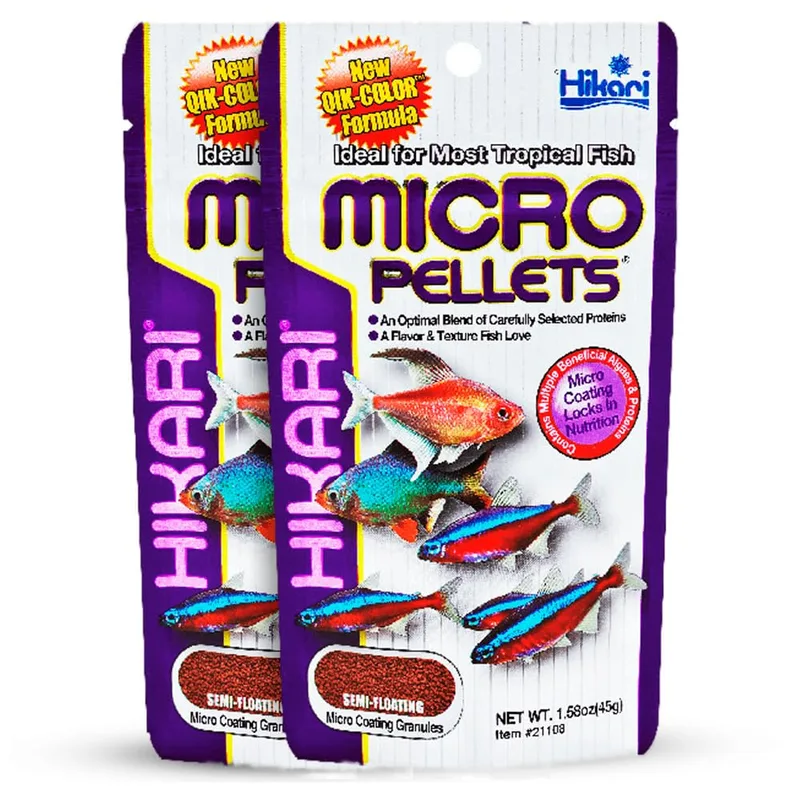
Hikari Micro Pellets
Best Pellet- ✓ Perfect pellet size for cherry barbs
- ✓ Semi-floating gives mid-water feeders time to eat
- ✓ High protein supports vibrant coloration
- ✗ Small container needs frequent replacement
- ✗ Some pellets sink fast in strong current
Daily feeding: High-quality flakes or micro pellets once or twice daily. Feed only what the school consumes in 60-90 seconds.
Supplemental foods: Frozen or live daphnia, baby brine shrimp, and bloodworms 2-3 times per week. These protein-rich supplements intensify male coloration and condition fish for breeding.
Vegetable matter: Cherry barbs graze on algae and soft plant surfaces naturally. Blanched zucchini or spirulina-based foods provide additional plant matter in tanks with minimal algae.
Behavior and Social Dynamics
Cherry barbs are schooling fish that need the security of their group. A lone cherry barb or a pair will hide constantly and never show natural behavior. In groups of 6 or more, they become confident, active, and display their full coloration.
Male competition: Males compete for female attention through color displays — the deepest red male attracts the most attention. This competition is visual, not physical. Males rarely harm each other, and the “fights” consist of parallel swimming and fin flaring.
Ratio: Keep more females than males (2:1 or 3:2 ratio). Too many males relative to females leads to excessive chasing that stresses females. In a group of 8, aim for 3 males and 5 females.
Shyness: Cherry barbs are one of the shyer barb species. They take 1-2 weeks to acclimate to a new tank and may hide extensively during this period. Dense planting and dim lighting help them settle faster. Once established, they become much bolder.
Tank Mates
Cherry barbs are compatible with almost any peaceful community fish of similar size:
Excellent matches:
- Tetras (ember, neon, cardinal, rummy nose)
- Rasboras (harlequin, chili, lambchop)
- Corydoras catfish
- Otocinclus
- Dwarf gouramis (honey gouramis are best)
- Kuhli loaches
- Nerite snails
Compatible with caution:
- Neocaridina shrimp (cherry barbs may eat some baby shrimp but leave adults alone)
- Endler’s livebearers
- Guppies (males — avoid large-finned varieties that might attract nipping)
Avoid:
- Tiger barbs (too aggressive, will nip cherry barbs)
- Large cichlids
- Bettas (territorial conflicts in smaller tanks)
- Anything large enough to eat them
Breeding
Cherry barbs are egg scatterers that breed readily in home aquariums. They do not provide parental care — in fact, they will eat their own eggs and fry if given the opportunity.
Conditioning
Separate breeding pairs or trios into a breeding tank and feed heavily with live foods (daphnia, brine shrimp) for 1-2 weeks. Males will deepen in color; females will become noticeably rounder as they fill with eggs.
Breeding Setup
A 10-gallon tank with:
- Fine-leaved plants or spawning mops (java moss works perfectly)
- No substrate or bare bottom for easy egg collection
- Temperature raised to 78-80degF
- Gentle sponge filter only
- Dim lighting
Spawning
Males chase females among the plants, and the female releases a few eggs at a time as the male fertilizes them. Eggs are adhesive and stick to plant surfaces. A single spawning event can produce 200-300 eggs over several hours.
Remove the adults immediately after spawning. They will eat every egg they find.
Fry Care
Eggs hatch in 24-48 hours. Fry are tiny and require infusoria or commercially prepared liquid fry food for the first week. After that, baby brine shrimp and powdered fry food support rapid growth. Fry reach adult coloration at about 3 months.
Common Health Issues
Cherry barbs are hardy, but they can develop issues in poor conditions:
- Ich: The most common disease, especially after introduction to a new tank. Treat with Ich-X and raised temperature.
- Fin rot: Usually from poor water quality. Improve conditions and the fish typically recover without medication.
- Color fading: Almost always stress-related — too few in the school, aggressive tank mates, poor diet, or inadequate cover.
Frequently Asked Questions
Are cherry barbs fin nippers?
No. Unlike many barb species, cherry barbs are not fin nippers. They can be kept safely with long-finned fish like guppies and bettas (in appropriate tank sizes). Occasional male-to-male sparring involves posturing, not physical damage.
How many cherry barbs should I keep?
Minimum 6, ideally 8-12. They are more confident, more colorful, and display more natural behavior in larger groups. A school of 10-12 in a 30-gallon tank is ideal.
Will cherry barbs eat shrimp?
Adults will not eat adult neocaridina shrimp. They will eat some baby shrimp that they encounter in open water. In a densely planted tank, enough babies survive to maintain a shrimp colony alongside cherry barbs. They are considered moderate-risk shrimp tank mates.
How long do cherry barbs live?
5-7 years with proper care. They are longer-lived than many similarly sized community fish.
Do cherry barbs need a heater?
In most homes, yes. They prefer 74-76degF, which is below room temperature in many climates. A heater set to 75degF provides stable conditions. In a heated room that stays above 72degF consistently, some hobbyists successfully keep them without a heater.