If you keep a patio pond in the warm southern US or anywhere in USDA Zones 7-9, mosquitoes are the tax you pay from March through October. Standing water is a mosquito nursery, and a patio pond is standing water with a neon sign. Without some kind of larval control, you will have a mosquito problem within a week of setting up.
The good news: mosquito control for ponds is a solved problem, and you have more than one lever to pull. BTI products kill larvae directly. Fish eat larvae as fast as they hatch. Aerators, fountain pumps, and floating plants disrupt the still, shaded water mosquitoes need to lay eggs in the first place. All of it is fish and shrimp safe when you pick the right products, and the best setups combine two or three approaches.
Here is what works, what the differences are, and how to build a mosquito-free patio pond.
| Summit Mosquito Dunks (6-Pack) Editor's Choice | Summit Mosquito Bits (30 oz) Best Quick Kill | 20 Live Mosquito Fish (Koi Pond) with Hornwort Plant Best Biological Control | Bonide Mosquito Beater Water Soluble Pouches Best for Small Containers | NFESOLAR 3W Solar Pond Aerator Best No-Power Aerator | Beckett CGFK60 Container Fountain Pump Kit Best Plug-In Circulation | Water Hyacinth (Live Floating Plants, 3-Pack) Best Surface Shade | Pond Netting Cover, 7 x 10 ft (3/8-inch Mesh) Best Debris Control | |
|---|---|---|---|---|---|---|---|---|
| Rating | 9.4/10 | 9/10 | 8.3/10 | 8.2/10 | 8/10 | 8.3/10 | 8.1/10 | 7.8/10 |
| Price | $8.58as of Sep 27, 2026 | Check price | $32.00as of Sep 27, 2026 | $15.99as of Sep 27, 2026 | $23.99as of Sep 27, 2026 | $19.99as of Sep 27, 2026 | $15.99as of Sep 27, 2026 | $9.99-$11.99as of Sep 27, 2026 |
| Brand | Summit Chemical | Summit Chemical | — | Bonide | — | Beckett | — | — |
| Active Ingredient | BTI (Bacillus thuringiensis israelensis) | BTI | — | BTI | — | — | — | — |
| Duration | 30 days per dunk | Kills within 24 hours | — | 14 days per pouch | — | — | — | — |
| Coverage | 100 sq ft per dunk | Sprinkle as needed | — | One pouch per 50 sq ft | — | — | — | 7 x 10 ft |
| Fish Safe | Yes — all species | Yes — all species | N/A (these ARE the fish) | Yes | Yes | Yes | — | Yes |
| Shrimp Safe | Yes | Yes | No — will eat and harass shrimp | Yes | — | — | Yes | — |
| Pack Size | 6 dunks | 30 oz granules | — | 24 pouches | — | — | — | — |
| Species | — | — | Gambusia (mosquitofish) | — | — | — | — | — |
| Quantity | — | — | 20 fish, plus a live hornwort bunch | — | — | — | — | — |
| Temperature Range | — | — | 40–95°F | — | — | — | — | — |
| Pond Size | — | — | Any — 5+ per 50 gallons | — | — | — | — | — |
| Power | — | — | — | — | 3W solar panel | 5 watts, 120V | — | — |
| Battery | — | — | — | — | 1800mAh | — | — | — |
| Modes | — | — | — | — | 3 (Strong/Soft/Cycle) | — | — | — |
| Runtime | — | — | — | — | Up to 36h (cycle mode) | — | — | — |
| Flow rate | — | — | — | — | — | 120 GPH | — | — |
| Cord length | — | — | — | — | — | 6 ft | — | — |
| Type | — | — | — | — | — | — | Floating | — |
| Light | — | — | — | — | — | — | Full sun | — |
| Growth Rate | — | — | — | — | — | — | Very fast | — |
| Hardiness | — | — | — | — | — | — | Annual in USDA Zones 7-9 (dies below 50°F) | — |
| Mesh | — | — | — | — | — | — | — | 3/8 inch |
| Material | — | — | — | — | — | — | — | Woven polyethylene |
| Includes | — | — | — | — | — | — | — | 12 ground stakes |
| Check Price → | Check Price → | Check Price → | Check Price → | Check Price → | Check Price → | Check Price → | Check Price → |
Prices change daily — tap Check Price for the current Amazon price. Numbers shown were verified on the "as of" date.
Quick Picks
Mosquito Control Buying Guide
BTI: How It Works and Why It Is Safe
BTI is a naturally occurring soil bacteria that produces proteins toxic specifically to mosquito, black fly, and fungus gnat larvae. When larvae ingest BTI, the proteins destroy their gut lining and they die within hours. BTI does not affect fish, shrimp, snails, birds, mammals, or beneficial insects like bees and dragonflies.
BTI has been used in mosquito control programs worldwide since the 1980s and has an impeccable safety record. The EPA classifies it as practically non-toxic to humans and wildlife. You can use it in ponds with fish, in birdbaths where birds drink, and even in water troughs where livestock drink.
Shrimp-Safe Mosquito Control
If your patio pond or any connected tank holds Neocaridina or Caridina shrimp, stick to BTI products (Mosquito Dunks, Mosquito Bits, Bonide pouches) or non-chemical water disruption (aerators, fountain pumps, floating plants). All of them are shrimp safe. Live mosquitofish are the one option on this list that is not shrimp safe — Gambusia will eat juvenile shrimp and harass adults, so keep them out of any pond that also holds a shrimp colony. If you want biological larvae control in a shrimp pond, guppies, endlers, or ricefish eat larvae without the aggression problem; see our mosquito fish guide for the full comparison.
Fish vs. BTI: Do You Need Both?
In most patio ponds, either approach works alone. But combining fish and BTI provides the most reliable coverage:
- Fish eat larvae actively during daylight hours when they are feeding. At night, larvae can reproduce unchecked.
- BTI works 24/7 regardless of whether fish are actively feeding, during cold snaps when fish are dormant, or in areas of the pond fish cannot reach.
For guppy ponds here in the warm southern US, guppies alone keep mosquito populations manageable from May through September when the water is warm and guppies are actively feeding. In March-April and October, when water is below 65°F and guppies are sluggish (or moved indoors), BTI dunks fill the gap if you still have standing water outside.
Guppies vs. Mosquitofish for Ponds
Both eat mosquito larvae. Here is how they compare:
- Guppies are prettier, less aggressive, and coexist with other species. But they need water above 65°F and cannot overwinter in most outdoor ponds.
- Mosquitofish are more aggressive, eat more larvae per day, and tolerate much colder water (down to 40°F). But they nip fins and bully other small fish, and they are not shrimp safe.
If you already have a guppy pond, your guppies are providing mosquito control. Adding mosquitofish would just harass your guppies. If you have a dedicated water feature with no ornamental fish or shrimp, mosquitofish are the more effective choice — our dedicated mosquito fish guide covers stocking rates, legal considerations, and seasonal care in more depth than fits here.
Non-Chemical Water Disruption: Aerators, Pumps, and Plants
Mosquitoes need still, undisturbed water to lay eggs and for larvae to breathe at the surface. Anything that keeps the surface moving or shaded works against them without adding a single chemical:
- A solar aerator or fountain pump keeps the surface agitated around the clock. Neither kills existing larvae, but consistent movement makes a pond far less attractive for egg-laying in the first place. See our full solar pond aerator and water feature pump roundups if you need something bigger than a patio pond.
- Floating plants like water hyacinth shade the water and give predators (dragonfly nymphs, fish) cover to hunt from, though a fully shaded surface can also hide larvae from fish — thin the plants back if you notice larvae surviving underneath. Our aquatic plants for ponds guide covers more floating and marginal options.
- Pond netting keeps leaf litter and organic debris from accumulating and decomposing in the water, which removes one more thing drawing egg-laying females in — and it does double duty as basic predator protection.
None of these replace BTI or fish as your primary control. Treat them as a force multiplier that makes your pond a worse breeding target to begin with.
How Many Fish Per Pond?
For mosquitofish: 5 fish per 50 gallons of water. They breed fast and the population will self-regulate based on available food. For guppies: same ratio works, but guppies breed even faster, so population management becomes the challenge (see our livebearer colony management guide).
Detailed Reviews
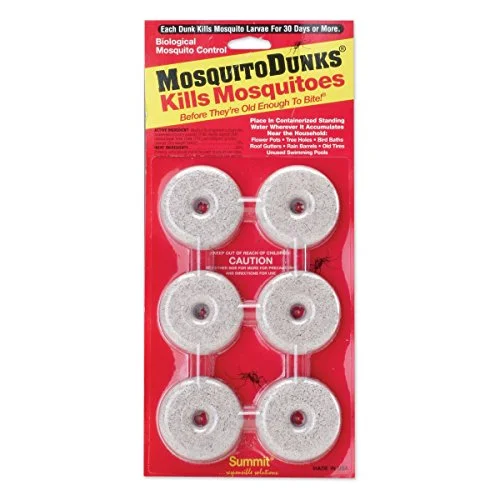
1. Summit Mosquito Dunks (6-Pack)
Summit Mosquito Dunks (6-Pack)
Editor's Choice- ✓ Kills mosquito larvae within hours — guaranteed 30-day control per dunk
- ✓ Completely safe for fish, shrimp, birds, pets, and humans
- ✓ Each dunk treats up to 100 square feet of surface water
- ✓ Can be broken into pieces for smaller patio ponds
- ✗ Only kills larvae — does not repel adult mosquitoes
- ✗ Dunks float and can look out of place in a clean pond setup
Mosquito Dunks are the standard for pond mosquito control, and for good reason. Each donut-shaped dunk contains BTI (Bacillus thuringiensis israelensis), a naturally occurring bacteria that is lethal to mosquito larvae and harmless to everything else — fish, shrimp, birds, pets, humans, beneficial insects.
Drop one dunk in your patio pond, and it floats on the surface releasing BTI for up to 30 days. Mosquito larvae eat the BTI, their gut lining is destroyed, and they die within hours. One dunk covers up to 100 square feet of water surface, which is far more than any patio pond.
For smaller containers — a 15-gallon tub pond, a half whiskey barrel — break a dunk into quarters. A quarter dunk is enough for anything under 25 gallons and lasts about two weeks. This makes a 6-pack last the entire March-through-October outdoor season here in the warm southern US.
The only aesthetic downside is that the dunks float. In a nicely planted patio pond, a tan donut bobbing on the surface is not the look you are going for. You can tuck it behind a plant or wedge it under a marginal pot to keep it out of sight.
Best for: Any patio pond where you want reliable, set-it-and-forget-it mosquito larvae control.
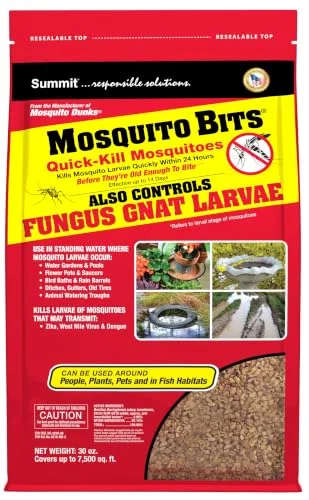
2. Summit Mosquito Bits (30 oz)
Summit Mosquito Bits (30 oz)
Best Quick Kill- ✓ Kills existing mosquito larvae within 24 hours — faster than dunks
- ✓ Granule format lets you dose precisely for any size container
- ✓ Same BTI active ingredient — completely fish and shrimp safe
- ✓ Excellent for initial knockdown before switching to dunks for maintenance
- ✗ Shorter lasting than dunks — needs re-application every 7–14 days
- ✗ Corn cob carrier can cloud water temporarily in small ponds
If you already have a mosquito larvae infestation — and you will know because you can see the wrigglers at the surface — Mosquito Bits kill them within 24 hours. Dunks take a day or two to ramp up. Bits work fast because they are granules that sink and release BTI throughout the water column immediately.
The typical approach is to use Bits for initial knockdown, then switch to Dunks for ongoing prevention. Sprinkle a tablespoon of Bits per 25 square feet of water surface, and the existing larvae population collapses within a day. Then drop in a Dunk for sustained protection.
Bits need re-application every 7 to 14 days because the granules release their BTI quickly and do not have the slow-release formula of the Dunks. The corn cob carrier can also cloud water in small ponds for a day or two after application, which is cosmetic only and does not harm fish.
For guppy ponds specifically: guppies will eat the mosquito larvae before the Bits kill them, and they will also peck at the corn cob granules (which is harmless). Between hungry guppies and BTI granules, larvae do not stand a chance.
Best for: Quick knockdown of existing mosquito larvae before transitioning to Dunks for maintenance.
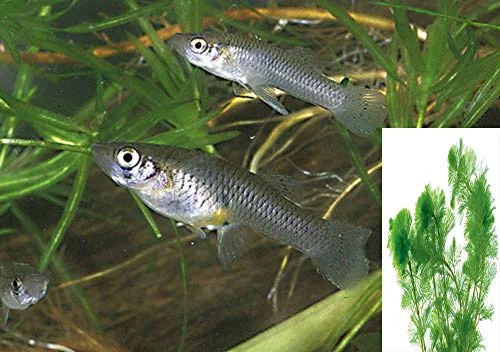
3. 20 Live Mosquito Fish (Koi Pond) with Hornwort Plant
20 Live Mosquito Fish (Koi Pond) with Hornwort Plant
Best Biological Control- ✓ 20 live mosquitofish eat hundreds of larvae per day between them
- ✓ Bundled hornwort bunch adds oxygenation and cover on arrival
- ✓ Extremely hardy — tolerate poor water quality and wide temperature swings
- ✓ Self-sustaining colony that breeds in the pond all season
- ✗ Aggressive fin-nippers — do not mix with guppies, endlers, or shrimp
- ✗ Cannot overwinter outdoors in ponds that freeze solid
Gambusia — the common mosquitofish — is the original biological mosquito control. A single mosquitofish can eat several hundred larvae per day, and a group of 20 in a patio pond will keep the surface virtually larvae-free without any chemical treatment. This listing ships 20 live fish along with a bunch of hornwort, a fast-growing oxygenator that gives the fish cover on arrival.
Mosquitofish are absurdly hardy. They tolerate water temperatures from roughly 40°F to over 95°F, survive in poor water quality that would kill most tropical fish, and breed prolifically in outdoor ponds from late spring through fall. A starting group of 20 will grow well past 100 by the end of the season.
Here in the warm southern US (USDA Zones 7-9), mosquitofish can overwinter outdoors if the pond does not freeze solid and has at least 18 inches of depth. They go dormant in cold weather and resume activity when water hits 60°F in spring. If your patio pond is a shallow container that drops below 40°F, bring them inside for winter or expect losses.
The big caveat: mosquitofish are aggressive. They are fin nippers and will harass guppies, endlers, and other small fish, and they will eat and harass shrimp. If your patio pond already has guppies or a shrimp colony, skip the mosquitofish — guppies eat mosquito larvae too, just not as voraciously. Mosquitofish are best as the sole species in a dedicated mosquito control setup. Our full mosquito fish guide covers stocking rates, legal considerations (Gambusia are restricted in some states), and compatible tankmates in detail.
Best for: Ponds without other small fish or shrimp where you want permanent, self-sustaining biological mosquito control.
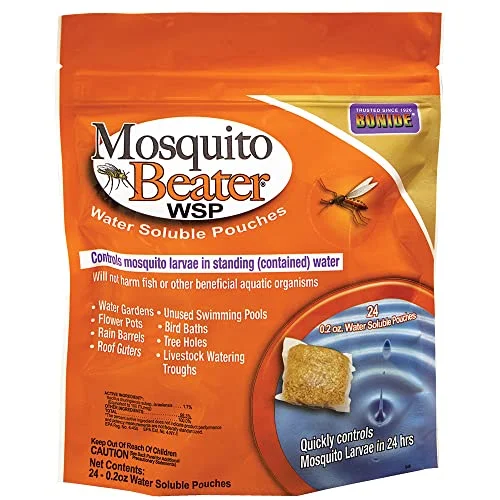
4. Bonide Mosquito Beater Water Soluble Pouches
Bonide Mosquito Beater Water Soluble Pouches
Best for Small Containers- ✓ Water-soluble pouches dissolve completely — no floating debris
- ✓ 24 pouches per pack provides a full season of coverage
- ✓ Sized right for small patio ponds, birdbaths, and container water gardens
- ✓ No mess — just toss a pouch in and forget it for two weeks
- ✗ Shorter duration than Mosquito Dunks (14 vs. 30 days)
- ✗ Less cost-effective per day of treatment than dunks
The Bonide pouches solve the aesthetic problem of floating dunks. Each pouch is a water-soluble packet that dissolves completely when dropped in water, releasing BTI without leaving any visible debris. For a clean-looking patio pond with lilies and polished stones, these are the tidy option.
Each pouch treats up to 50 square feet of water surface and lasts about 14 days. A 24-pack covers a typical patio pond for the entire outdoor season with room to spare. Just toss a pouch in every two weeks and you are covered.
The tradeoff versus Dunks is cost efficiency. Dunks last twice as long (30 days vs. 14 days) and cost less per day of treatment. If you are covering a large pond or multiple containers, Dunks save money. If you have one small patio pond and care about appearance, the Bonide pouches are worth the premium.
Like all BTI products, these are fish and shrimp safe. They do not affect water chemistry, do not harm plants, and leave no residue. The pouches work in bird baths, rain barrels, and any standing water — not just fish ponds.
Best for: Small, decorative patio ponds and water features where you do not want visible floats or debris.
Complementary Gear for Complete Mosquito Control
These four products will not kill a single larva on their own, but they make your pond a worse breeding target and round out a complete setup alongside the BTI and fish options above.
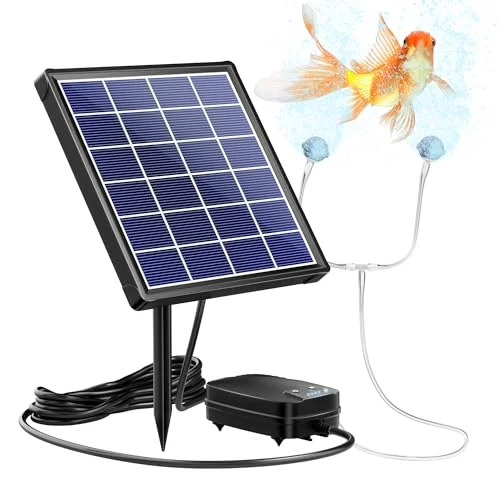
5. NFESOLAR 3W Solar Pond Aerator
NFESOLAR 3W Solar Pond Aerator
Best No-Power Aerator- ✓ Constant surface bubbling disrupts the still water mosquitoes need to lay eggs
- ✓ No outlet needed — runs on solar with a battery reserve for overcast days and nighttime
- ✓ Doubles as pond aeration and circulation, benefiting fish and plants
- ✗ 3W panel struggles on overcast days and charges slowly
- ✗ Bubbling alone will not kill existing larvae — pair with BTI or fish
A solar aerator keeps the surface bubbling around the clock without an outlet nearby — exactly the kind of disruption mosquitoes avoid when picking where to lay eggs. The 1800mAh battery bridges overcast days and runs the pump through the night, and three output modes let you dial it back for a small patio pond or open it up for more aggressive circulation.
This is not a larvicide. Pair it with a Mosquito Dunk or your pond fish for actual kill power — the aerator’s job is making the water less inviting in the first place.
Best for: Ponds with no nearby outlet that still want constant surface disruption.
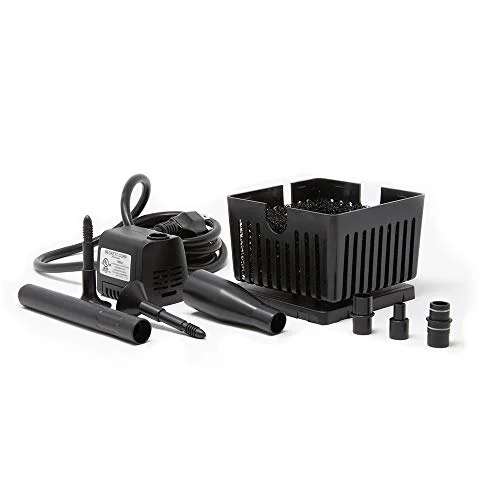
6. Beckett CGFK60 Container Fountain Pump Kit
Beckett CGFK60 Container Fountain Pump Kit
Best Plug-In Circulation- ✓ 120 GPH keeps the surface moving — mosquitoes need still water to lay eggs
- ✓ Compact kit built for barrel and container ponds, not oversized for a patio setup
- ✓ Runs continuously for pennies a month on a standard outlet
- ✗ Needs a nearby GFCI outlet — not an option for ponds without power
- ✗ Only moves water — does not kill any larvae already present
If you have power nearby, a small plug-in pump like this Beckett kit moves 120 GPH for pennies a month and keeps a container or barrel pond in constant motion. It is sized for patio ponds specifically — not an oversized pump built for a koi pond waterfall.
Like the solar aerator, this is a prevention tool, not a kill tool. Running water discourages egg-laying but does nothing for larvae already present, so treat it as a supplement to BTI or fish, not a replacement.
Best for: Container and barrel ponds with an outlet nearby that want continuous circulation.
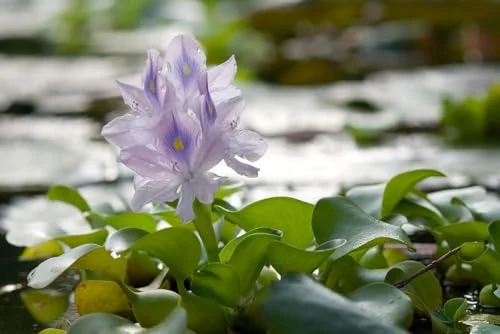
7. Water Hyacinth (Live Floating Plants, 3-Pack)
Water Hyacinth (Live Floating Plants, 3-Pack)
Best Surface Shade- ✓ Dense floating roots and leaves shade the surface, discouraging egg-laying
- ✓ Root mass gives fry and shrimp cover while also polishing water quality
- ✓ Grows fast enough to cover a patio pond surface within weeks
- ✗ Spreads aggressively and needs regular thinning to avoid choking the pond
- ✗ Dies back below 50°F — treat as a seasonal, not permanent, addition
Water hyacinth’s dense floating roots and leaves shade the surface, which both discourages egg-laying and gives fry and shrimp somewhere to hide from predators. It is one of the fastest-growing floating plants available and will cover a patio pond’s surface within a few weeks in full sun.
Watch the flip side: a fully shaded, densely rooted surface can also give larvae somewhere to hide from fish that would otherwise eat them. Thin the plant back regularly, and don’t rely on it as your only mosquito control — combine it with a BTI product or fish for actual larvae kill.
Best for: Adding surface shade and natural filtration alongside an active larvae-control method.
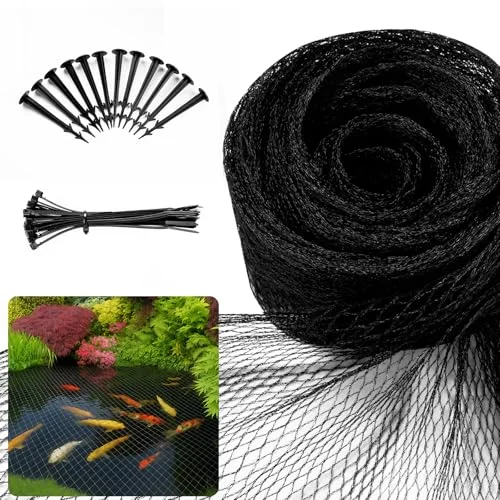
8. Pond Netting Cover, 7 x 10 ft (3/8-inch Mesh)
Pond Netting Cover, 7 x 10 ft (3/8-inch Mesh)
Best Debris Control- ✓ Keeps leaves and organic debris out, reducing the decaying matter that fouls water and draws egg-laying mosquitoes
- ✓ 3/8-inch mesh doubles as basic predator protection for a patio pond
- ✓ Stakes included for a secure, taut fit over small ponds
- ✗ Fine mesh clogs with debris faster than wider-gauge nets and needs regular clearing
- ✗ Does not address mosquitoes already breeding in the water — pair with BTI or fish
Falling leaves and organic debris that sink and decompose in a pond create exactly the kind of nutrient-rich, undisturbed water mosquitoes prefer for egg-laying — on top of fouling water quality for fish and shrimp. A taut mesh cover over a patio pond keeps that debris out entirely, and the 3/8-inch mesh doubles as basic protection against birds and raccoons.
This is the most indirect option on this list for mosquito control specifically, but it is the cheapest way to reduce the organic buildup that compounds every other problem in an untreated pond.
Best for: Patio ponds under trees or in windy spots where leaf litter is a constant issue.
Frequently Asked Questions
Will mosquito dunks harm my guppies?
No. BTI (the active ingredient in Mosquito Dunks) is specifically toxic to mosquito larvae and a few closely related fly species. It has zero effect on fish, shrimp, snails, or aquatic plants. You can use Mosquito Dunks in any pond with live fish.
How many mosquito dunks do I need for a patio pond?
One dunk covers 100 square feet of water surface, which is far more than any typical patio pond. For container ponds under 25 gallons, break a dunk into quarters — a quarter dunk lasts about two weeks. A 6-pack can cover the entire outdoor season from March through October.
Are mosquito fish shrimp safe?
No. Gambusia (mosquitofish) will eat juvenile shrimp and harass adults, so keep them out of any pond or tank that also holds a shrimp colony. BTI products, aerators, fountain pumps, and floating plants are all shrimp safe if you need mosquito control in a shrimp setup.
Can guppies survive in an outdoor pond year-round in USDA Zones 7-9?
Not safely. Guppies need water above 65°F and start dying below 55°F. In the South (USDA Zones 7-9), outdoor water drops below 65°F by mid-October and does not reliably stay above it until April. You need to bring guppies indoors for winter or accept that they are seasonal outdoor fish. Use BTI dunks for any standing water left outside during cold months.
Do mosquito dunks affect water quality?
No. BTI does not change pH, hardness, ammonia, or any other water parameter. The dunk itself is a pressed disc of a natural carrier material — it is inert. Some keepers notice a slight film when a dunk first goes in, but it dissipates within hours and is harmless.
Do I need an aerator or pump if I already use dunks or fish?
Not strictly, but it helps. BTI and fish handle the larvae that are already there; an aerator, fountain pump, or floating plants make the pond a less attractive place for adult mosquitoes to lay eggs in the first place. In a heavy-pressure yard, layering prevention on top of active control closes gaps that any single method leaves open.
Are there natural mosquito control methods besides fish and BTI?
Dragonfly larvae are voracious mosquito larvae predators, but you cannot buy them on demand — they colonize naturally. Water circulation from a pump or aerator disrupts the still surface mosquitoes need for egg-laying, but does not kill existing larvae. Floating plants like water hyacinth shade the surface and reduce egg-laying areas. None of these are as reliable as fish or BTI alone, but they all help.
Can I use mosquito dunks in my indoor aquarium?
Technically yes — BTI is fish safe. But there is no reason to. Indoor aquariums do not attract egg-laying mosquitoes, and if you have fungus gnat issues with houseplants, treat the soil directly rather than your aquarium water.
Conclusion
Our Top Pick
For patio ponds in the warm southern US and similar USDA Zones 7-9 areas, the winning combination is Summit Mosquito Dunks for long-term prevention plus your pond fish (guppies or mosquitofish) for biological control. Drop a quarter-dunk in your patio pond every two weeks from March through October, and mosquitoes will not be a problem.
If you find an existing infestation, hit it first with Summit Mosquito Bits for a 24-hour knockdown, then switch to Dunks for maintenance. Layer in a solar aerator or fountain pump and some water hyacinth if you want to make the pond an unattractive target in the first place — your fish and BTI will handle whatever slips through.