Fry need their own space. Leaving newborns in the main tank means most of them get eaten. Keeping them in a breeder box for more than a few days stunts their growth and fouls the water. The solution is a dedicated grow-out tank — a separate tank where fry live from birth until they are large enough to sell, give away, or add back to the main tank.
The best grow-out tank is not fancy. It is affordable (because you will probably need several), easy to maintain, and big enough to give fry room to grow without overcrowding. Most successful breeders use bare-bottom tanks with a sponge filter and nothing else — no substrate, no decorations, no elaborate setups.
Here are the five best options for grow-out tanks in 2026, plus the sponge filter, heater, and air pump that turn any of them into a working setup.
| Aqueon Standard Glass 10 Gallon Tank Best Overall | Aqueon 10 Gallon LED Starter Kit Best Starter Kit | Sterilite 28-Quart Storage Container Best Budget | Aqueon Standard Glass 20 Gallon Long Best for Large Batches | All Glass Aquarium 5.5 Gallon Tank Best Nano Grow-Out | |
|---|---|---|---|---|---|
| Rating | 9.2/10 | 8.8/10 | 8.5/10 | 8.8/10 | 8/10 |
| Price | Unavailable | Unavailable | $18.00as of Sep 27, 2026 | Unavailable | Unavailable |
| Brand | Aqueon | Aqueon | Sterilite | Aqueon | All Glass Aquarium |
| Size | 10 gallons (20x10x12 in) | 10 gallons | ~7 gallons (28 quart) | 20 gallons long (30x12x12 in) | 5.5 gallons (16x8x10 in) |
| Material | Glass | Glass | Clear plastic | Glass | Glass |
| Lid Included | No | Yes (with LED light) | Yes (snap lid) | No | No |
| Type | Bare tank | — | Plastic tub | Bare tank | Bare tank |
| Filter | — | QuietFlow 10 included | — | — | — |
| Check Price → | Check Price → | Check Price → | Check Price → | Check Price → |
Prices change daily — tap Check Price for the current Amazon price. Numbers shown were verified on the "as of" date.
Quick Picks
- Best Overall: Aqueon Standard 10 Gallon — the industry standard grow-out tank, cheap and durable
- Best Starter Kit: Aqueon 10 Gallon LED Kit — everything in one box for first-time breeders
- Best Budget: Sterilite 28-Qt Container — under $10, perfect for breeding racks
- Best for Large Batches: Aqueon 20 Gallon Long — more space for big batches of fast-growing fry
- Best Nano: All Glass Aquarium 5.5 Gallon — compact option for small batches in tight spaces
Detailed Reviews
1. Aqueon Standard Glass 10 Gallon Tank
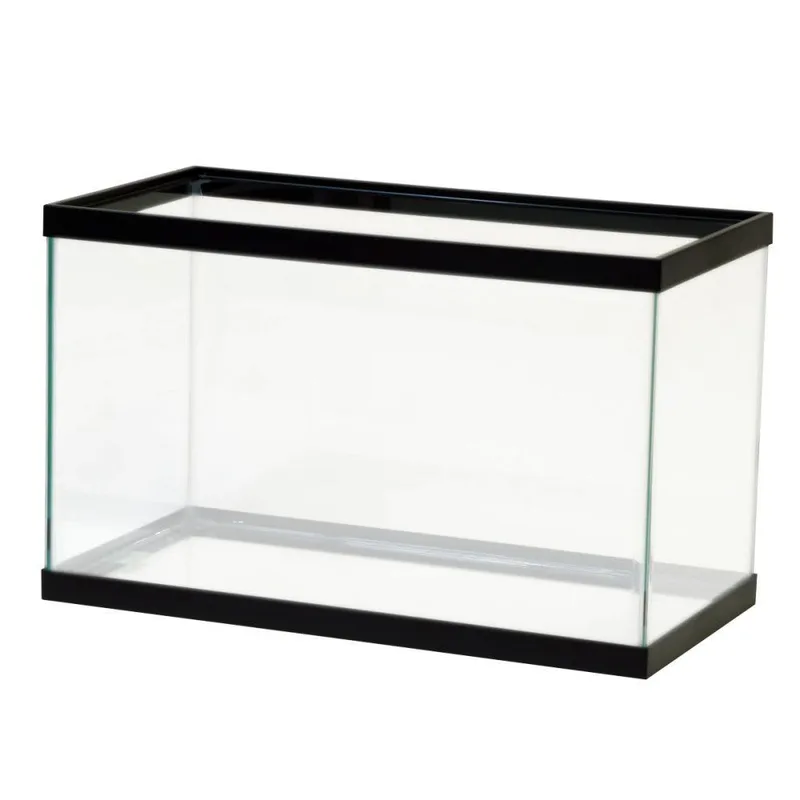
Aqueon Standard Glass 10 Gallon Tank
Best Overall- ✓ The classic grow-out tank — affordable, durable, and available everywhere
- ✓ Glass construction does not scratch or cloud over time
- ✓ Perfect size for a single batch of 20–40 fry
- ✓ Cheap enough to buy multiples for a grow-out rack
- ✗ No lid, light, or filter included — all sold separately
- ✗ Heavy compared to plastic alternatives
- ✗ 10 gallons may be too small for fast-growing species like mollies
The Aqueon 10-gallon glass tank is what 90% of livebearer breeders use for grow-out. It is cheap ($15.99-$21.99 at most pet stores and online), durable (glass does not scratch or yellow), and the perfect size for a single batch of 20–40 guppy or swordtail fry.
Run it bare-bottom with a single sponge filter. No substrate means you can easily see uneaten food and waste, siphon it out in seconds, and keep water quality high without complex maintenance. A bare-bottom tank is also easier to catch fish in when it is time to sell or rehome them — no decorations to chase them behind.
The standard 10-gallon dimensions (20x10x12 inches) fit neatly on a basic shelf or aquarium rack. You can stack two or three levels of 10-gallon tanks on a standard wire shelving unit, creating a simple breeding rack for under $200 in total equipment.
No lid is included, which means you need to buy one separately or use a piece of egg crate/light diffuser panel to prevent jumping. Guppy fry rarely jump, but older juveniles can surprise you.
Best for: Most livebearer breeders — the default grow-out tank for good reason.
2. Aqueon 10 Gallon LED Starter Kit
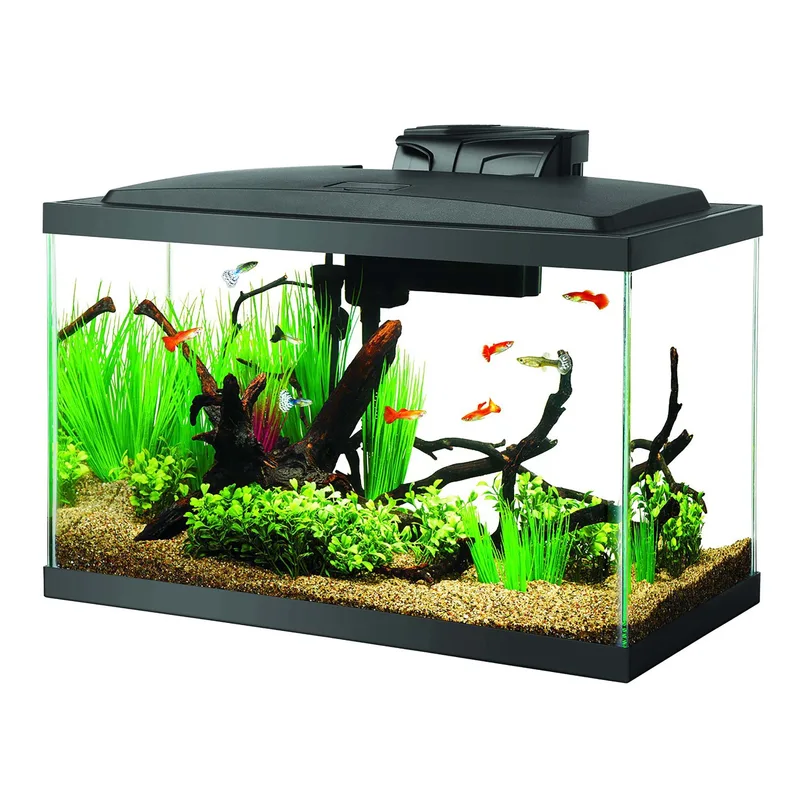
Aqueon 10 Gallon LED Starter Kit
Best Starter Kit- ✓ Everything you need in one box — tank, lid, light, filter, heater
- ✓ LED lid keeps fry from jumping out
- ✓ QuietFlow filter is adequate for a fry grow-out
- ✓ Good starting point for first-time breeders
- ✗ Included filter is NOT shrimp-safe without intake modification
- ✗ Heater quality is basic — may need upgrading for precise temps
- ✗ Slightly more expensive than building a setup from components
If you want a complete grow-out setup without sourcing individual components, the Aqueon starter kit gives you the tank, a lid with built-in LED light, a QuietFlow 10 filter, a heater, and basic supplies like a thermometer and water conditioner sample.
For a first-time breeder, this simplicity is valuable. You unbox, fill, cycle, and add fry. No figuring out which sponge filter to buy, no sourcing a separate heater, no hunting for a lid that fits.
The QuietFlow filter included is a hang-on-back style, which means the intake can suck up very small fry. You will need to cover the intake with a sponge prefilter (a $3 add-on) to make it fry-safe. This is a minor modification but an essential one.
The LED light is adequate for viewing fry and growing basic floating plants (which provide cover and improve water quality). It is not strong enough for demanding planted tanks, but grow-out tanks do not need impressive lighting.
For experienced breeders who already have components, this kit offers no advantage over buying a bare tank and adding your own sponge filter. But for beginners setting up their first dedicated fry tank, it saves time and eliminates guesswork.
Best for: First-time breeders who want a complete grow-out setup in one purchase.
3. Sterilite 28-Quart Storage Container
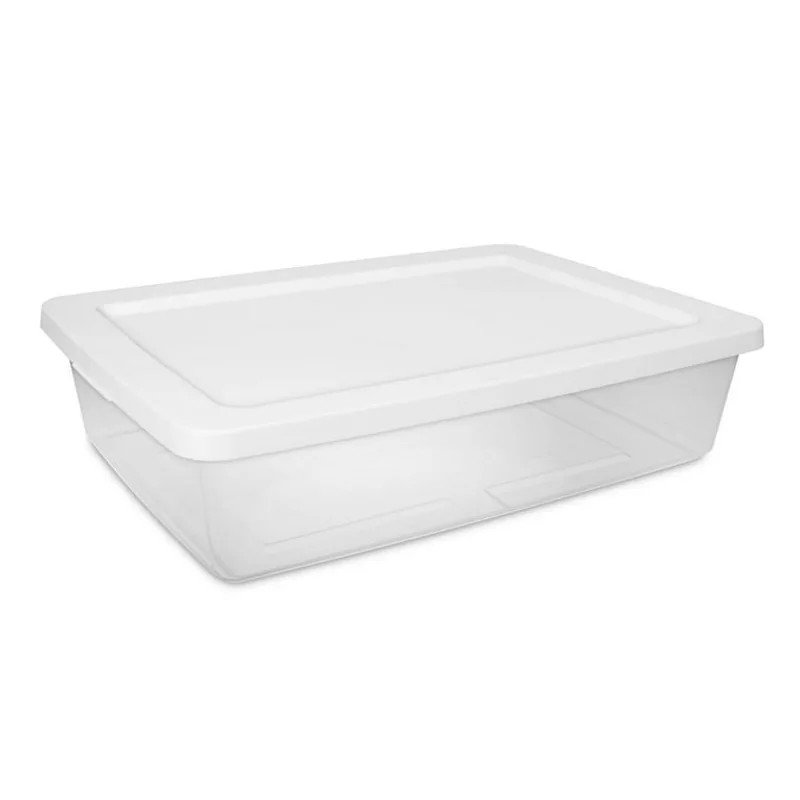
Sterilite 28-Quart Storage Container
Best Budget- ✓ Under $10 — the cheapest possible grow-out container
- ✓ Lightweight and stackable for breeding rack setups
- ✓ Clear plastic lets you see fry without lifting the lid
- ✓ Easy to drill for overflow or airline pass-through
- ✗ Plastic scratches easily and may cloud over time
- ✗ No filtration — requires a sponge filter addition
- ✗ Does not look like an aquarium (purely functional)
- ✗ May leach chemicals — use food-grade or let off-gas for a week
Serious guppy breeders with fish rooms full of tanks do not buy glass aquariums for every grow-out — they use plastic storage tubs. A Sterilite 28-quart container costs under $10, holds roughly 7 gallons of water, and can be stacked on a wire shelf rack five or six high.
This is the most cost-effective way to raise large numbers of fry across multiple batches. Buy ten of them for under $100, add a sponge filter to each, run airline from a single large air pump, and you have a breeding rack that would cost $300+ with glass tanks.
The clear plastic lets you see fry without lifting the lid (useful for checking growth progress and spotting dead fish). The snap-on lid prevents jumping and reduces evaporation. You can drill holes for airline pass-through or overflow tubing if you run a drip system.
The downsides are aesthetics and longevity. These are storage containers, not aquariums. They look functional, not attractive. Over time, the plastic scratches and clouds from algae and mineral deposits. But at $6.99-$9.99 each, replacement is trivial.
Food safety note: standard Sterilite containers are made from polypropylene (PP) or polyethylene (PE), which are generally considered safe for aquatic use. However, let new containers off-gas for a few days before filling with fish to be safe.
Best for: Breeders running multiple grow-out batches who need maximum capacity at minimum cost.
4. Aqueon Standard Glass 20 Gallon Long
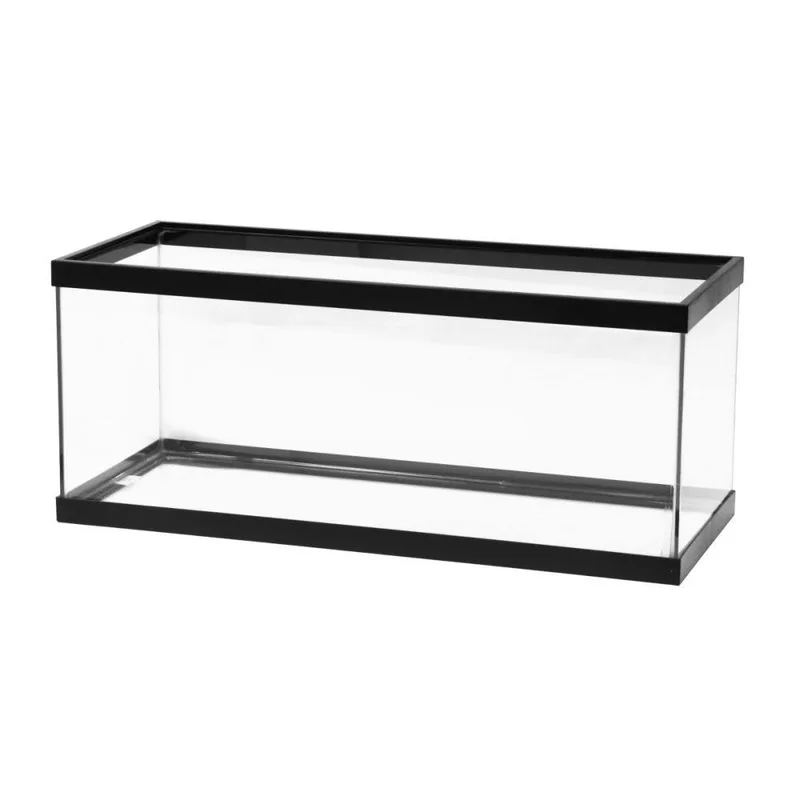
Aqueon Standard Glass 20 Gallon Long
Best for Large Batches- ✓ Long footprint provides more swimming space for growing fry
- ✓ 20 gallons handles batches of 40–80+ fry comfortably
- ✓ Shallow depth (12 inches) makes catching fish easy
- ✓ Standard size — lids, lights, and filters are readily available
- ✗ Takes up more shelf space than a 10 gallon
- ✗ Heavier when full — requires a sturdy stand or rack
- ✗ Overkill for small batches of 10–20 fry
When you are raising larger batches (40–80+ fry) or growing out species that need more swimming space (swordtails, mollies), the 20-gallon long is the step up from the standard 10. The “long” dimension (30x12x12 inches) provides more horizontal swimming space with the same shallow depth, which makes maintenance and fish catching easier.
The 20 long is also the ideal tank for growing out multiple species in divided sections. A DIY tank divider (egg crate or plastic canvas) splits a 20 long into two 10-gallon sections, each holding a different batch or strain.
For guppy breeders specifically, the 20 long is where you grow out males and females separately once they reach sexual maturity (around 4–6 weeks). Males go in one 20 long, females in another, and you evaluate them for strain quality as their colors develop over the following weeks.
The weight is the main consideration. A filled 20-gallon long weighs about 225 pounds. Your shelving or stand must support this — do not put it on a standard wire shelf rated for light storage.
Best for: Breeders raising large batches or needing divided sections for sorting juveniles by sex or quality.
5. All Glass Aquarium 5.5 Gallon Tank
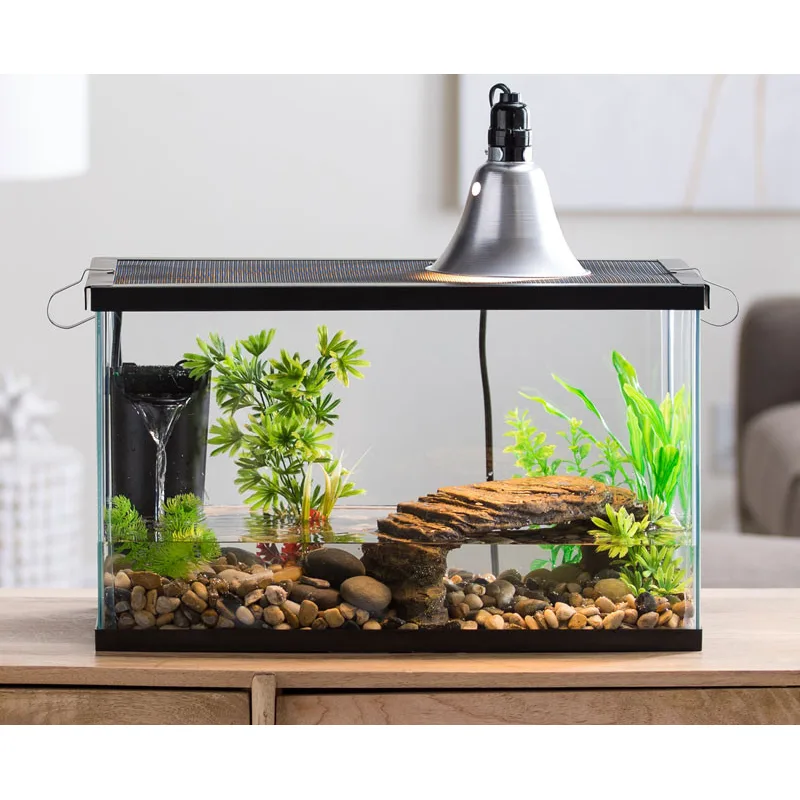
All Glass Aquarium 5.5 Gallon Tank
Best Nano Grow-Out- ✓ Compact enough for tight spaces and small breeding racks
- ✓ Good for very small batches (5–15 fry)
- ✓ Glass construction is durable and scratchproof
- ✓ Affordable and replaceable
- ✗ 5.5 gallons limits the number of fry you can raise safely
- ✗ Water quality fluctuates faster in smaller volumes
- ✗ Fry outgrow this size quickly — may need to upgrade within weeks
Sometimes you have a small batch of fry — five or ten from a single drop — and a 10-gallon tank feels like overkill. The 5.5-gallon glass tank fills this niche: compact enough for tight spaces, adequate for small batches, and cheap enough to keep several on hand.
The 5.5-gallon is also useful as a temporary holding tank. Fish coming back from a show, new purchases in quarantine, or individual fish being conditioned for breeding — a 5.5 handles these short-term situations without committing a full 10-gallon tank.
The downside is water stability. Smaller volumes are less forgiving of mistakes — a missed feeding, an accidental overdose of fertilizer, or a temperature swing hits harder in 5 gallons than in 10 or 20. For very young fry (first two weeks of life), the instability risk is real. Move fry to a larger tank as soon as they are big enough to benefit from the space.
Best for: Small fry batches, quarantine, and conditioning individual fish.
Buying Guide: Setting Up a Grow-Out Tank
Bare Bottom vs. Substrate
Run grow-out tanks bare-bottom. Substrate hides uneaten food, makes waste harder to spot, and complicates cleaning. In a bare-bottom tank, you can see everything on the bottom and siphon waste in seconds. Fry growth rates are measurably better in clean bare-bottom tanks versus substrate tanks because water quality stays higher with less effort.
Filtration for Fry Tanks
Sponge filters are the only appropriate filter for grow-out tanks. They are shrimp-safe (and fry-safe), provide both mechanical and biological filtration, and cost under $5 each. Run one sponge filter per tank, driven by a centralized air pump with airline splitting to each tank.
Never use a hang-on-back or canister filter in a fry tank without a sponge prefilter over the intake. Unprotected intakes will suck up and kill fry.
Heating
Livebearer fry grow fastest at 78–80°F. A small preset heater (25W for 5–10 gallons, 50W for 20 gallons) maintains stable temperature. Adjustable heaters are better for fine-tuning, but preset heaters are cheaper and adequate for grow-out.
In fish rooms where ambient temperature stays above 76°F, heaters may be unnecessary. Many breeders heat the room rather than individual tanks.
Water Changes
Frequent water changes drive fry growth. In grow-out tanks, aim for 25–50% water changes every 2–3 days. Fresh water stimulates appetite and growth. Many breeders credit aggressive water change schedules as the number one factor in producing large, healthy juveniles quickly.
Feeding Schedule
Feed fry 3–4 times per day with small portions. Crushed flake, powdered fry food, baby brine shrimp, and microworms are all appropriate. Feed only what fry can consume in 2–3 minutes, then siphon any leftovers at the next water change.
Beyond the Tank: Grow-Out Essentials
A bare tank is just glass and plastic until it runs. These three components — filtration, heat, and air — are what a grow-out tank needs before the first fry goes in, and all three are shrimp-safe air-driven equipment with no chemicals or exposed impellers to worry about.
Hikari Bacto-Surge Foam Filter, Small
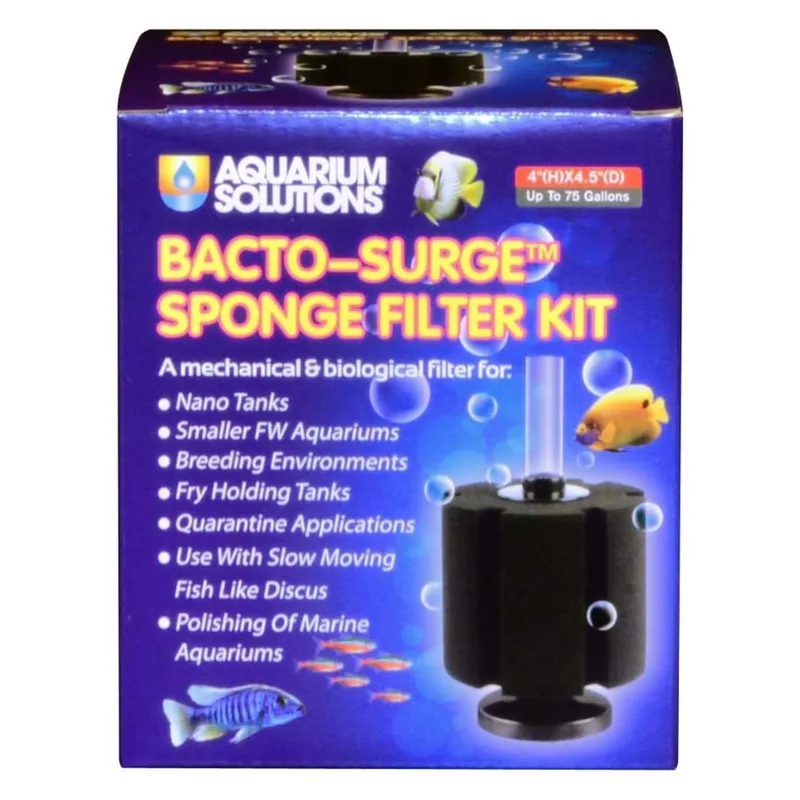
Hikari Bacto-Surge Foam Filter, Small
Best Sponge Filter- ✓ Dense foam provides strong biological surface area for a small footprint
- ✓ Gentle air-driven flow is safe for fry and shrimp
- ✓ No moving intake parts to injure fry
- ✗ Requires a separate air pump and airline
- ✗ Foam needs regular squeezing out in tank water to stay unclogged
A dense foam sponge filter is the standard fry-tank filter for good reason: it runs on gentle air-driven flow with no intake strong enough to pull in a fry, and it is safe to run alongside a shrimp colony with zero risk from copper or other chemical treatments. Pair one with a small air pump per tank.
Aqueon Pro Adjustable Heater 50W
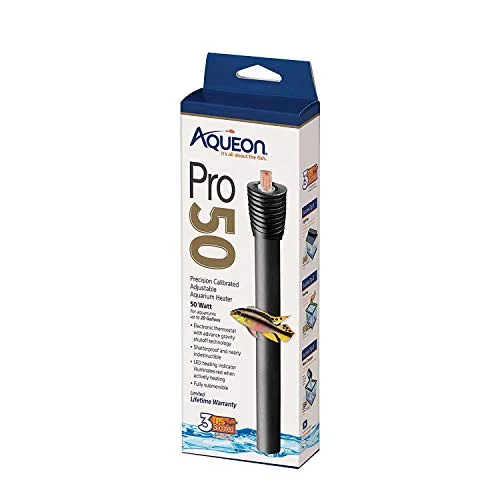
Aqueon Pro Adjustable Heater 50W
Best Heater- ✓ Adjustable dial holds the 78-80°F range fry need for fastest growth
- ✓ Fully submersible with an indicator light
- ✓ Sized right for 10 to 20 gallon grow-out tanks
- ✗ Glass heater body — handle with care around active fry tanks
- ✗ No auto shut-off if the tank runs dry
Livebearer fry grow fastest between 78-80°F. A 50W adjustable heater holds that range in a 10 to 20 gallon grow-out tank without overshooting, and the fully submersible design fits the shallow, bare-bottom setups breeders run.
Pawfly Nano Silent Air Pump
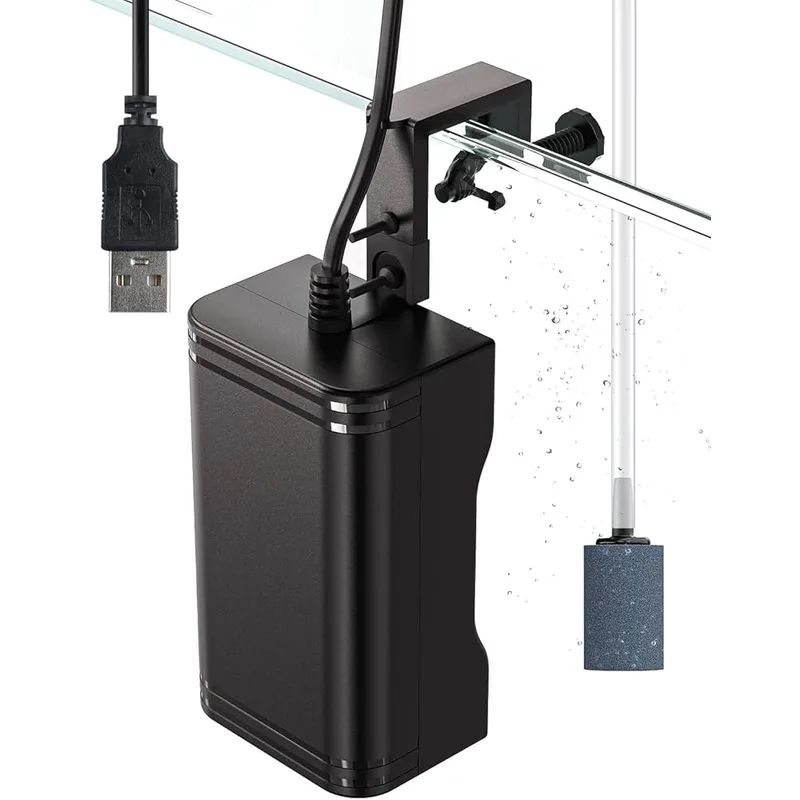
Pawfly Nano Silent Air Pump
Best Air Pump- ✓ Quiet enough for a bedroom or living room breeding rack
- ✓ Right-sized output for a single sponge filter
- ✓ Compact enough to tuck behind a shelf of grow-out tanks
- ✗ Single outlet — needs a gang valve to run more than one sponge filter
- ✗ Not powerful enough to drive filters on tanks over 15 gallons
One quiet air pump per tank (or per bank of tanks with a gang valve) is what actually drives the sponge filter. This one is sized for a single 1-15 gallon grow-out tank and stays quiet enough for an indoor breeding rack in a living space.
Frequently Asked Questions
How long do fry need to stay in a grow-out tank?
Until they are large enough to not be eaten by adult fish — typically 4–8 weeks for guppies and 6–10 weeks for swordtails and mollies. The rule of thumb: when fry are too large to fit in an adult’s mouth, they are safe to move back.
How many fry can I keep in a 10-gallon grow-out tank?
For guppy fry: 30–50 with frequent water changes. For larger species (swordtails, mollies): 15–25. Overcrowding stunts growth and increases disease risk. If growth seems slow, reduce numbers by moving some to a second tank.
Do grow-out tanks need live plants?
Not required, but beneficial. Floating plants (water sprite, duckweed, guppy grass) provide cover that reduces stress, grow biofilm that fry graze on, and absorb nitrogen from the water. They do not require substrate — just float them on the surface.
Should I keep grow-out tanks bare or decorated?
Bare. Decorations create hiding spots that make catching fish difficult, trap waste, and serve no purpose in a functional grow-out setup. The only addition worth considering is floating plants for the reasons above.
When should I separate male and female fry?
For guppies: around 4–6 weeks of age, when you can first identify males by the developing gonopodium (pointed anal fin). Separating before females become sexually mature prevents uncontrolled breeding and lets you select the best males for your breeding program.
Conclusion
The Aqueon Standard 10 Gallon glass tank is the default grow-out tank for good reason — it is cheap, durable, widely available, and the right size for most livebearer batches. Buy a few, add sponge filters, and you have a functional grow-out system for under $50 per tank.
If you are scaling up, the Sterilite containers at under $10 each are the cost-effective choice for breeding racks. And when you have large batches or need to sort by sex, the 20 Gallon Long gives you the space and flexibility that smaller tanks cannot match.