Tank dividers are one of those tools that every serious breeder owns a pile of but nobody talks about. They are not glamorous. They are not expensive. But a well-placed divider turns a single tank into a multi-purpose breeding station — isolating aggressive males, separating strains, protecting fry from predation, or conditioning pairs before spawning.
The right divider depends entirely on what you are trying to accomplish. Solid panels block visual contact for aggressive species. Mesh dividers keep fry safe while sharing filtration. Grid systems create modular compartments for line breeding. Each has a use case, and most breeders end up owning all three types.
Quick Picks
- Best Overall: TQDXZA 8-Pack Grid — combinable perforated panels with suction cups that fit most standard tanks
- Best Modular: AHANDMAKER 12-Pack Grid — cable-tie panels together into any configuration
- Best Clear Panel: CVUTOVO Clear Divider — nearly invisible solid panel for visual separation
- Best Fry Mesh: Pssopp Incubator Mesh Box — fine mesh isolation box for protecting newborn fry
- Best Budget: POPETPOP Mesh 4-Pack — cheap black mesh dividers for nano tanks
| TQDXZA Aquarium Divider Panel (8-Pack Grid) Best Overall | AHANDMAKER 12 Pack Grid Divider Best Modular | CVUTOVO Clear Tank Divider Best Clear Panel | Pssopp Fish Incubator Mesh Box Best Fry Mesh | POPETPOP Fish Tank Divider Mesh (4-Pack) Best Budget | |
|---|---|---|---|---|---|
| Rating | 8.8/10 | 8.5/10 | 8.3/10 | 8/10 | 7.8/10 |
| Price | $19.57as of Sep 27, 2026 | $17.59as of Sep 27, 2026 | $13.99as of Sep 27, 2026 | $10.26as of Sep 27, 2026 | Unavailable |
| Material | Perforated PVC plastic | White plastic grid | Clear plastic | Fine mesh with plastic frame | Black mesh |
| Size | 11.8 x 11.8 inches each (8-pack, combinable) | Each panel approximately 11 x 11 inches | 11.8 x 7.87 inches | — | 30 x 15 cm each |
| Flow | 0.35-inch holes for water circulation | Open grid — full water circulation | Solid panel with minimal perforations | Full mesh — excellent water circulation | Full mesh — water passes freely |
| Install | Suction cups included, combine panels to size | — | Suction cup mounts | Suction cups to tank wall | — |
| Pack | — | 12 panels + 6 sucker clips + 20 cable ties | — | — | 4 pieces |
| Type | — | — | — | Hang-inside isolation box | — |
| Check Price → | Check Price → | Check Price → | Check Price → | Check Price → |
Prices change daily — tap Check Price for the current Amazon price. Numbers shown were verified on the "as of" date.
Detailed Reviews
1. TQDXZA Aquarium Divider Panel (8-Pack Grid)
TQDXZA Aquarium Divider Panel (8-Pack Grid)
Best Overall- ✓ Eight panels combine to fit most standard tanks up to 55 gallons
- ✓ Suction cups included — no separate hardware to buy
- ✓ Perforated design allows water flow between sections
- ✓ Sturdy enough to keep aggressive fish separated
- ✗ Perforations are large enough for newborn fry to pass through
- ✗ Suction cups can lose grip on silicone seams
- ✗ Combining panels to a custom size takes more setup than a single trimmable sheet
The TQDXZA set is the closest thing to a universal tank divider. Eight combinable panels are large enough to cover tanks up to 55 gallons, and the perforated PVC material is food-safe, rigid, and does not yellow over time like some acrylic panels. Suction cups are included, so there is no separate hardware to source.
The perforations are the key design feature. They allow water to flow between both sides of the divider, which means a single filter and heater can serve the entire tank. For breeders running multiple pairs in a single tank, this cuts equipment costs in half.
What it is best for: Separating adult breeding stock — conditioning male and female livebearers on opposite sides before pairing, keeping aggressive cichlid males from harassing females between spawns, or isolating a sick fish without setting up a hospital tank.
What it is NOT good for: Fry protection. The perforations are large enough for newborn guppy and endler fry to pass through. If you need to contain fry, pair this with mesh or use a dedicated fry box.
2. AHANDMAKER 12 Pack Grid Divider
AHANDMAKER 12 Pack Grid Divider
Best Modular- ✓ 12 panels let you create multiple compartments in one tank
- ✓ Cable ties connect panels into any custom configuration
- ✓ Full water flow through the grid means one filter serves all sections
- ✓ Easy to reconfigure as breeding projects change
- ✗ Open grid does not block visual contact between fish
- ✗ Fry swim through the grid freely — not fry-safe without added mesh
- ✗ White color is visually intrusive in display tanks
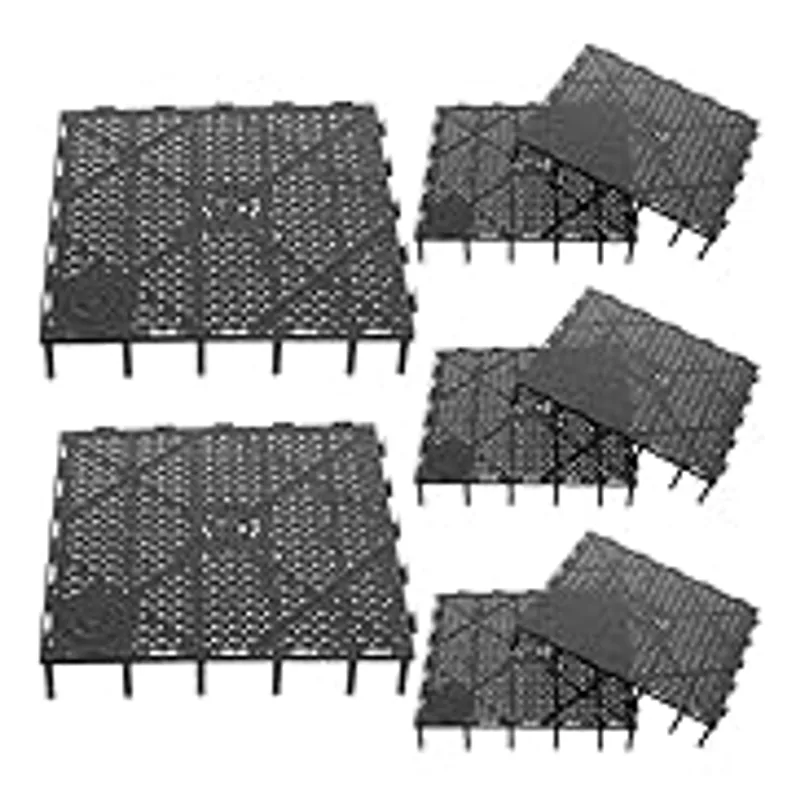
This is the modular approach. Twelve grid panels, six suction cup clips, and twenty cable ties let you build divider walls in whatever configuration your breeding project requires. Want to split a 20-long into three sections? Cable-tie four panels together vertically for each wall. Need a four-way split in a 40-breeder? You have enough panels.
The open grid design means water flows completely freely between sections. One sponge filter in the corner handles biological filtration for the entire divided tank. This is ideal for breeding rack setups where efficiency matters.
The limitation: These are visual barriers only in the loosest sense. Fish can see through the grid clearly, which means aggressive species will still display and stress each other. And fry pass through the grid openings without resistance — you need to attach fine mesh to the grid if fry containment is the goal.
Pro tip: Line the grid with craft mesh (available at any craft store) using cable ties. This creates a fine-mesh divider with the structural support of the rigid grid. Cost: about $3 total.
3. CVUTOVO Clear Tank Divider
CVUTOVO Clear Tank Divider
Best Clear Panel- ✓ High transparency makes the divider nearly invisible in the tank
- ✓ Solid panel blocks aggression and visual contact
- ✓ Suction mount installation takes under a minute
- ✓ Affordable enough to buy multiples for rack systems
- ✗ Fixed size — cannot be trimmed easily without cracking
- ✗ Small size only works for tanks under 10 gallons
- ✗ Solid panel restricts water flow — both sides need circulation
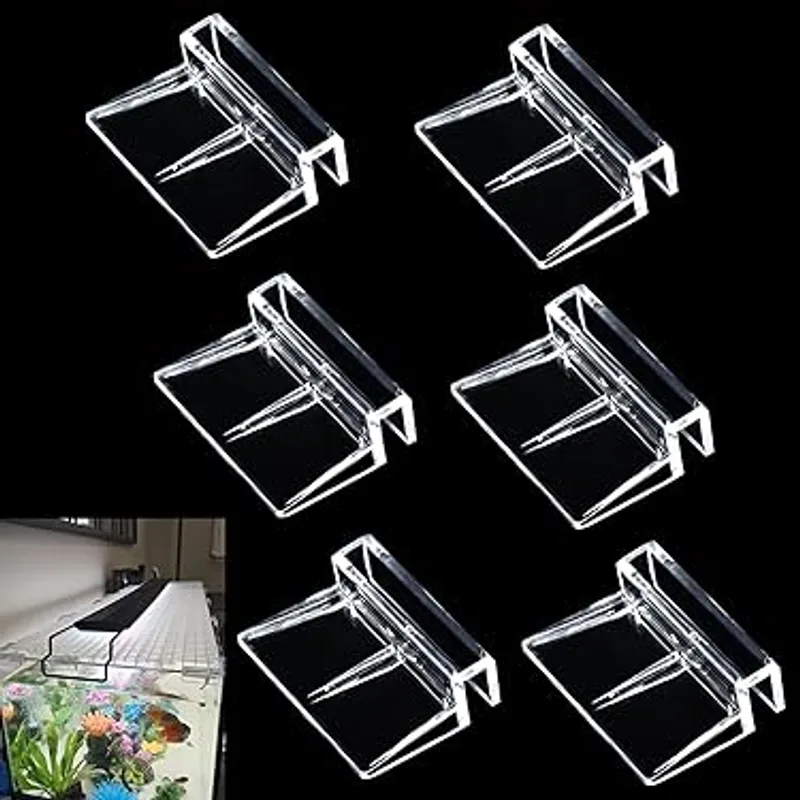
If you want a divider that disappears visually, the CVUTOVO clear panel is excellent. The transparency is high enough that the divider is barely noticeable in a well-lit tank. This matters for display tanks where you want to separate fish without ruining the aesthetic.
The solid construction blocks visual contact between sections, which is critical for bettas and other species that stress from seeing rivals. A perforated divider does not solve betta aggression — they will flare at each other through the holes all day. A solid clear panel at least limits the angle of visibility.
Size limitation: At 11.8 x 7.87 inches, this only works in tanks under 10 gallons. It is perfect for splitting a 5-gallon or 10-gallon into betta compartments, but it will not fit a 20-gallon without modification. For larger tanks, go with the TQDXZA.
4. Pssopp Fish Incubator Mesh Box
Pssopp Fish Incubator Mesh Box
Best Fry Mesh- ✓ Fine mesh keeps even newborn fry contained safely
- ✓ Full mesh construction means fry share the main tank's water quality
- ✓ Plastic frame is sturdy and holds shape
- ✓ Suction cups position the box at any height in the tank
- ✗ Limited space — fine for fry but too small for adult fish isolation
- ✗ Mesh can trap debris and needs regular cleaning
- ✗ Fry in a small box grow slower than fry with full tank access
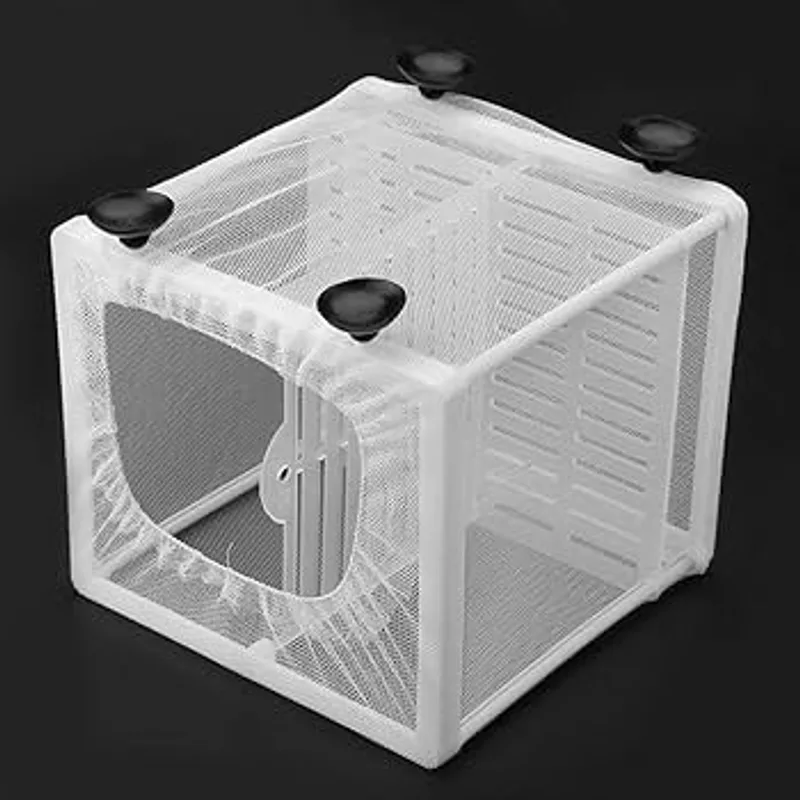
Mesh breeder boxes solve a specific problem: keeping newborn fry alive in a tank with adult fish that will eat them. The fine mesh keeps fry inside the box while allowing tank water to flow through freely. The fry share the main tank’s temperature, filtration, and water quality without being exposed to predation.
This is the standard approach for livebearer breeders who do not have separate fry tanks. When a female guppy or endler is about to drop fry, move her into the mesh box. After she gives birth, remove the mother and leave the fry in the box until they are large enough to survive in the main tank (usually 2-3 weeks).
The honest downside: Fry raised in breeder boxes grow slower than fry with full tank access. The restricted space, limited exercise, and competition for food in a small area all contribute. If you are raising show-quality fish, a dedicated fry tank produces better results. But for hobby breeders who just want to save some fry without extra tanks, mesh boxes work.
5. POPETPOP Fish Tank Divider Mesh (4-Pack)
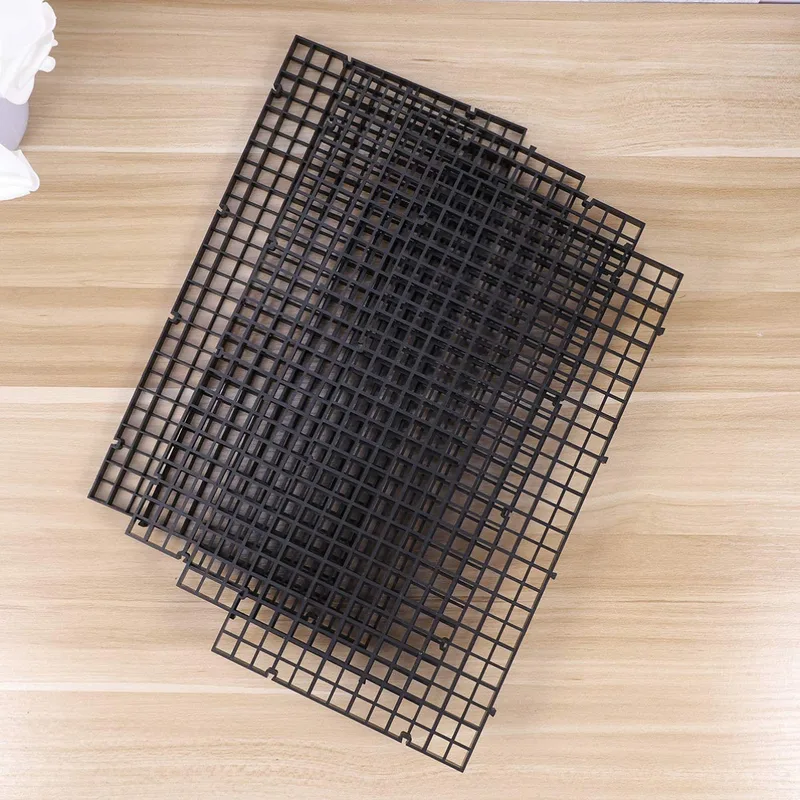
POPETPOP Fish Tank Divider Mesh (4-Pack)
Best Budget- ✓ Four-pack gives you dividers for multiple tanks or configurations
- ✓ Black mesh is less visually distracting than white grid panels
- ✓ Mesh allows full water circulation
- ✓ Cheapest option for basic breeding separation
- ✗ Small size — only works for nano tanks or as supplemental mesh
- ✗ No frame — can sag or shift without additional support
- ✗ Mesh openings may be too large for smallest newborn fry
At $7–$10 for four mesh panels, these are the cheapest divider option available. The black mesh is less visually distracting than white grid panels, and the four-pack gives you enough material for multiple nano tank setups.
These work best as supplemental mesh rather than standalone dividers. Attach them to a rigid grid panel for structural support, or use them to line a breeder box for finer fry containment. On their own, they are too floppy to stand up as a divider wall without sagging.
Best use case: Nano tank breeding setups under 10 gallons where you need basic separation between shrimp colonies or small fish strains. At this price, they are essentially disposable — replace them when they get clogged with algae rather than cleaning them.
Choosing the Right Divider for Your Breeding Project
| Breeding Goal | Best Divider Type | Recommendation |
|---|---|---|
| Separate male/female livebearers | Perforated grid panel | TQDXZA |
| Betta compartments | Solid clear panel | CVUTOVO |
| Protect newborn fry | Fine mesh box | Pssopp |
| Multi-strain line breeding | Modular grid | AHANDMAKER + mesh |
| Budget nano separation | Mesh panels | POPETPOP |
| Shrimp colony separation | Solid panel (shrimp climb mesh) | CVUTOVO or TQDXZA |
Tips for Using Tank Dividers Effectively
Water flow matters. If you use a solid divider, you need circulation on both sides. A single sponge filter will not adequately filter water that cannot reach it. Either use a perforated/mesh divider or add a small air stone to each section.
Secure the bottom. Fish will find gaps. Substrate can create uneven surfaces that leave space under the divider. Push the divider down into the substrate or use aquarium silicone to seal the bottom edge. One escaped male in a strain isolation setup can contaminate an entire breeding line.
Clean mesh regularly. Fine mesh traps debris, uneaten food, and algae. A clogged mesh divider restricts water flow and creates a dead zone on one side. Rinse mesh dividers in old tank water during water changes.
Match the divider to the species. Shrimp climb mesh — they will cross a mesh divider within hours. Use solid panels for shrimp colony separation. Bettas need visual barriers, not just physical ones. Fry need mesh fine enough that they cannot squeeze through — newborn guppy fry are incredibly small.
The right divider is a breeding tool, not a decoration. Pick the one that solves your specific problem, secure it properly, and check it regularly. A divider that has slipped or been undermined is worse than no divider at all — it gives you a false sense of security while your carefully separated fish mix freely on the other side.