Choosing the right tank for breeding guppies and endlers is less about finding a specialized “breeding tank” and more about understanding what these fish need to reproduce successfully at scale. Livebearers breed in anything — a jar, a bucket, a neglected 5-gallon. The question is what gives you the best combination of colony health, fry survival, and manageable maintenance.
The answer, for most breeders, is boring: standard glass tanks in 10 or 20-gallon sizes. They are cheap, stackable, widely available, and fit all standard equipment. The breeding magic happens in your management approach, not the tank itself.
Quick Picks
| Need | Our Pick |
|---|---|
| Best overall breeding tank | Aqueon 10-Gallon Standard |
| Best colony tank | Aqueon 20-Gallon Long |
| Best display breeder | Ultum Nature Systems 5N Rimless |
| Best fry separator | Marina Hang-On Breeding Box |
Tank Size Strategy
Single-Strain Breeding: 10 Gallons
A 10-gallon tank is the workhorse of guppy and endler breeding. It comfortably holds a breeding group of 2-3 males and 5-6 females with room for the first few batches of fry to grow. Once fry reach 2-3 weeks old, move them to a separate grow-out tank.
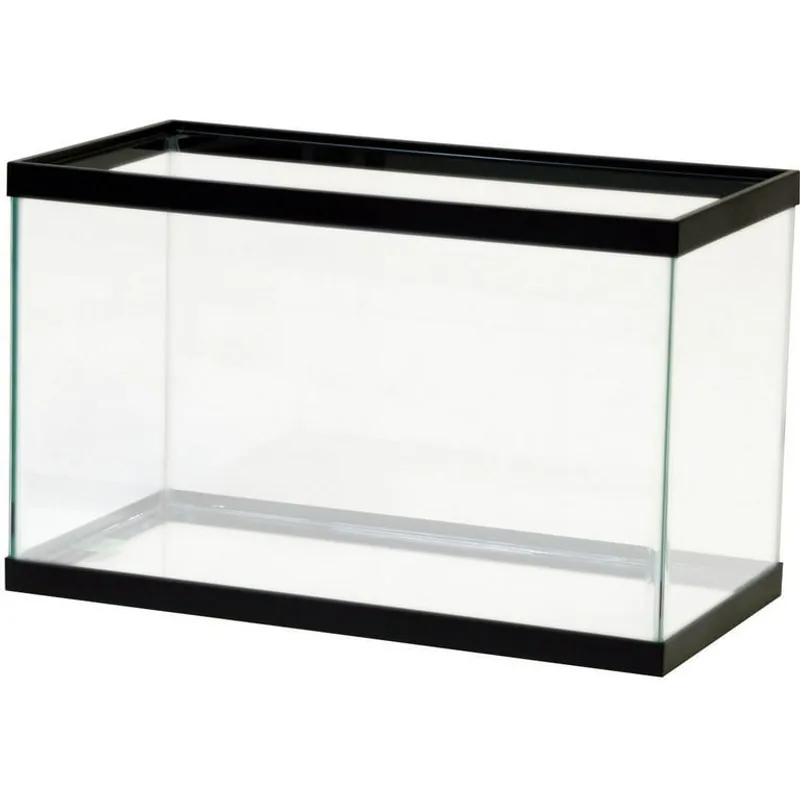
Aqueon Standard 10-Gallon Tank
Best Overall- ✓ Perfect size for a breeding trio or small colony
- ✓ Widely available and extremely affordable
- ✓ Fits standard equipment (heaters, filters, lids)
- ✓ Stackable for multi-tank breeding racks
- ✗ Basic appearance — no rimless aesthetic
- ✗ Limited footprint for larger colonies
Setup per 10-gallon breeder:
- Sponge filter (shrimp-safe, gentle flow)
- Heater at 78degF
- Floating plants (guppy grass, water sprite, java moss)
- No substrate or fine sand (easier to spot and collect fry)
- Basic LED light on 8-hour timer
Colony Breeding: 20-Gallon Long
If you want a self-sustaining colony where adults and fry coexist with minimal intervention, the 20-gallon long is ideal. The extended footprint (30 inches) provides enough space for adults to swim actively and fry to find cover among floating plants.
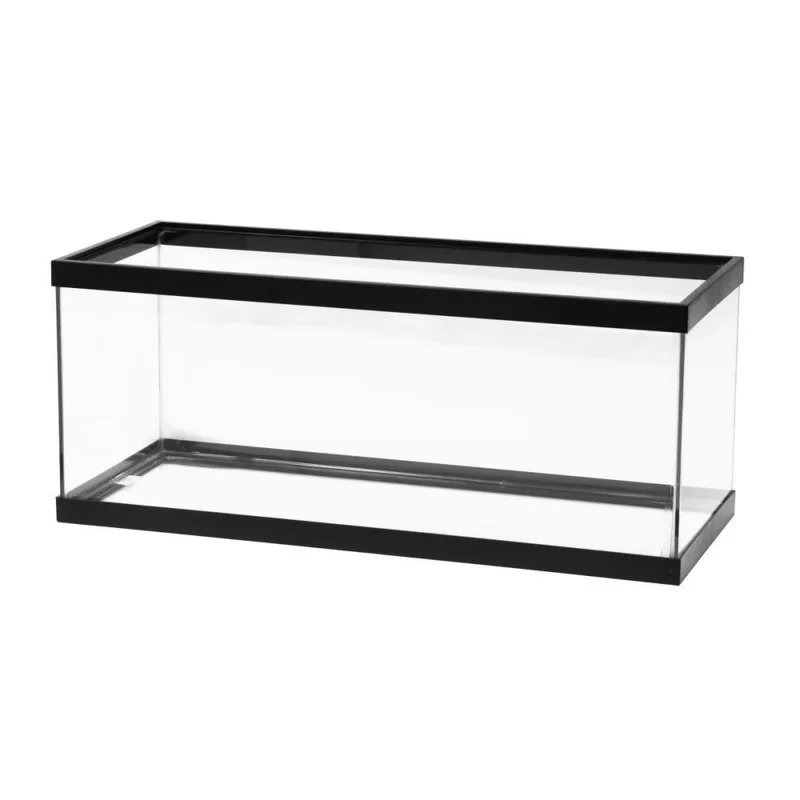
Aqueon Standard 20-Gallon Long Tank
Best Colony Tank- ✓ Excellent footprint for colony breeding (30 inches long)
- ✓ Accommodates 8-12 adult fish plus growing fry
- ✓ Stable water parameters due to larger volume
- ✓ Fits two side-by-side on a 36-inch rack shelf
- ✗ Heavier when filled (225+ lbs)
- ✗ Takes up more rack space than 10-gallons
In a heavily planted 20-gallon long, enough fry survive predation from adults to maintain and grow the colony without manual fry separation. This is the “set and observe” approach — feed, maintain water quality, and let the colony manage itself.
Display Breeding: 3-Gallon Rimless
For hobbyists who want to watch the breeding process in a beautiful setup — a single trio in a rimless nano tank makes a stunning desk display.
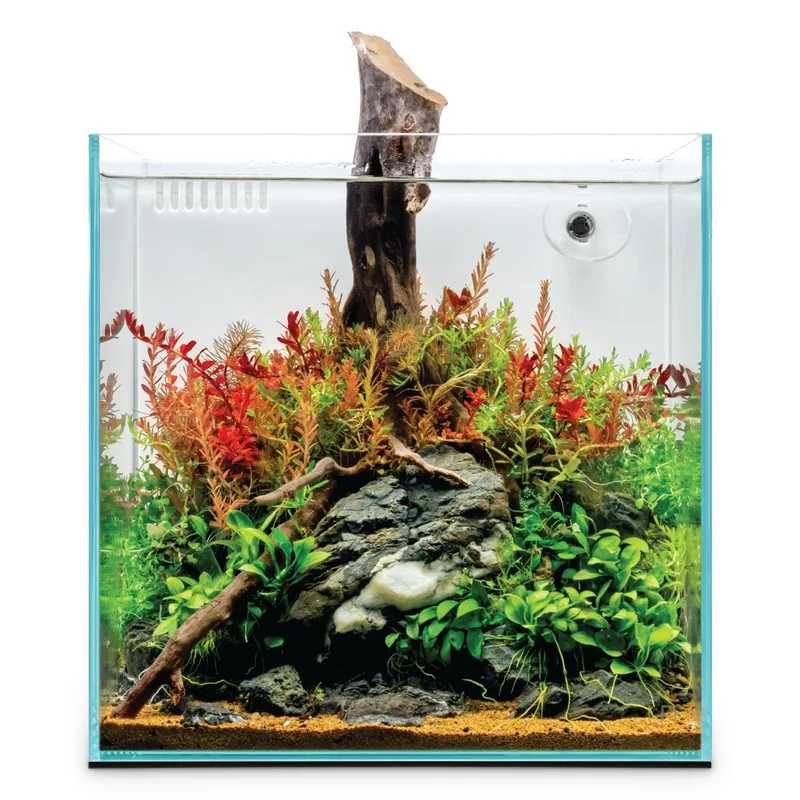
Ultum Nature Systems 5N Rimless Aquarium (~5 Gallon)
Best Display Breeder- ✓ Beautiful rimless design for display breeding
- ✓ Low-iron glass provides exceptional clarity
- ✓ Compact enough for desk or countertop
- ✓ Roomy enough for a small breeding trio or a few pairs
- ✗ 5 gallons is still tight for full colony stability
- ✗ Expensive per gallon compared to standard tanks
- ✗ Not practical for multi-tank rack setups
The 5-gallon size is adequate for a single male and two or three females, but fry must be removed within 1-2 weeks or the adults will eat them. This is a display and observation tank, not a production setup.
Separating Fry
In-Tank Solutions
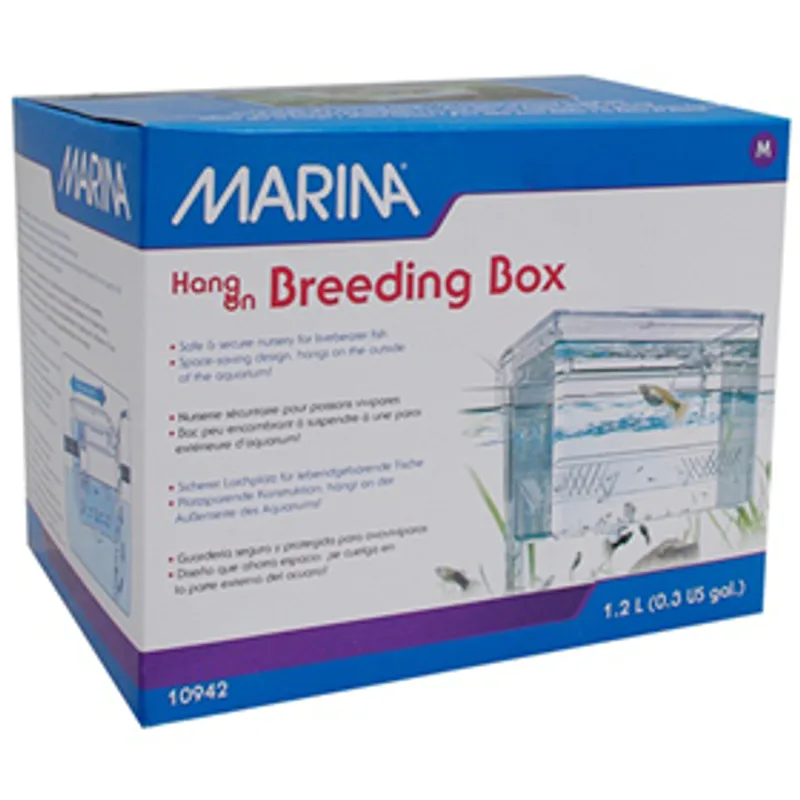
Marina Hang-On Breeding Box
Best Fry Separator- ✓ Separates pregnant females without a separate tank
- ✓ Divider slot allows fry to drop to safety
- ✓ Uses main tank water — no separate heater needed
- ✓ Affordable and simple
- ✗ Very small — stressful for fish over 48 hours
- ✗ Flow-through design relies on main tank circulation
- ✗ Fry need to be moved to a grow-out tank quickly
- ✗ Plastic construction scratches easily
Hang-on breeding boxes isolate pregnant females or trap fry in a separate compartment within the main tank. They use main tank water (so temperature and chemistry match) and require no additional equipment.
The limitation is stress. Confining a pregnant female in a small plastic box for days is stressful and can cause premature delivery or health issues. Use breeding boxes for no more than 24-48 hours — just long enough for the female to drop her fry, then release her back to the main tank.
Dedicated Grow-Out Tanks
The better approach is a separate grow-out tank. Move fry at 1-3 days old (or move pregnant females to a separate tank and return her after delivery). A simple 10-gallon with a sponge filter and floating plants gives fry space to grow without adult predation pressure.
Colony Management for Strain Maintenance
Guppy Colonies
For strain maintenance, keep single-strain colonies isolated. One male from a different strain that accidentally enters a colony can introduce unwanted genetics that take 3-4 generations to breed out.
Colony ratio: 1 male per 2-3 females. More females than males reduces harassment and gives each female recovery time between pregnancies.
Culling schedule: Grade males at 8-12 weeks when color and finnage are fully expressed. Keep the top 20-30% as breeders. Sell or cull the rest. For females, cull any showing weak color or body deformities.
Endler Colonies
Pure N-class endlers are increasingly rare and valuable. If maintaining N-class purity:
- Never house with guppies or hybrids
- Track lineage if possible
- Buy from verified N-class breeders
- Males are easy to identify by strain-specific patterns; females are harder to distinguish from hybrids
Endlers breed faster than guppies (shorter gestation, earlier maturity) and produce smaller broods (5-15 fry vs. 20-50+ for guppies). Colony growth is steady but less explosive.
Water Conditions for Maximum Breeding
Livebearers breed in a wide range of conditions, but optimal parameters maximize output:
- Temperature: 78-80degF (higher = faster metabolism = faster breeding cycle)
- pH: 7.0-7.8
- GH: 8-14 dGH (livebearers prefer moderately hard water)
- KH: 4-8 dKH
- Ammonia/Nitrite: 0 ppm (non-negotiable)
- Nitrate: Below 20 ppm
Higher temperatures shorten gestation periods (from 30 days at 76degF to 25 days at 82degF) but also shorten overall lifespan. Most breeders run at 78degF as a balance between breeding speed and fish longevity.
Multi-Tank Rack Setup
For serious breeding, a rack system with multiple tanks is the most space-efficient approach:
Typical rack layout (one 36-inch wire shelf unit):
- Shelf 1: Breeding colony #1 (10-gallon)
- Shelf 2: Breeding colony #2 (10-gallon)
- Shelf 3: Male grow-out (10-gallon)
- Shelf 4: Female grow-out (10-gallon)
- Shelf 5: Fry tank / Holding for sale (10-gallon)
This 5-tank setup lets you maintain 2 strains simultaneously with dedicated grow-out and sales holding. Expand by adding a second rack for more strains.
Frequently Asked Questions
How many guppies can I breed in a 10-gallon tank?
A breeding group of 2 males and 5-6 females is comfortable. With fry present (before moving to grow-out), total population can temporarily reach 30-40 before density becomes a problem.
Do I need separate tanks for males and females?
For selective breeding, yes — separate males and females once sexable (3-4 weeks) to control which fish breed. For colony breeding where you are selecting from the best offspring regardless, co-housing is fine.
How often do guppies breed?
Females drop fry every 25-30 days. A single female stores sperm and can produce multiple batches from a single mating. Even females purchased alone may already be pregnant from pet store exposure.
Is bare bottom or substrate better for breeding tanks?
Bare bottom is easier for maintenance — you can see and remove uneaten food, spot fry easily, and vacuum waste without navigating substrate. Substrate is better for colony tanks where aesthetics and biological stability matter more than fry visibility.
Can I breed guppies and endlers in the same tank?
You can, but they will hybridize freely. If maintaining strain purity is your goal, never house guppies and endlers together. If you want interesting hybrid variations and are not concerned about purity, mixed colonies produce diverse and often beautiful offspring.