AquaRanked is reader-supported. When you buy through links on our site, we may earn an affiliate commission.
A patio pond without plants is just a bucket of water. Plants do the real work in an outdoor pond — they filter waste, oxygenate the water, shade the surface to control temperature, and give fish and fry places to hide. In the South’s USDA Zones 7-9 climate, you get a solid March-through-October growing season, which is more than enough time for aquatic plants to establish and keep your pond water healthy.
The key is choosing the right mix of plant types. Floaters (water hyacinth, water lettuce) sit on the surface and absorb nutrients directly from the water column. Submerged plants (hornwort, anacharis) oxygenate the water and compete with algae. Marginals (dwarf papyrus, creeping jenny) grow along the edges and add visual interest while filtering runoff.
For a balanced patio pond, you want at least one of each type. Here are the five plants I recommend for USDA Zones 7-9 outdoor ponds in 2026.
| Water Hyacinth (Live Floating Plants, 3-Pack) Editor's Choice | Water Lettuce (Pistia stratiotes, 3-Pack) Best Floater | Hornwort (Ceratophyllum demersum, Live Bunches) Best Oxygenator | Anacharis (Elodea, 10-Stem Bundle) Best Submerged Plant | Dwarf Papyrus (Cyperus prolifer) Best Marginal | |
|---|---|---|---|---|---|
| Rating | 9.3/10 | 9/10 | 8.8/10 | 8.5/10 | 8.3/10 |
| Price | $15.99as of Sep 27, 2026 | Unavailable | $15.88as of Sep 27, 2026 | Unavailable | $29.97as of Sep 27, 2026 |
| Type | Floating | Floating | Submerged (floating or anchored) | Submerged | Marginal (bog/edge plant) |
| Light | Full sun | Full sun to partial shade | Any — full sun to shade | Moderate to full sun | Full sun to partial shade |
| Growth Rate | Very fast | Fast | Fast | Fast | Moderate |
| Hardiness | Annual in USDA Zones 7-9 (dies below 50°F) | Annual in USDA Zones 7-9 (dies below 50°F) | Perennial — survives USDA Zones 7-9 winters | Perennial in USDA Zones 7-9 | Perennial in USDA Zones 7-11 |
| Nutrient Absorption | Excellent | Very good | Good | Good | — |
| Max Height | — | — | — | — | 18–24 inches |
| Check Price → | Check Price → | Check Price → | Check Price → | Check Price → |
Prices change daily — tap Check Price for the current Amazon price. Numbers shown were verified on the "as of" date.
Quick Picks
- Best Overall: Water Hyacinth — unmatched nutrient absorption with gorgeous lavender blooms
- Best Floater: Water Lettuce — attractive rosettes with dense root cover for fry
- Best Oxygenator: Hornwort — tough, perennial, grows in any light
- Best Submerged Plant: Anacharis — fast-growing nitrate sponge that overwinters in USDA Zones 7-9
- Best Marginal: Dwarf Papyrus — adds vertical texture, hardy perennial in our climate
Buying Guide: Building a Balanced Patio Pond Plant System
The Three-Layer Approach
A healthy patio pond uses plants at three levels:
- Surface layer (floaters): Water hyacinth or water lettuce covering 50-60% of the surface. These shade the water, reduce algae growth, and absorb the bulk of excess nutrients.
- Mid-water layer (submerged): Hornwort or anacharis providing oxygenation and additional nutrient absorption. These also give fish hiding cover throughout the water column.
- Edge layer (marginals): Dwarf papyrus, creeping jenny, or other bog plants along the perimeter for aesthetics and minor filtration.
You do not need all five plants from this list. A patio pond with water lettuce and hornwort is perfectly functional. But adding variety creates a more stable ecosystem with more biological redundancy.
USDA Zones 7-9 Seasonal Calendar
- March: Water temperatures hit 65°F. Safe to add guppies (they need a minimum of 65°F). Begin adding floating plants if available. Hornwort and anacharis start growing from winter turions.
- April-May: Peak planting window. Water hyacinth and water lettuce are available from Amazon and local nurseries. Growth accelerates.
- June-September: Full growth season. Thin floaters every 1-2 weeks to maintain 50-60% surface coverage. Trim submerged plants as needed.
- October: Water temperatures begin dropping. Remove dying floaters. Hornwort and anacharis form turions. Bring guppies indoors when overnight temps drop below 65°F.
- November-February: Pond is dormant. Remove accumulated plant debris. Mulch marginal perennials.
How Many Plants to Start With
For a typical 40-gallon patio pond:
- 3-4 water hyacinth or water lettuce (they will multiply fast)
- 2-3 bunches of hornwort or anacharis
- 1 marginal plant in a pot
Start conservative. Aquatic plants in a sunny USDA Zones 7-9 pond grow faster than you expect. You will be thinning within a month.
Keeping Floaters From Taking Over
Fast growers like water hyacinth and water lettuce do not respect boundaries. A set of floating plant containment rings keeps floaters corralled to one section of the pond so they don’t drift into pump intakes or crowd out submerged plants underneath. For potted marginals like dwarf papyrus, a TotalPond aquatic plant basket keeps substrate contained instead of clouding the water — the same basket we recommend in our barrel pond roundup.
Detailed Reviews
1. Water Hyacinth
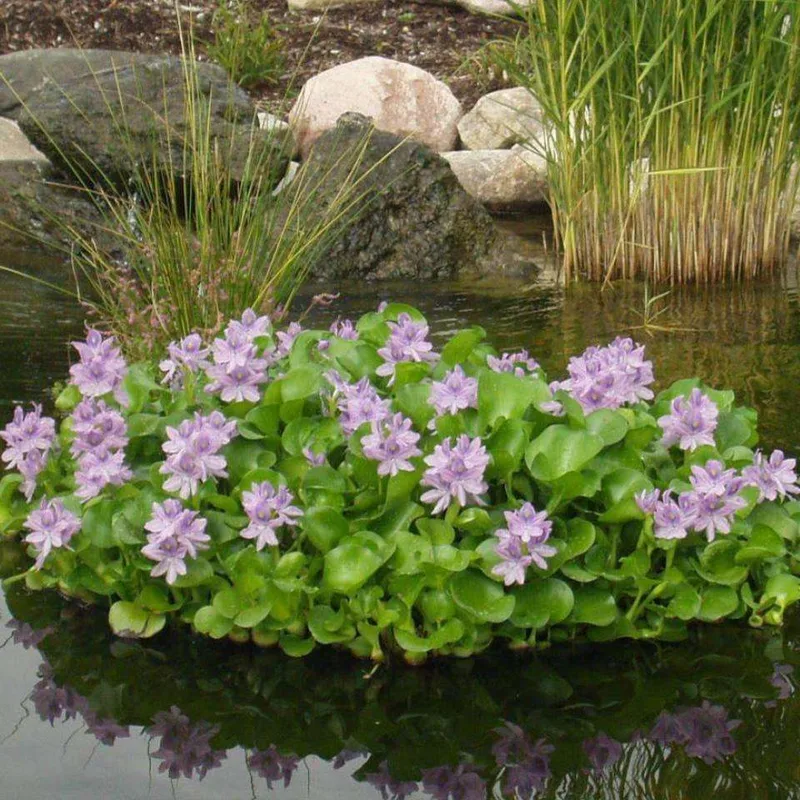
Water Hyacinth (Live Floating Plants, 3-Pack)
Editor's Choice- ✓ Fastest-growing nutrient sponge available — outcompetes algae aggressively
- ✓ Beautiful lavender flowers in peak summer
- ✓ Trailing roots provide shelter for guppy fry and small fish
- ✓ Shades the water surface, reducing temperature swings
- ✗ Dies at first frost — must be replaced each spring
- ✗ Illegal to sell or transport in several US states (check your state regulations)
- ✗ Can take over the entire water surface if not thinned regularly
Water hyacinth is the single most effective plant you can put in a patio pond for water quality. Nothing else absorbs nitrogen and phosphorus as fast. A handful of hyacinth in a 40-gallon patio pond will noticeably reduce algae growth within a couple of weeks as the plants strip excess nutrients from the water.
In the South, water hyacinth grows explosively from late April through September. By midsummer, a few plants can cover the entire surface of a small pond, and you will be pulling out handfuls every week to keep coverage at 50-60% of the water surface (any more than that and the plants underneath start dying from light starvation).
The lavender flowers are a genuine bonus — they bloom reliably in full sun during the hottest months and attract pollinators. The trailing root system also provides excellent shelter for guppy fry. In my outdoor guppy ponds, survival rates are noticeably higher when hyacinth roots are dense enough for newborns to hide in.
The catch: water hyacinth is an annual in USDA Zones 7-9. It dies at the first frost, and you are buying new plants every spring. Some keepers try to overwinter them indoors under grow lights, but the effort rarely pays off. Just plan on spending $12.00-$18.00 each spring for a fresh batch.
Also check your state regulations. Water hyacinth is restricted or banned in several states due to its invasive potential in natural waterways. Most southern states allow it for private pond use, but do not dump it in any natural body of water.
Best for: Maximum nutrient absorption and algae competition in sunny patio ponds.
2. Water Lettuce
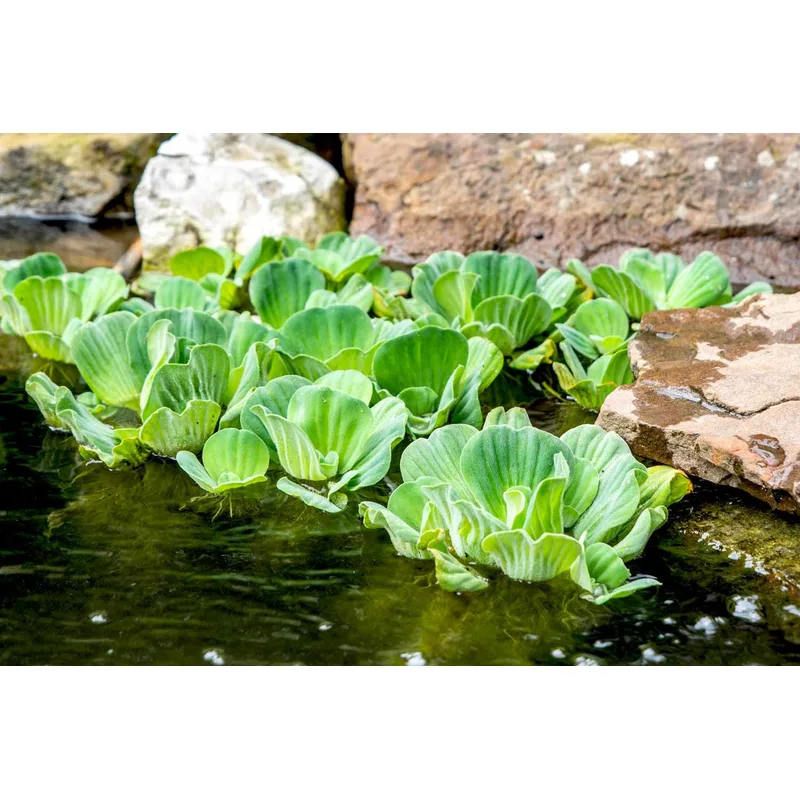
Water Lettuce (Pistia stratiotes, 3-Pack)
Best Floater- ✓ Attractive rosette shape looks great in container ponds
- ✓ Dense root system provides excellent fry cover
- ✓ Tolerates partial shade better than water hyacinth
- ✓ Easy to thin — just pull out excess rosettes
- ✗ Not frost-hardy — treat as an annual in USDA Zones 7-9
- ✗ Restricted in some states, though fewer than water hyacinth
- ✗ Smaller root mass than hyacinth means slightly less filtration
Water lettuce is the more civilized cousin of water hyacinth. It grows quickly but not as aggressively, looks tidier with its rosette form, and tolerates partial shade better than hyacinth does.
For patio ponds on covered patios or in partially shaded areas, water lettuce is the better floating plant choice. It handles 4–6 hours of direct sun without scorching, while hyacinth really wants full sun all day. The compact rosettes also look better in smaller container ponds where hyacinth’s sprawling growth can feel overwhelming.
The root system is dense and fibrous — perfect fry shelter. Guppies in particular love dropping fry near water lettuce roots, and the babies instinctively hide in the root mass. If you are breeding guppies outdoors, a surface covered in water lettuce improves fry survival significantly.
Like hyacinth, water lettuce is an annual in USDA Zones 7-9. It cannot tolerate temperatures below 50°F and dies at frost. Budget for replacement each spring. Fortunately, it is cheaper and easier to find than hyacinth, and Amazon ships live plants in good condition between March and October.
Best for: Partially shaded patio ponds and smaller container setups where hyacinth is too aggressive.
3. Hornwort
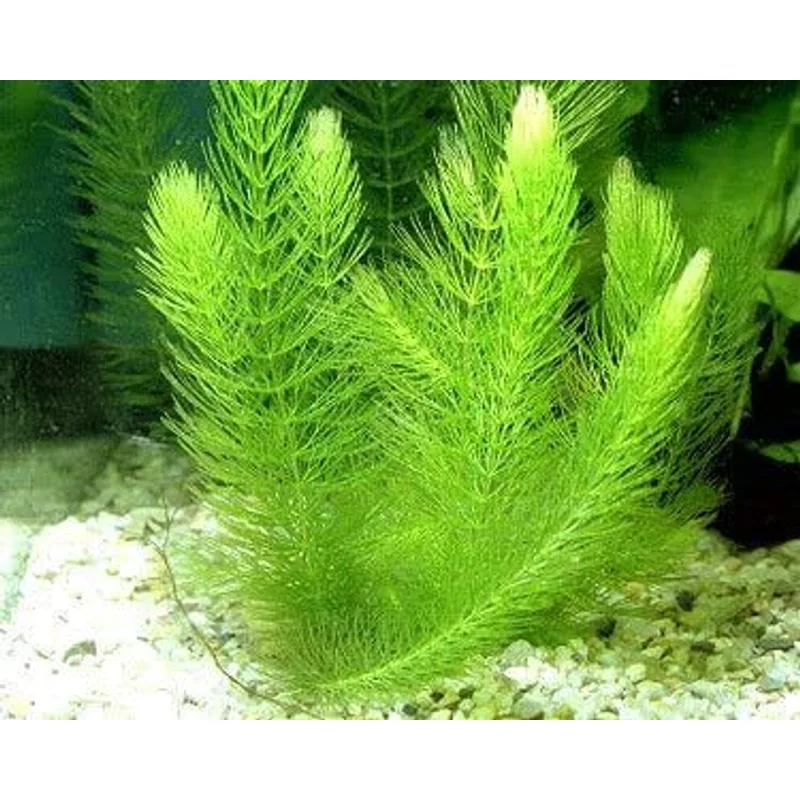
Hornwort (Ceratophyllum demersum, Live Bunches)
Best Oxygenator- ✓ Survives winter in USDA Zones 7-9 — no need to replace annually
- ✓ Grows in almost any light condition
- ✓ Excellent oxygenator that keeps water clear
- ✓ No planting needed — floats freely or sinks with a weight
- ✗ Sheds needle-like leaves that can look messy
- ✗ Grows so fast it can choke out other submerged plants
- ✗ Does not produce flowers
Hornwort is the cockroach of aquatic plants — and I mean that as a compliment. It survives conditions that would kill most plants. Low light, high light, warm water, cold water, neglect, over-fertilization. It just keeps growing.
For outdoor ponds in USDA Zones 7-9, the most important feature of hornwort is that it is perennial. When fall temperatures drop, hornwort produces turions (compact buds) that sink to the bottom and survive the winter. In spring, they sprout new growth and the cycle repeats. No replanting, no buying new stock, no fuss.
Hornwort floats freely or sinks with a small plant weight. It does not have true roots, so you cannot plant it in substrate. In a patio pond, just toss it in and let it drift. The feathery stems provide excellent oxygenation and give fish and invertebrates hiding spots throughout the water column.
The downside is messiness. Hornwort sheds its needle-like leaves, especially when conditions change (water temperature, light levels, being moved to a new pond). The shed needles settle on the bottom and can look untidy. Regular removal of dead material keeps things clean, but it is an ongoing task.
Best for: Low-maintenance ponds where you want a perennial oxygenating plant that comes back every year.
4. Anacharis
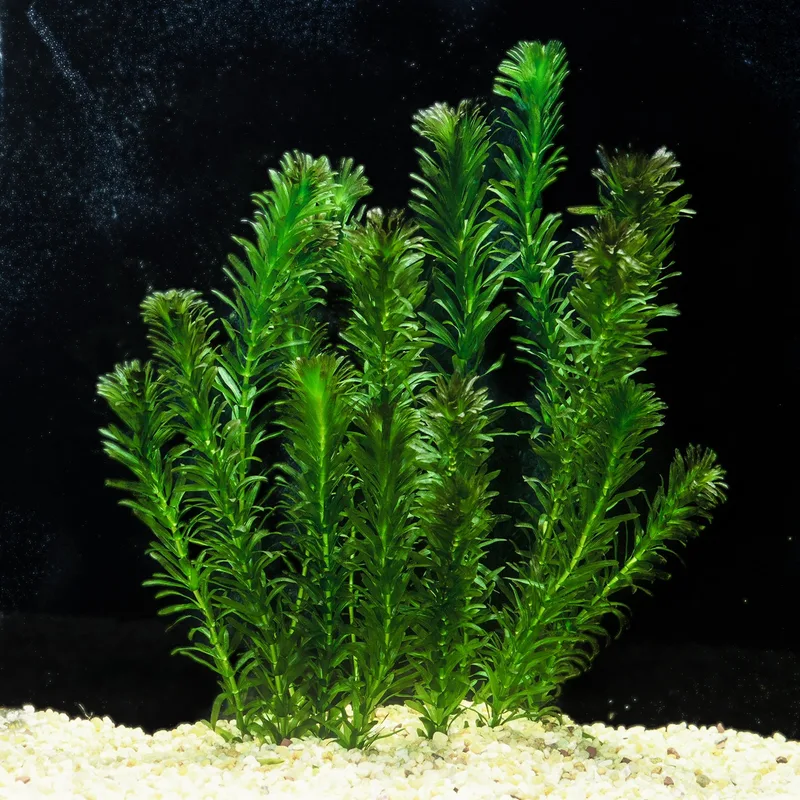
Anacharis (Elodea, 10-Stem Bundle)
Best Submerged Plant- ✓ Grows quickly and absorbs nitrates from fish waste
- ✓ Provides cover for fry and invertebrates
- ✓ Perennial in USDA Zones 7-9 — comes back each spring
- ✓ Roots easily from cuttings for free propagation
- ✗ Prefers cooler water — can struggle in peak summer heat above 80°F
- ✗ Stems can become leggy and tangled without trimming
- ✗ Restricted in some states due to invasive potential
Anacharis (also sold as Elodea or Egeria densa) is the other workhorse submerged plant for outdoor ponds. It grows fast, absorbs nitrates aggressively, and roots easily in substrate or floats freely.
In USDA Zones 7-9, anacharis is perennial. It slows down in winter but does not die completely, and it bounces back quickly once water temperatures rise above 60°F in spring. By midsummer, a single stem can produce multiple side shoots, and you can propagate endlessly by cutting stems and replanting the cuttings.
For guppy ponds, anacharis serves double duty: it absorbs fish waste and provides cover for fry among its dense stems. The stems grow vertically, creating a forest-like structure that small fish navigate easily but larger predators (like adult guppies hunting their own fry) find harder to penetrate.
The one weakness is heat tolerance. When water temperatures climb above 80°F in late July and August (common in the warm southern US), anacharis can look stressed — stems may yellow and growth slows. It usually recovers as temperatures cool in September. Providing some afternoon shade to the pond helps.
Best for: Planted patio ponds where you want submerged vegetation that filters water and shelters fry.
5. Dwarf Papyrus
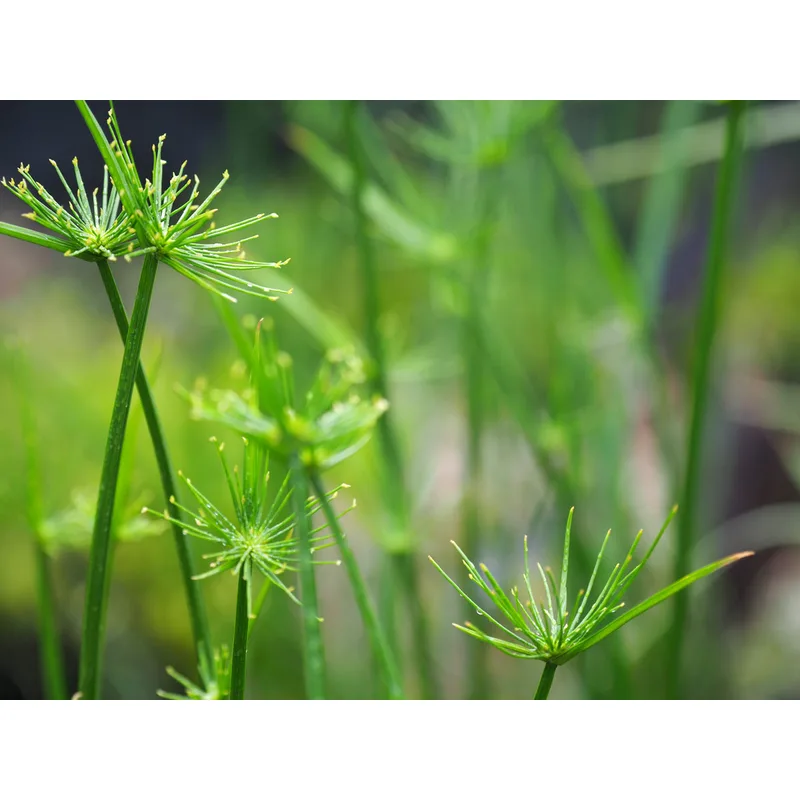
Dwarf Papyrus (Cyperus prolifer)
Best Marginal- ✓ Adds vertical interest and texture to the pond edge
- ✓ Hardy perennial in the warm southern US USDA Zones 7-9 — returns reliably each year
- ✓ Tolerates both standing water and moist soil
- ✓ Compact enough for container ponds and patio setups
- ✗ Does not absorb nutrients as aggressively as floating plants
- ✗ Needs protection from hard freezes (mulch the crown)
- ✗ Can spread in favorable conditions — contain in a pot within the pond
Floating and submerged plants do the heavy filtration work, but marginals complete the look. Dwarf papyrus adds vertical interest with its umbrella-like leaf clusters atop slender stems, reaching 18–24 inches tall in a mature plant.
In USDA Zones 7-9, dwarf papyrus is hardy enough to overwinter outdoors if you mulch the crown when temperatures drop below freezing. It dies back to the roots in winter and sends up fresh growth in March. By May, it is back to full size.
For patio pond setups, place dwarf papyrus in a pot submerged so the soil line is 1–2 inches below the water surface. It thrives in standing water but also does well in moist soil along the pond edge. The compact height makes it appropriate for container ponds where taller marginals like full-size papyrus or cattails would look ridiculous.
Dwarf papyrus does not absorb nutrients as aggressively as floating plants, so do not rely on it for filtration. Its value is aesthetic — it provides structure and texture that floating plants alone cannot. Pair it with water lettuce or hyacinth for a pond that both looks good and stays clean.
Best for: Adding vertical visual interest to patio ponds without overwhelming small containers.
Comparison Table
| Water Hyacinth (Live Floating Plants, 3-Pack) Editor's Choice | Water Lettuce (Pistia stratiotes, 3-Pack) Best Floater | Hornwort (Ceratophyllum demersum, Live Bunches) Best Oxygenator | Anacharis (Elodea, 10-Stem Bundle) Best Submerged Plant | Dwarf Papyrus (Cyperus prolifer) Best Marginal | |
|---|---|---|---|---|---|
| Rating | 9.3/10 | 9/10 | 8.8/10 | 8.5/10 | 8.3/10 |
| Price | $15.99as of Sep 27, 2026 | Unavailable | $15.88as of Sep 27, 2026 | Unavailable | $29.97as of Sep 27, 2026 |
| Type | Floating | Floating | Submerged (floating or anchored) | Submerged | Marginal (bog/edge plant) |
| Light | Full sun | Full sun to partial shade | Any — full sun to shade | Moderate to full sun | Full sun to partial shade |
| Growth Rate | Very fast | Fast | Fast | Fast | Moderate |
| Hardiness | Annual in USDA Zones 7-9 (dies below 50°F) | Annual in USDA Zones 7-9 (dies below 50°F) | Perennial — survives USDA Zones 7-9 winters | Perennial in USDA Zones 7-9 | Perennial in USDA Zones 7-11 |
| Nutrient Absorption | Excellent | Very good | Good | Good | — |
| Max Height | — | — | — | — | 18–24 inches |
| Check Price → | Check Price → | Check Price → | Check Price → | Check Price → |
Prices change daily — tap Check Price for the current Amazon price. Numbers shown were verified on the "as of" date.
Frequently Asked Questions
Can I keep aquatic plants over winter in USDA Zones 7-9?
Submerged plants like hornwort and anacharis survive USDA Zones 7-9 winters by forming turions or going dormant. Hardy marginals like dwarf papyrus overwinter with mulching. Floating plants (water hyacinth, water lettuce) die at frost and must be replaced each spring.
Do I need to fertilize pond plants?
In a pond with fish, no. Fish waste provides more than enough nitrogen and phosphorus for pond plants. Adding fertilizer on top of that feeds algae. If you run a fish-free water garden, a small amount of aquatic plant fertilizer can help, but most people do not need it.
How do I prevent plants from taking over the pond?
Thin regularly. Pull out excess floaters every 1–2 weeks during peak summer. Trim submerged plants when they reach the surface. Keep marginals in pots to contain root spread. The goal is 50–60% surface coverage — enough to shade the water and filter nutrients, but not so much that plants below the surface die from light starvation.
Are these plants safe for guppies?
All five plants on this list are completely safe for guppies and other pond fish. None are toxic, and all provide cover that improves fry survival. The trailing roots of water hyacinth and water lettuce are particularly valuable as fry hiding spots.
Will water hyacinth survive a USDA Zones 7-9 winter?
No. Water hyacinth dies when water temperatures drop below 50°F, which happens by late October in the warm southern US. Treat it as an annual and budget for new plants each spring. Some keepers overwinter them indoors under grow lights, but the survival rate is low and the effort is rarely worth the cost of replacement plants.
Do submerged plants need substrate?
Hornwort has no true roots and cannot be planted — it must float or be weighted down. Anacharis can root in substrate but also grows fine as a floating plant. For patio ponds, floating both species is usually easiest — no substrate, no pots, just toss them in.
Do dense plants attract mosquitoes?
Still water attracts mosquitoes regardless of plants, but heavy floating coverage actually helps by shading out the warm, sunlit surface water mosquito larvae prefer. If you still see larvae, Mosquito Dunks are shrimp- and fish-safe — they use Bti, a natural larvicide, and won’t harm your plants or livestock.
Conclusion
For a patio pond in the warm southern US’s USDA Zones 7-9 climate, start with water hyacinth or water lettuce as your primary floater for nutrient control, add hornwort as a low-maintenance perennial oxygenator, and throw in a dwarf papyrus at the edge for visual interest. That combination gives you surface shading, underwater oxygenation, nutrient absorption, and a pond that looks like you planned it rather than just filled a container with water.
Replace your floaters each spring, thin them throughout summer, and let the perennials do their thing year after year. It is a simple system that works.
Our Top Pick