Algae is not a lighting problem. It is a balance problem. But lighting is the single biggest lever you can pull to tip that balance in your favor — or against it.
Too much light with not enough plant mass and CO2 feeds algae. Too little light starves your plants and lets algae take over the surfaces they abandon. The wrong spectrum pushes growth toward green water or hair algae. And running your lights for 14 hours because you like how the tank looks guarantees you will be scraping glass every other day.
This guide covers the best aquarium lights in 2026 for keeping algae in check while still growing healthy plants, plus the practical knowledge about spectrum, intensity, and photoperiod that actually matters.
Quick Picks
| Need | Our Pick |
|---|---|
| Best overall spectrum control | Fluval Plant 3.0 LED |
| Best value | Hygger Advanced Full Spectrum |
| Best budget | NICREW ClassicLED Gen 2 |
| Best for nano tanks | Fluval Plant Nano LED |
| Best auto cycle | SEAOURA 24/7 Cycle LED |
Why Lighting Causes Algae (And How to Fix It)
Plants and algae compete for the same resources: light, CO2, and nutrients. When one of these is out of balance relative to the others, algae wins.
High light + low CO2 = algae. This is the most common beginner mistake. A powerful light on a tank with no CO2 injection and limited plant mass creates an energy surplus that algae exploits before plants can.
High light + high nutrients + low plant mass = algae. Even with CO2, if your tank is lightly planted, algae has uncontested access to nutrients.
Long photoperiod = algae. Running lights for more than 8-10 hours gives algae more opportunity to photosynthesize. Plants plateau in their light usage; algae does not seem to.
The fix is straightforward: match your light intensity to your CO2 and nutrient levels, keep the photoperiod reasonable, and grow enough plants to outcompete algae for resources.
Spectrum: What Actually Matters
Full spectrum white light in the 6000-7000K range is optimal for most freshwater planted tanks. This provides the wavelengths plants need without skewing toward spectrums that favor specific algae types.
Blue light (400-500nm): Necessary for plant growth but also heavily utilized by cyanobacteria and some green algae. If you are battling blue-green algae, reducing your blue channel can help.
Red light (600-700nm): The primary driver of photosynthesis in plants. Red-heavy spectrums promote compact, dense growth. Less associated with algae promotion than blue.
Green light (500-565nm): Penetrates deeper into the water column and into leaf tissue. Important for overall plant health but not the primary growth driver.
The practical takeaway: a full-spectrum light with adjustable color channels gives you the most control. If algae appears, you can dial back blue while maintaining red and green output.
Photoperiod: The Most Underrated Variable
The single fastest way to reduce algae in most tanks is to shorten your photoperiod. Here are practical guidelines:
- New tanks (first 4-6 weeks): 6 hours per day maximum. Your plants are establishing roots and cannot yet absorb light efficiently. Any excess feeds algae.
- Low-tech tanks (no CO2): 7-8 hours per day. Without CO2 injection, plants cannot utilize light beyond this window effectively.
- High-tech tanks (CO2 injection): 8-10 hours per day. CO2 allows plants to photosynthesize more efficiently, justifying longer periods.
- Shrimp-only tanks: 6-8 hours. Shrimp tanks typically have lower plant mass, so shorter periods help keep algae manageable.
A siesta period — splitting the photoperiod into two blocks with a 2-3 hour dark break — can also help. Some hobbyists report reduced algae with a schedule like 4 hours on, 3 hours off, 4 hours on.
Intensity: Dim It Down
Most aquarium LEDs ship at full intensity, which is far too bright for newly planted or low-tech tanks. Start at 40-50% intensity and increase only if plants show signs of insufficient light (leggy growth, pale leaves, reaching toward the surface).
If your light does not have a dimmer, raise the fixture higher above the water surface. Every inch of height reduces PAR at the substrate. A light mounted 8 inches above the water delivers significantly less intensity than one sitting directly on the rim.
Detailed Reviews
1. Fluval Plant 3.0 LED
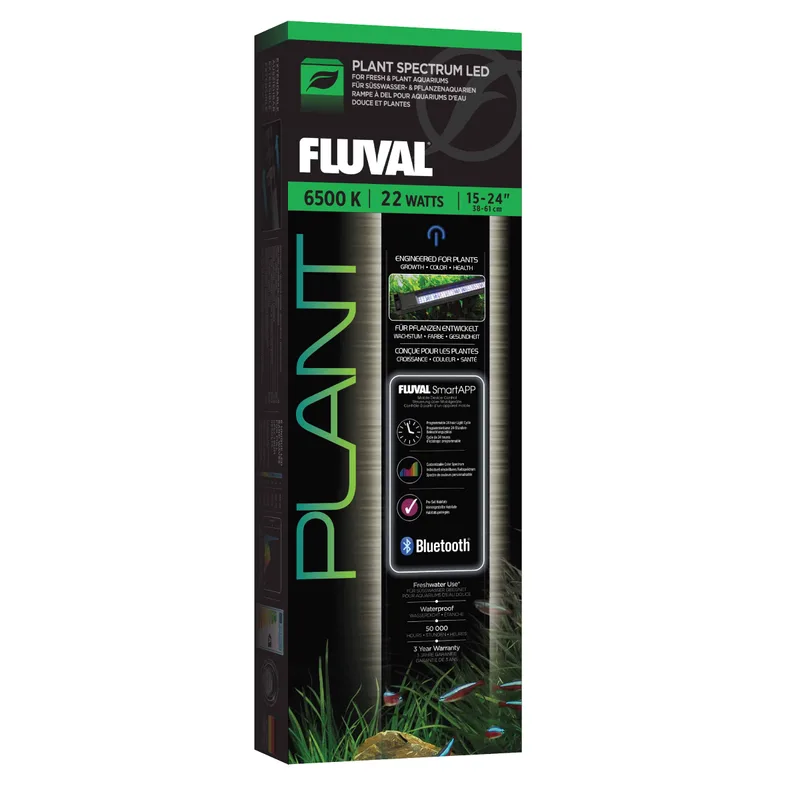
Fluval Plant 3.0 LED
Best Overall- ✓ Individual color channel control lets you dial back blue and ramp green
- ✓ Bluetooth app makes scheduling sunrise/sunset ramps easy
- ✓ Strong PAR output supports demanding plants
- ✓ Proven track record among planted tank hobbyists
- ✗ Bluetooth range is limited — app can be finicky
- ✗ Higher price point than budget LEDs
- ✗ Mounting brackets feel flimsy for the price
The Fluval Plant 3.0 remains the benchmark for planted tank lighting in 2026, and its algae-control capabilities are a major reason why. The Bluetooth app lets you independently adjust six color channels — including separate control over cool white, warm white, red, blue, green, and pure UV. This level of granularity means you can respond to algae outbreaks by targeting specific wavelengths.
Running into green spot algae? Reduce the photoperiod and lower blue intensity. Hair algae creeping in? Drop overall intensity by 20% and check your CO2. The Plant 3.0 gives you the tools to make these adjustments without buying a new light.
The programmable 24-hour schedule with gradual ramp-up and ramp-down periods mimics natural sunrise and sunset, which is less stressful for fish and shrimp than abrupt on/off transitions. Program a 7-hour peak with 30-minute ramps on each end and you have an effective, algae-resistant lighting schedule out of the box.
Who it is for: Serious planted tank hobbyists who want maximum spectrum control and are willing to pay for it.
2. Hygger Advanced Full Spectrum LED
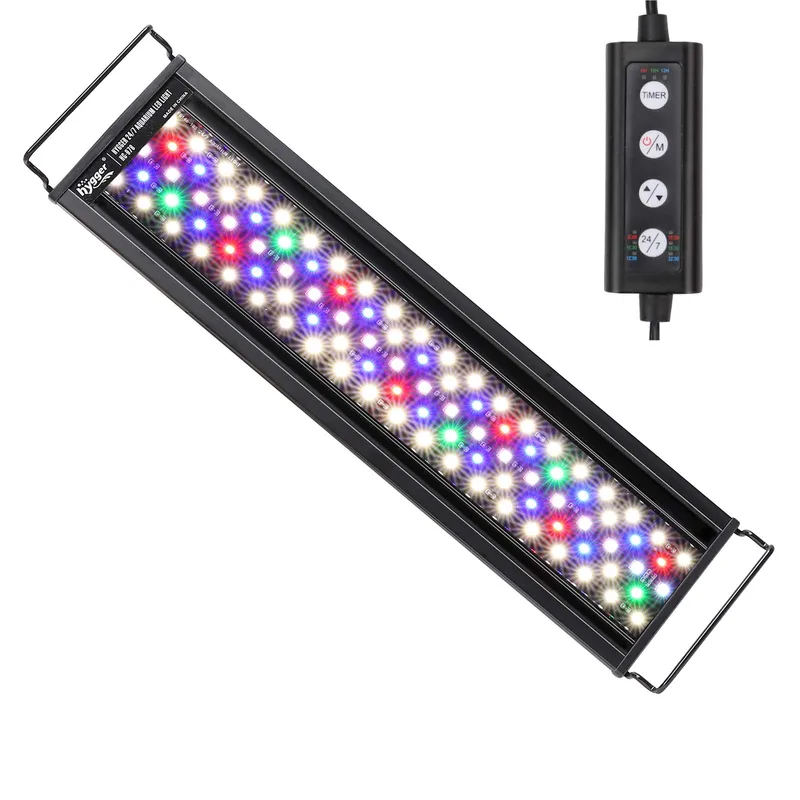
Hygger Advanced Full Spectrum LED
Best Value- ✓ 24/7 mode with gradual sunrise and sunset transitions
- ✓ Excellent PAR output for the price
- ✓ DIY mode lets you customize color channels
- ✓ Multiple size options from 12 to 54 inches
- ✗ Controller buttons are small and fiddly
- ✗ No app control — manual adjustments only
- ✗ Timer presets are limited compared to Fluval
The Hygger Advanced hits a sweet spot between the budget lights and premium options like the Fluval. Its 24/7 mode automatically transitions through dawn, daylight, dusk, and moonlight phases, providing a natural rhythm that works well for algae prevention without manual scheduling.
The DIY mode is where the real algae control lives. You can customize the intensity of each color channel and set three independent timer blocks. Reduce blue to 30%, set red and green to 70%, and run for 7 hours — that is a proven low-algae configuration for most planted tanks.
At $35-60 depending on size, the Hygger delivers PAR numbers comparable to lights twice its price. The tradeoff is the clunky manual controller versus app-based control, but once you dial in your settings, you rarely need to change them.
Who it is for: Hobbyists who want good spectrum control at a reasonable price and do not mind button-based setup.
3. NICREW ClassicLED Gen 2
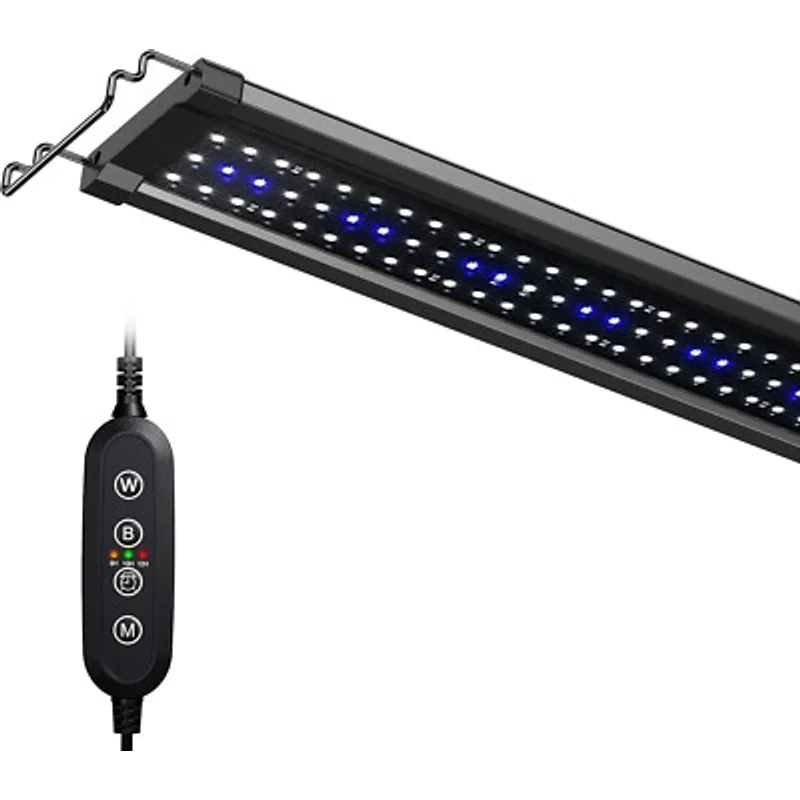
NICREW ClassicLED Gen 2
Best Budget- ✓ Extremely affordable entry point for planted tanks
- ✓ Adequate PAR for low-tech plants
- ✓ Two separate channels for white and blue
- ✓ Slim profile and adjustable mounting legs
- ✗ No built-in timer — must buy separately
- ✗ Limited spectrum customization
- ✗ Not enough output for high-demand carpeting plants
The NICREW ClassicLED Gen 2 is the light most beginners should start with, and ironically, its limited power output is an algae advantage. With lower PAR values than the Fluval or Hygger, the NICREW is less likely to overwhelm a low-tech tank with excess light energy.
The two-channel design — white and blue — lets you run white-only during the day and add blue for dawn/dusk effects. For algae control, keep blue off during peak hours and run white-only for 7-8 hours with an external timer (a basic outlet timer for $8 works perfectly).
This light will not grow demanding carpeting plants like Monte Carlo or dwarf baby tears. But for java fern, anubias, crypts, and other low-to-moderate light plants, it delivers exactly what you need without the algae risk that comes with more powerful fixtures.
Who it is for: Budget-conscious beginners with low-tech planted tanks who want minimal algae hassle.
4. Fluval Plant Nano LED
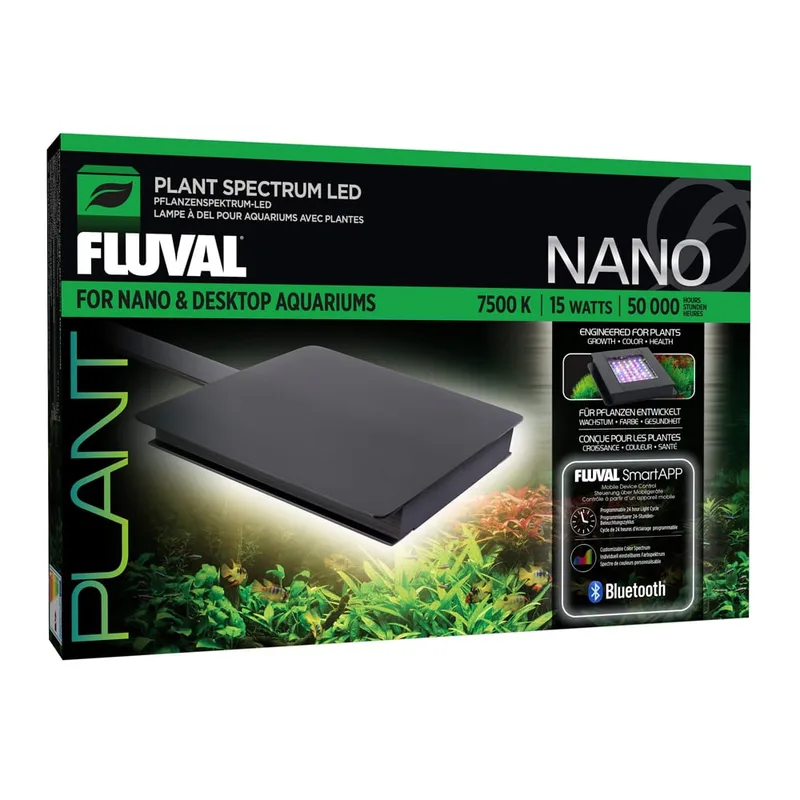
Fluval Plant Nano LED
Best for Nano Tanks- ✓ Same Bluetooth app and spectrum control as the full-size Plant 3.0
- ✓ Perfect for 5-15 gallon tanks
- ✓ Strong PAR at short mounting heights
- ✓ Clean gooseneck mounting system
- ✗ Only suitable for nano and small tanks
- ✗ Gooseneck mount can wobble on thin glass rims
- ✗ Premium price for a nano light
The Plant Nano brings the same Bluetooth app and spectrum control as the full-size Plant 3.0 into a compact gooseneck form factor for tanks up to 15 gallons. For nano shrimp tanks and small planted setups, this is the best option available.
At 15 watts on a small tank, light intensity at the substrate can be quite high, which means algae control is especially important. Use the app to reduce intensity to 50-60% initially and run a 6-7 hour photoperiod. The gradual ramp feature is particularly useful in nano tanks where sudden light changes can stress shrimp and promote algae blooms.
The gooseneck mount is both a strength and weakness — it allows precise positioning but can wobble on thin glass rims. A small clamp or adhesive pad stabilizes it completely.
Who it is for: Nano tank hobbyists and shrimp keepers who want premium spectrum control in a small form factor.
5. SEAOURA 24/7 Cycle LED
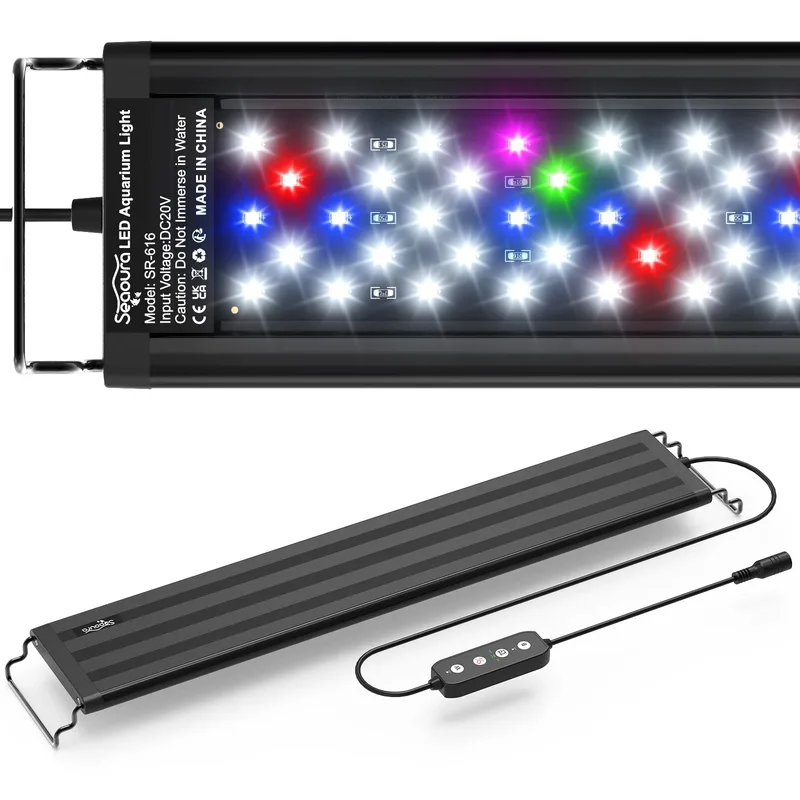
SEAOURA 24/7 Cycle LED
Best Auto Cycle- ✓ Set-and-forget 24/7 cycle replicates natural day progression
- ✓ Decent PAR for low-to-medium light plants
- ✓ Budget-friendly for beginners
- ✓ Multiple size options available
- ✗ Limited individual color channel adjustment
- ✗ Build quality is a step below Hygger and Fluval
- ✗ 24/7 mode intensity may promote algae in nutrient-rich tanks
The SEAOURA takes a set-and-forget approach to algae control with its fully automated 24/7 lighting cycle. Once activated, the light transitions through sunrise (warm, low intensity), midday (full spectrum, peak intensity), sunset (warm, dimming), and moonlight (blue, minimal) without any user input.
This automation works well for hobbyists who do not want to tinker with spectrum settings. The natural rhythm discourages algae by avoiding the sudden light bursts that can trigger blooms. However, the fixed cycle means you cannot customize peak duration or spectrum balance.
The main risk is that the midday peak intensity may be too high for heavily stocked or nutrient-rich tanks. If you notice algae developing, switch to manual mode and reduce the photoperiod to 6-7 hours until things stabilize.
Who it is for: Beginners who want an automated, low-maintenance lighting setup and are growing easy plants.
Comparison Table
| Fluval Plant 3.0 LED Best Overall | Hygger Advanced Full Spectrum LED Best Value | NICREW ClassicLED Gen 2 Best Budget | Fluval Plant Nano LED Best for Nano Tanks | SEAOURA 24/7 Cycle LED Best Auto Cycle | |
|---|---|---|---|---|---|
| Rating | 9.3/10 | 8.8/10 | 8.2/10 | 8.9/10 | 8/10 |
| Price | $127.49-$149.99as of Sep 27, 2026 | $50.34as of Sep 27, 2026 | Unavailable | Unavailable | $32.99-$38.99as of Sep 27, 2026 |
| Wattage | 22W (15-24 inch model) | 24-36W (varies by size) | 10-18W (varies by size) | 15W | 18-28W (varies by size) |
| Spectrum | Full spectrum with adjustable RGB | Full spectrum with 24/7 mode | White and blue LEDs | Full spectrum with Bluetooth | Full spectrum RGB |
| Control | Bluetooth app | Built-in controller | Inline switch (2 channels) | Bluetooth app | Built-in controller |
| Timer | Programmable 24-hour cycle | 6, 10, or 12 hour presets | Requires external timer | Programmable 24-hour cycle | 24/7 automated cycle |
| Check Price → | Check Price → | Check Price → | Check Price → | Check Price → |
Prices change daily — tap Check Price for the current Amazon price. Numbers shown were verified on the "as of" date.
Algae Types and Light-Based Responses
Different algae respond to different light adjustments:
Green spot algae (GSA): Usually indicates insufficient CO2 relative to light. Reduce intensity by 20% or increase CO2 before changing the photoperiod.
Hair algae / thread algae: Often caused by excessive light combined with nutrient imbalances. Shorten the photoperiod to 6 hours and reduce intensity.
Green water (suspended algae): Triggered by excess light and ammonia. A 3-day blackout followed by a 6-hour photoperiod usually resolves it.
Blue-green algae (cyanobacteria): Not technically algae, but light reduction helps. Reduce blue spectrum specifically and improve water circulation.
Black beard algae (BBA): Linked to fluctuating CO2 levels more than light, but reducing intensity while stabilizing CO2 helps. BBA is stubborn — spot-treating with hydrogen peroxide or liquid carbon is often necessary alongside light adjustments.
Brown diatoms: Common in new tanks and typically resolve on their own as the tank matures. No light adjustment needed — diatoms actually prefer lower light conditions.
Practical Tips for Any Light
- Use a timer. Running lights manually leads to inconsistent photoperiods, which promotes algae more than any other single factor.
- Start dim and short. Begin at 50% intensity for 6 hours and increase gradually over weeks.
- Grow fast-growing plants first. Stem plants like hornwort, water sprite, and pearl weed absorb nutrients quickly and outcompete algae during the critical early weeks.
- Floating plants are natural dimmers. Red root floaters, dwarf water lettuce, and salvinia reduce light reaching the lower tank naturally.
- Clean your light. Mineral deposits and water splash on LEDs reduce output and shift spectrum. Wipe your fixture monthly.
Frequently Asked Questions
How many hours of light do aquarium plants need?
Most freshwater plants thrive with 7-8 hours of moderate light. High-tech tanks with CO2 can push to 10 hours. Running more than 10 hours rarely benefits plants but almost always promotes algae.
Does blue light cause algae?
Blue light alone does not cause algae, but it is heavily utilized by cyanobacteria and certain green algae species. Reducing blue intensity while maintaining red and white output can help if you are dealing with blue-green algae specifically.
Should I turn off my aquarium light at night?
Yes. Fish and plants need a dark period for respiration and rest. Running lights 24/7 stresses fish, disrupts plant metabolic cycles, and guarantees algae problems.
Do LED lights cause more algae than fluorescent?
LEDs do not inherently cause more algae, but they are often more powerful per watt than fluorescent tubes. A new LED at full intensity on a tank that was previously running aging fluorescent tubes can easily trigger an algae bloom due to the sudden increase in PAR.
Can I use a siesta period to control algae?
Yes. Splitting the photoperiod into two blocks (for example, 4 hours on, 3 off, 4 on) can help reduce algae in some tanks. The dark period in the middle disrupts algae photosynthesis more than plant photosynthesis because most aquarium plants recover faster from short dark periods than common algae species.